

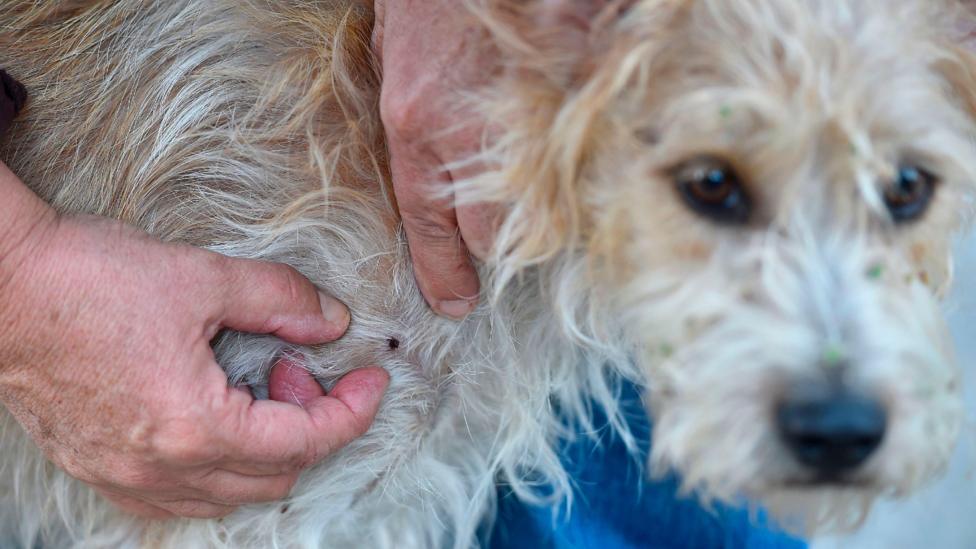
Pet flea treatments should be banned from general sale, a Lords committee has urged after an inquiry raised concerns about their impact on the environment. Spot-on treatments used to prevent parasite infestations in fur and on skin are currently widely available for pet owners to buy in supermarkets and online.
The House of Lords environment committee said their sale should be restricted, adding that widespread use posed a potential threat to natural ecosystems. The government said it was continuing to assess the availability of the treatments in order to ensure "correct usage by owners".
Why is the committee concerned?
The committee said blanket monthly use of preventative spot-on treatments for dogs and cats is not supported by robust scientific evidence and is likely to be harming the environment. In a series of evidence sessions, it heard that many vets do not treat their own pets monthly and instead regularly check their fur with flea combs, restricting treatment to when fleas are spotted.
The committee also heard that high volumes of fipronil and imidacloprid, common active ingredients in spot-on treatments, have been found in UK streams and rivers, killing off aquatic life with a knock-on effect on wildlife higher up the food chain.
These chemicals have already been banned for use as agricultural pesticides because of their impact on wildlife such as bees, while the committee said "very little is known" about the impacts of newer chemicals such as isoxazolines.
In a report, external, the cross-party committee recommended that only vets, pharmacists and other qualified professionals should be able to sell such treatments, with pet owners advised to take a precautionary approach to using them.
What did Baroness Sheehan say?
Baroness Shas Sheehan, who chairs the committee, said the overuse of the treatments on household pets was "the equivalent of using a sledgehammer to crack a nut". She added: "Our report raises serious questions and concerns about the environmental risks of pet flea and tick treatments, as well as how they are sold to pet owners."
She added that pet owners deserved "accurate, evidence-based guidance on the need for, and risks of, the existing and new chemicals which are being prescribed".
How have vets and industry groups responded?
The move has been backed by the British Veterinary Association (BVA), which supports a ban on over-the-counter sales. However, the National Office of Animal Health (NOAH), which describes itself as the trade association representing the UK animal health industry, said the "risk-based use" of parasite control products played a "vital role" in preventing disease in animals and reducing the risk of parasite transmission from pets to people.

A spokesman added: "All pet parasite treatments undergo rigorous scientific assessment by independent regulatory authorities before approval for use, and their safety and efficacy continue to be monitored."
The committee report said: "A risk-based approach should consider the individual clinical needs of each companion animal being treated.
"We are concerned that parasiticide chemicals are being routinely sold for pets without convincing evidence of clinical need."
Vets should also warn of potential harm to wildlife and those risks should also be made more visible on packaging, the report added.
The report also recommended a review of the relationship between the industry and UK and international veterinary medicine regulators, and for the pet health industry to fund further research on the environmental impact of treatments.
What is the government doing next?
The Department for the Environment, Farming and Rural Affairs (Defra) launched a a call for evidence in May on the impact of the treatments on UK rivers. A spokesperson for the department said it was "committed to restoring nature and cleaning up our rivers whilst upholding the highest animal welfare standards".
"While these treatments play a vital role in public and pet health against fleas and ticks, it is right that we assess the availability of these treatments to ensure correct usage by owners,"
The Veterinary Medicines Directorate (VMD), the regulator funded by government and by the pharmaceutical industry, said it wanted to limit the environmental impacts of flea and tick spot-on treatments, and pointed to their consultation and awareness campaign.
"We recognise that while pet parasite treatments play an important role in protecting pets and people from parasites and the diseases they carry, they are entering our watercourses which could be contributing to wider environmental impacts."

Vets advise ban on over the counter flea treatment for pets
Minister considers banning over-the-counter flea treatments for pets
for our Politics Essential newsletter to read top political analysis, gain insight from across the UK and stay up to speed with the big moments. It'll be delivered straight to your inbox every weekday.
- Pet flea treatments
- Environment committee
- Defra
- Veterinary Medicines Directorate


