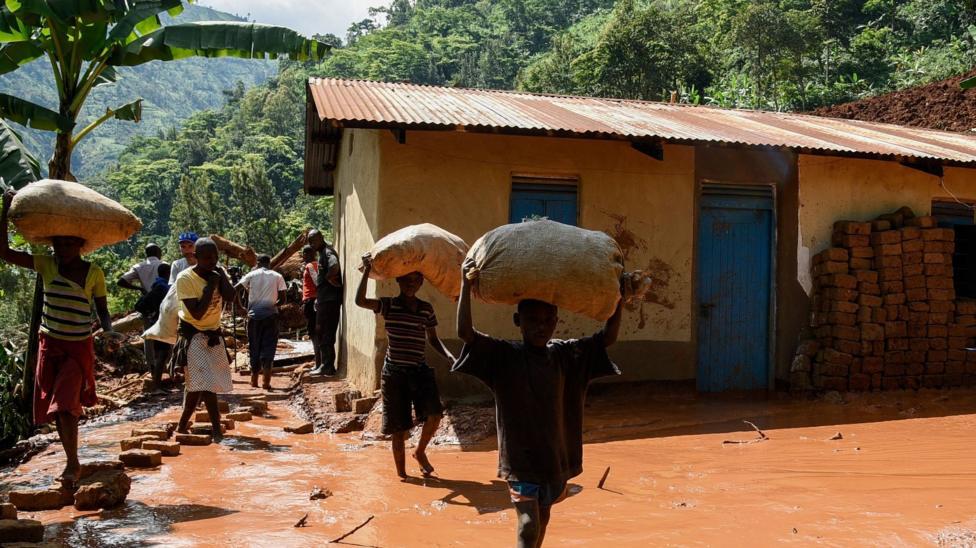
Forty-eight survivors of a 2019 landslide in Bududa, eastern Uganda, that claimed more than 53 lives have escalated their demands for relocation and compensation by filing a complaint with the United Nations Human Rights Committee. According to BBC News, the case is believed to be the first of its kind globally to seek climate adaptation measures as a human rights remedy, potentially establishing a significant legal precedent.
The complainants accuse Uganda's government of breaching the nation's constitution by neglecting to implement adequate disaster management systems in Bududa, a mountainous district repeatedly struck by landslides. The 2019 disaster killed 33 children among its victims. Earlier catastrophes in the same region—in 2010 and 2018—claimed more than 142 lives combined, underscoring the area's vulnerability to these recurring natural hazards.
Why are survivors pursuing international action?
Residents argue that the government's relocation programme fails to address their fundamental concerns about safety, land rights, and economic survival. William Tsama, who lost four family members in the 2019 landslide, expressed his determination to use his experience as a catalyst for change.
"My quest should be a lesson," he said. "Victims in such situations, ignored by governments, can take them to court to compel them to help their citizens."
Beyond the immediate threat of landslides, survivors report that shifting rainfall patterns and deteriorating soil quality have undermined agricultural productivity, leaving many households unable to sustain their livelihoods.
"I want to get a new good place for my people, so even if I die, they will be okay. I am an old man, but I am doing it for my children,"Tsama added.
The legal action began in Uganda in 2020 and gained institutional backing from Greenwatch, a Ugandan environmental organisation, three years later. The complainants are seeking financial compensation for deceased relatives and lost livelihoods, alongside emergency interventions such as accessible early-warning systems in high-risk zones.
What is Uganda's resettlement response?
Uganda introduced its first resettlement initiative in 2011, though implementation has progressed slowly with limited numbers of people actually relocated. In October 2026, the government launched a revised programme offering affected households 18 million Ugandan shillings (approximately $4,300) to facilitate relocation to safer locations.
Under the scheme, families may select between receiving two acres of land valued at 8 million shillings ($1,900) combined with 10 million shillings (roughly $2,400) for house construction, or accepting an equivalent land allowance in cash alongside the same housing grant. The initiative targets 1,410 households identified as occupying high-risk zones.
However, according to AllAfrica, Prime Minister Robinah Nabbanja revealed that verification identified approximately 1,100 eligible households in Bududa compared with 3,200 initially registered, while Namisindwa district verified about 700 from 2,016 registered applicants. The government has mandated that residents of designated high-risk areas vacate within two months, from November through December 2026, or face compulsory eviction.
Concerns have emerged regarding the adequacy of the financial package to cover relocation and rebuilding expenses. Additionally, Nile Post reported that the resettlement plan has attracted criticism for requiring recipients to surrender land to the Uganda Wildlife Authority and demolish their homes, though the government characterises the payment as relocation support rather than compensation. According to the government timeline, beneficiaries may harvest crops through 31 December 2026, after which vacated land transfers to the Uganda Wildlife Authority.

What is the broader climate context?
Samantha Atukunda Kakuru Mwesigwa, Executive Director of Greenwatch, framed the case as fundamentally about reshaping how governments prepare for and respond to climate-driven disasters.
"Justice for claimants is not just about winning in court. It is about forcing government policy to keep pace with a changing climate, and ensuring loss and damage is no longer an afterthought in disaster management,"she stated.
The threat of climate-related disasters extends throughout East Africa and beyond. In Kenya, floods and landslides killed at least 181 people between March and May 2024, according to the Kenya Red Cross. Rwanda experienced 135 deaths from floods and landslides in May 2023. In October 2026, a flash flood devastated Nepal's Gorkha district after a landslide obstructed a river, destroying homes and infrastructure and killing over 1,500 people.
Vesselina Newman, a lawyer with ClientEarth, emphasised the disproportionate burden falling on developing nations.
"Disasters like the one in Bududa are only getting worse because of climate change – and they are happening all around the world, as we've seen recently and tragically in Nepal,"she said.
"High income countries must provide financial assistance and ensure that sufficient money goes directly to countries like Uganda, so they can roll out life-saving adaptation measures."She noted that poorer countries, which have contributed minimally to global emissions, bear some of the most severe consequences of climate change and require substantially greater financial support.
What do survivors want from relocation?
The complainants insist that relocation must transcend merely moving people away from danger zones. They demand that the government safeguard their economic activities, honour their land rights, and acknowledge individual circumstances and needs in any resettlement process.
According to The Independent Uganda, Bugisu cultural leader Sir Jude Mike Mudoma proposed an additional three-year rehabilitation fund of 750,000 Ugandan shillings per quarter per household and sought a meeting with President Yoweri Museveni to discuss the resettlement plans. The government's October initiative originally allocated 62 billion Ugandan shillings to relocate an estimated 13,000 households across landslide-prone areas of Bugisu.
What happens next?
The UN Human Rights Committee has requested that Uganda submit its response to the complaint within six months. No hearing date or decision timeline has been announced. The outcome of this case could establish a global precedent for using human rights mechanisms to compel governments to implement climate adaptation measures and address the loss and damage experienced by vulnerable populations.
Key Facts
- The 2019 Bududa landslide killed 53 people, including 33 children, with earlier disasters in 2010 and 2018 claiming more than 142 lives combined
- Uganda's resettlement programme offers 18 million shillings ($4,300) per household, with residents required to vacate high-risk areas by December 2026
- The case before the UN Human Rights Committee is believed to be the first globally seeking climate adaptation measures as a human rights remedy
- East Africa has experienced multiple climate-related disasters, including 181 deaths in Kenya (March-May 2024) and over 1,500 deaths in Nepal's October 2026 flash flood
- Verification identified approximately 1,100 eligible households in Bududa, significantly fewer than the 3,200 initially registered