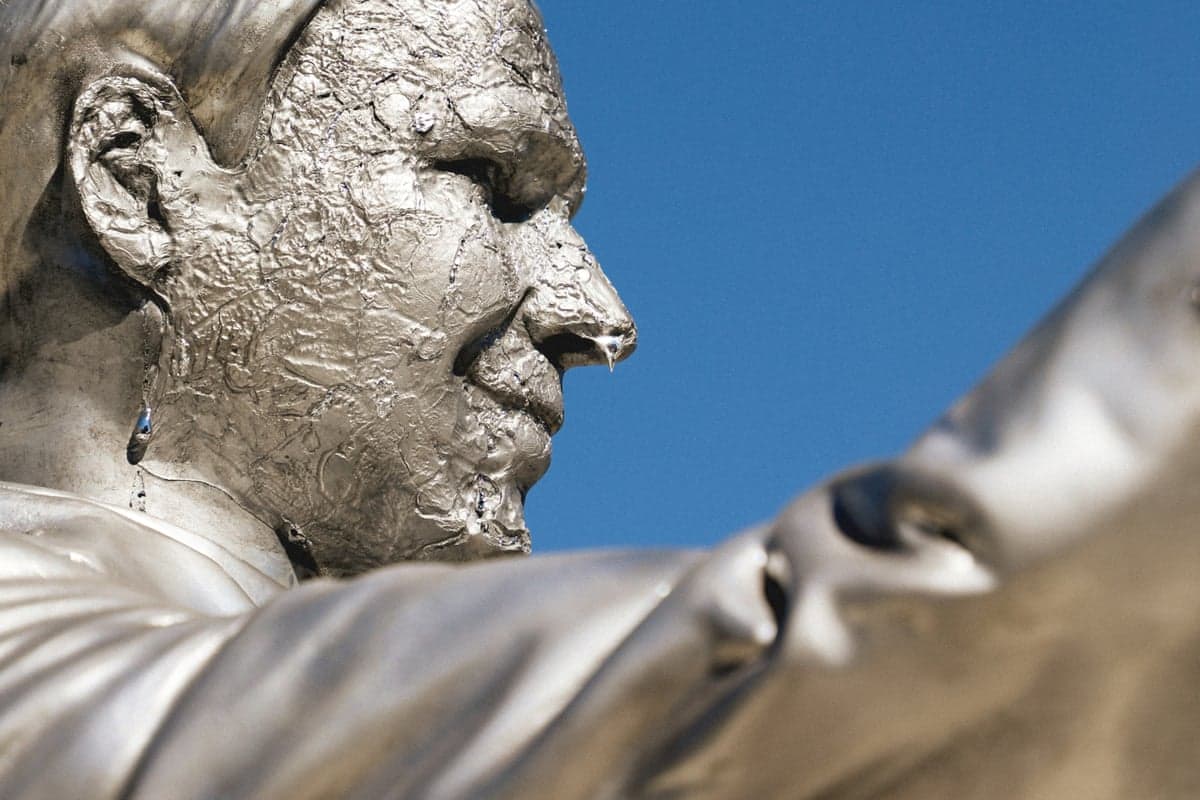
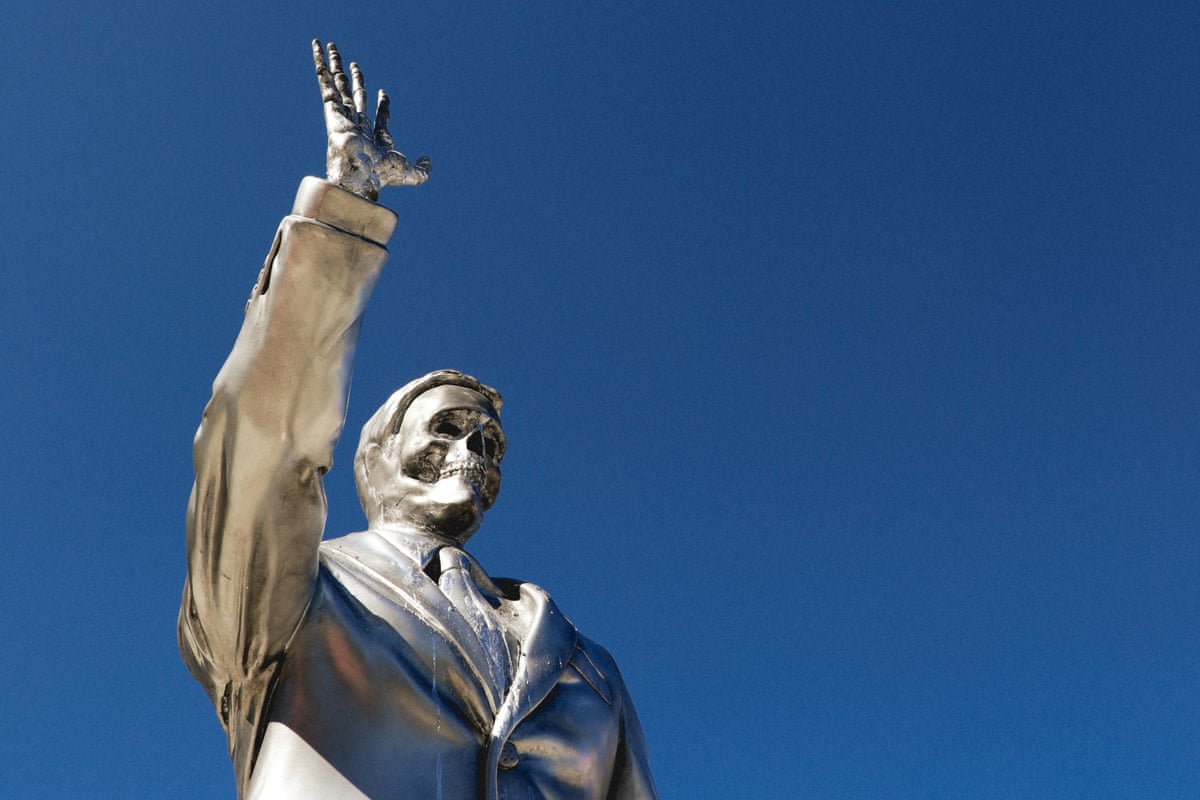
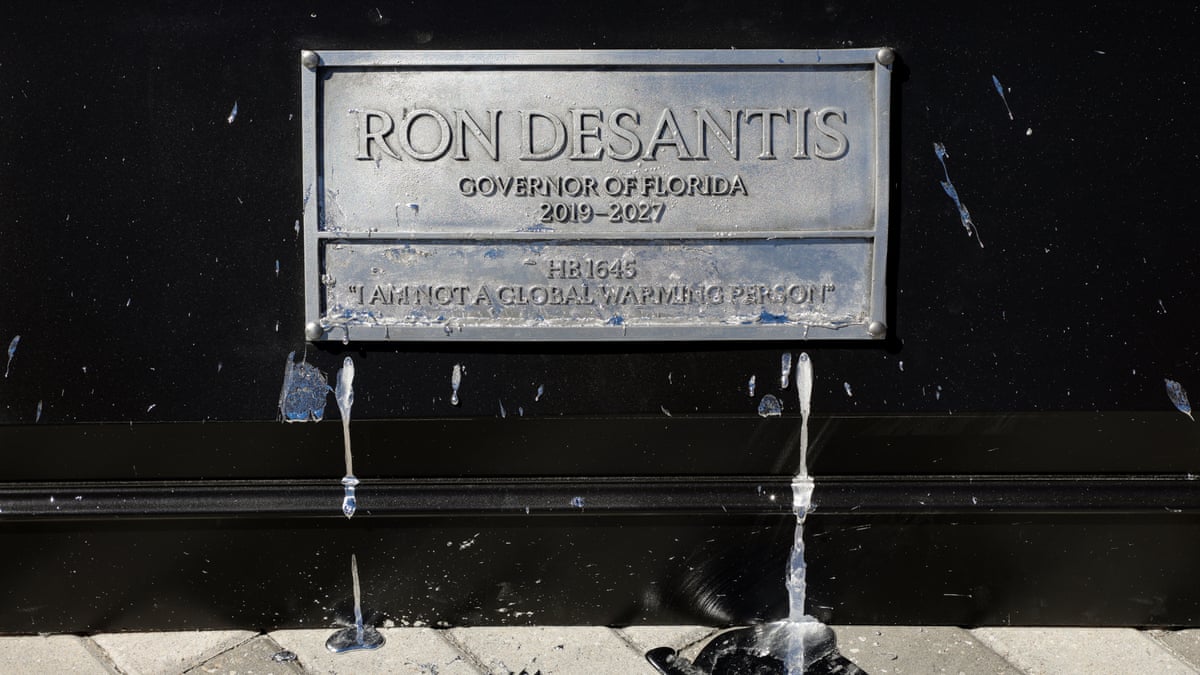
Environmental activists unveiled a life-sized statue of Ron DeSantis in Tallahassee last week that melted away during its public display, transforming into a skull beneath the governor's face as a stark commentary on his record of blocking climate action. The silvery sculpture, constructed from solid gallium—a metal with a melting point of 85.6 degrees Fahrenheit (29.8 degrees Celsius)—was designed to dissolve in Florida's typical summer heat, symbolizing what campaigners view as DeSantis's eight-year tenure of inaction on the climate crisis as the state faces mounting environmental threats.
According to The Guardian, the protest was organized by 350Action, an environmental advocacy group, alongside advertising agency Uncommon. The installation, titled "DENIAL," served as a visual rebuke to the Republican governor's consistent opposition to climate legislation and his dismissal of environmental concerns as a "radical climate agenda."
Throughout his governorship, DeSantis has actively worked to suppress climate-related discourse and policy across Florida. Florida's 2024 energy law, HB 1645, removed more than 50 lines of climate-related provisions from state statutes and redirected energy policy toward what the administration framed as reliable, cost-effective supply and economic growth. The law also bans offshore wind facilities and turbines near Florida's coast, while removing state requirements to prioritize fuel efficiency and climate-friendly purchasing.
How has DeSantis restricted climate discussion?
The governor has implemented policies that extend far beyond energy legislation. State regulations have systematically eliminated references to climate change from educational curricula, preventing classroom instruction on the subject. Additionally, a state law has restricted the ability of Florida agencies to even acknowledge the existence of a climate crisis, effectively erasing the terminology from official discourse.
In 2018, DeSantis made his personal stance explicit, stating: "I am not a global warming person, I don't want that label on me." More recently, when defending his environmental approach on social media, he declared: "We're restoring sanity in our approach to energy and rejecting the agenda of the radical green zealots."
Why is climate action urgent for Florida?
Florida faces exceptional vulnerability to climate-related disasters. Southern portions of the state experience chronic saltwater intrusion that threatens freshwater supplies and agricultural productivity. Across the entire state, increasingly severe hurricanes—intensified by rising ocean and atmospheric temperatures—have inflicted escalating damage to homes and businesses. The financial toll has become so substantial that multiple major insurance companies have withdrawn from the Florida market entirely, leaving residents with limited coverage options.
What is the political outlook for climate policy in Florida?
The state's approach to the climate crisis is unlikely to shift in the near term. Florida has solidified its position as a Republican stronghold, and Byron Donalds, the GOP candidate for governor, is heavily favored to win the upcoming election. While Donalds has stated he wants to maintain Florida's environment, he has incorrectly disputed the scientific consensus linking climate change to human activities—a position contradicted by overwhelming evidence that fossil fuel combustion is driving global temperature increases.
Candice Fortin, campaign manager at 350Action, emphasized the stakes of the election: "The climate crisis is one of the top issues facing our planet today. And yet, some candidates running for office still deny it's happening, and deny the bold climate action that the people want. That's why it's more important than ever to deny them back at the ballot box. If everyone who cares about people and our planet makes their voices heard on election day, we'll be too loud to deny."
When will Florida voters decide?
Florida's general election for governor is scheduled for November 3, 2026, with early voting statewide beginning October 24. The election will determine whether the state continues its current trajectory on environmental policy or shifts toward greater climate action.