
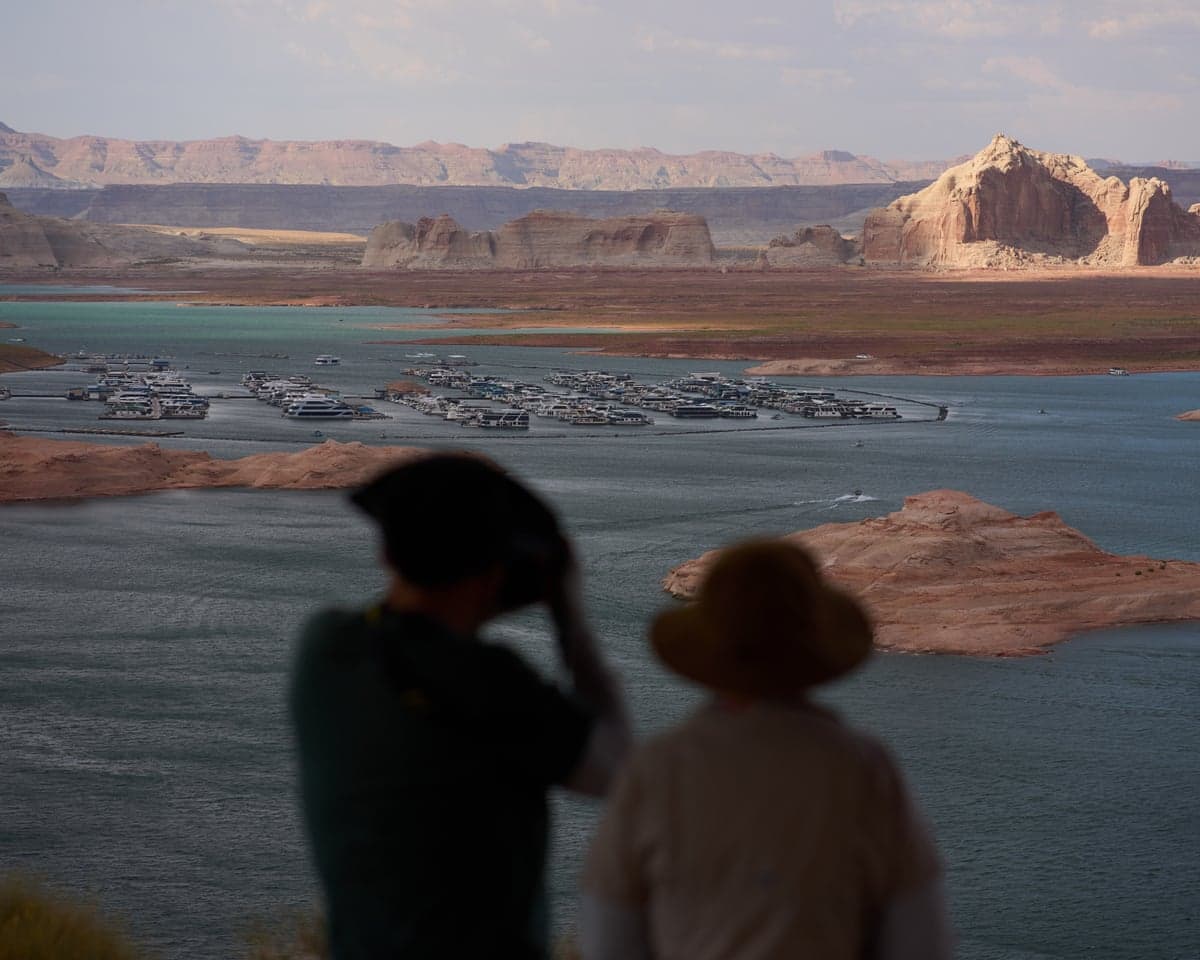
After years of contentious negotiations and repeated missed deadlines, the federal government has unveiled a framework to manage the future of the Colorado River—though experts warn it amounts to a stopgap rather than a lasting solution to the deepening crisis.
On Friday, the US Bureau of Reclamation released its proposal for governing the river through 2036. The 10-year blueprint establishes parameters for operating guidelines that will be revised every two years, with the preferred approach being an adaptive decision framework rather than a fixed operating plan. The previous framework was set to expire in October 2026, making the announcement urgent.
Under the new federal framework, California, Arizona and Nevada could collectively lose up to 3 million acre-feet of water annually—roughly 40% of their combined supply. One acre-foot, a unit denoting the volume of water covering a football field one foot deep, equals approximately 326,000 gallons (1.2 million liters), enough to supply roughly three families for a year.
The lower-basin states face a mandatory reduction of 1.25 million acre-feet in 2027 and 2028, with the possibility of larger cuts depending on hydrological conditions. The document does not specify how those reductions will be distributed among the three states, though a proposed sharing agreement would assign Arizona 760,000 acre-feet, California 440,000 acre-feet and Nevada 50,000 acre-feet.
Why experts say the plan falls short
Rather than resolving the water crisis unfolding across the American West, the new rules represent a temporary measure designed to protect critical infrastructure while allowing the seven basin states more time to reach their own agreement.
"This just kicks the can down the road,"said Noah Garrison, a water researcher at UCLA's Institute of the Environment and Sustainability.
"There is a potential for extremely serious consequences if we don't address this. We're putting the water supply for 40 million people at risk."
Hydrologists calculate that more than 3 million acre-feet of cuts—an amount exceeding a quarter of the basin's annual average flow—are needed to restore balance. In exceptionally dry years like the current one, even that magnitude may prove insufficient.
"In order to best protect the system, there needs to be pretty significant shortages,"said Dr John Berggren, regional policy manager at Western Resource Advocates.
"We're going to have to do more."

How did the Colorado River reach this crisis?
The conflict over the Colorado River spans more than a century. A water compact signed in 1922 divided resources equally between the upper-basin states (Colorado, New Mexico, Utah and Wyoming) and the lower-basin states (California, Arizona and Nevada), awarding each region rights to 7.5 million acre-feet annually. That agreement, however, allocated more water than the river typically carries.
Since 2020, the Colorado's flows have averaged just over 10 million acre-feet per year, creating a massive gap between allocated rights and available supply. Average flows have dropped 32% since 2020 compared with the previous century, driven by warming temperatures, reduced snowmelt and increased evaporation from soil and vegetation.
The Colorado River is one of North America's largest waterways, stretching 1,450 miles (2,300 kilometers) from the Rocky Mountains into Mexico. It supplies roughly 40 million people across seven states, dozens of Indigenous tribes and two countries, while irrigating 5.5 million acres (2.23 million hectares) of farmland. Its waters built major cities including Los Angeles, Phoenix and Las Vegas, and fuel an estimated $1.4 trillion in economic activity. Large dams on its two main reservoirs—Lake Mead and Lake Powell—generate hydroelectric power for millions, and the basin provides critical habitat for more than 150 threatened or endangered species.
What triggered the immediate crisis?
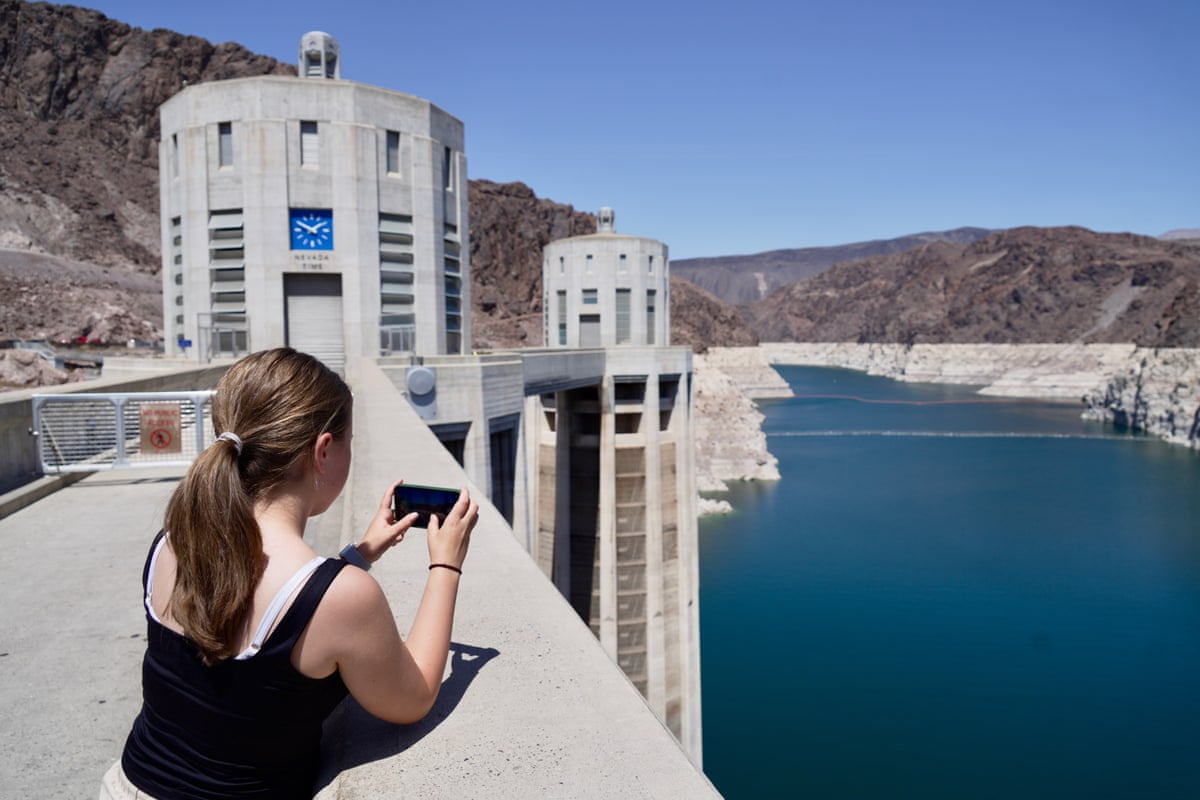
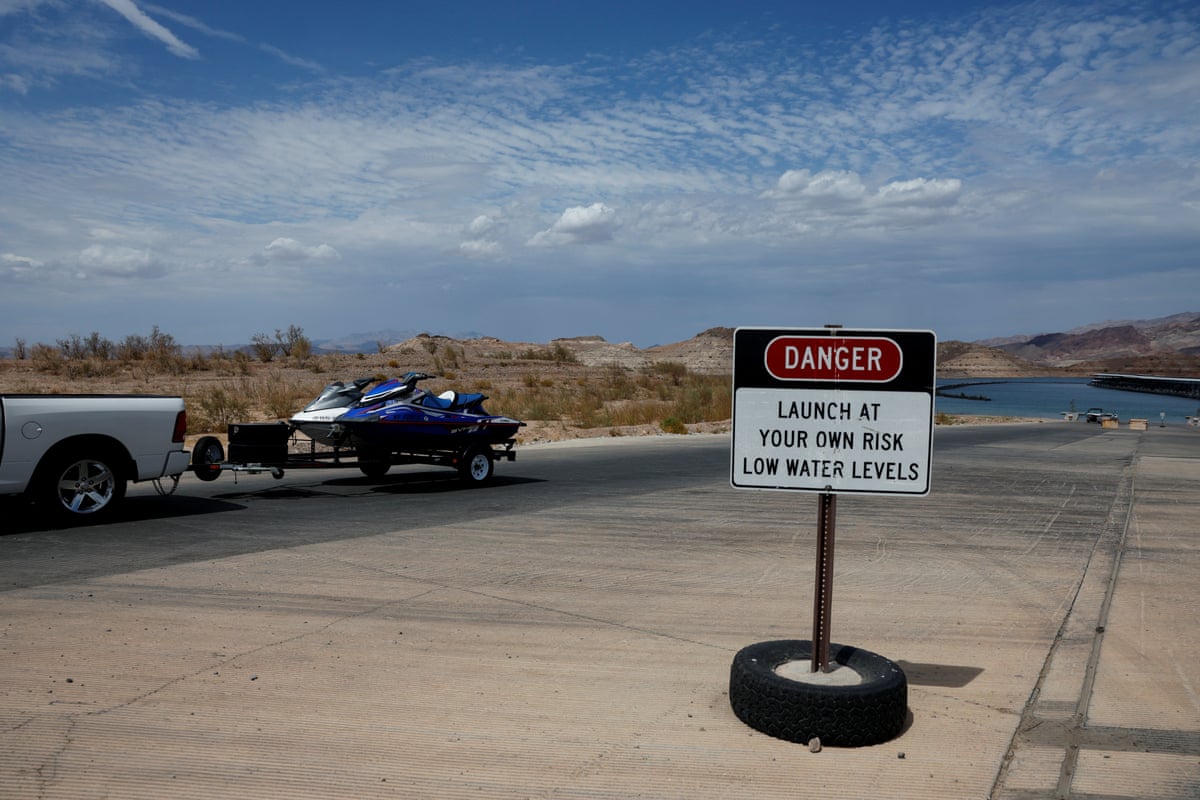
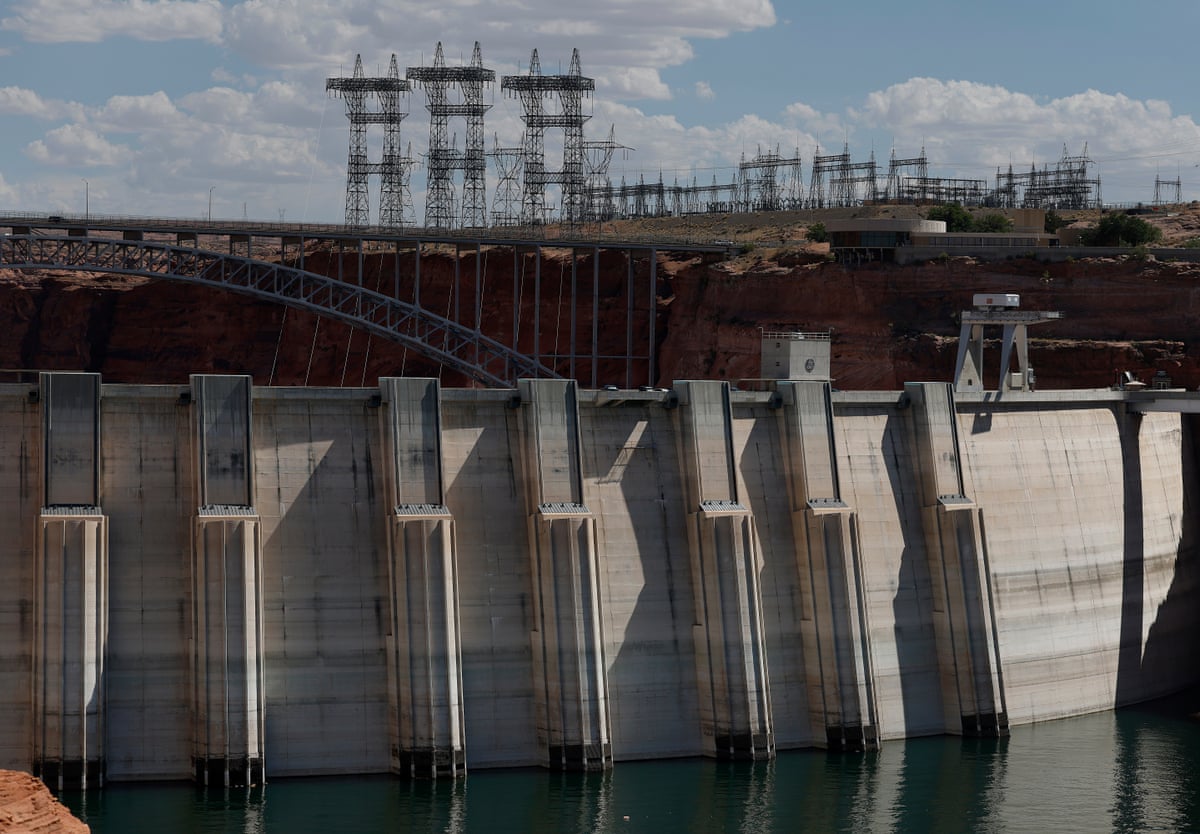
The crisis intensified dramatically in 2026 following a devastating snow drought and an extreme spring heatwave. At the start of summer, water levels at Lake Powell hovered just 37 feet above the elevation where Glen Canyon Dam would lose its ability to generate hydroelectric power relied upon by nearly 6 million households and businesses. If reservoir levels fell further, gravity would cease carrying water downstream—a scenario known as "deadpool" that would be catastrophic for the region.
Reservoir levels typically peak in early summer, leaving months before new snowmelt arrives—assuming snow falls at all.
"If we have another mediocre year of runoff – not an excessively low year, just a mediocre year – we'd go over the cliff,"said Dr Jack Schmidt, director of the Center for Colorado River Studies at Utah State University.
"Even if we had the ultimate gangbuster year, we would still not get out of the crisis we're in."
More than 70% of Colorado River water supports agriculture, including water-intensive crops such as alfalfa and hay for livestock, as well as the bulk of winter lettuce and leafy greens grown in the United States. Water shortages therefore threaten both food production and rural economies across the region.
Will climate patterns provide relief?
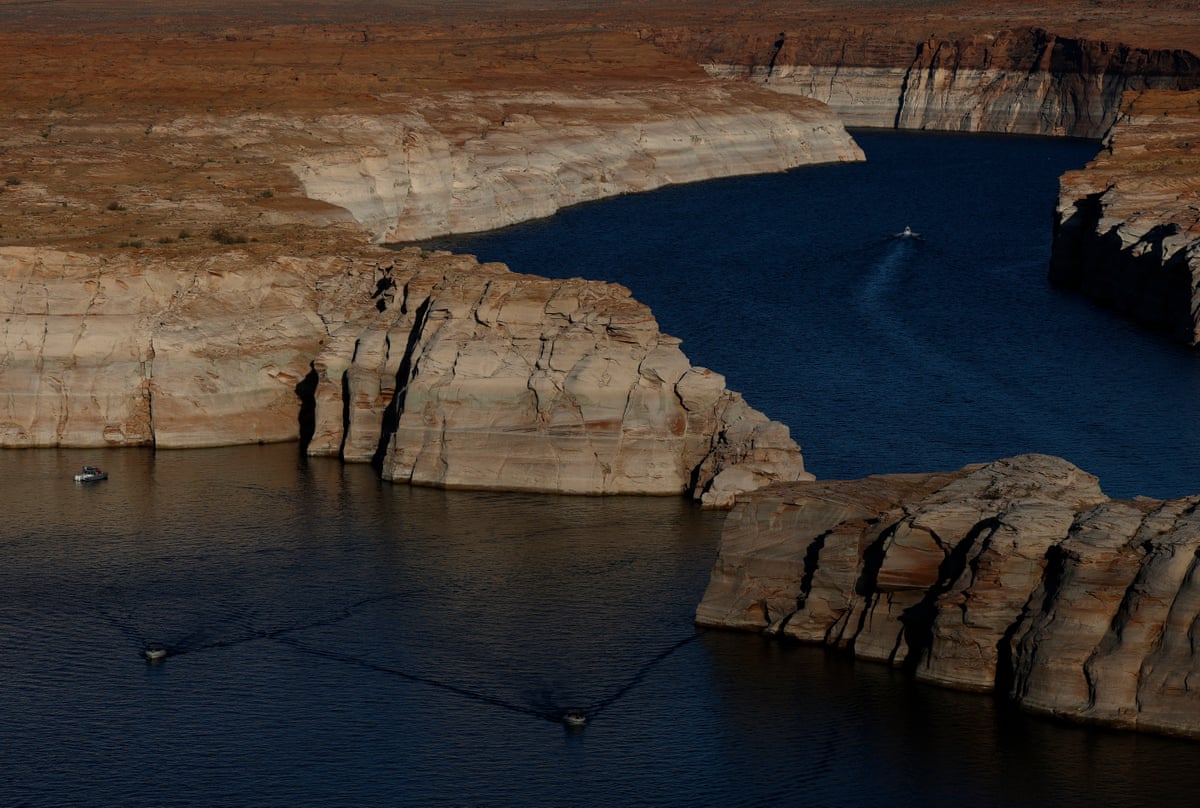
Some have suggested that El Niño, a climate phenomenon that models indicate could strengthen this winter with increased precipitation, might ease the crisis. However, historical data offers little reassurance.
"El Niño is not gonna save our bacon here,"said Brad Udall, a senior water and climate research scientist at the University of Colorado.
"If we had a decent winter, it would only buy us a little time. But arguably, that could confuse the nature of the serious steps we'd still need to take."

A century of records shows no strong correlation between El Niño's intensity and Colorado River water supplies, meaning wet conditions do not guarantee robust flows into the reservoirs.
How does the federal plan attempt to encourage conservation?
The framework attempts to incentivize water savings through a storage credit system. Rather than forfeiting conserved water, users can store large amounts in federal reservoirs for future use and receive credits. While the plan does not mandate cuts to the upper-basin states, it includes voluntary conservation and storage of at least 700,000 additional acre-feet over the two-year period. The federal government is using this mechanism to encourage up to 200,000 acre-feet of water savings from Colorado, Utah, Wyoming and New Mexico.
Additionally, the Bureau of Reclamation announced in mid-August its intention to move up to about 2.48 million acre-feet of water to Lake Powell by shifting water from Flaming Gorge Reservoir and reducing Lake Powell releases, a maneuver designed to stabilize the critical reservoir.
What are the states saying?
State officials remain divided over the proposal.
"This is a bridge, not a permanent solution,"said JB Hamby, chair of the Colorado River Board of California and Colorado River commissioner for California.
"Three states cannot carry the responsibility of all seven."He stated that the next two years provide an opportunity to reach an agreement that
"spread that responsibility fairly across the basin."
Others expressed sharper criticism.
"We need to plan for our future. And this deal does not let us do that,"said Bill Hasencamp, the Southern California Metropolitan Water District's manager of Colorado River resources.
Representatives from states facing the harshest cuts pushed back immediately. Arizona Governor Katie Hobbs stated that some federal options were unacceptable. Nevada Governor Joe Lombardo promised to fight
"any outcome that imposes unreasonable impacts"to his constituents. Arizona officials further warned in mid-August that they identified legal issues in the federal proposal, underscoring state opposition to the plan.
The upper-basin states—Colorado, New Mexico, Utah and Wyoming—have historically resisted mandatory cuts to their allocation, insisting that the lower-basin states bear responsibility for drawing down the reservoirs. The lower-basin states have already accepted substantial reductions but demand their northern neighbors share the burden.
What is the threat of litigation?
The specter of lawsuits looms over negotiations.
"Some states in this basin are preparing to sue their sister states,"said Amy Haas, executive director of the Colorado River Authority of Utah, in a Senate committee hearing. She cited states
"hiring high-dollar firms"and setting aside litigation funds, warning that lawsuits could tie up decisions for decades.
Legal disputes would likely center on whether the upper basin can be held responsible for supply losses due to climate change. An interstate water law conflict would go directly to the US Supreme Court.
"By this September or October, there's going to be a pretty compelling argument from the lower basin that the upper basin hasn't met its delivery obligation,"said Rhett Larson, a professor of water law at Arizona State University.
Stakeholders agree that allowing courts to decide through prolonged legal battles would be catastrophic for all parties. In a region where water has historically been both a source of survival and conflict, the challenges hindering consensus are as formidable as the stakes are high.
What comes next?
The federal government finalized Colorado River operations through 2028 on August 21, 2026, including the Lower Basin delivery cuts and the 10-year plan. The Interior Department is expected to announce the two-year operations plan for the 2027 water year later in August 2026. The operating framework is designed to keep basin parties negotiating toward consensus agreements that could later be incorporated into future operations. The next formal update to operating guidelines follows the 2027-2028 period.
With no resolution to the crisis in sight, experts agree the federal plan represents a starting point rather than the final answer.
"We are going to have to at some point agree on reductions in supply across the seven basin states, and we have absolutely not been able to do that,"Garrison said.
"But even more, we need to look at ways to maximize water supply, and that's going to require a host of solutions."
He pointed to expanding recycled water use and establishing new price signals for growers consuming large quantities as potential approaches.
"Otherwise, in two years, we're going to be right back where we started – if not sooner."
Key Facts
- The Colorado River supplies approximately 40 million people across seven states, two countries and dozens of Indigenous tribes, while supporting $1.4 trillion in annual economic activity.
- The 1922 water compact allocated 7.5 million acre-feet to each basin region, but since 2020 the river has averaged just over 10 million acre-feet annually, creating a structural deficit.
- More than 3 million acre-feet of cuts are required to restore the basin to balance, yet the federal plan mandates only 1.25 million acre-feet in mandatory reductions for 2027-2028.
- Lake Powell water levels dropped to within 37 feet of the elevation where Glen Canyon Dam would cease generating hydroelectric power for nearly 6 million households and businesses.
- The federal framework updates operating guidelines every two years rather than establishing a permanent solution, keeping states in ongoing negotiations.


