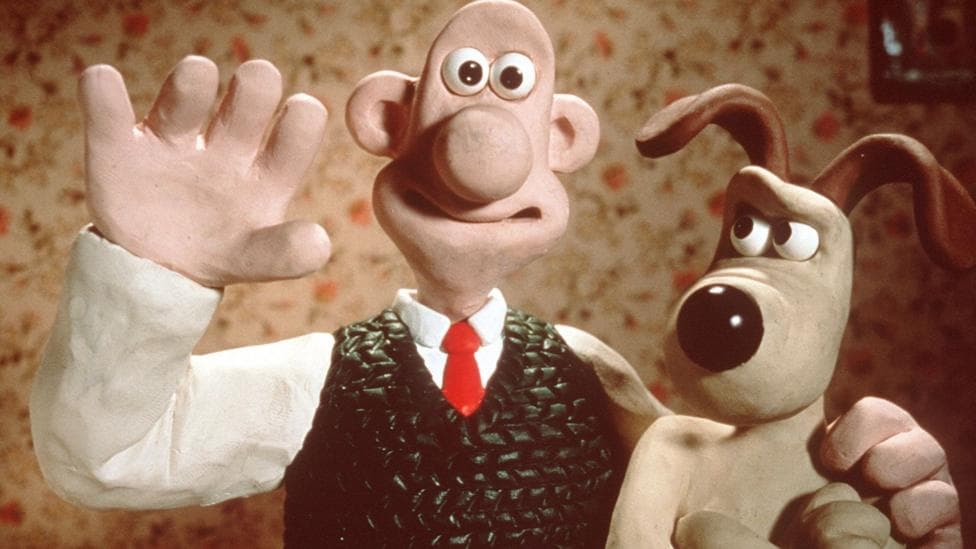
Wallace and his expressive but speechless dog Gromit first appeared on screens in 1989, launching what would become one of animation's most beloved partnerships. Yet the character that defined a generation almost never existed in the form audiences came to know and love.
As Aardman Animations marks five decades since its founding, the studio's creators have revealed the surprising creative decisions, fortunate accidents and practical compromises that shaped Bristol's most celebrated animation house into an Oscar-winning powerhouse.
Sir Peter Lord and Sir David Sproxton established Aardman in 1976 as school friends experimenting with plasticine and a camera. The studio has since produced Morph, Wallace and Gromit, Shaun the Sheep and Chicken Run—the world's most successful stop-motion film. Yet the path from two teenagers playing with modelling clay to international animation leaders has repeatedly hinged on chance and creative instinct.
Why Gromit Was Almost a Feline
The decision to make Gromit a dog rather than a cat came down to practical difficulty. Animator Nick Park, who joined Aardman in 1985, was developing A Grand Day Out at the National Film and Television School in London when he conceived the character.
"I had this idea of an English guy who builds a rocket, in the basement of his house," recalled Park. "I was thinking he may have a pet, probably a cat."
The shift happened almost by accident.
"I started modelling the cat, and it was just very difficult, so I thought I'd do a dog instead!"Park's pragmatic choice proved inspired. When Lord and Sproxton visited the film school to speak with students, they recognised Park's talent immediately.
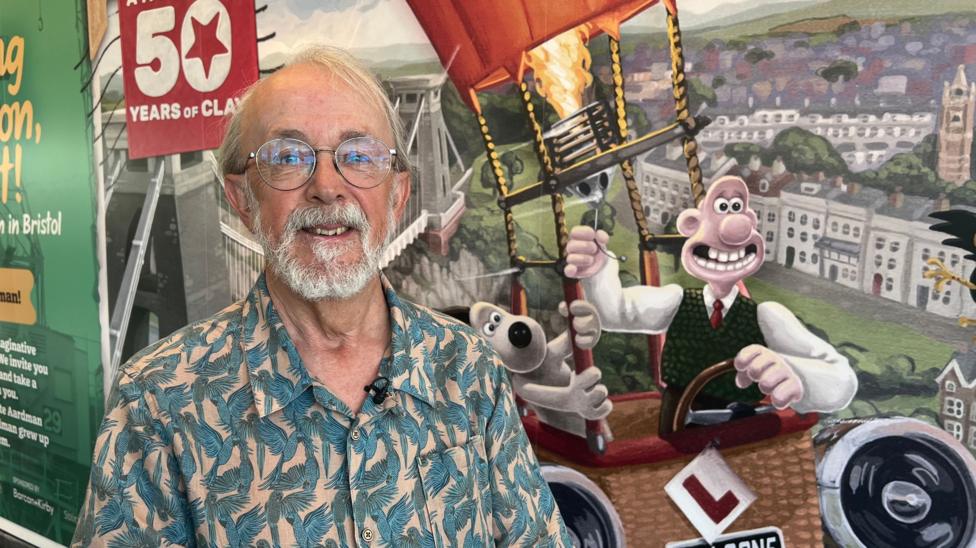
"We met him and thought, 'Oh, he's good'. In fact, he's very good. Now I know him, he's actually a genius,"said Lord. The partnership proved electric. A Grand Day Out earned an Oscar nomination in 1990, losing only to another Aardman production, Creature Comforts, also directed by Park.
Lord reflected on the characters' enduring appeal by pointing to a poster of Wallace and Gromit floating over Bristol in a hot-air balloon.
"When they appear on the screen, you laugh before they do anything."Park would go on to win three additional Oscars, cementing his status as one of animation's greatest talents. Perhaps it was fortunate he never mastered the art of animating Gromit the Cat.
How Chicken Run Changed the Academy Awards
By the mid-1990s, Wallace and Gromit had established Aardman as one of animation's most talked-about names. That success led to an unlikely meeting with Steven Spielberg and DreamWorks chief executive Jeffrey Katzenberg.
"We want to do The Great Escape,"Lord told Spielberg at dinner.
"I had always been a fan of Aardman,"Katzenberg said.
"And I had this secret ambition that someday there would be a way to work together."
Park remembered Spielberg's enthusiastic response.
"Spielberg said, 'The Great Escape is one of my favourite films, and I have 300 chickens on my ranch!' So it went very well."No-one had previously attempted a 90-minute stop-motion feature made entirely from modelling clay. The budget exceeded £20 million, and Aardman insisted every frame would be shot in Bristol.
The gamble succeeded spectacularly. Chicken Run earned more than $220 million (£165 million) worldwide and remains the highest-grossing stop-motion film ever made. Yet the film's success had an unexpected consequence for the Academy Awards.
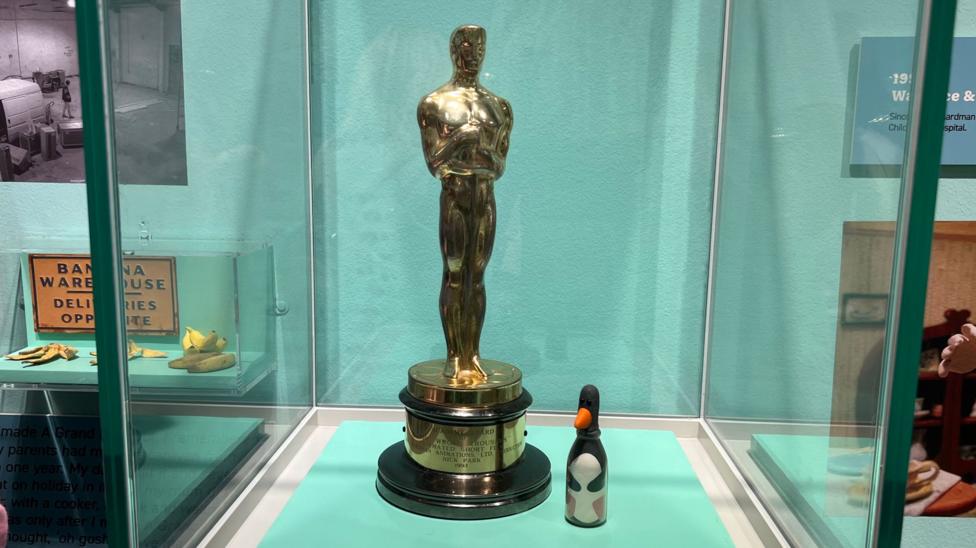
At the time, no Academy Award existed for animated features. The Wrong Trousers had won an Oscar in 1994, but Chicken Run could not compete in that category because it exceeded the length restrictions.
"And so because they couldn't give Chicken Run a little golden man, they invented the category,"said film critic Ali Plumb. The Academy introduced the Best Animated Feature Oscar the following year.
"And a couple of years later, Wallace and Gromit won that Oscar for 'The Curse of the Were-Rabbit', so they got their own reward,"Plumb added.
Shaun the Sheep Nearly Got a Voice
If Chicken Run proved Aardman could conquer Hollywood, another character would go on to achieve global dominance. Shaun first appeared in the Wallace and Gromit film A Close Shave in 1995 and has become one of the studio's biggest international stars.

Like all the other animals in Aardman productions, Shaun expresses himself through bleats, grunts and highly expressive facial movements rather than spoken dialogue.
"The beauty of Shaun is it transcends borders and cultures because it doesn't rely on the spoken word,"said Aardman's Managing Director Sean Clarke.
"You can literally see Shaun the Sheep here in Bristol and in Outer Mongolia."
Yet studio executives repeatedly urged Aardman to add a voice to the character.
"When we launched the Shaun the Sheep series, we were told to add voices,"Clarke remembered. The same pressure returned when Shaun received his own feature film in 2015.
"They said, 'You can't do 80 minutes without any dialogue'."
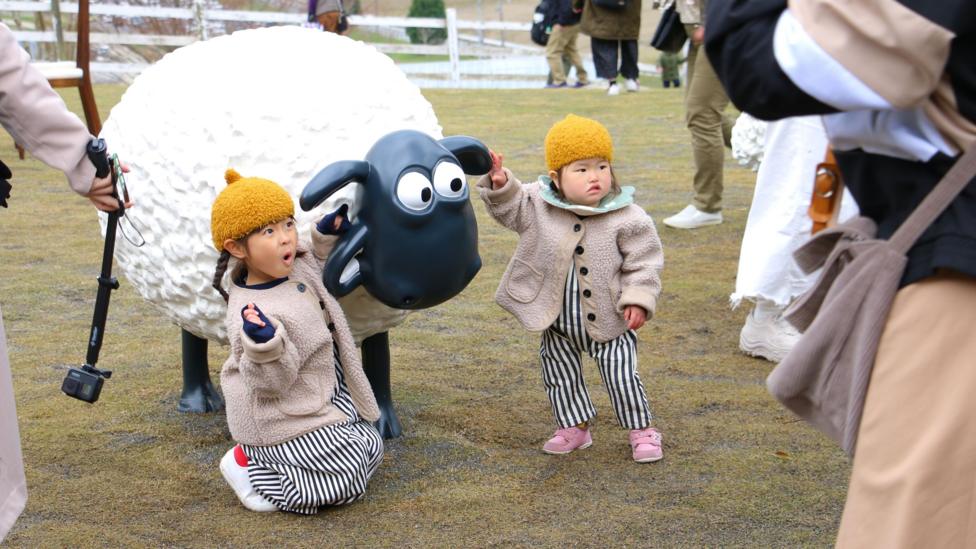
"But we stuck to our convictions, and I think it is now one of our most revered films."Lord insists the decision to keep Shaun silent was not motivated by international sales calculations but simply
"seemed better that way."The character's global appeal has proven undeniable nonetheless. Clarke noted that Shaun has been sold into 170 countries and enjoys particular popularity across Asia.
"Shaun is actually our most valuable character now. Wallace and Gromit built the house, but Shaun keeps the lights on."
From a Joke to a Studio Name
The journey from two teenagers experimenting with their father's camera to running an international animation studio began almost by accident. Lord and Sproxton started while still at school,
"playing with Dad's cine camera,"as Sproxton remembered.
Their first character was a self-styled superhero with a cape and an unfortunate habit of falling down holes. They named him
"Aard Man"as a deliberate joke.
"We just thought 'Aardvark' was a silly word, so we combined it with 'Superman',"Sproxton explained. To their surprise, the BBC Bristol television programme Vision On purchased their short cartoon.
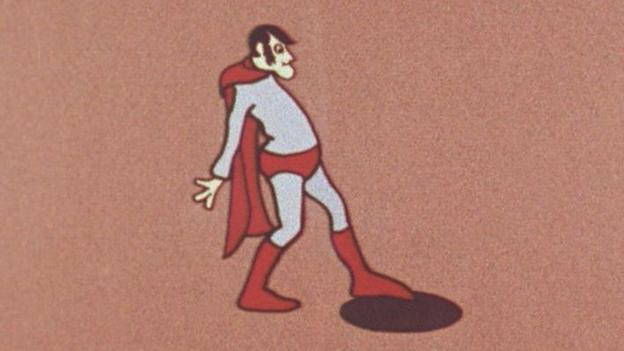
"They asked us who to make the cheque out to,"recalled Lord with a fond smile. And so Aardman Animations was officially born, named after a character created as a joke by two schoolboys.
Morph: The Character Born From Budget Constraints
If that cheque gave them a company name, their next creation gave them their first star. Lord and Sproxton relocated to Bristol to work on Take Hart, the successor programme to Vision On. On this show they made what Lord called
"a leap into the third dimension."
"Plasticine was cheap,"Lord explained.
"The budgets were low, and you can work quickly with it."He fashioned Morph, a simple terracotta-brown figure capable of transforming into any shape imaginable—hence the name.
"It was just so easy to squash him up and reform him as a dog, or a submarine, or a bird or anything,"Lord said.
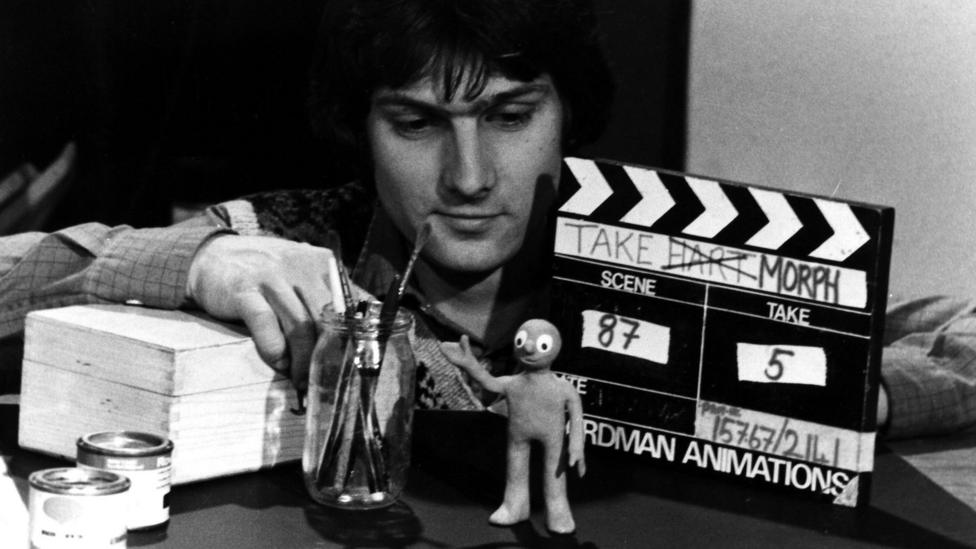
Morph became a hit with both children and adults, and remains a fixture at Aardman's Bristol headquarters. In 1989, Lord told a BBC West documentary called The Animators that he
"hoped Morph will still be around in 30 years or so, and still be loved."It has now been 37 years since he made that prediction, and Morph remains beloved by audiences worldwide.
An Aardman exhibition at Bristol's M Shed Museum, running until 13 September 2026, was recently packed with Morph superfans. Lord, now the studio's creative director, still comes into the office and playfully reshapes Morph while chatting with colleagues. When asked what Wallace would make of the studio's five-decade journey, he smiled and replied,
"Oh, he'd probably just say 'Cracking careers lads!'"
Celebrating Five Decades of Animation Magic
Aardman's 50th anniversary is being marked with a series of major celebrations across Bristol and beyond. According to Aardman's official announcement, an immersive exhibition called Larger Than Life: Starring Wallace & Gromit, Shaun and More is scheduled to open on 14 October 2026, offering fans an unprecedented look at the studio's most iconic characters.
The Royal Mint has also joined the celebrations. A commemorative Aardman 50p coin was launched on 9 June 2026, featuring a recycled-gold version. Visitors have the opportunity to strike their own coin from 3 August to 5 October 2026.
Bristol Museums and Aardman have partnered on a major exhibition called Cracking Exhibition, Gromit! 50 Years of Aardman in Bristol, with hidden Aardman treasures placed across Bristol Museum & Art Gallery. The M Shed exhibition runs until 13 September 2026, while the Bristol Museum & Art Gallery mini-museum hunt runs until the same date.
In February 2026, Aardman launched a fan-voted "Clay Offs" tournament to determine audiences' favourite character. The final is scheduled for 23 October 2026, with the winner revealed on 30 October 2026.
What Happens Next
The anniversary celebrations will continue through October 2026. The Larger Than Life exhibition opens on 14 October, offering an immersive experience of Aardman's most celebrated creations. The Royal Mint's coin-striking opportunity concludes on 5 October, while the Clay Offs tournament reaches its climax on 23 October with the winner announcement on 30 October. The M Shed and Bristol Museum & Art Gallery exhibitions remain open until 13 September 2026, providing extended opportunities for fans to explore the studio's five-decade legacy.
Key Facts
- Aardman Animations was founded in 1976 by school friends Sir Peter Lord and Sir David Sproxton, initially named after a joke superhero character called "Aard Man"
- Gromit was almost animated as a cat but became a dog due to practical modelling difficulties faced by animator Nick Park
- Chicken Run's commercial success ($220 million worldwide) led directly to the creation of the Academy Award for Best Animated Feature in 1999
- Shaun the Sheep, which has no spoken dialogue, has been sold into 170 countries and is now Aardman's most valuable character globally
- Multiple 50th-anniversary celebrations are running through October 2026, including exhibitions, a commemorative Royal Mint coin, and a fan-voted character tournament