Tidying expert Dilly Carter began her career while working as a personal assistant.
Decluttering is Dilly Carter's passion.
The tidying specialist from BBC One's Sort Your Life Out once assisted an ex-boyfriend in clearing and organizing his late mother's home.
"It was a way that I could help him," Carter says. "And in doing that, we ended up getting back together." They are now married.
Raised in a chaotic household with two working parents, she discovered early on that she preferred tidiness and organization.
Carter worked as a PA for business executives and, beyond managing their diaries, began ensuring their homes were orderly as well.
Tidying expert Dilly Carter discusses with celebrity guests their favorite objects at home and the significance of these items.
In her new BBC video podcast, Sort Your Life Out Unpacked, she interviews well-known personalities such as Sophie Ellis-Bextor and Lorraine Kelly about their cherished possessions and offers advice on maintaining clutter-free homes.
I asked Carter to identify the four most common cluttering mistakes and how to address them.
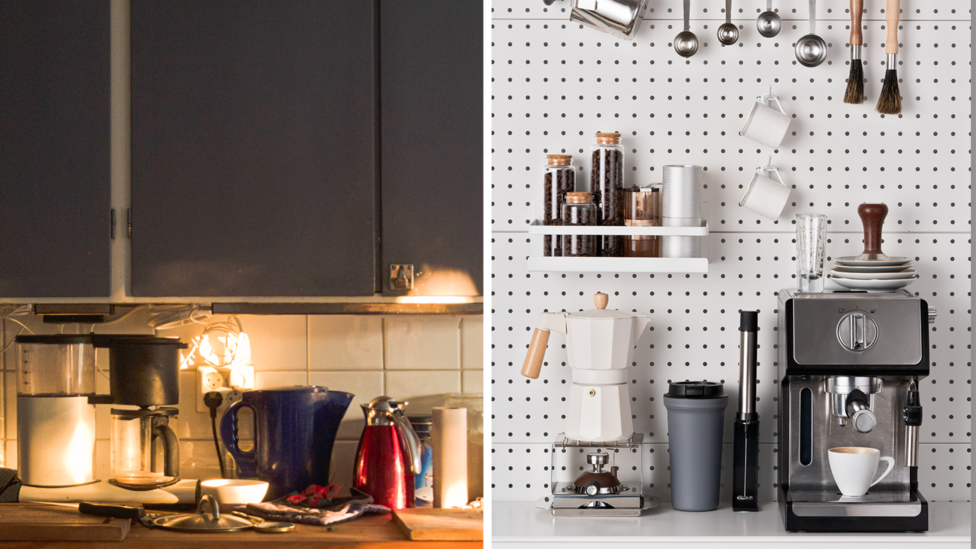
Kitchen counters are 'prime real estate'
Bread makers, air fryers, blenders, juicers, mandoline slicers with cut-resistant gloves and hand guards—the variety of kitchen appliances designed to enhance cooking and save time is vast.
However, these items require storage space, often ending up on kitchen countertops, which can become increasingly cramped due to such clutter.
"I like to think of kitchens as real estate," says Carter. "Everything in your kitchen has to earn its place in there."
She frequently observes kitchens where rarely used gadgets occupy "prime real estate"; these items could be stored in drawers, cupboards, or even the loft if they are seldom used.
"Go through your kitchen regularly and check what you need, see what you use regularly and [what] you don't."
Another recommendation is to avoid purchasing excessive kitchen appliances initially, but if you do, ensure they are multi-functional.
For instance, blenders are more versatile than juicers. If you want juice instead of a smoothie, you can extract liquid from blended fruit and vegetable pulp using a sieve or cheesecloth—eliminating the need for a single-purpose gadget.
Too many clothes, not enough drawers
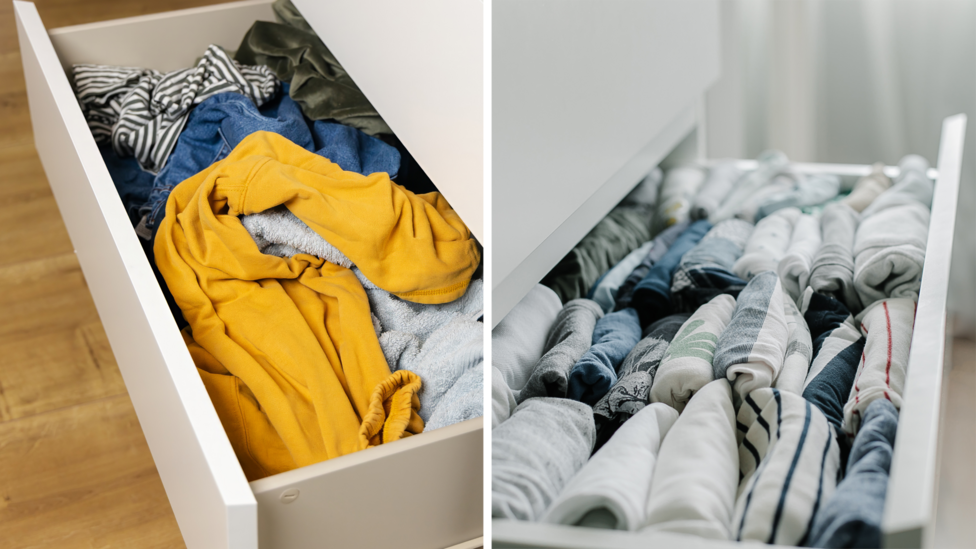
Rolling T-shirts is an efficient method to fit them into a drawer, but it limits visibility when selecting an outfit.
File folding, where clothes are stored on their side rather than stacked, allows you to see the color of each T-shirt, even if the design is not visible.
"We only roll or fold when we're trying to maximise the space of a drawer," says Carter, cautioning about which clothes to file fold.

She advises considering the age and material of shirts, blouses, and T-shirts before deciding on storage methods.
"I would say that your shirts (and blouses) definitely need to be hung, but your T-shirts definitely can be file folded."
One big box for toys won't help you
For families with young children, toys scattered across the floor are a common hazard.
For convenience, you might store all toys in one large box in a room corner, but Carter advises against this.
"When your child is trying to look for that one toy, how are they going to find that toy? They're not going to find it easily because they have to chuck out everything else [in the box] to find it," she explains.
"And then you're going to be stressed because all the other toys are now all over the place."
She suggests using several smaller, categorized toy boxes throughout the home.
These help children locate toys more quickly and reduce the mess for parents to clean up.
"Whether it's cardboard boxes, baskets, clear containers - it has to be a system that makes sense for you and so that your children can find their toy."

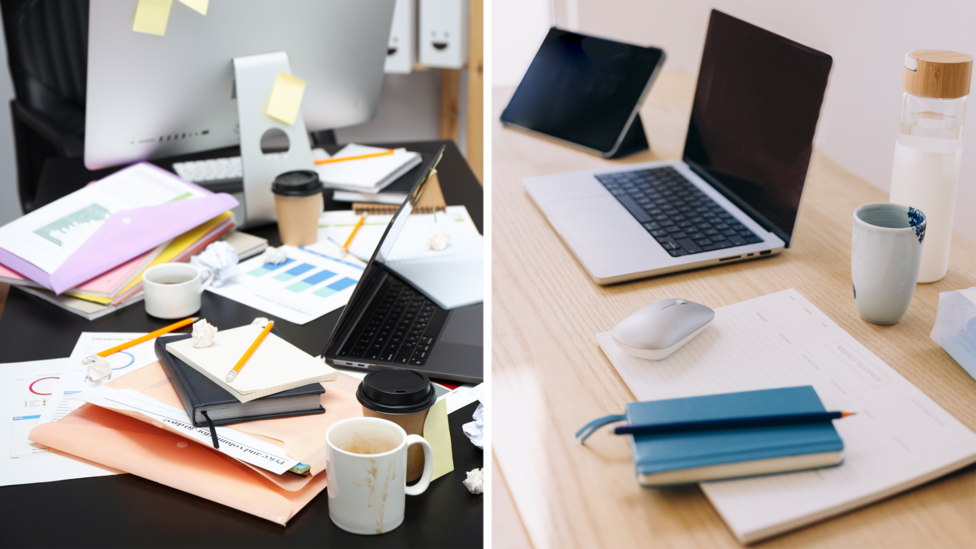
Don't let paperwork piles get overwhelming
Another challenge in maintaining a tidy home is managing paperwork related to household responsibilities—utility bills, council tax, TV licenses, and other payments.
Unlike the toy situation, Carter believes keeping all paperwork together in one place is beneficial as it simplifies mental management.
"For a lot of people, paperwork [is something] negative... it's bills, it's invoices, it's things you have to do," she explains.
"So when it's spread across the house - it's on the kitchen counter, it's on the side table, it's in your bedroom, it's in your handbag - [it feels] like 15 different piles of things that you have to deal with."
Collecting all paperwork in one location makes it feel less intrusive.
"It feels like, OK, well, I've only got this one box of paperwork to deal with now - so I'm going to sit and just go through it. It makes it much easier."
For Carter, the mental benefits of an organized and tidy home are evident.
She reflects on the consequences of neglecting tidiness:
"Well, all clutter does is look back at us - doesn't it?"
- How we decluttered our home and you can too
- How Stacey Solomon decluttered our homes back from the brink
- Why now is time to declutter and four ways to get started