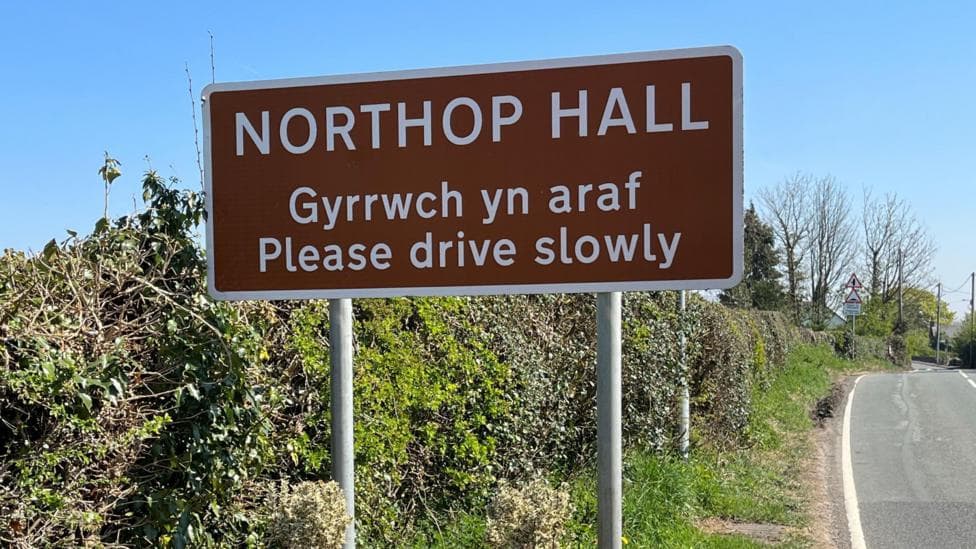
A Flintshire village has formally adopted its historic Welsh name Pentre Moch—meaning Pigs Village—as its primary Welsh designation, following approval by the local council. The name, which dates back to at least the 17th century, refers to the pig farm around which the settlement of Northop Hall developed. The English name will remain in use, but Pentre Moch will now appear on Ordnance Survey maps, Royal Mail records, and property documents.
According to local Welsh media, the council's next administrative step involves notifying Ordnance Survey, Royal Mail, and the Land and Property Gazetteer of the change. One report noted that road signs will not be changed until they require replacement, meaning the visual landscape of the village will transition gradually rather than through an immediate overhaul.
How did the name survive for so long?
The name Pentre Moch endured despite severe restrictions imposed on the Welsh language throughout the 19th century, when its use was actively discouraged in official and educational contexts. As the Welsh language gained renewed acceptance and promotion in the 20th century, the village became known by the literal translation Neuadd Llaneurgain. Yet the older name persisted in local memory and usage, passed down through generations of residents who maintained a connection to the village's agricultural heritage.

What did residents think about the change?
Opinion among villagers was divided. Some residents expressed concern that the name would make the community a "laughing stock," viewing the literal translation as potentially embarrassing or undignified. However, other residents welcomed the move, arguing that the translation carried no negative connotation and represented an opportunity to strengthen the use of Welsh language in the area. A community consultation drew responses from almost a fifth of villagers, indicating substantial local engagement with the proposal despite the mixed feelings.
Supporters of the change emphasised that the name reflected the village's ancient past and cultural identity. Councillor Linda Thew, seconding a motion by councillor Mared Eastwood to approve the adoption, stated:
Against all the odds, the name Pentre Moch has survived for hundreds of years, passed down from generation to generation to reflect our agricultural past, our ancient woodland where wild boar roamed and were depicted on our heraldic coats of arms. This decision will not affect those that wish to use the name Northop Hall. They can continue to use that name, but it will give the opportunity for those who wish to use a Welsh name to do so.
What role did official bodies play in the decision?
The Welsh Language Commissioner's Place-names Standardisation Panel supported the proposal, and the council was advised that the Welsh name should be added to the official standardised list of place names. Northop Hall Community Council formally requested recognition of Pentre Moch following the public consultation, which demonstrated community backing for the move. The decision reflects a broader effort by local authorities to recognise and promote Welsh heritage and language use in areas where historical Welsh names have been displaced or forgotten.
What happens next?
Following formal Cabinet approval, Flintshire County Council is required to inform the Welsh Minister, the Democracy and Boundary Commission Cymru, Ordnance Survey, the Registrar General, and the Welsh Language Commissioner of the official adoption. The administrative process will unfold over the coming weeks and months as these various bodies update their records and systems. The change represents a symbolic restoration of linguistic and cultural identity for a village whose name has roots stretching back centuries into Wales's agricultural past.