Thoughtful, clever cooking that errs on the side of tasty rather than flippant—this is what awaits diners at Kintsu, the restored fine-dining restaurant in Colchester, Essex. Chef Paul Wendholt's eight-course tasting menu, priced at £90 per head, represents a remarkable recovery after the restaurant's abrupt closure in May 2025 due to financial pressures. Now operating from a Grade II-listed building tucked down a back lane beside a multi-storey car park, Kintsu has emerged as a beacon for ambitious regional dining.
Colchester itself gained city status in 2022, Britain's oldest recorded settlement finally receiving formal recognition. Yet the arrival of Kintsu—a restaurant serving the kind of refined fare that defines a proper city establishment—felt like the missing piece. The restaurant's name draws from kintsugi, the Japanese art of repairing broken pottery with gold, silver or platinum, a philosophy that embraces imperfection and transforms misfortune into beauty. That metaphor proved prophetic when Wendholt, a two-time Essex Chef of the Year winner, managed to reopen the restaurant just four months after its closure and has since expanded the offering to eight courses plus supplementary dishes.
According to Harden's restaurant guide, Kintsu operates as an ambitious set-menu establishment, with both five-course (£65) and eight-course (£90) options available. The restaurant had previously earned recognition as a Michelin Bib Gourmand winner in 2022, marking its status among the country's most accomplished independent dining venues.
What makes the tasting menu work?
Even sceptics of the tasting menu format—those who dismiss it as unnecessarily fussy—find themselves won over from the opening course. The meal begins with warm-up snacks that immediately signal the kitchen's ambition: whipped Montgomery cheddar nestled in a fluted tartlet casing, topped with crunchy yeast and additional cheese. This gives way to duck liver mousse crowning a lattice tuile, garnished with glossy amber beads of onion gel and a postage stamp-sized chunk of bread pudding layered with ricotta, lemon, raw peas and shoots. The presentation balances style with substance from the very start.
Hunks of warm sourdough arrive fresh from the oven, their sweetness and fragrance a reminder of what the bread should taste like when properly made. Spread with glorious butter, these slices stand in stark contrast to the hard, spongy bread served across the country as a base for scrambled eggs. The opening sequence unfolds against a soundtrack of mid-1980s chart music—Lionel Richie giving way to Johnny Hates Jazz—creating an atmosphere that feels entirely appropriate for a Saturday lunchtime in a listed barn.
How does the kitchen handle the main courses?
The first course tomatoes arrive as a carefully composed arrangement of excellent fruit on silky whipped pecorino, finished with a wicked green basil oil. The Cornish crab tarts that follow are chunky and squat, resembling mince pies, with layers of brown meat beneath the white, all encased in very good, crunchy pastry. This is cooking that thinks carefully about flavour and texture rather than pursuing unnecessary complexity.

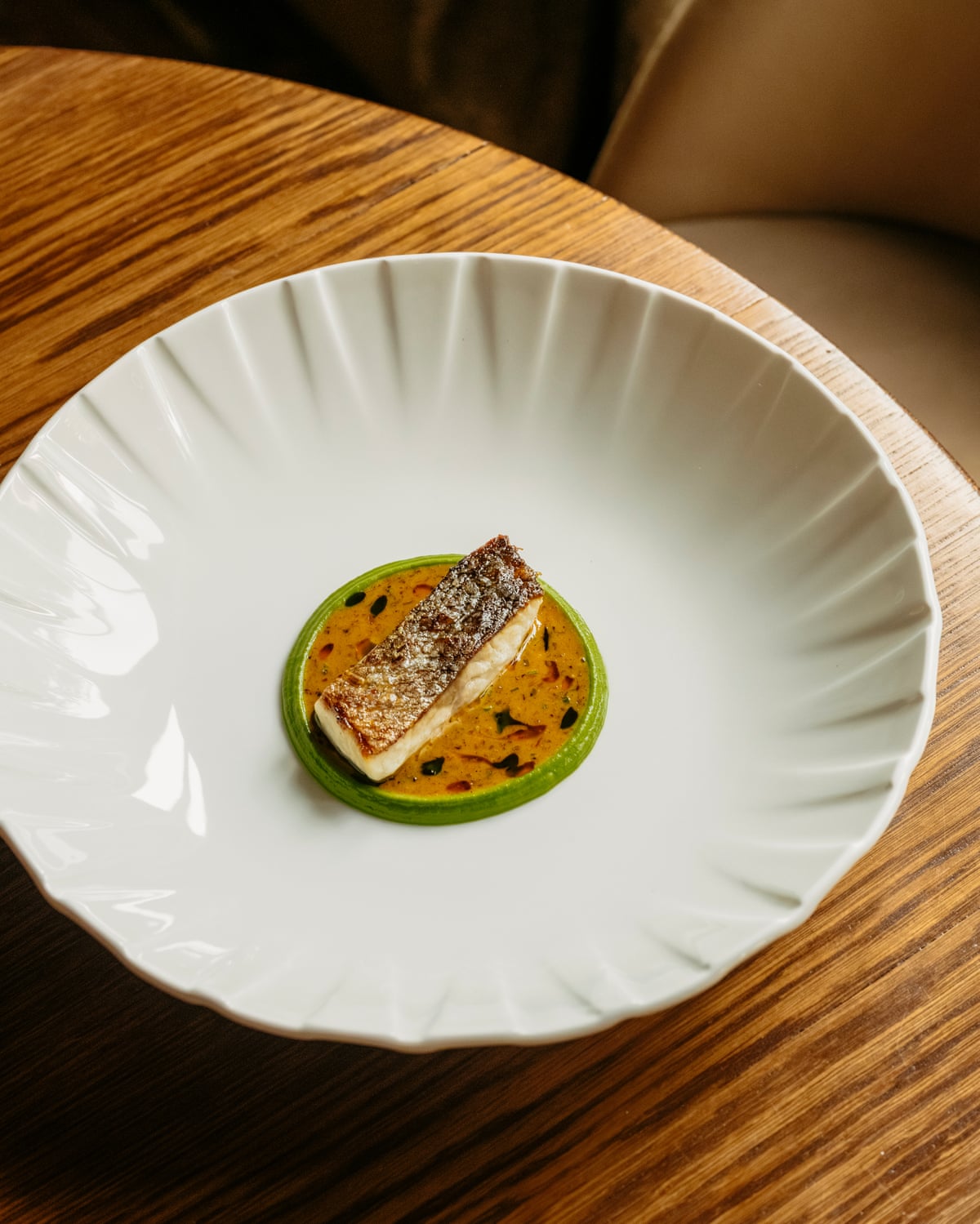
The wild Suffolk bass demonstrates precision in execution: its skin is crisp and blistered, the flesh cooked to exact doneness and served on a foamed sauce flecked with chives and beads of orange oil. The treacle-cured pork that follows is hot, juicy, pitch-black around the edges, and arrives layered with sweet raw and cooked apple. Both dishes showcase the kitchen's technical control and understanding of flavour balance.
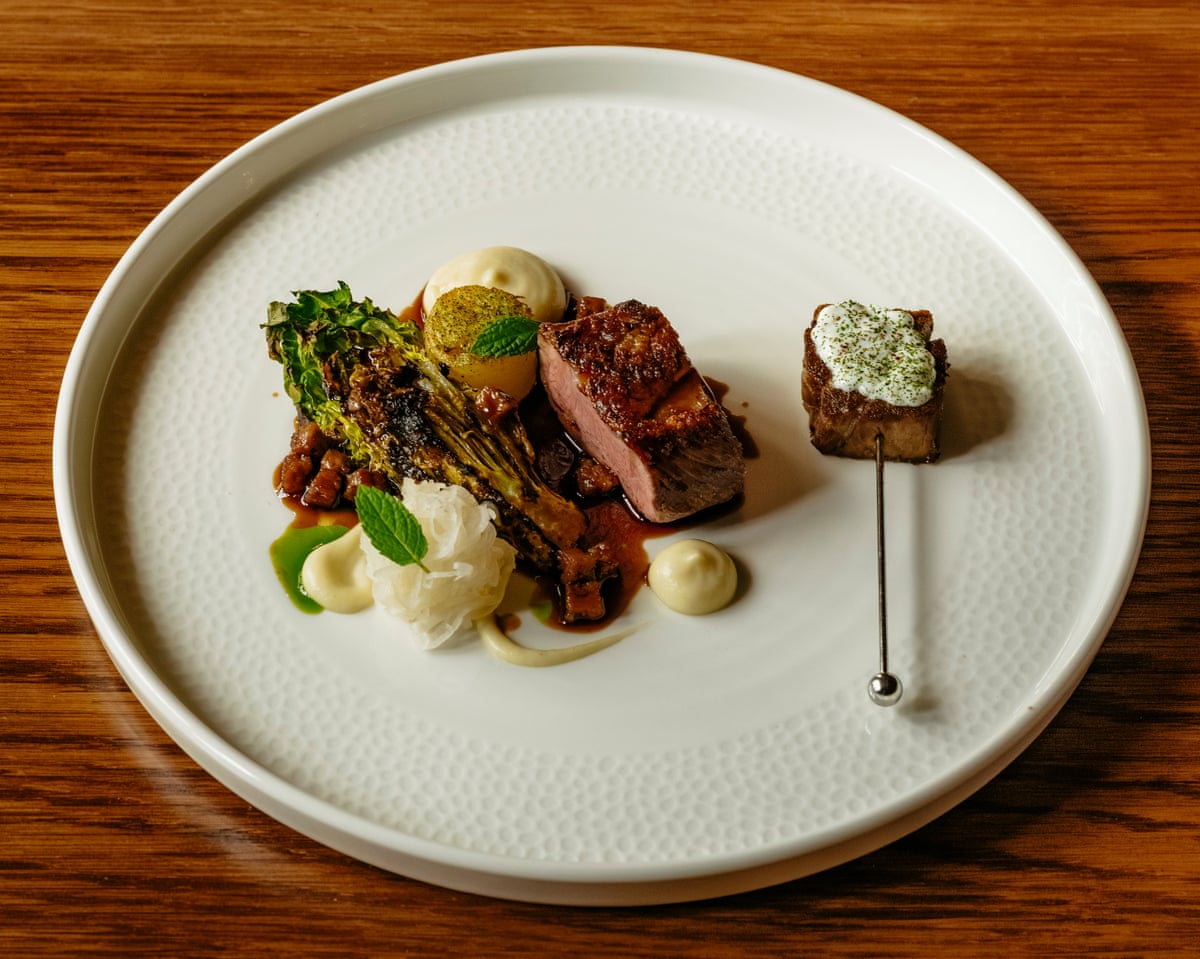
The strongest course comes in the form of Herdwick lamb, featuring a moist, well-seasoned medallion accompanied by a dark, rich jus, tiny nests of shredded turnip, and additional lamb that has been roasted, pulled and compacted on to a metal skewer, then topped with cream and shredded mint. This is the moment when the meal reaches its peak of intensity and satisfaction.
How does the meal conclude?
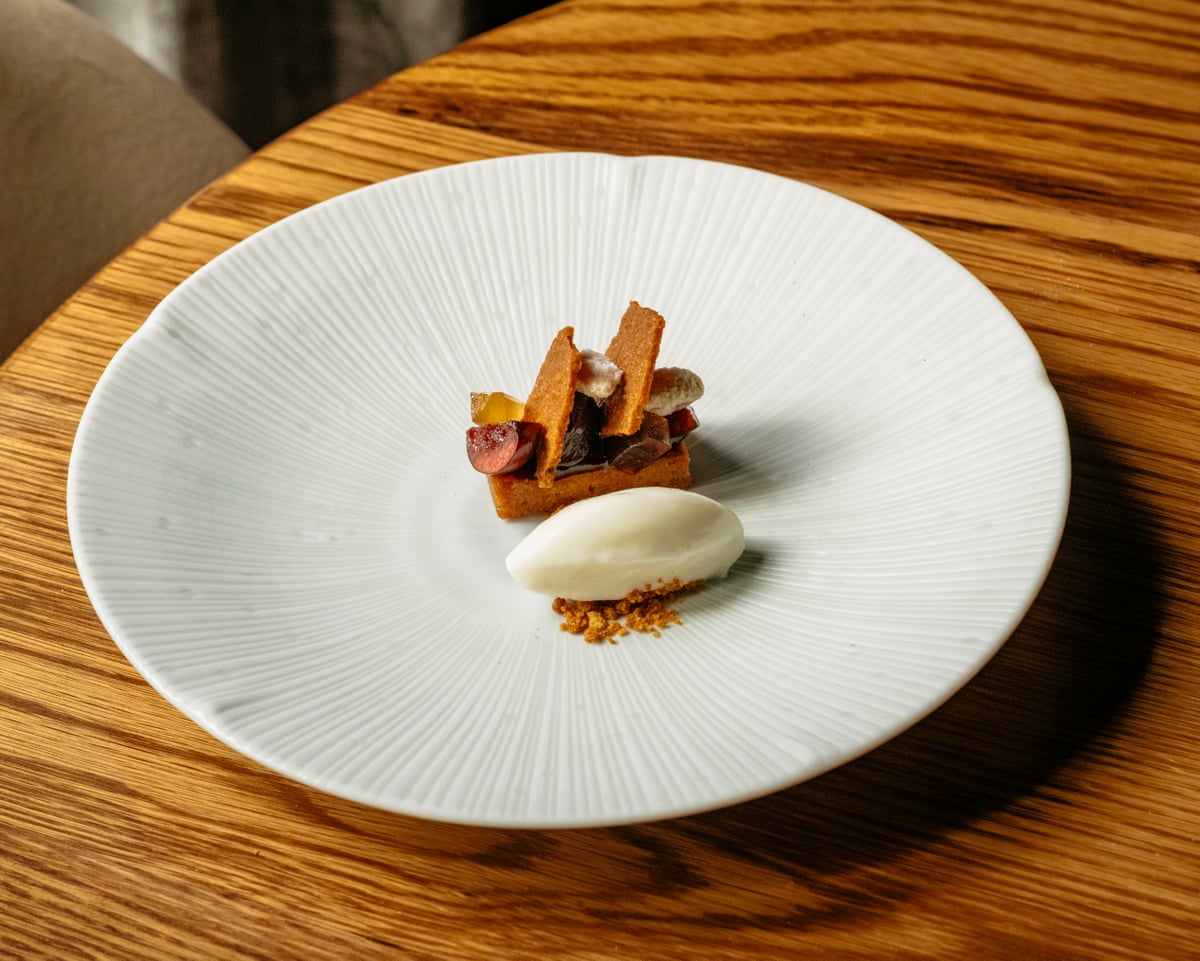
A pre-pudding of yoghurt, raspberry and lemon resets the palate before the final course arrives. The dessert—featuring Colchester cherries in both cooked and preserved forms, served alongside something biscuity, something creamy and something carrying a whiff of amaretto—may not look like much on the plate. Described as a collapsed Jenga of dessert ideas, it is utterly fabulous in execution and flavour. The meal concludes with slices of homemade fig-leaf fudge, the kind of confection one might happily distribute in boxes at Christmas or consume alone on the sofa.
What is the restaurant's current status?
Kintsu represents a significant example of a small regional independent restaurant operating at the highest level during challenging times for the hospitality sector. According to a review published in early September 2026, the restaurant continues to operate with current service hours for both lunch and dinner service. The restaurant's reopening reservations opened on 1 September 2025, with bookings initially available through the end of December 2025, indicating that further reservation releases would depend on later updates.
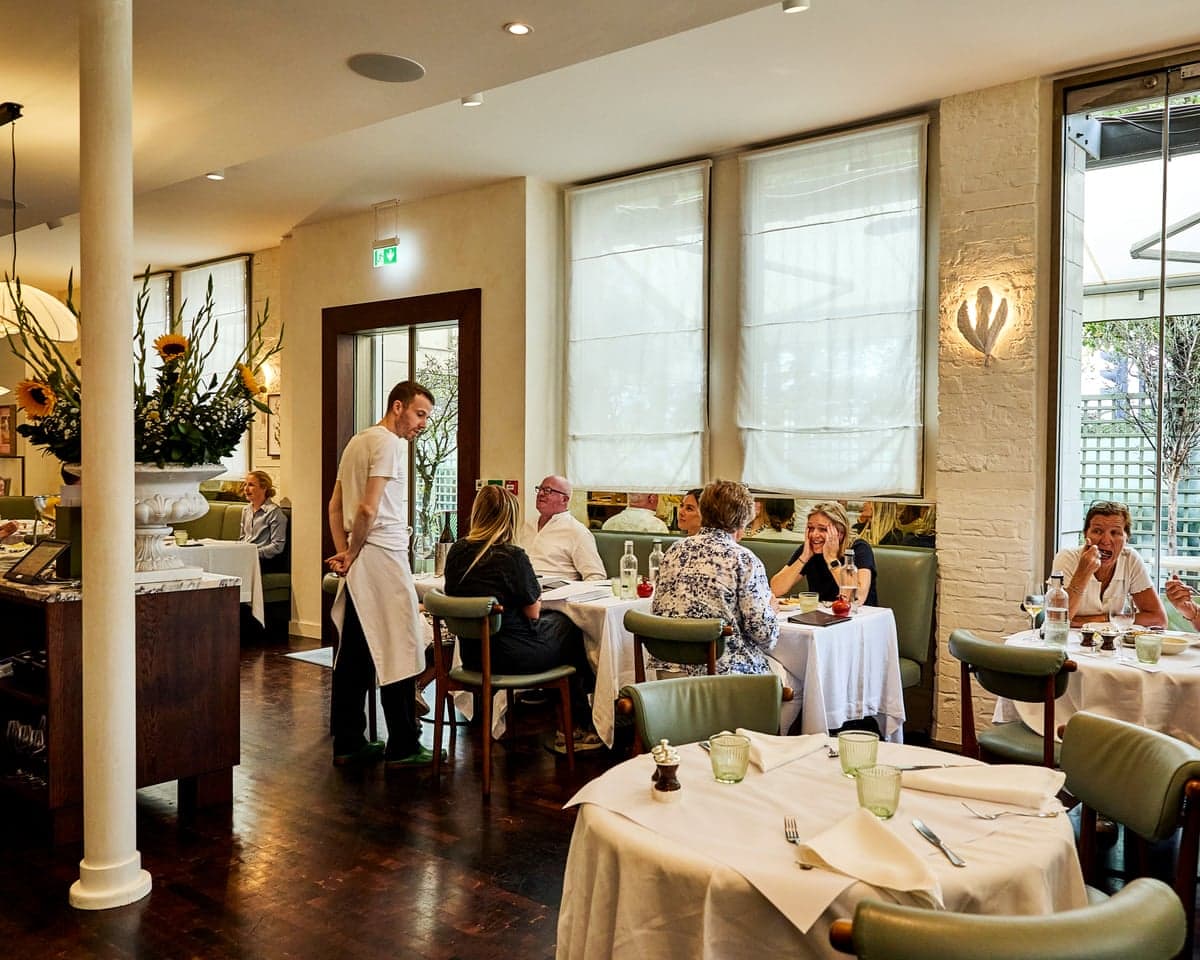
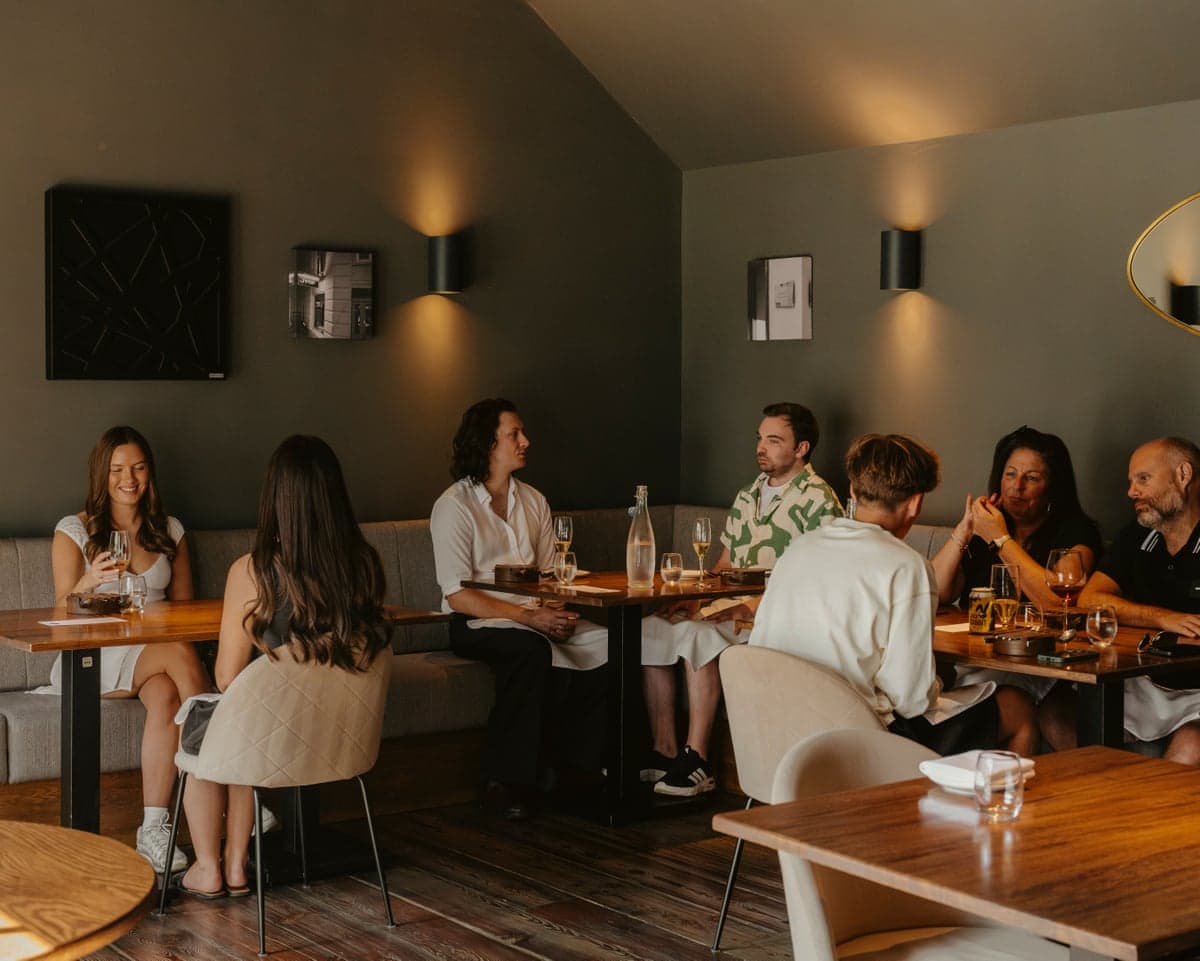
The setting—a beautifully restored Grade II-listed building down a back lane beside a multi-storey car park—will win no beauty contests. Yet when a chef demonstrates such determination to cook dinner at this level, the unglamorous location feels entirely beside the point. The minimal staff—two in the kitchen and one on the floor—could not be more attentive or welcoming, moving with quiet efficiency to deliver each course.
What happens next?
The restaurant operates on a Wednesday-to-Saturday trading pattern, with lunch service on Friday and Saturday and dinner service across all four days. Current opening hours are noon to 1.30pm for lunch (last orders) and 6.30pm to 8pm for dinner, extending to 8.30pm on Friday and Saturday (last orders). Both five-course and eight-course tasting menus are available, plus drinks and service charges. Diners seeking a table at this ambitious Essex establishment should contact the restaurant at 01206 574361 or visit 11a North Hill, Colchester, Essex.
Kintsu stands as a reminder of what independent restaurants can achieve when chef and establishment are aligned in their commitment to quality. These venues deserve support and patronage—use them or risk losing them. Right now, Kintsu is open, beautifully restored, with shimmers of gold.