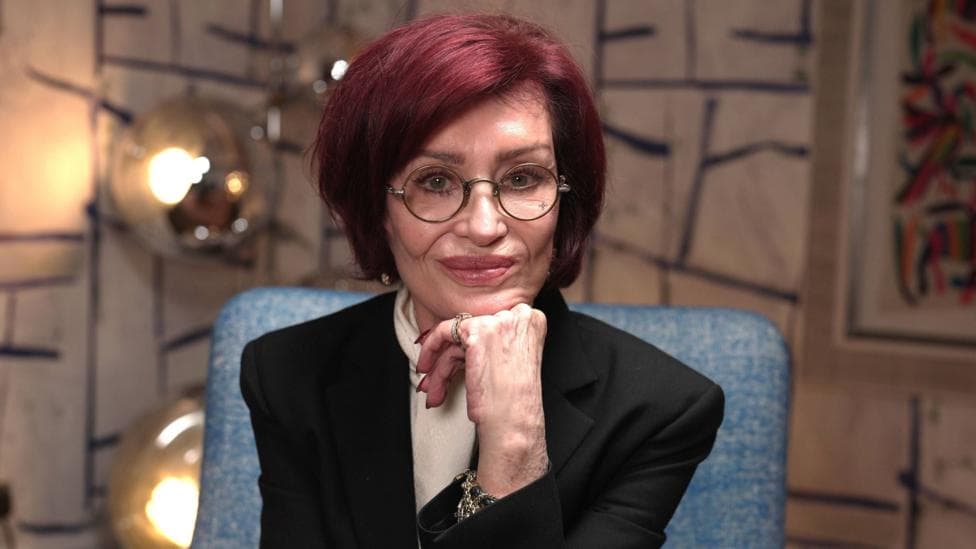
Sharon Osbourne has opened up about her life since the death of her husband Ozzy, speaking to BBC News as the family prepares to release a documentary about his final concert with Black Sabbath. It has been 15 months since Ozzy Osbourne passed away at the age of 76 at his home in Buckinghamshire, just weeks after delivering what would become his last performance on stage.
Despite years of battling serious health conditions including Parkinson's disease and a fractured vertebra, his death came as a shock to those close to him. Less than three weeks before he died, he had performed a triumphant farewell concert in Birmingham, and in the days that followed, he was in remarkably high spirits, reviewing positive responses to the show online and expressing bewilderment at the lack of criticism.
The final morning
On the morning of his death, Ozzy woke early and went downstairs for his customary workout routine. Shortly afterwards, he suffered a heart attack. An air ambulance was dispatched and paramedics attempted resuscitation, but he could not be saved. Sharon recalls the intimate moments they shared the night before, when Ozzy woke and asked her to kiss him twice and hold him close.
The grief of losing him, Sharon explains, is something that will remain with her permanently.
You've lost the love of your life, so you don't just wake up and go, 'I'm fine now. I'm cured'. You never get over it. But you learn to live with it, and that's what I'm trying to do.She describes her approach to moving forward: either withdraw from life entirely or accept the loss and integrate it into her existence.
How does Sharon cope with daily life?
Sharon visits Ozzy's grave every day, which is located in the family garden at their Buckinghamshire home.
Of course, every day. I can see him from my window.She continues to speak with him regularly, though she keeps the nature of these conversations private. Rather than placing him in a public cemetery where he would be subject to constant visits from fans and well-wishers, Sharon chose to have him buried on their private property so he could rest undisturbed.
What was the public response to his death?
The outpouring of affection from Ozzy's fanbase became evident immediately. Thousands of people lined the streets of Birmingham, leaving floral tributes and singing Black Sabbath songs as his body was transported through the city in a hearse topped with a purple floral cross. Sharon believes Ozzy would have been bewildered by such a display, likely telling people to go home rather than gather to mourn him.
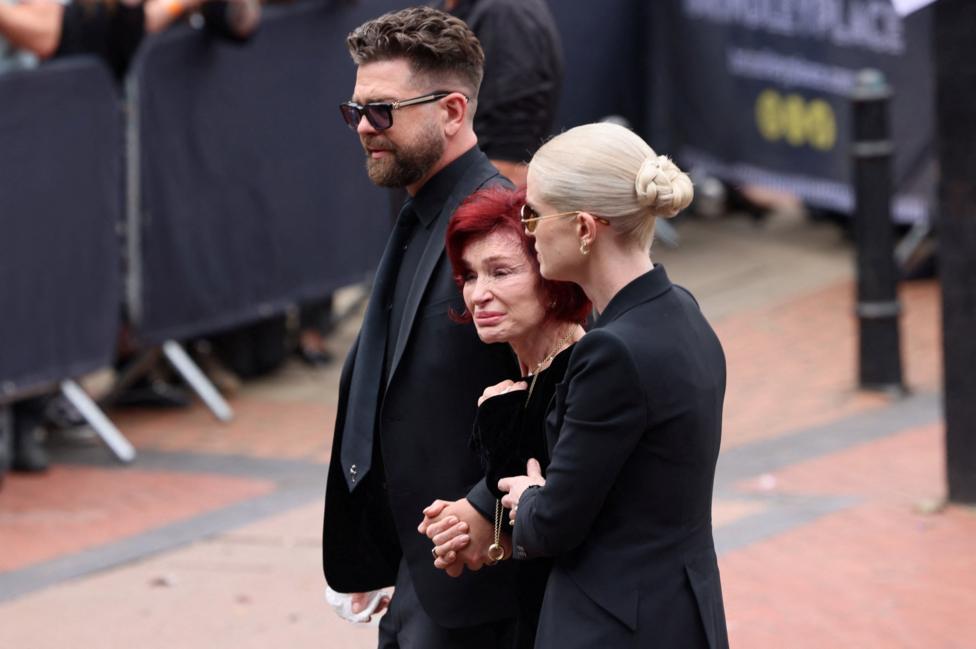
For the family, the public's response provided immense comfort during an extraordinarily difficult time. Their daughter Kelly reflected on this the previous year, saying the knowledge that the world loved Ozzy as deeply as the family did helped them feel less alone in their grief. Sharon ensured that all the cards and messages sent by fans were collected, sorted and photographed, while the flowers were composted for use in the family garden where Ozzy is buried.
What was their relationship like?
Ozzy and Sharon's connection spanned more than five decades. They first met in 1970 and married in 1982. Their relationship was marked by both extraordinary highs and devastating lows—he was arrested in 1989 for attempting to murder her, though she dropped the charges, and they separated briefly in 2016 amid infidelity rumours. Despite these turbulent periods, both maintained they were soulmates. As his life drew to a close, Sharon says he understood how deeply he was loved.
What was the significance of his final concert?
The farewell concert at Birmingham's Villa Park reunited Black Sabbath's original lineup for the first time in more than 20 years, fulfilling what Sharon describes as Ozzy's final wish—the one thing that would bring him happiness after years of declining health. The documentary, titled Back To The Beginning, features more than 25 songs from that star-studded event, including Ozzy's solo set and the band's complete performance.
In the months leading up to the concert, Ozzy's health had deteriorated significantly. Six months before the show, he fell and fractured his vertebrae. During his recovery, he contracted pneumonia three times. Following back surgery, he developed sepsis and came close to death. Just two weeks before the performance, doctors visited the family home and strongly advised him to cancel, warning that his heart was too weak to withstand the physical demands of performing.
Ozzy refused to abandon his plan.
No, I'm doing it. Whatever happens, happens.In the film, despite his severe condition, he appears remarkably vital. Performing seated on a throne, his eyes gleam with life and his voice remains powerful. As he surveys the crowd, he radiates joy and vitality.
According to People, the film runs for two hours and 30 minutes and includes performances of "Crazy Train," "Mama I'm Coming Home," "Iron Man" and "Paranoid." In backstage footage, fellow performers discuss Ozzy's profound influence. Metallica frontman James Hetfield states:
If there was no Sabbath, there's no Metallica. It's as simple as that.Artist Yungblud, whose rendition of "Changes" became one of the concert's most moving moments, speaks about how Ozzy's celebration of individuality and unconventionality gave him hope as a young person who felt like an outsider.
How did the concert transform him?
Backstage, Sharon admits the entire family was terrified about whether Ozzy could manage the performance. However, something shifted once he entered the stadium. While watching other performers on a monitor in his dressing room, he expressed amazement that they had all come to support him. The combination of encouragement, affection and sheer determination produced a remarkable transformation in someone who, days earlier, could barely breathe or speak without exhaustion.
Sharon reflects on this extraordinary moment:
It's amazing what support and love and determination can do for you, because [before the show] he was somebody that couldn't breathe. He had a lung condition. He had a heart condition. He had terrible, terrible agony from his spine. He had blood clots and he had Parkinson's. Some days just to even talk was an effort, let alone sing. And I don't know how he did it, but he did it. And you saw it in his eyes, in his face. It just made him feel like he was alive again.
The galvanising effect of the performance was so powerful that when Ozzy left the stage, he declared his intention to embark on a tour, telling Sharon he was ready to continue performing and that fans would accept him performing while seated. For 17 days following the concert, he existed in a state of euphoria and joy, floating on the high of having achieved his final wish and proven to himself and the world that he still had the capacity to captivate an audience.
What happens next with the documentary?
The film's Los Angeles world premiere took place on October 14, hosted by Sharon and Jack Osbourne. According to Blabbermouth, the star-studded event brought together family and industry figures to celebrate Ozzy's legacy. The concert film is scheduled for a limited worldwide cinema release beginning on October 28, 2026, allowing fans globally to witness Ozzy's final performance and the remarkable story of how he achieved his last great wish.
Sharon concludes by reflecting on what the concert meant for Ozzy's final chapter.
To quote one of his songs, he was flying high again. He was just floating for those last 17 days. It was great. It was joyous.Though Ozzy endured immense suffering in his final years, he was able to say goodbye in the way he had always dreamed, surrounded by the music, the fans and the bandmates who had defined his extraordinary life.