Commemorative plaques have been unveiled across the United Kingdom to honour the nation's first spacecraft to successfully reach another planet. Yet the visionary who orchestrated the Beagle 2 mission was far removed from the stereotypical image of a rocket scientist.
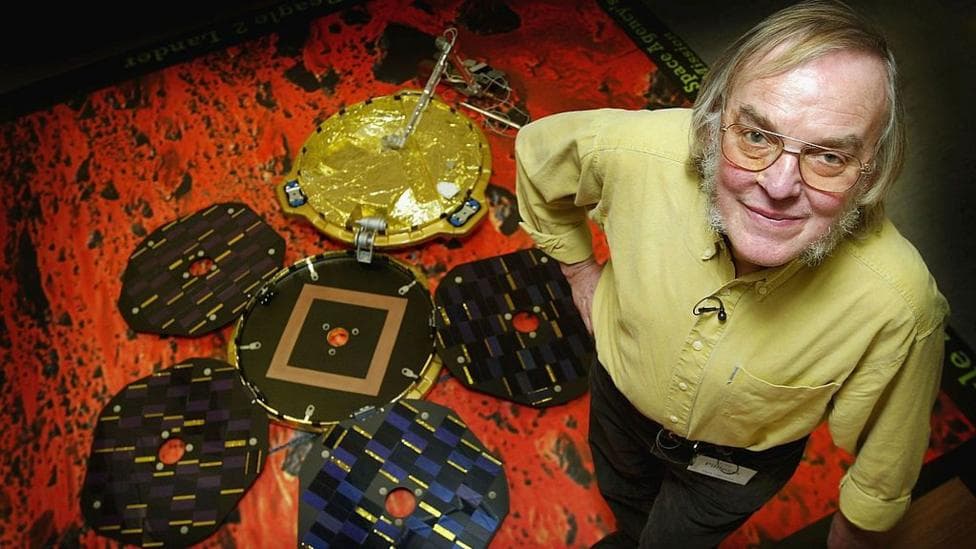
With distinctive mutton-chop sideburns, a West Country accent and boundless enthusiasm, Professor Colin Pillinger convinced politicians, musicians and the general public to back an endeavour that many considered unachievable: a British-led expedition to Mars. For decades, his story embodied the narrative of ambitious British failure. The discovery of his lander on the Martian surface years after his death transformed that narrative entirely, leading to the recent nationwide recognition of his legacy.
Who was Colin Pillinger and how did he conceive Beagle 2?
Pillinger grew up in Kingswood, a town near Bristol, and studied at Swansea University. His early career brought him international prominence through pioneering work on lunar samples. After relocating to Cambridge University, he specialised in examining meteorites recovered from Antarctica that scientists believed originated from Mars.
During the 1980s, Pillinger became instrumental in establishing the Planetary and Space Sciences Research Institute at The Open University in Milton Keynes. It was within this institution that he developed the concept of dispatching a robotic lander to Mars. His wife named the spacecraft Beagle 2, and its mission would be to investigate the red planet's surface for evidence of past or present life.
Space exploration had long been the exclusive domain of superpowers and major agencies like Nasa, which possessed the enormous budgets required for such ambitious projects. Britain lacked a dedicated space agency, so Pillinger devised an alternative strategy: Beagle 2 would travel as a passenger aboard Mars Express, an unmanned spacecraft being developed by the European Space Agency (ESA) that was already destined for Mars.
When the ESA approved this arrangement in 1999, the agency offered no guarantee of financial support or institutional backing for Pillinger's component of the mission. Recognising this challenge, Pillinger understood that generating public enthusiasm would be essential to securing the necessary funding.
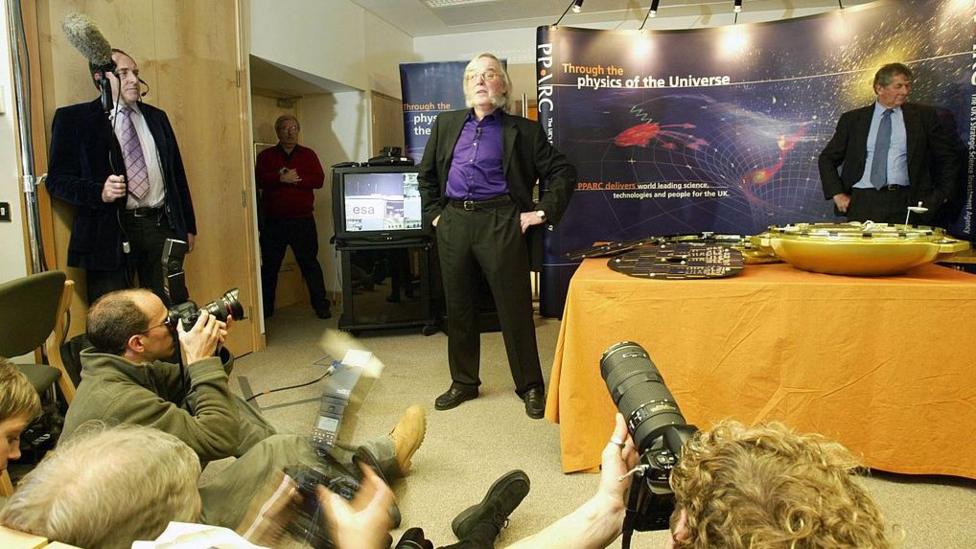
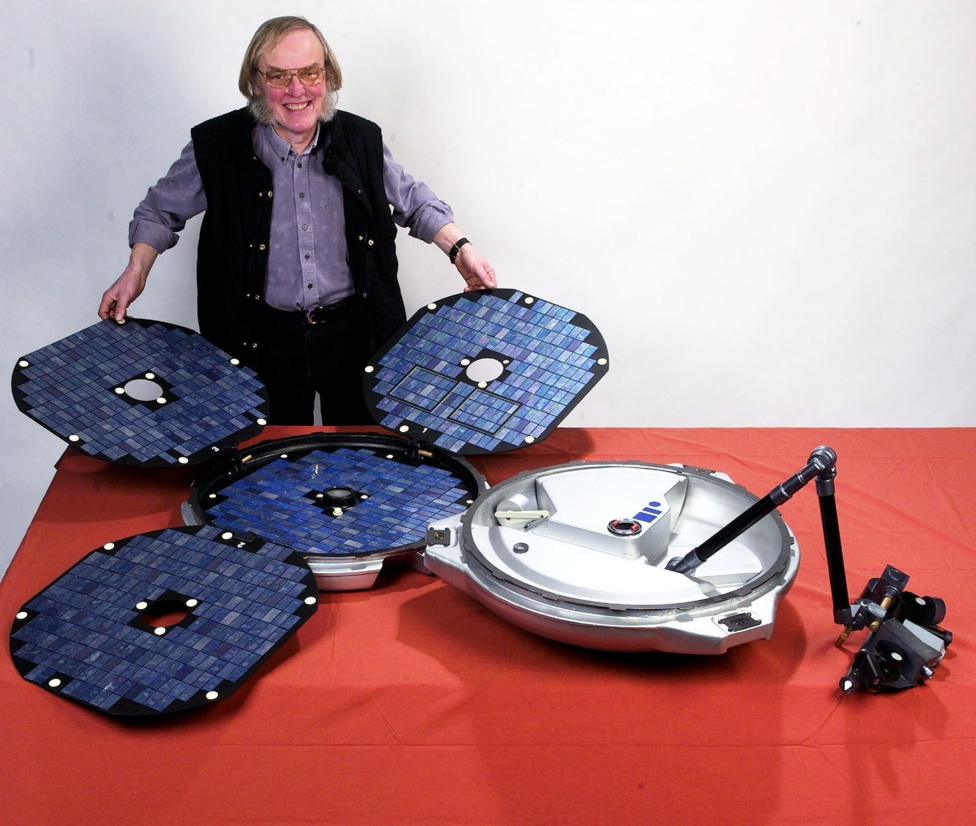
Pallab Ghosh, a science correspondent for a national broadcaster, recalled his initial scepticism when assigned to interview a scientist in Milton Keynes proposing to send a spacecraft to Mars. His doubts intensified when Pillinger unveiled a model of Beagle 2 on the lawn—Ghosh observed that it bore little resemblance to what one might expect a spaceship to look like.
In another memorable demonstration, Pillinger loaded a full-scale replica of Beagle 2 into a supermarket trolley and pushed it through The Open University's car park, illustrating to cameras how compact the lander was. This unconventional publicity stunt was subsequently mocked on a popular satirical television programme, which paradoxically expanded its reach to millions of viewers.
How did Pillinger build public and financial support?
Pillinger's strategy to capture public imagination proved remarkably effective. He persuaded the Britpop band Blur to compose a distinctive electronic signal that Beagle 2 would transmit to Earth upon landing, giving the mission a cultural signature. Renowned artist Damien Hirst contributed a spot painting that would serve as a colour calibration reference for the lander's camera system.
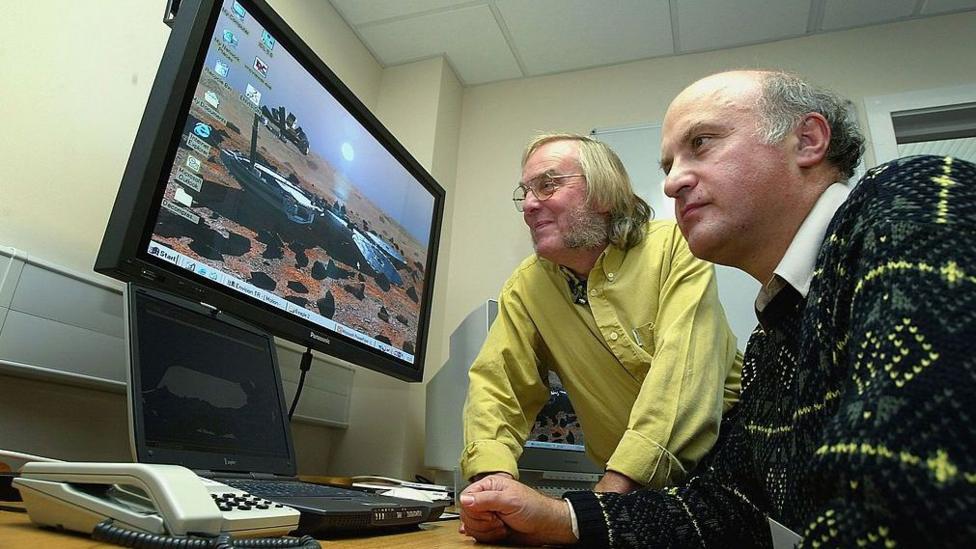
These creative partnerships, combined with Pillinger's tireless public engagement, attracted backing from the UK government, universities, industrial partners and private donors. The entire Beagle 2 project was constructed for approximately £50 million—a fraction of what Nasa had invested in the Apollo programme, which consumed $25 billion during the 1960s.
What happened when Beagle 2 launched?
Mars Express lifted off on 2 June 2003 carrying Beagle 2 as its payload. The lander was scheduled to separate from its carrier and descend to the Martian surface on Christmas Day. On Christmas Eve, scientists, engineers and celebrities assembled at The Open University's London office in anticipation. Members of Blur attended the gathering, a singer distributed jelly babies to the crowd, and everyone waited for confirmation that Beagle 2 had touched down safely.
The confirmation never arrived. Pillinger and his team later concluded that the lander had descended too rapidly after encountering unexpected atmospheric conditions above Mars. Subsequent investigations by the UK government and the ESA identified deficiencies in project management and financial oversight. However, supporters of the mission contended that it had achieved something unprecedented: bringing together British industries and research institutions around a single planetary exploration objective.
Undeterred by the apparent failure, Pillinger proposed Beagle 3, a successor mission. The ESA rejected this proposal in 2004. In his 2010 memoir, My Life on Mars, Pillinger reflected on the mission's cultural impact, recounting an encounter with a builder at The Open University who stopped him to express gratitude. He wrote:
There's nobody in the UK I didn't reach.
What was discovered after Pillinger's death?
Pillinger died in May 2014 following a brain haemorrhage and subsequent coma, never knowing whether his mission had truly succeeded. Eight months later, high-resolution photographs transmitted by Nasa's Mars Reconnaissance Orbiter revealed an astonishing discovery. Sitting in the Martian dust, approximately 5 kilometres from its designated landing site, lay the largely intact Beagle 2.
According to Nasa's Jet Propulsion Laboratory, the images demonstrated that much of the landing sequence had functioned correctly. The parachute system and inflatable airbags had deployed as designed. However, the lander's petal-shaped solar panels had not fully unfurled, which meant the communications antenna remained obstructed and unable to transmit signals back to Earth.
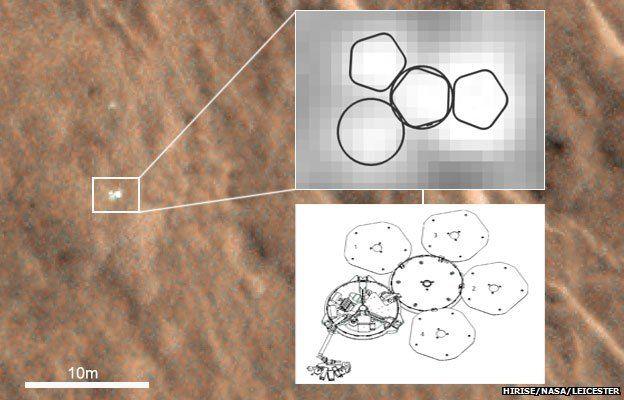
The discovery vindicated Pillinger's vision and engineering. A joint inquiry by the European Space Agency and the UK's space-agency predecessor had attributed the mission's apparent failure to a combination of inadequate management practices and insufficient testing protocols. Yet the physical evidence showed that the spacecraft had successfully navigated the journey across 225 million kilometres of space and executed a controlled landing on another world.
How is Beagle 2 being commemorated?
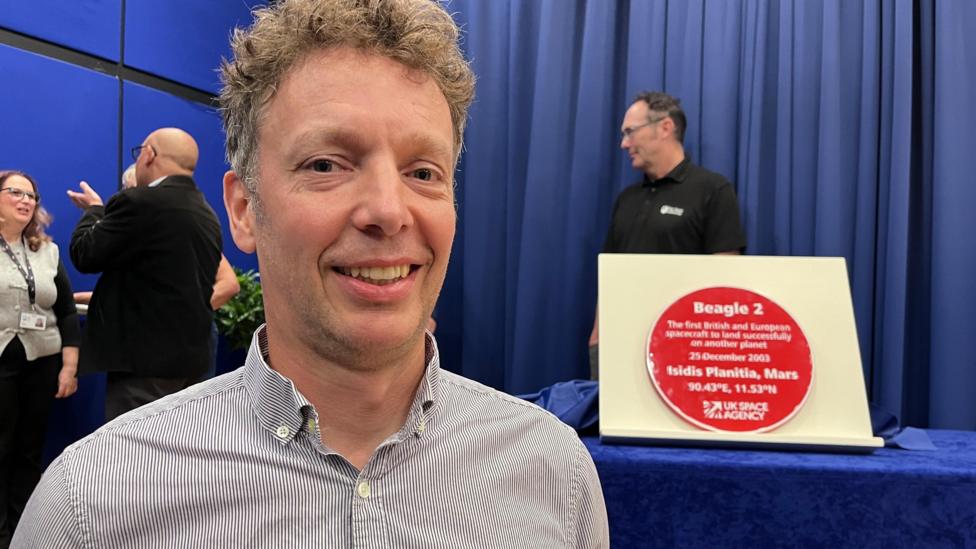
The UK government has announced a programme of 13 commemorative plaques to be installed at organisations and companies that contributed to the Beagle 2 mission or played roles in public engagement with space exploration. A plaque honouring Pillinger and the mission was unveiled at Bristol's M Shed museum on 5 October 2026, recognising the historic achievement and the dedication of its creators. The National Space Centre in Leicester unveiled another plaque at its Lander Operation Control Centre on 7 June 2026, coinciding with the facility's 25th-anniversary celebrations.
For Nic Pillinger, Colin's son, the discovery of the lander and the subsequent recognition represented the vindication of an achievement that had remained
on ice for many yearsand could finally assume its rightful position in British scientific history. Reflecting on his father's passing before the truth emerged, Nic observed:
My dad always spoke of himself as being the frontman to the band that was behind this. It wasn't just a one-man project. It was a huge number of people working across different institutions coming together to make it happen.
What does Beagle 2's legacy mean for British space exploration?
The Beagle 2 mission represented a watershed moment in British space ambition. Despite the initial appearance of failure, the project demonstrated that Britain could compete in planetary exploration without the vast budgets of superpowers. Pillinger's unconventional approach—combining rigorous science with popular culture, enlisting artists and musicians, and maintaining unwavering public engagement—established a template for how space missions could capture national imagination.
The recent plaques serve as permanent reminders that Pillinger's vision was not merely a quixotic dream but a genuine achievement. The lander did reach Mars. It did land successfully. The only tragedy was that Pillinger himself never received confirmation of this triumph. His legacy endures not only in the physical presence of Beagle 2 on the Martian surface, but in the inspiration he provided to generations of British scientists, engineers and space enthusiasts who continue to pursue ambitious goals in exploration and discovery.