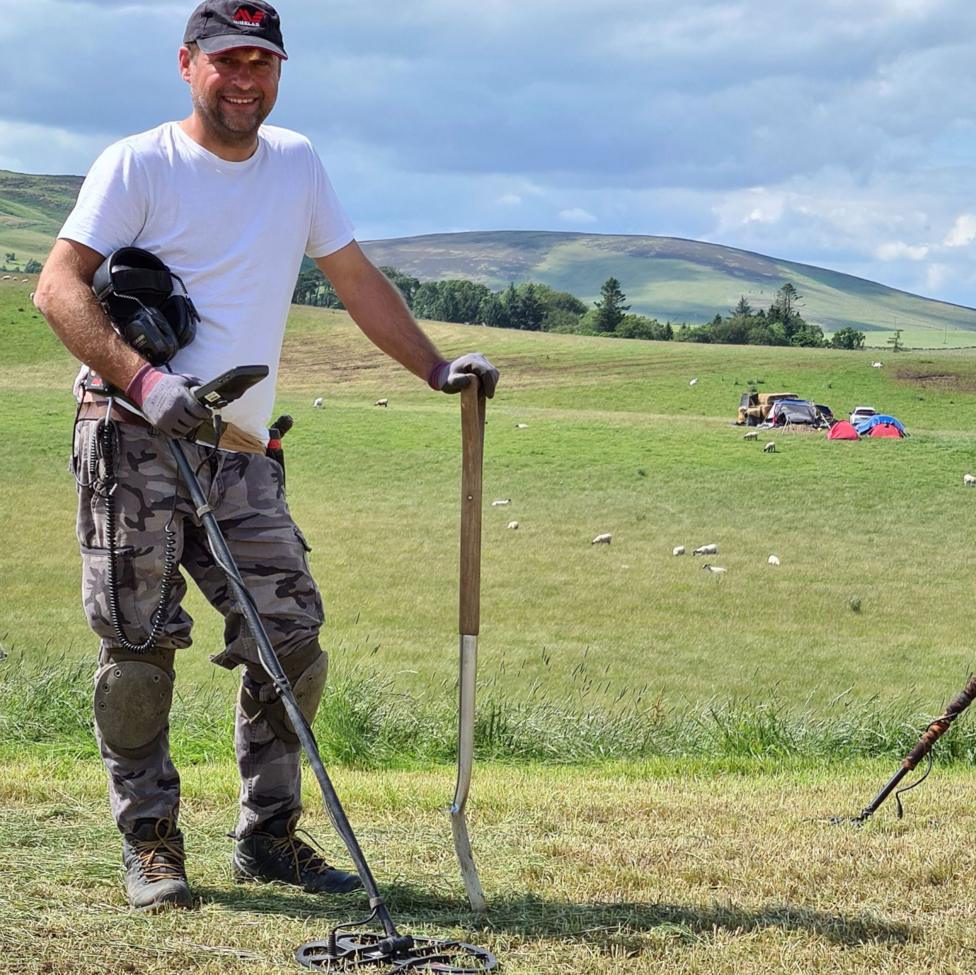
A metal detectorist has announced a second significant Bronze Age discovery in the Scottish Borders, adding to his remarkable track record of archaeological finds in the region.
Mariusz Stepien located the artefacts, now designated the Blyth Hoard, during fieldwork in 2022 at a location approximately seven miles from his earlier discovery of the Peebles Hoard in 2020. The newly found assemblage dates to the Late Bronze Age, spanning the period from 1150BC to 850BC, making the objects roughly 3,000 years old.
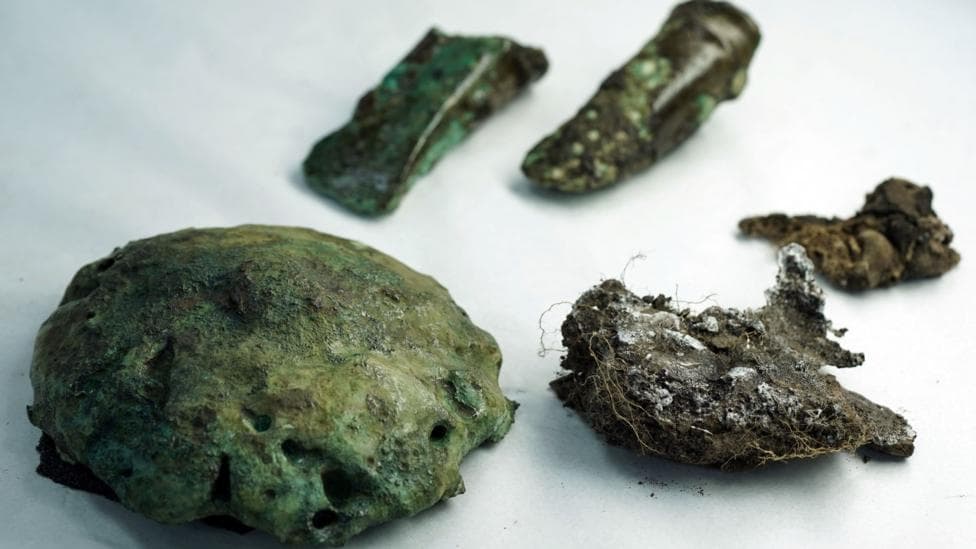
The Blyth Hoard comprises two bronze axe-heads and a complete copper ingot, the latter representing the first example of its kind recovered in Scotland. Among the most significant elements are clay moulds that may have been employed in the manufacture of distinctive bronze fittings discovered within the nearby Peebles Hoard, which entered the national collection in 2024. Archaeological excavation at the site also uncovered an ancient stone cairn.
What makes these discoveries particularly significant?
The proximity and interconnection between the two hoards suggest a meaningful relationship between the Bronze Age deposits. Dr Matthew Knight, curator of prehistory and Bronze Age collections at the National Museums of Scotland (NMS), emphasised the exceptional nature of the find.
"This is one of those classic archaeological finds that initially doesn't look like much, but is actually really incredible and has many stories to tell. It's really rare for mould materials to survive at all, so it's a special find in its own right, but the proximity and relationship to the Peebles Hoard makes it all the more extraordinary."
The survival of clay moulds is particularly uncommon in the archaeological record, making their presence in the Blyth Hoard a noteworthy development. Researchers anticipate that detailed analysis of the copper ingot may reveal the geographical origins of the metals incorporated into the bronze objects found in both hoards, potentially illuminating Bronze Age trade networks and metallurgical practices.
What was found in the earlier Peebles Hoard?
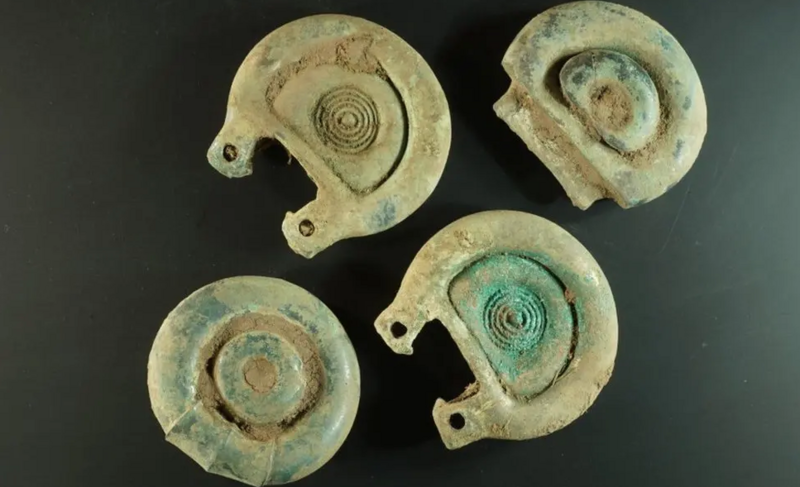
The Peebles Hoard, discovered by Stepien in 2020, represents one of the most complete Bronze Age assemblages ever recovered in Scotland. The collection includes a fully intact horse harness, a sword still contained within its original scabbard, decorated straps, buckles, rings, ornaments and chariot wheel axle caps. The hoard was acquired for the nation in 2024 through the Treasure Trove system, ensuring its preservation and public accessibility.
What happens next with the Blyth Hoard?
The Blyth Hoard has been transferred to the National Museums Collection Centre in Edinburgh, where conservation specialists and researchers will undertake detailed examination and analysis. Stepien expressed his enthusiasm for the forthcoming research phase.
"When I first discovered the Blyth Hoard, I was excited to have found more Bronze Age material in an area that I already knew was archaeologically significant. At that stage, I had no idea just how important the discovery might turn out to be. Having previously discovered the Peebles Hoard, it is quite extraordinary to think that two discoveries I made so close to one another could be connected."
How does Scotland's Treasure Trove system work?
Under Scots law, all archaeological finds discovered within Scotland must be formally reported to the Treasure Trove Unit, administered by the National Museums of Scotland, where they are catalogued and evaluated. Finds of particular significance may be claimed on behalf of the Crown by the King's and Lord Treasurer's Remembrancer and subsequently allocated to museums through the Treasure Trove system. This mechanism ensures that important discoveries are preserved, conserved and made available for public benefit and scholarly research.
Key Facts
- The Blyth Hoard was discovered in 2022 at a location seven miles from the Peebles Hoard, found in 2020
- The assemblage dates to the Late Bronze Age (1150BC to 850BC) and includes two bronze axe-heads, clay moulds and a copper ingot—the first of its kind found in Scotland
- The clay moulds may have been used to manufacture bronze fittings found in the Peebles Hoard, suggesting a direct connection between the two deposits
- Both hoards are now held by the National Museums of Scotland following acquisition through the Treasure Trove system