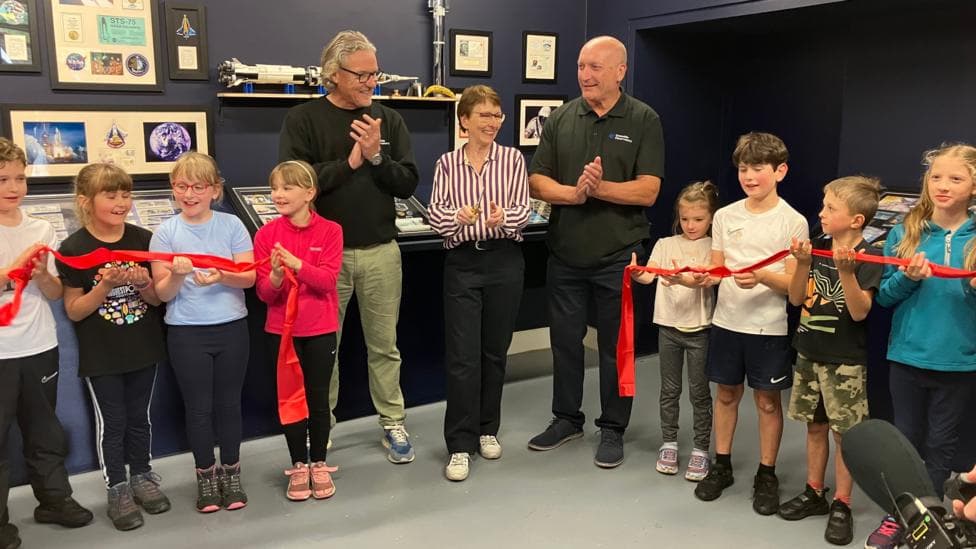
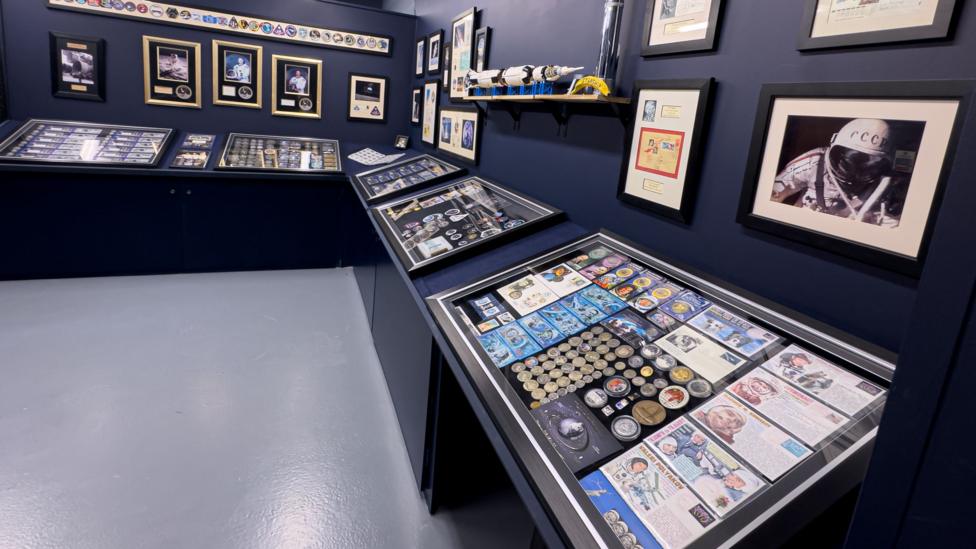
Helen Sharman, who made history as Britain's first astronaut, has officially inaugurated the John Dulcamara Space Flight Museum at Grizedale Observatory near Ambleside in Cumbria. The museum houses a significant collection of space exploration artefacts, including a piece of the command module from Apollo 11, the 1969 mission that first landed humans on the moon.
The collection was donated by private collector John Dulcamara and represents three decades of dedicated acquisition. Sharman, who travelled to space in 1991 aboard the Russian Mir Space Station, described the assembled items as remarkable.
It's an extraordinary collection. We've got bits of Apollo 11, bits from the Russian space programme - it's just an amazing collection of artefacts from space flight history.
Grizedale Observatory and Planetarium began welcoming visitors in May 2024, establishing itself as a public astronomy facility in the Lake District. The venue provides access to telescopes, a planetarium, and a meteorite laboratory. According to the observatory's information, typical visits last between 1.5 and 2 hours, with family space adventures that include a meteorite room where visitors can examine space rocks. The site operates from the Yan building at Grizedale, accessed via the main car park, and features wheelchair-accessible planetarium and lounge areas for talks.
Sharman reflected on the significance of the collection beyond its material value.
It tells its own story of space history, but also of the people that went and the items that were important to them. For it to be on show now in this beautiful way, as part of Grizedale Observatory, what a coup for Cumbria.
How did the collection begin?
Dulcamara's passion for space memorabilia began in 1996 when he attended a shuttle launch and kept his ticket.
That's what started my 30 year collection off. There's thousands of pieces on display, I hope people will come and have a look.The museum now contains a diverse range of items spanning from autographed photographs and signatures of prominent figures in spaceflight to actual spacecraft components.

Observatory director Gary Fildes explained how the partnership came about.
John asked whether we would be interested in keeping his collection here at the observatory so other people could have the chance to see it. He brought a few samples along and we knew we had to make it happen. We thought: 'failure is not an option'!According to recent reporting, the observatory was already operating six nights a week by late May 2024, with plans to add a seventh night, and the space memorabilia museum forms part of its wider educational offer beyond stargazing.
What educational opportunities does the museum provide?
During her visit to open the museum, Sharman engaged with local schoolchildren to discuss her experiences aboard the Mir Space Station, where she conducted scientific experiments and made observations of Earth. Fildes emphasised the importance of this direct engagement.
To have Helen opening the museum is incredibly special. What makes this particularly important to us is the opportunity for local children to meet Helen. You simply don't know where an experience like that might lead.
The museum's opening comes as space exploration continues to capture public imagination. According to earlier coverage of the observatory's launch, the facility was designed to make Cumbria a destination for astronomy enthusiasts, and the site's collection already included a lunar meteorite—a genuine fragment of the moon—before Dulcamara's donation expanded the offerings significantly.
What happens next?
The observatory continues to offer regular public astronomy and planetarium programming. Ongoing events and activities are scheduled throughout the year, with the venue operating as a year-round destination for visitors interested in space science and stargazing in one of Britain's most scenic natural landscapes.
Key Facts:
- Helen Sharman became Britain's first astronaut when she travelled to the Mir Space Station in 1991
- The John Dulcamara Space Flight Museum houses thousands of artefacts collected over 30 years, including a piece of the Apollo 11 command module
- Grizedale Observatory opened in May 2024 and operates six nights a week with a 20-capacity planetarium and multiple telescopes
- Visits typically last 1.5 to 2 hours and include access to a meteorite room and wheelchair-accessible facilities
- The museum aims to inspire local schoolchildren through direct engagement with space exploration history