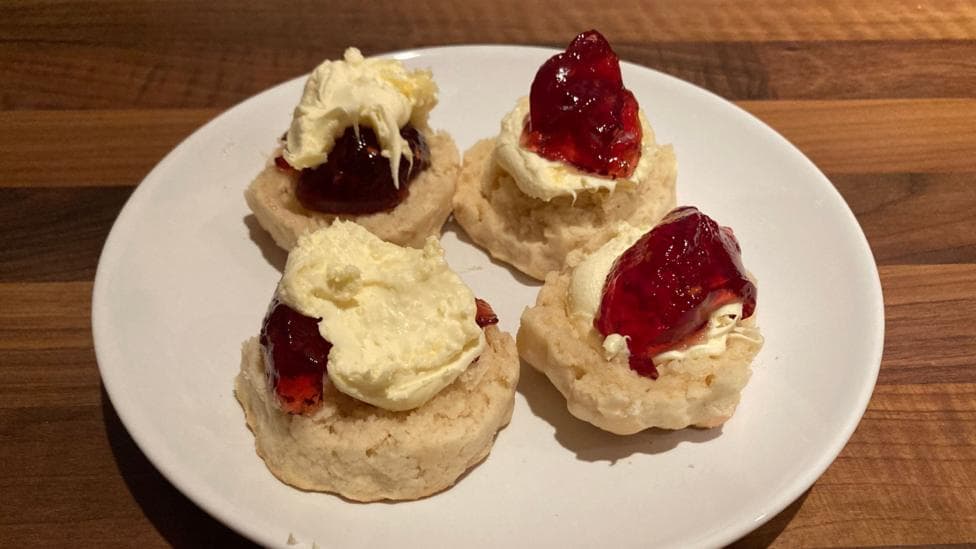
Cream teas have remained a fixture across British cafes, particularly in the South West, yet the question of whether to apply jam or cream first continues to spark passionate disagreement among enthusiasts and casual diners alike. The rivalry between Devon's cream-first tradition and Cornwall's jam-first approach has evolved from friendly regional banter into something far more culturally significant, touching on questions of heritage, identity and even the physics of pastry preparation.
Jane Malyon, a cream tea expert and author of Scone or Scon(e) - the essential guide to British Afternoon Tea, has experienced firsthand how contentious this matter has become. She recalled an incident where a newspaper misrepresented her views on the subject.
"A newspaper printed an article once that said a cream tea expert - me - says 'it should be cream first'. I didn't actually say that, what I said was what I tend to do is cream first, but the majority of people don't. I got 32,200 complaints saying 'what is she talking about?'."Malyon reflected on the intensity of the debate:
"Cream or jam first is more divisive than Brexit, I swear that's true."
Why has this become such a contested issue?
The geographical split between the two counties has hardened into something approaching cultural warfare. Cornwall has embraced jam-first as a rallying cry, with the phrase appearing on car bumper stickers and merchandise throughout the region. Devon responded in kind, with a giant flag bearing the words "cream first" causing considerable discussion at Glastonbury Festival in 2025. According to a YouGov poll, 62% of Britons prefer jam first and 28% cream first, though Devon remains the only area where cream-first narrowly leads.
Tom Woodley, founder and managing director of The Cornish Company, conducted a blind taste test in 2025 that provided some empirical support for the jam-first camp.
"For me, the reason makes sense when you taste them side by side,"Woodley explained.
"Putting the jam on first allows that sweetness to soak slightly into the scone, while the thick Cornish clotted cream sits on top. You get more of the sweetness of the jam followed by the richness and texture of the cream."The test showed 69% of participants preferred jam first.
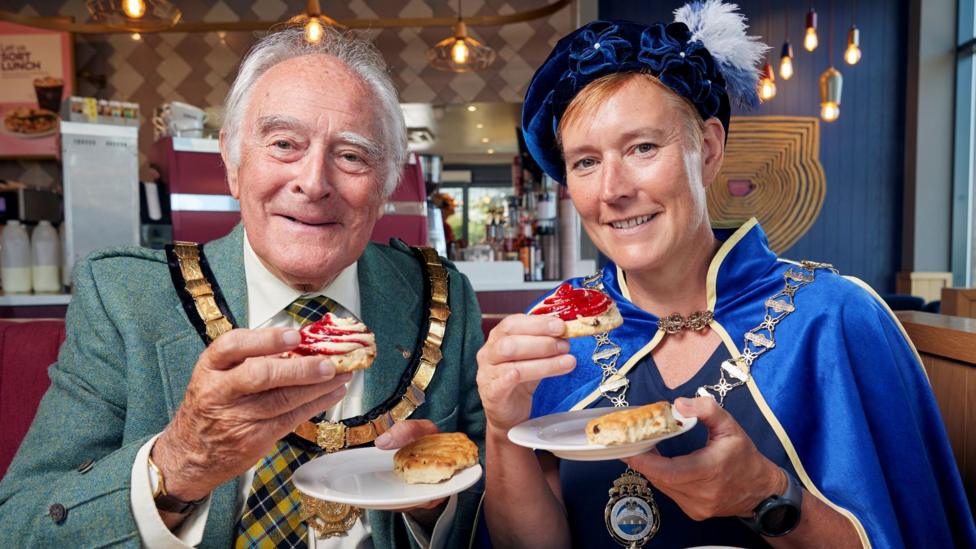
The debate was reignited earlier in 2026 when Costa Coffee attempted to settle the matter with their "50/50 scone," which used a piping bag to apply cream and jam simultaneously. The initiative drew participation from local dignitaries, including the Mayor of Saltash and the Mayor of Kingsbridge, though whether it resolved anything remains unclear.
On the other side of the River Tamar in Devon, Ellie Emberson, director of Kingsteignton-based bakery Truly Treats, offered a contrasting perspective.
"The cream is the equivalent of butter on bread, so it makes sense for that to go on first with the jam on top. You wouldn't put jam on your toast before the butter, and a scone's no different."
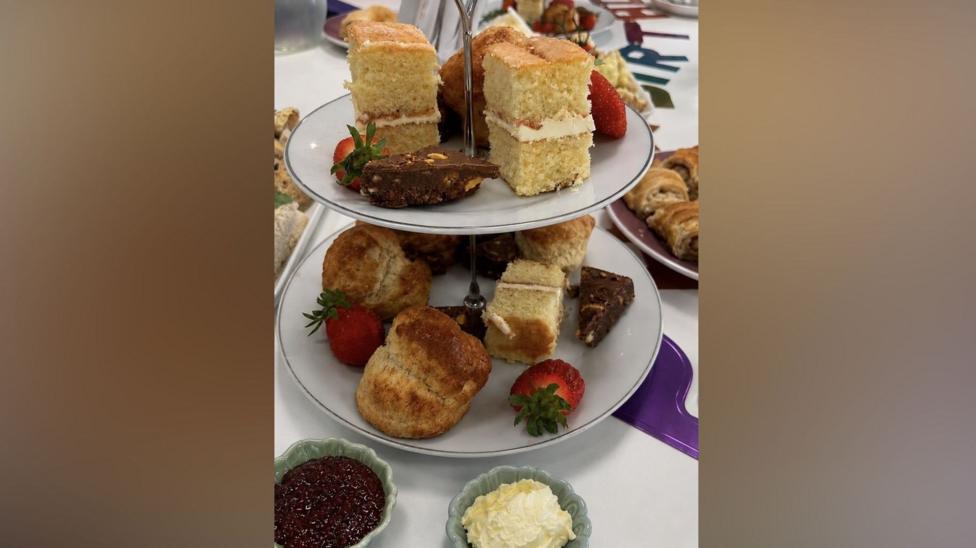
How old is the cream tea tradition really?
Food historian Dr Neil Buttery has investigated the origins of the cream tea and discovered that the tradition may be younger than many assume.
"The earliest mention I can find in a newspaper or anything in print to do with a cream tea is 1932 in the Cornishman newspaper,"Buttery, who runs the British Food: A History blog and hosts The British Food History Podcast, explained.
"I can't go any further back than that, but the article presumes everybody reading it knows what a cream tea is, so maybe it's already 20 or 30 years old. So I put it down to a nice, round 1900 that we can go back to when it comes to cream teas."

The evolution of the cream tea involved a significant shift in its core component.
"The main change is quite a big one really and that's because scones weren't the main cake or baked good that you were having, it was splits - either Devonshire or Cornish splits - that were used,"Buttery noted.
"There was a switch to scones because there's no yeast required, you don't have to kneed stuff, wait for it to rise, so using a scone meant that you could quicken up the baking and made things a lot cheaper and more accessible for people."

This transition may have inadvertently created the Devon-Cornwall rivalry.
"It was the Devonians who first went from a split to a scone, at least as far as I can see, so they were a little bit ahead of the curve if you're thinking about this as a bit of an evolution. Because of this though, both counties can say they're the inventor of the cream tea."
Is there a scientific explanation for the divide?
Buttery suggested that the physical properties of clotted cream might play a role in the debate. He explained that homemade clotted cream, produced by heating cream at low temperature for several hours, develops a thick, viscous texture.
"It's very thick and gloopy and viscous, it's almost syrupy. If I was using that kind of cream on a scone and I put it on first then tried to put jam on top of that, it would be an absolute mess."
However, modern commercial clotted cream is centrifuged rather than baked, creating a denser product.
"If you buy clotted cream these days it's centrifuged now instead of baked and it's very, very thick, so it really maybe makes more sense to put that on first because it's thicker than the jam. So I think there's a bit of physics going on here."Buttery, who personally favours the cream-first approach, acknowledged that the method of cream preparation may influence which order works best.

How should a cream tea actually be eaten?
Malyon, who also runs The English Cream Tea Company, emphasised that the quality of the scone itself is paramount.
"It's no good giving me something tiny like a hockey puck that is going to explode if you try and get into it,"she said. She also stressed the importance of proper technique when consuming the treat.
"Assuming you haven't been tarmacadaming the road, you break your scone in half with your hands. When you pull, you prise your scone apart and get this fluffy texture which is delicious and really good with the cream and jam. If you cut a scone in half, it seals the inside of the scone and it becomes a hard surface and not nearly as good."
Malyon described cutting a scone with a knife as a
"big no-no."She advocated for flexibility outside the traditional heartlands:
"If you're in any county other than Devon or Cornwall, definitely do your thing. I'm in Essex so I'll do it anyway I want, but if I was with a Cornishman and I could see this was a touchy subject, out of politeness I would fit in with what they're doing. When in Rome."
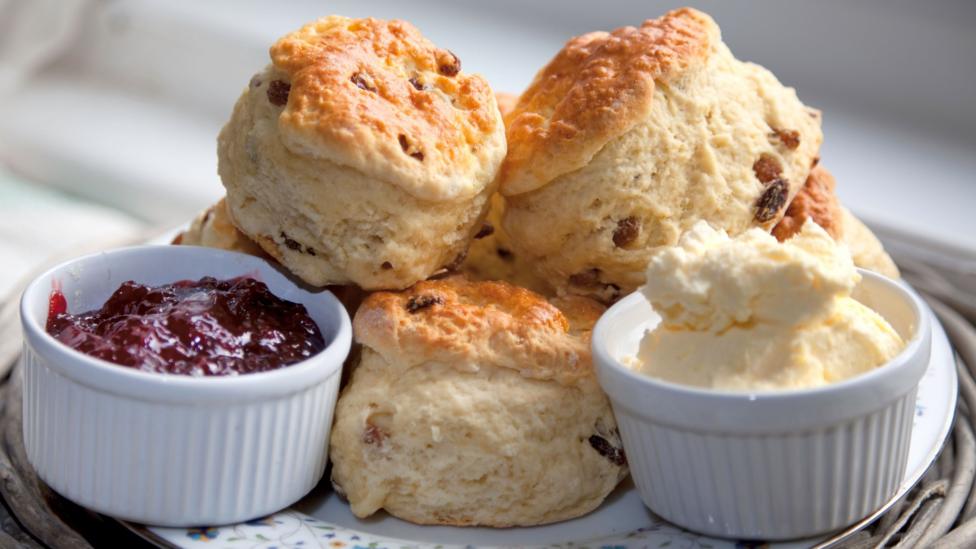
Why do cream teas remain so popular?
Cream teas have transcended their regional origins to become a significant commercial enterprise. Debra Quine, who runs the Bumble and Bee cafe business in Exmouth, reported that 9,580 scones had been sold at their premises so far in 2026.
"Cream teas are so quintessentially British,"Quine observed.
"They're quaint, they're nostalgic and they're particularly perfect for Devon seaside towns and a cute little café. There's just something about a cream tea that feels like a little treat. It feels special, it feels fancy and who doesn't like to feel like that?"She attributed their enduring appeal to being a
"simple affordable pleasure"that anyone could enjoy.
Simon and Claire Searle, who operate The Old Forge café in Chagford, found that scones accounted for approximately 10% of their gross sales in 2026. The couple noted that variations beyond the traditional cream tea had gained traction with customers.
"On our menu is a cheese scone, served with butter and sweet pickle - this is almost as popular as a cream tea,"they explained.
"We have a lot of overseas visitors who are very keen to try a scone, whether it's for breakfast, lunch or afternoon tea. There appears to be no right or wrong time to enjoy them."
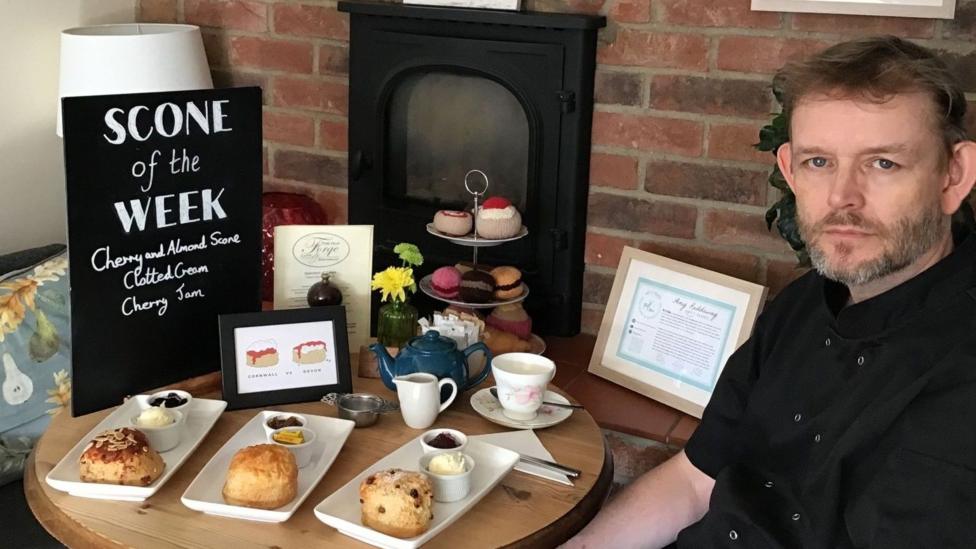
How has the cream tea tradition spread internationally?
Malyon noted that cream teas have become popular with tourists visiting the United Kingdom and can now be found in countries including Australia and North America, though many establishments do not serve traditional clotted cream.
"Also, about three times, instead of jam, I've been offered marmalade with my scones, which was a little unusual,"she added, highlighting how interpretations of the tradition vary abroad.
The cultural significance of the cream tea debate extends beyond casual dining. According to Cornwall Hospice, the organisation promoted a "Great Cornish Cream Tea" fundraising event with tickets available through a dedicated "jamfirst" page, demonstrating how the regional identity has been mobilised for charitable purposes. Similarly, a Cream Tea Train event advertised in 2026 promoted a traditional Cornish cream tea experience with "jam first of course!" as part of its marketing.
Key Facts
- A blind taste test conducted by The Cornish Company in 2025 found that 69% of participants preferred jam first, though regional preferences remain deeply divided.
- The earliest documented reference to a cream tea appears in the Cornishman newspaper in 1932, suggesting the tradition dates back to approximately 1900.
- Cream teas evolved from earlier British afternoon tea traditions that used splits rather than scones, with the shift occurring to reduce baking time and costs.
- Both Devon and Cornwall can claim historical connections to the cream tea tradition, with Devon adopting scones slightly earlier than Cornwall.
- Cream teas remain significant business for establishments across the South West, with individual cafes reporting thousands of scones sold annually.