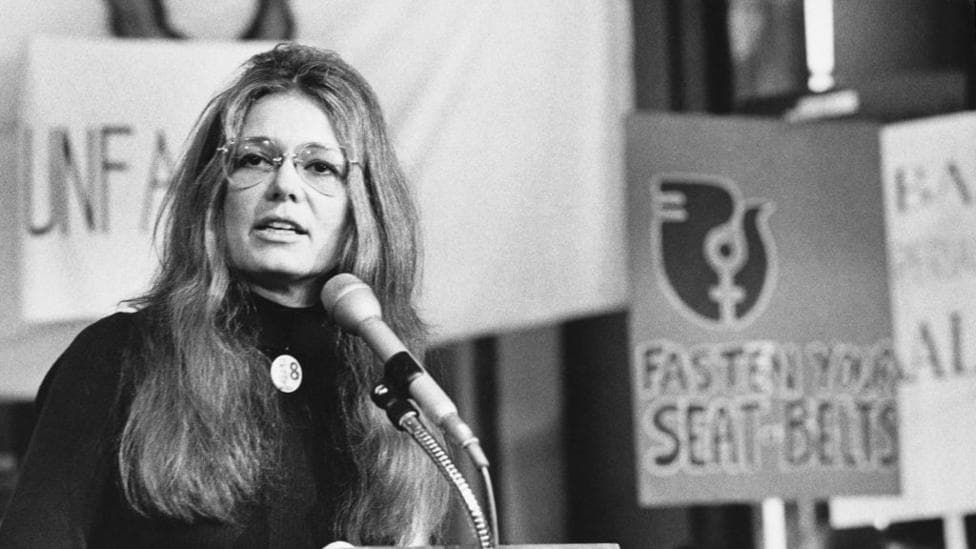
Gloria Steinem, the pioneering feminist activist and journalist who reshaped conversations about gender equality through decades of advocacy, journalism and organising, died on 2 September 2026 at her home in New York City, aged 92. According to the United Nations News Service, she was surrounded by family members when she passed away peacefully. To generations of women across the world, she was an inspiration—a fearless challenger of sexism, domestic violence, and the systemic barriers that confined women to narrow roles. As reported, she was a writer, lecturer, activist and organiser who fought for gender equality and women's civil and reproductive rights for more than five decades. Readers who encountered her work, attended her talks, or met her in person have shared memories of her courage, intelligence, and warmth—tributes that illuminate how profoundly she altered the landscape for women seeking to define their own lives.
Finding permission to be oneself
For many who came of age during the women's movement, Steinem's greatest gift was permission. One engineer from Switzerland, who graduated as one of only three women in a class exceeding 150 students, recalled that what she valued most was how Steinem allowed her to feel ordinary. In Steinem's vision, feminism meant being judged on capability rather than gender—a radical proposition at the time. The engineer found her books profoundly inspirational and empowering during her early career, when such validation was scarce.
A retired attorney from Michigan, who earned honours at every stage of her education—high school, university, and law school—described meeting Steinem at a Michigan Bar Association keynote in the 1990s. After thanking her
"for making my life so difficult"in a moment of gratitude for the doors Steinem had opened, the activist smiled, laughed, and embraced her. That brief encounter, the attorney reflected, ranked among the most meaningful of her life, surpassing meetings with diplomats and supreme court justices.
"Even though I've met many important people, diplomats, and supreme court justices, that quick chat with her to thank her for helping me to fully become myself was the best."
A retired educator from New Jersey encountered Steinem's work around 1975 while still in high school.
"Gloria blazed into my consciousness in high school, around 1975. She opened my eyes to the real world; I could define sexism and rail against it."The educator went on to live what she described as a beautiful life filled with love, joy, and travel—a path she credited directly to Steinem's influence. She attended one of Steinem's talks at a local school gymnasium and later travelled to the Women's March in Washington, DC in 2017, where
"Her voice was manna from heaven."

A presence that commanded attention
Those who encountered Steinem in person often remarked on her magnetic presence and the way she seemed to embody the possibilities she advocated for. A journalist from Maine, who was herself just beginning her career in 1959, met Steinem at the World Festival of Youth and Students held in Vienna that summer. The festival, widely acknowledged to be sponsored by the Soviet bloc in the aftermath of the failed Hungarian uprising against communism, drew young people from across the globe. The American delegation split into two groups: the New York contingent and the Cambridge crowd. Steinem served as the Cambridge group's secretary, though her actual influence far exceeded the title.
The journalist recalled Steinem as
"the super-glamorous, gorgeous, dynamic 'secretary' of the Cambridge crowd."In her summer dress and striking footwear, she was visibly in command, orchestrating operations, arranging for the legendary Ella Fitzgerald to perform a free concert, and feeding journalists stories and angles.
"I don't think her official title was anything more than secretary, but clearly she was the person in charge."The journalist was unsurprised when Steinem emerged years later as a central figure in the women's movement, noting that
"Her combination of brains and a well-nourished sense of humour brought strength, wit, and intelligence to the movement."

Decades later, in March 2014, a New York City resident spotted Steinem aboard an uptown 6 subway train. Though the train was fairly crowded, when someone offered her a seat, she declined, saying she was only travelling a couple of stops. Despite the likelihood that most passengers would not have recognised her by name, her presence was unmistakable. A young woman approached her shyly, and they spoke briefly; Steinem appeared delighted by the interaction. The observer noted that she
"was a lovely, gracious person and – like all true New Yorkers – happy to hop on the subway."
Catalyst for lifelong commitment
For some, a single encounter with Steinem proved transformative enough to shape entire careers. A woman who attended a forum where Steinem spoke at Wichita State University in 1972 described the experience as pivotal. After her talk, Steinem spent time with attendees, demonstrating warmth and accessibility.
"She was so warm and friendly."Inspired by this meeting, the woman and others worked to advance the Equal Rights Amendment, though that effort ultimately failed. A year or two after meeting Steinem, she relocated to Tehran, Iran, where Steinem's perspective on women's circumstances proved invaluable. The encounter became
"the catalyst for my lifelong interest in gender studies and in particular issues and problems of middle-aged women around the world."
In 1972, when Nevada cut welfare payments in half—a decision that disproportionately affected women and children—Steinem was among several celebrities who travelled to the state to protest. She participated in a major march that shut down the Las Vegas Strip and also came to northern Nevada to picket legal brothels that were owned and operated by men. Her activism extended to supporting women's political ambitions; she backed one woman's campaign for US Senate at a time when no women held seats in that chamber. Those who worked alongside her remembered her as
"kind. Kind eyes, soft spoken, and usually taking a back seat to listen to the other women in the room. And extremely smart with strategy, and witty at confronting chauvinism and stupid men."
Addressing the invisible crisis
One of Steinem's most significant contributions was bringing visibility to domestic violence at a time when the issue remained largely hidden and ignored by institutions. A retired domestic violence worker from Seattle credited Steinem's advocacy with inspiring her own career path. After witnessing how her mother was dismissed by the system in the 1960s, she resolved to become a domestic violence rescuer. She later helped pass the Violence Against Women Act in 1994.
"Gloria Steinem was a groundbreaking giant. She was smart and articulate like nobody before her, except Betty Friedan – we were so lucky to have these brave women. They woke us up from a long domestic violence nightmare."While Steinem worked across many areas of women's rights, this worker emphasised her singular commitment to addressing domestic violence:
"Nobody was talking about it before."
Reaching across generations and continents
Steinem's influence extended far beyond the United States and across generational lines. An Australian woman who grew up in regional Queensland found that reading Steinem's books felt
"like opening a portal to a new world that I wanted to be part of."Though she never met Steinem until attending her final Australian tour in May 2016 at Sydney Town Hall, the experience proved transformative. She brought her then 12-year-old daughter, who was struck by the occasion. The daughter witnessed the excitement of the crowd and encountered Steinem's published works in person. During conversations with other women at the event, the daughter heard stories that astonished her—accounts of women being forced to leave their jobs upon marriage in the 1960s. The family purchased several of Steinem's books, and the daughter began reading them on the train home.
"It was a truly memorable evening."
According to the New York Times, Steinem described herself as
"an entrepreneur of social change,"a characterisation that captures how deliberately and strategically she approached her work. Her death prompted tributes from figures spanning politics and popular culture, underscoring her reach and the depth of her impact across multiple generations and sectors of society.
A legacy that endures
The memories shared by those who encountered Steinem reveal a woman whose influence operated on multiple levels simultaneously. She provided intellectual frameworks for understanding inequality, modelled courage in confronting systemic injustice, demonstrated that femininity and strength were not mutually exclusive, and showed through her actions that women's liberation required sustained commitment across many fronts—from electoral politics to labour rights to the hidden crisis of domestic violence. Her warmth and accessibility meant that even brief encounters left lasting impressions, while her strategic intelligence and wit equipped movements with both moral clarity and practical effectiveness. For readers, attendees, colleagues, and chance encounters on the subway, Steinem represented the possibility that one person's vision and determination could reshape the world for millions of others.