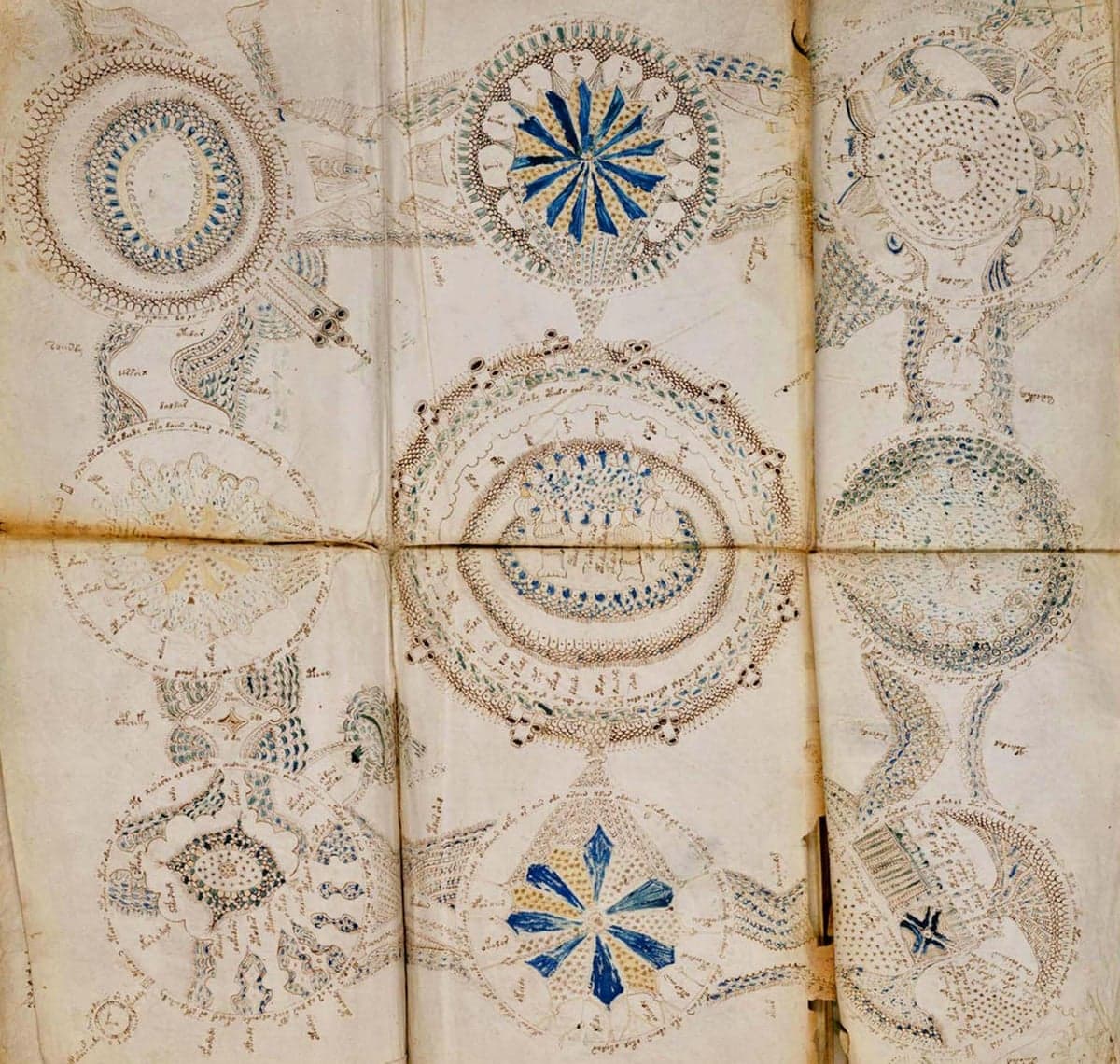
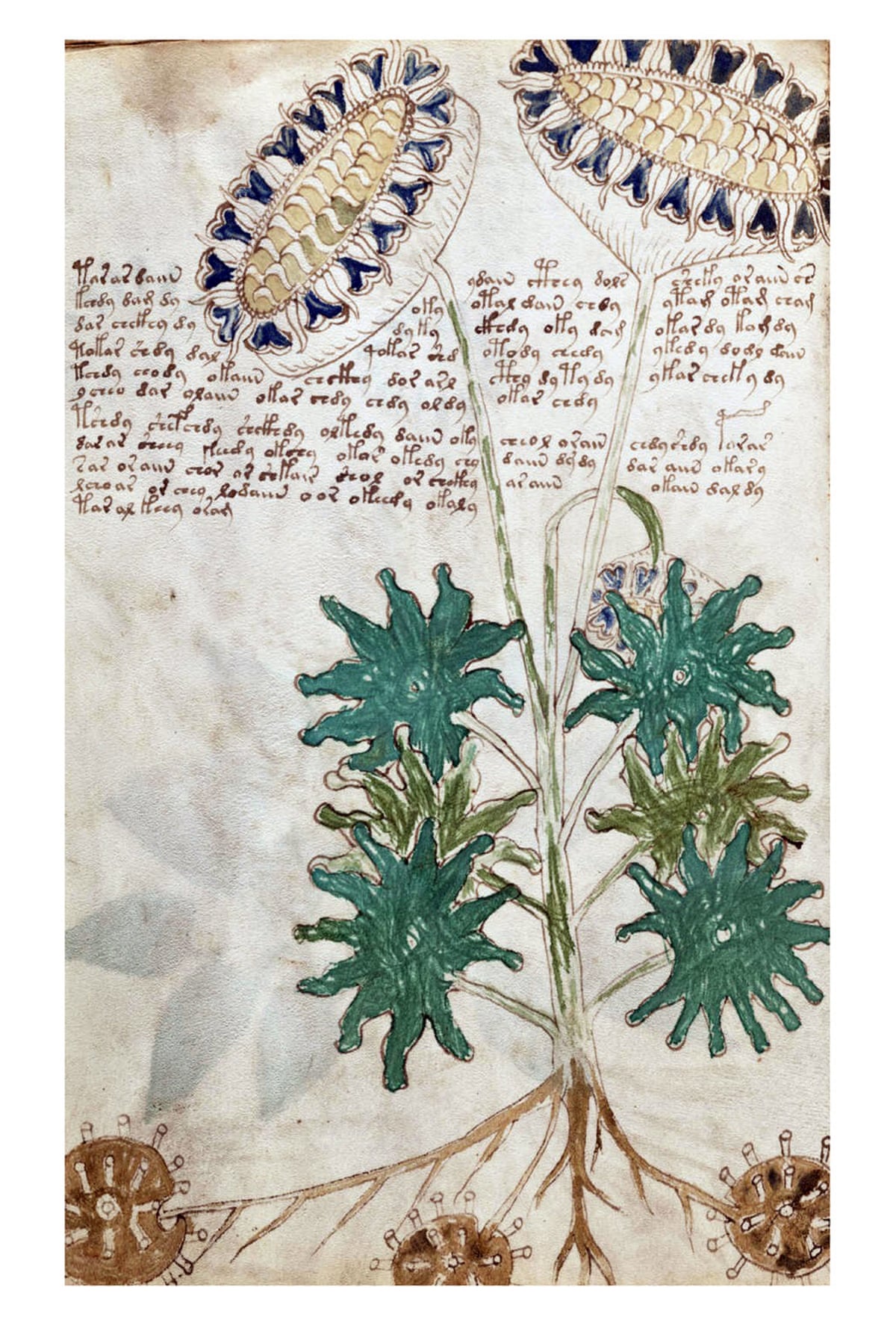
Researchers have long grappled with one of history's most enigmatic documents: a medieval codex containing botanical illustrations, astronomical diagrams, images of unclothed figures and text written in an unknown script. The Voynich manuscript has been attributed variously to a lost language, a musical composition, an instruction manual or an elaborate deception, yet its genuine purpose has eluded cryptographers and scholars for centuries.
A fresh investigation now proposes a radical explanation for why consensus has remained so elusive: the manuscript's pages may have been assembled in the wrong sequence entirely. Researchers Colin Layfield and Lisa Fagin Davis contend that the document's folded sheets were originally stacked as separate units—similar to a pile of greeting cards—before being incorrectly bound in the conventional nested format sometime in the mid to late 15th century.
Although their discovery does not immediately unlock the script known as "Voynichese", the scholars argue their finding fundamentally reshapes understanding of what the manuscript was designed to accomplish.
"Many people have wanted the Voynich to be the work of a single brilliant individual toiling away in a medieval London workshop or similar location," Davis explained. "The evidence actually points toward something more collaborative—perhaps a collection of small booklets through which knowledge was transmitted across generations. The 'solitary genius' narrative essentially collapses."
How did scholars discover the binding error?
The manuscript's mysterious origins have captivated researchers since its appearance in 17th-century book collector inventories. When Polish revolutionary and antiquarian dealer Wilfrid Voynich purchased it in 1912 from his Soho Square shop in London, many believed it was a scientific journal authored by 13th-century Renaissance figure Roger Bacon. Some attributed it to Leonardo da Vinci instead.
Modern chemical examination of the parchment, now housed at Yale University, has established through radiocarbon dating that the material originates between 1404 and 1438, eliminating these celebrated attributions.
For their study "Singulion Structure and the Voynich Manuscript," Layfield and Davis employed computational text analysis to examine passages and discovered that numerous pages demonstrated strong textual coherence even when separated by many intervening leaves. This pattern suggested the binding sequence was incorrect.
Physical evidence reinforced this conclusion. In the current arrangement, certain illustrations depicting streams or conduits extend into the binding margin—the blank interior edge where pages are joined—yet fail to align properly with images on the facing page.
"Once you treat them as loose pages stacked together, all these artistic anomalies suddenly join up,"noted Layfield, a senior lecturer in information systems at the University of Malta.
What does this reveal about the manuscript's purpose?
The repositioning hypothesis addresses numerous structural inconsistencies with remarkable efficiency, according to Davis, a specialist in medieval paleography. She identified only one other known medieval manuscript preserved in a singulion arrangement: North African Qurans, which were apparently distributed as small instructional booklets.
"I think it's likely we are looking similarly at an object that was made by a community that wanted to pass its knowledge forward,"Davis stated. Paleographical investigation indicating the manuscript was produced by as many as five different scribes supports this interpretation.
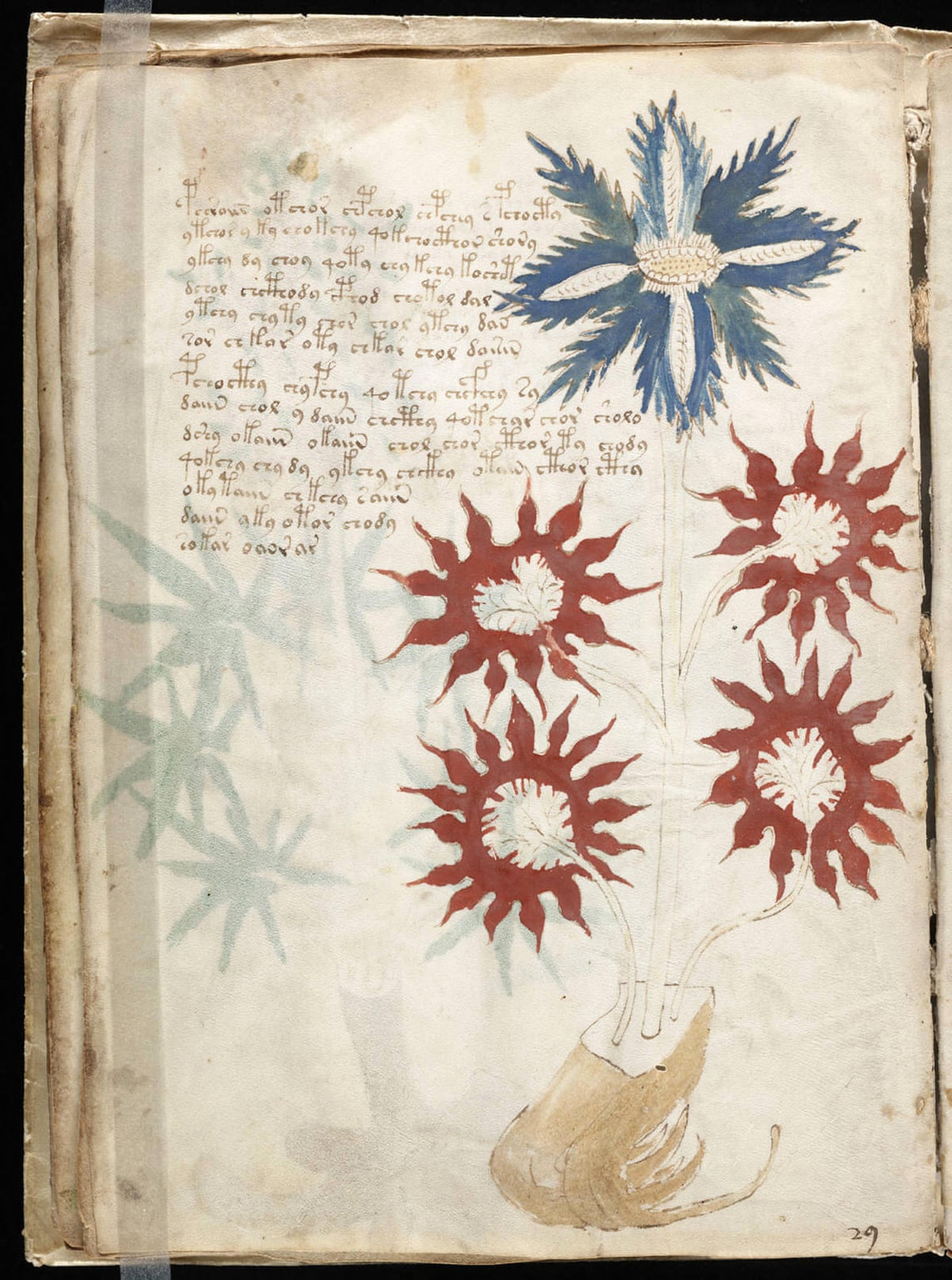
The codex contains illustrations resembling female reproductive anatomy alongside depictions suggesting herbal knowledge and astrological study.
"When you put all of this together, it starts to feel like a book of women's folk knowledge that's being preserved,"Davis said, though she acknowledged
"you cannot prove that yet."
What remains uncertain about the theory?
A methodological examination published following the Layfield and Davis research questions whether their data conclusively establish the proposed reading sequence, arguing instead that similarities may exist only within individual physical bifolia. The review also challenges the underlying assumption that meaningful text necessarily maximizes lexical similarity between consecutive pages.
The same review notes that the manuscript's astrological and Rose bifolia are already singulions, and points to illustrations crossing binding margins as evidence relevant to the hypothesis.
Regarding the mystery of Voynichese itself, Davis suggested it remains plausible that other manuscripts written in this script once existed.
"The problem is that so few manuscripts have survived from the middle ages, because they weren't bound. The irony is that whoever mis-bound this manuscript still did us a huge favour by ensuring its survival."
Some scholars have proposed that the Voynich text represents nothing more than random characters designed as a hoax or forgery. Others have determined it more probably represents a genuine, though still unidentified, natural language.
In 2019, a biology research assistant at the University of Bristol claimed to have deciphered portions of the text, though subsequent analysis disputed these findings, and the university later withdrew its endorsement of the claims from its website.
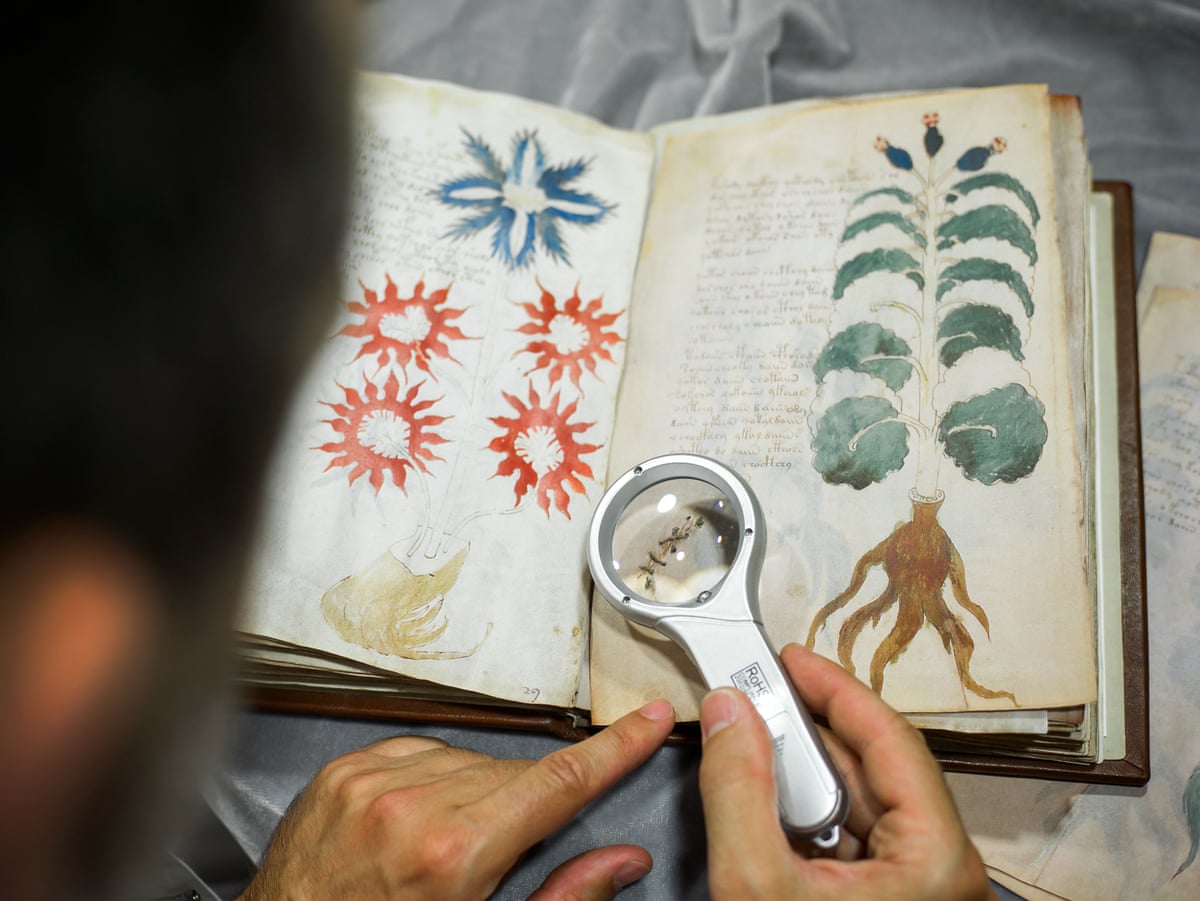
The Layfield and Davis article, titled "Singulion Structure and the Voynich Manuscript," was published in the open-access journal *Digital Medievalist*, which describes the work as using computer analysis to investigate the manuscript's original physical structure.