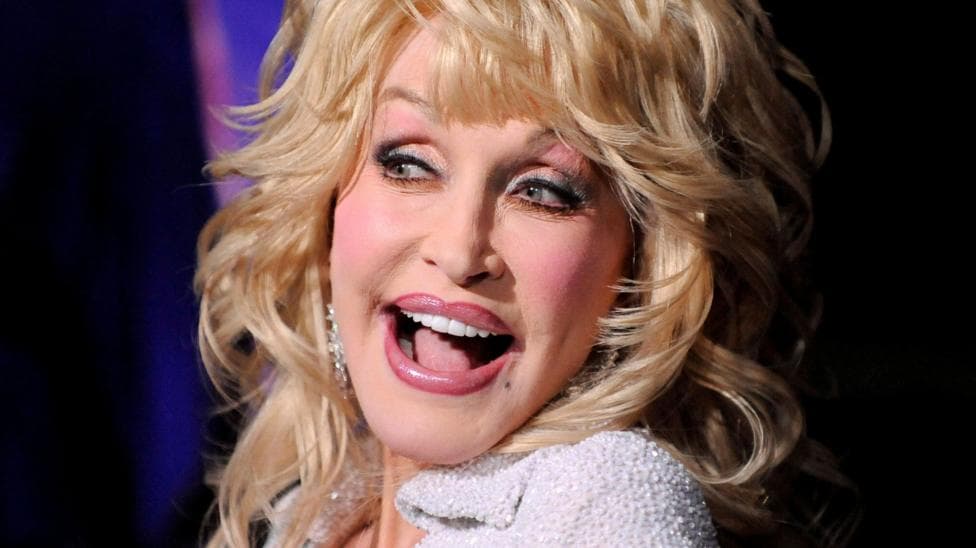
Dolly Parton, the much-loved US singer-songwriter who died on 25 August 2026 at the age of 80, was recognised far beyond her musical achievements for her pearls of wisdom and humour. Her death in Nashville, Tennessee, following a cancer diagnosis, prompted an outpouring of tributes from across the entertainment world and beyond. Tributes from fellow artists including Reba McEntire, Celine Dion, Lily Tomlin and Carole King highlighted not only her musical legacy but her generosity and cultural impact. U.S. President Donald Trump ordered American flags to be flown at half-staff for a week in her honour, and public landmarks were illuminated in pink as a tribute.
Throughout her nearly six-decade career spanning music, film, business and philanthropy, Parton regularly offered perceptive and witty insights about life, music, fame and equal rights. Her words reflected a philosophy shaped by her humble beginnings and her determination to build something meaningful from her talents.
What did Parton believe about life's challenges?
Parton's approach to adversity was characterised by resilience and optimism.
The way I see it, if you want the rainbow, you gotta put up with the rain.This sentiment captured her belief that difficulty was inseparable from achievement. She extended this philosophy to human connection, saying
I always just thought if you see somebody without a smile, give 'em yours!
Her determination to forge her own path was equally clear.
I'm not going to limit myself just because people won't accept the fact that I can do something else.She encouraged others to take similar action:
If you don't like the road you're walking, start paving another one.She also warned against losing sight of what truly mattered, observing that
Don't get so busy making a living that you forget to make a life.Her metaphor for personal growth was simple:
Storms make trees take deeper roots.She reflected on her own journey with gratitude, noting that
Sometimes, what would look like to be my biggest mistakes turn out to be my biggest blessings.
How did Parton view her work as a songwriter?
Songwriting stood at the centre of Parton's artistic identity.
I actually take my songwriting more serious than anything else I do, so I would say I am a songwriter first.For her, the craft served a deeper purpose:
It's my way of expressing myself. It's my therapy.She acknowledged the autobiographical nature of her compositions, explaining that
You have to search for a long time because I've written a lot of songs. But yes, there are pieces of me, of course, in everything I write.
Her commitment to music was unwavering.
I have to write and sing. See, that was my first love, and I have to do that forever, however I have to do it.She rejected the notion that commercial success required compromising her artistic vision.
I look totally artificial, but I am totally real, as a writer, as a professional, as a human being. A rhinestone shines just as good as a diamond.
Parton's motivation transcended financial reward.
My dream was always to make as many people happy as I could in this life.She was explicit about her priorities:
I always count my blessings, more than I count my money. I don't work for money, never did. It was the art, it was the job. I loved the work. And I've done well, and I'm thankful for it.Her ambitions as a young woman were rooted in aspiration rather than material greed.
I wanted more than to just be a farmer's daughter, even though I'm proud to be [one]. I just wanted pretty things. I wanted money to buy the things I had always been impressed with as a child. I wanted, I guess, to be a star.
What was Parton's philosophy about her distinctive appearance?
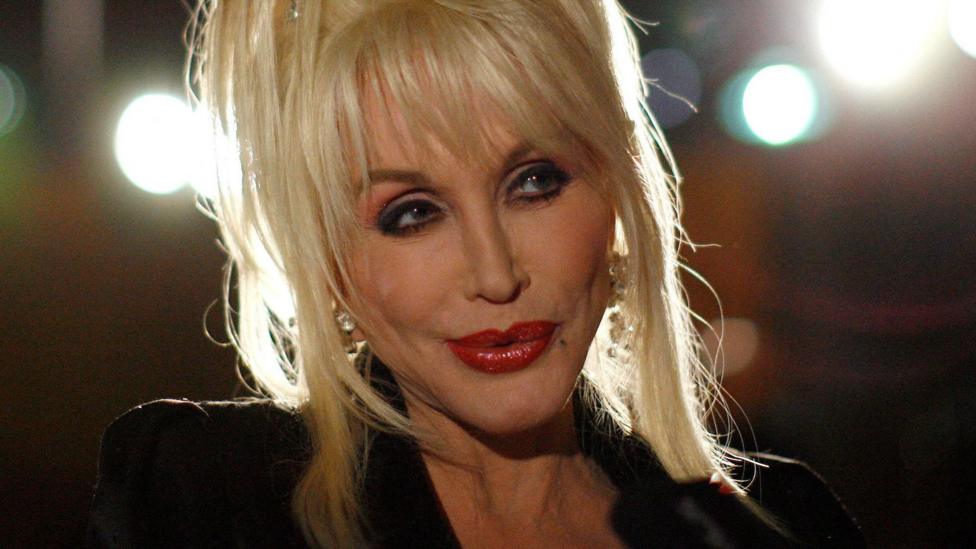
Parton's visual presentation became as iconic as her music, and she spoke candidly about the deliberate nature of her image.
If I was trying to describe myself to someone that had never seen me before, I would say, 'Calm down. Don't get scared. It's just me. I know I look totally bizarre and artificial, but I'm totally real inside.'She used humour to deflect criticism, declaring
I'm not offended by all the dumb blonde jokes because I know I'm not dumb - and I'm not blonde either.
Her commitment to her aesthetic was absolute.
It costs a lot of money to look this cheap.When asked about the time required for her appearance, she quipped:
People always ask me how long it takes to do my hair. I don't know, I'm never there.She was unapologetic about cosmetic procedures, stating
If I see something sagging, bagging and dragging, I'm going to nip it, tuck it, and suck it.

Parton rejected conformity as a principle.
I don't like to be like everybody else. I've often made the statement that I would never stoop so low as to be fashionable. That's the easiest thing in the world to do.Her look was inspired by a specific figure from her youth:
I make jokes about it, but it's the truth that I kind of patterned my look after the town tramp. I didn't know what she was, just this woman who was blond and piled her hair up, wore high heels and tight skirts, and, boy, she was the prettiest thing I'd ever seen. Momma used to say, 'Aw, she's just trash', and I thought, 'That's what I want to be when I grow up. Trash.'
She distinguished between different forms of intelligence, saying
I'm pretty sharp. I'm not educated and I'm not that intelligent, but I'm smart. They say somebody's street smart. I feel like if I got intelligence, it's just a country smart.When a journalist asked what trait she most deplored in herself, she responded with characteristic candour:
The fact that sometimes my mouth is a little too big and a little too open and sounds too much like a sailor.Yet she remained grounded in what mattered most:
I'm very real where it counts, and that's inside.
What did Parton teach about love, family and mortality?
Parton's views on love were rooted in shared purpose rather than romantic sentiment alone.
They say love isn't about two people gazing into each other's eyes, it is about two people gazing outwards in the same direction. I believe this with all my heart.She believed authenticity fostered connection:
I never really tried to hide myself from anybody. I think that's one of the reasons I'm still around, people feel like they know me.She was clear about her priorities:
I don't want to be a star if I have no life.
Her decision not to have biological children was deliberate and purposeful. Speaking about her book gifting programme for children, the Imagination Library, she explained:
Since I had no kids and my husband was pretty independent, I had freedom. So I think a big part of my success is the fact that I was free to work. And I didn't have children, because I believe that God didn't mean for me to have kids, so everybody's kids could be mine, so I could do things like the Imagination Library.This philosophy allowed her to extend her influence across generations.
Parton rejected the notion of aging as a limitation.
I ain't never gonna be old because I ain't got time to be old. I can't stop long enough to grow old. I'm just gonna be the best I can be at whatever age I am.Her perspective on mortality was spiritual and peaceful.
When I'm done, I can rest in peace knowing I've done my best. I hope that when my time comes, I'll leave something behind that others can use to lift themselves up.She expressed her faith directly:
When I die, I'll really be getting to live then because I believe that there is a greater place than this.When asked what her funeral song should be, she replied with humour:
I don't know - but I won't be singing it!
How did Parton advocate for social justice?
Parton used her platform to champion equality across multiple dimensions of human identity. On marriage equality, she was forthright:
Yes, I support gay marriage. They have every right to be as miserable as straight people.She was equally direct about racial justice, stating
And of course black lives matter. Do we think our little white asses are the only ones that matter? No!
Her acceptance extended to her own family.
I've got transgender people. I've got gays. I've got lesbians. I've got drunks. I've got drug addicts - all within my own family. I know and love them all, and I do not judge.She even reflected on her own identity with humour:
It's a good thing I was born a girl, otherwise I'd be a drag queen.
What message did Parton leave for young people?
Through her Imagination Library, Parton addressed young readers directly with encouragement rooted in her own experience. In a letter to recipients, she wrote:
You and all of your friends are very special. There is no limit to what you can do or how far you can go.She distilled her life lessons into actionable guidance:
Just remember the lessons my family taught me - dream big dreams; learn everything you can learn; and care for all those who care for you. You do all of these things and you can be anyone you want to be.She closed with a personal affirmation:
You are terrific, and remember... I will always love you.
How is Parton being remembered?
Reba McEntire described her as "my buddy Dolly" in her tribute, while Jane Fonda recalled first meeting Parton at the Grand Ole Opry when she was performing with Porter Wagoner and preparing for her solo career. The Grand Ole Opry had previously honoured her legacy through annual celebrations; a 2026 birthday celebration called "Opry Goes Dolly" had been staged earlier in the year.
Parton's influence extended beyond music into business and philanthropy, making her a cultural icon whose impact will continue to resonate through the lives she touched and the institutions she built.