Bitterness occupies an unusual place in cooking: it is often perceived as undesirable, yet it possesses remarkable culinary potential. This contradiction deepens when considering how bitterness actually functions in the kitchen. While one might expect it to pair naturally with hot, pungent flavours such as mustard and horseradish, the reality is quite different—bitterness cools and refreshes rather than builds intensity. In Ayurvedic cooking traditions, bitter ingredients are prized specifically for their capacity to refresh the palate and restore balance to a meal. These restorative qualities form the backbone of two dishes that showcase how thoughtfully deployed bitterness can elevate everyday cooking.
Chef and food writer Alexina Anatole, a MasterChef finalist in 2021, has built her culinary philosophy around mastering this often-misunderstood flavour profile. Her cookbook Bitter explores how to harness bitterness as a tool for creating more sophisticated and balanced dishes. The two recipes that follow—a tahini panzanella and a curried corn farinata—demonstrate this philosophy in practice, with the elegant bitterness of tahini and the clean bite of grapefruit doing the essential work of refreshing and harmonising each plate.
What makes tahini panzanella different from traditional versions?
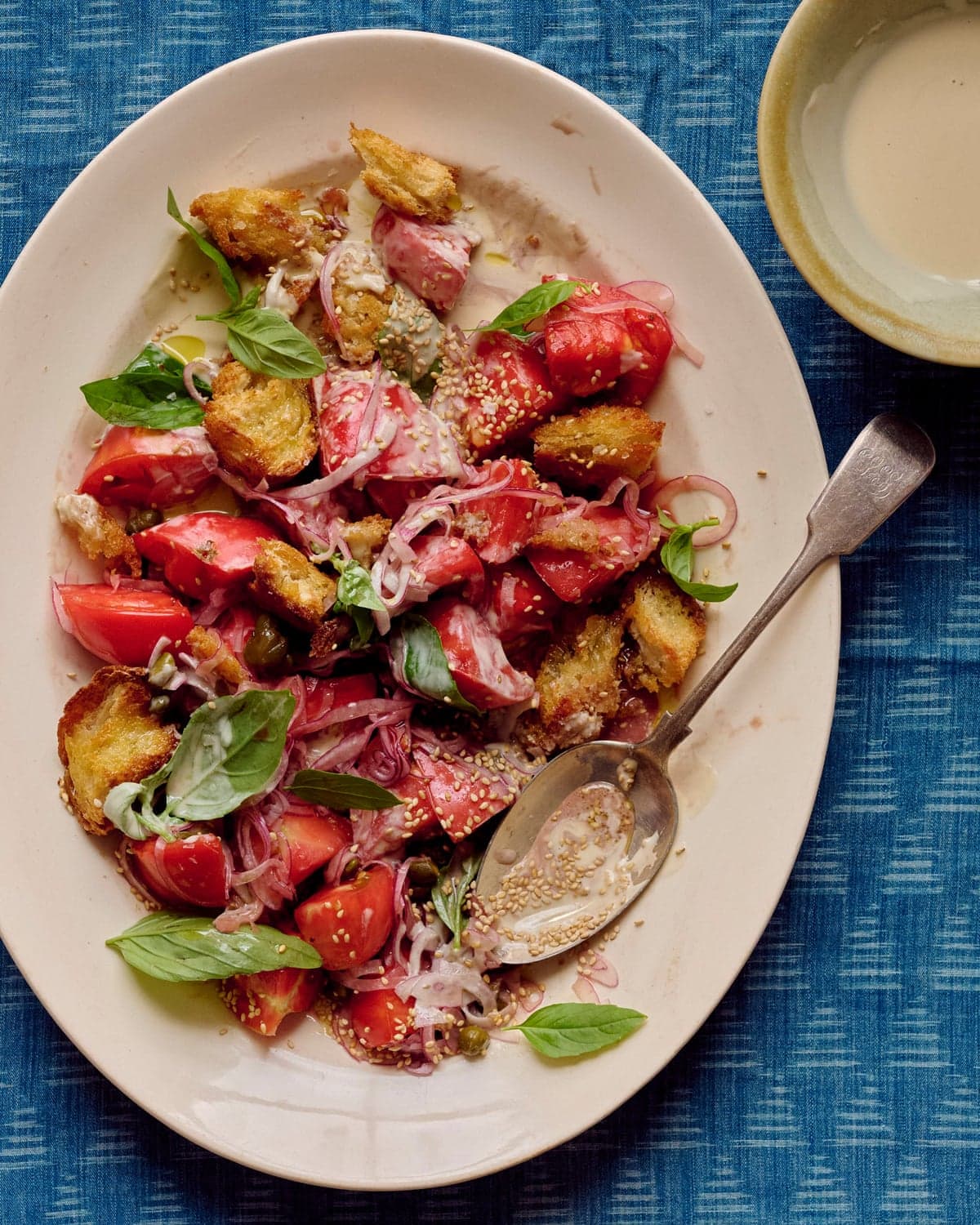
Tahini transforms this Tuscan bread salad into something altogether more refined and unexpected. Rather than relying solely on vinegar and oil, the tahini dressing introduces a subtle bitterness and creamy texture that binds the other elements together while maintaining a sense of lightness. The combination of pomegranate molasses, capers, and fresh basil creates layers of flavour that the tahini both anchors and elevates.
Tahini panzanella
Prep 10 min | Cook 25 min, plus resting | Serves 2–4
For the salad:
500g large tomatoes (beef, oxheart or monterosa varieties work well)
1 tsp flaky sea salt
½ small garlic clove
1 tbsp sherry vinegar or red-wine vinegar
1 tbsp pomegranate molasses
1 small red onion, peeled and very thinly sliced
½ tbsp capers, finely chopped, or nonpareilles (which are already small enough)
½ tbsp sesame seeds, lightly toasted
Basil leaves, to garnish
For the croutons:
125g sourdough with crusts, torn into rough pieces
2 tbsp extra-virgin olive oil
½ tsp flaky sea salt
For the tahini dressing:
2 tbsp tahini
1 tbsp lemon juice
1 tbsp extra-virgin olive oil
¼ tsp fine sea salt
Heat the oven to 220°C (200°C fan)/425°F/gas 7. Chop the tomatoes into haphazard, chunky pieces and place them in a colander set over a bowl. Toss with the flaky salt and allow to drain for 10–15 minutes, which concentrates their flavour and prevents the salad from becoming waterlogged.
While the tomatoes drain, spread the bread pieces on a baking tray, toss with the olive oil and salt, then bake for 10 minutes until golden and crisp. In a separate bowl, grate the garlic directly into the tablespoon of sherry vinegar; this technique softens the garlic's raw bite and distributes it evenly throughout the dressing.
Prepare the tahini dressing by whisking together the tahini, lemon juice, olive oil and salt. Gradually add approximately two tablespoons of ice-cold water, whisking continuously until the mixture reaches the consistency of double cream. The exact amount of water needed will vary depending on how thick your tahini is, so add it slowly and adjust to achieve the right consistency.

Transfer the drained tomatoes to a serving bowl and stir in the pomegranate molasses, sliced red onion and capers. Add the sherry vinegar and garlic mixture, along with the warm croutons, and toss thoroughly to combine. Pour the tahini dressing over the salad and toss again, then set aside for five to 10 minutes to allow the croutons to soften slightly and absorb the surrounding flavours. Serve garnished with the toasted sesame seeds and fresh basil leaves.
How does grapefruit balance the richness of chickpea flour?
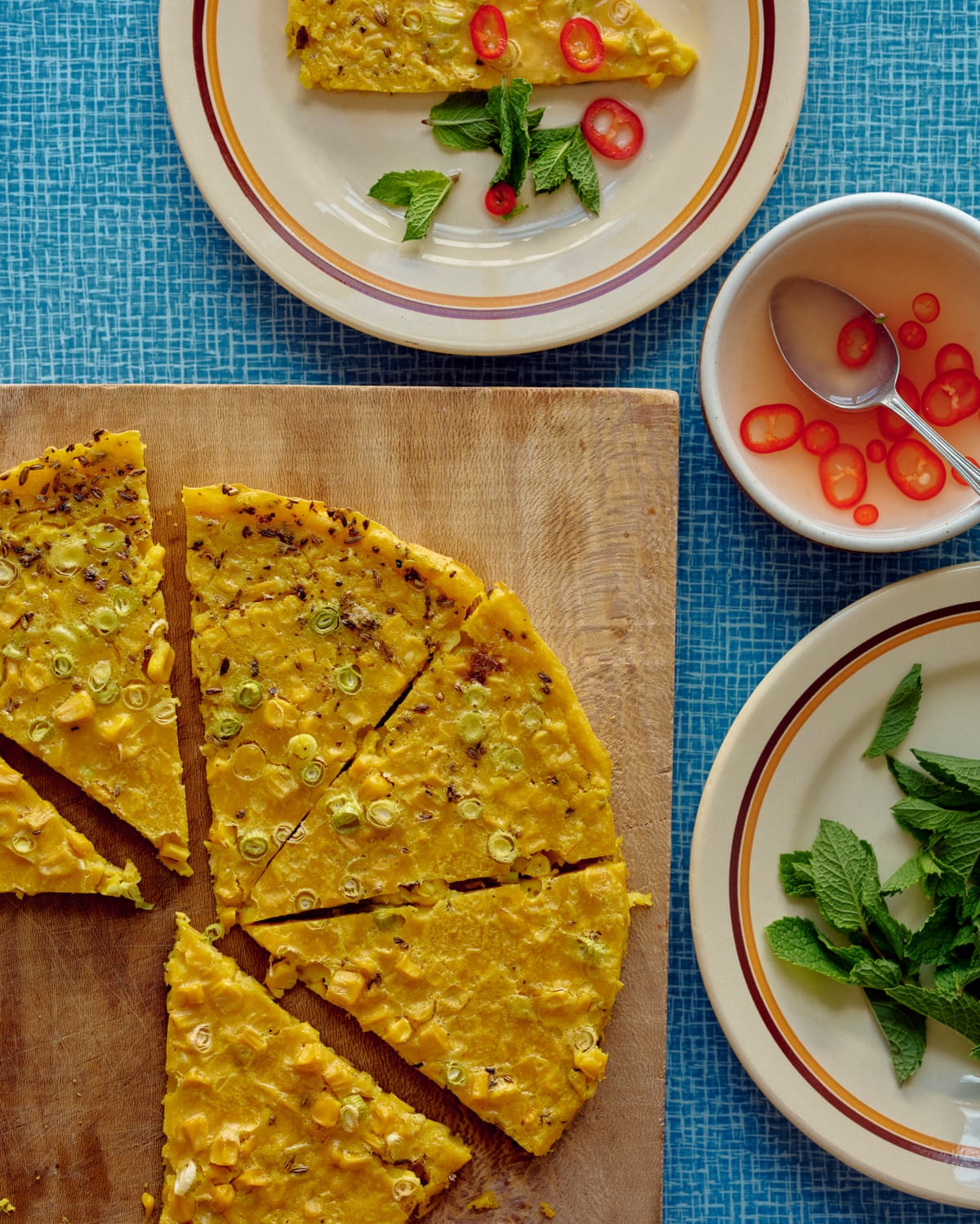
The grapefruit dipping sauce provides a sharp, citrus counterpoint to the earthiness and slight richness of the farinata. Its acidity and bitterness cut through the chickpea flour's density while the chilli adds warmth, creating a complete flavour experience that feels both light and satisfying.
Curried corn farinata with grapefruit dipping sauce
Prep 10 min | Rest 15 min | Cook 40 min | Serves 3–4 as a light lunch
For the farinata:
100g chickpea flour
½ tsp ground turmeric
½ tsp garlic powder or granules
½ tsp fine sea salt
1 tsp cumin seeds, toasted
1 tsp coriander seeds, toasted
4 tbsp extra-virgin olive oil
75g tinned sweetcorn, drained, or frozen and defrosted
3 spring onions, finely sliced
Mint leaves, to serve
For the grapefruit dipping sauce:
4 tbsp fresh red grapefruit juice (from approximately 1 grapefruit)
1 tbsp rice vinegar
1 tsp caster sugar
1 red chilli, finely chopped (seeds included if you prefer more heat)
In a large jug, combine the chickpea flour, turmeric, garlic powder or granules and salt. Gradually whisk in 230ml of cold water, ensuring no lumps remain, then leave the batter to rest for 15 minutes. This resting period allows the chickpea flour to fully hydrate and develop a smoother texture.
Heat the oven to 230°C (210°C fan)/450°F/gas 8. Roughly crush the cumin and coriander seeds using a pestle and mortar or the back of a spoon, breaking them up but stopping short of grinding them into powder; this releases their oils while preserving texture.
Make the dipping sauce by combining all its ingredients in a small bowl, stirring to dissolve the sugar.
Place a 20cm nonstick, ovenproof frying pan on a medium-high heat. Once the pan is hot, add three tablespoons of olive oil and allow it to heat for one minute. Meanwhile, whisk the remaining tablespoon of oil into the batter to ensure even distribution.
Add the crushed spices to the hot oil and let them sizzle gently for 30 seconds to bloom their flavours, then pour the batter into the centre of the pan—it should sizzle on contact. Scatter the corn and spring onions evenly over the surface, then transfer the pan to the oven and bake for 25 minutes until the farinata is golden and crisp around the edges. Remove from the oven, allow to rest for one minute, then turn out onto a board. Cut into wedges and serve immediately with the grapefruit dipping sauce and fresh mint leaves.
Anatole's approach to bitterness extends beyond these two recipes. Her cookbook Bitter is structured around mastering this flavour profile across a range of dishes, and other recipes from the collection include Tahini Tantanmen Ramen with Crispy Shiitakes, showing how the bitter-flavour theme runs consistently through her work. This philosophical consistency reflects a broader shift in contemporary cooking toward embracing complexity and balance rather than pursuing sweetness or heat alone.
For those seeking to explore more seasonal vegetable cooking, other chefs have shared approaches to celebrating tomatoes at their peak, while pomegranate molasses appears in other contemporary recipes as a way to add depth and tartness to vegetable-forward dishes. These ingredients—tahini, pomegranate molasses, grapefruit, and chickpea flour—represent a growing interest in building flavour through balance rather than dominance.
Key Facts
- Bitterness in Ayurvedic cooking is valued for its ability to refresh and rebalance the palate, functioning differently from hot or pungent flavours
- Tahini dressing requires gradual addition of ice-cold water to achieve the correct consistency, typically around two tablespoons depending on tahini thickness
- Farinata is a naturally gluten-free dish made from chickpea flour, making it accessible to those with dietary restrictions
- The grapefruit dipping sauce's acidity and bitterness are designed to cut through the earthiness of chickpea flour and complement the warmth of curry spices
- Alexina Anatole is the author of Bitter, published by Square Peg at £27, which explores mastering bitterness as a culinary tool across multiple recipes and cooking styles