Millions of households across England, Scotland and Wales face their steepest winter energy bills in three years when a new price cap takes effect on 1 October 2026. The industry regulator Ofgem is expected to announce the updated cap on 26 August 2026, reflecting sharp increases in wholesale gas costs that have rippled through the energy market.
The rise will affect approximately 33 million households on variable tariffs, with analysts forecasting a 4% increase from the current cap level. This timing coincides with the onset of colder weather, when heating demand peaks and energy consumption typically climbs.
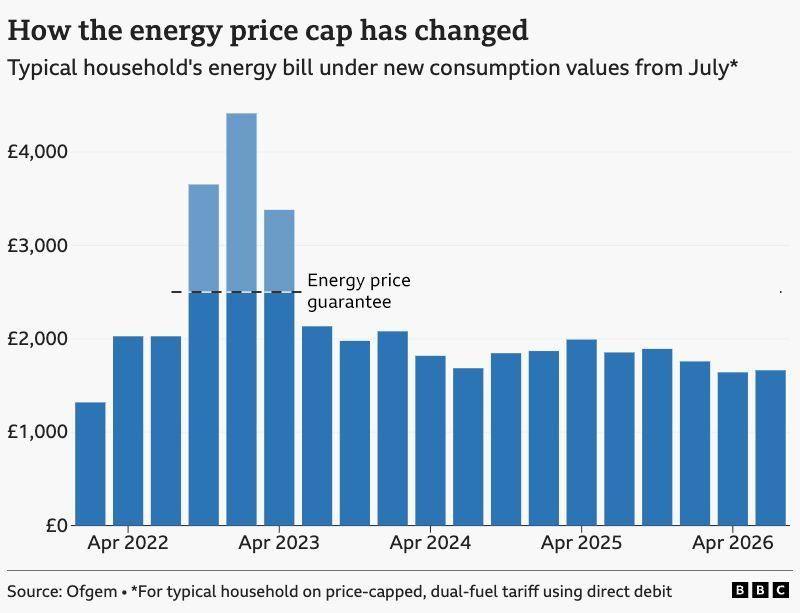
Earlier in 2026, energy prices had already surged significantly. From 1 July, the energy price cap rose by 13%, increasing typical annual bills by £221 due to higher wholesale costs linked to geopolitical tensions. That increase set the stage for further volatility heading into autumn.
How much will my bill rise?
A typical household paying by direct debit and using standard amounts of gas and electricity will see their annual bill reach £1,729 from October, according to forecasts from Cornwall Insight, the energy consultancy. This represents an increase from £1,663 between July and September 2026 and marks the highest level since late 2023.
The price cap sets a maximum charge per unit of gas and electricity rather than a fixed total bill, meaning individual households' final costs depend on their actual consumption. In July 2026, Ofgem revised its definition of "typical" household usage downward to 9,500 kWh of gas and 2,500 kWh of electricity annually, reflecting the fact that many homes have reduced consumption in response to sustained high prices and improved energy efficiency measures.
Those on fixed-rate tariffs will see no change to their payments until their contract ends, providing some insulation from the price cap increase. Approximately 40% of bill-payers currently hold fixed deals, meaning roughly 60% of households will face higher charges when the new cap arrives.
What is driving the price increase?
Wholesale gas prices have been the primary driver of the expected autumn increase. Wholesale gas-linked pressure is the key factor behind the expected autumn increase, with the average price of gas running 61% higher over the past three months compared to late 2025, according to Energy UK, the suppliers' trade body.
International market volatility, particularly stemming from the US-Israeli conflict with Iran, has created uncertainty that has pushed many consumers toward fixed-rate protection. Millions of households have switched to fixed tariffs in response to this geopolitical instability, seeking predictability in their energy costs.

How have energy bills changed since the crisis began?
The energy crisis triggered by Russia's full-scale invasion of Ukraine in 2022 fundamentally reshaped household energy costs. Compared with pre-crisis norms, bills have risen by approximately 70% on average, according to industry data. This sustained elevation has created severe financial strain across the country.
The impact on household finances has been compounded by accumulated debt. Energy UK estimates that total unpaid energy bills have climbed to £6 billion, with expectations for this figure to reach approximately £7 billion by the end of 2026. The average person in energy debt without a payment plan now owes £3,500, a stark indicator of the financial pressure households face.
What support is available for struggling households?
Energy suppliers operate various assistance schemes for customers unable to pay or facing difficulty meeting their bills. Energy UK maintains a directory of these programmes, though the trade body emphasises that companies can typically only provide help when customers proactively contact their supplier to explain their situation.
The government has implemented some measures to ease the burden. From October 2026, a reduction in VAT on electricity bills is expected to reduce typical annual bills by approximately £50. Additionally, certain policy costs were cancelled or shifted in April 2026, though ministers acknowledge further action is needed.
Energy UK has called for a flexible discounted tariff targeted at those most in need, funded through taxation. This proposal has gained support from many debt charities. Energy UK urges the government to expand financial support for households as winter energy bills are set to hit their highest level in three years, with the industry body proposing a new scheme offering targeted assistance to millions struggling with costs.
StepChange, a debt charity, has warned of the consequences of inaction.
Without urgent intervention – namely a national social tariff and implementation of the long-awaited debt write off scheme from Ofgem – we expect this [debt] figure to rise in the coming months, and with that see an increase in the number of people coming to us for help with energy bills,said Emily Whitford, senior public policy advocate at StepChange.
The Trades Union Congress has proposed an alternative approach, calling for a windfall tax on bank profits to be redirected toward reducing energy bills for households.
What happens next?
Ofgem will publish its official price cap announcement on 26 August 2026, confirming the rates that will apply from 1 October 2026 through 31 December 2026. The announcement will provide clarity on the exact level of increases households can expect and will inform the final forecasts from energy analysts and consumer groups.
Key Facts
- The winter price cap from 1 October 2026 is expected to reach £1,729 annually for a typical household, the highest level in three years
- Wholesale gas prices have averaged 61% higher over the past three months compared to late 2025, driving the increase
- Approximately 40% of bill-payers on fixed tariffs will not see their charges rise until their contracts expire
- Total unpaid energy bills have reached £6 billion, with projections to reach £7 billion by year-end 2026
- A VAT reduction on electricity from October 2026 is expected to save typical households around £50 annually