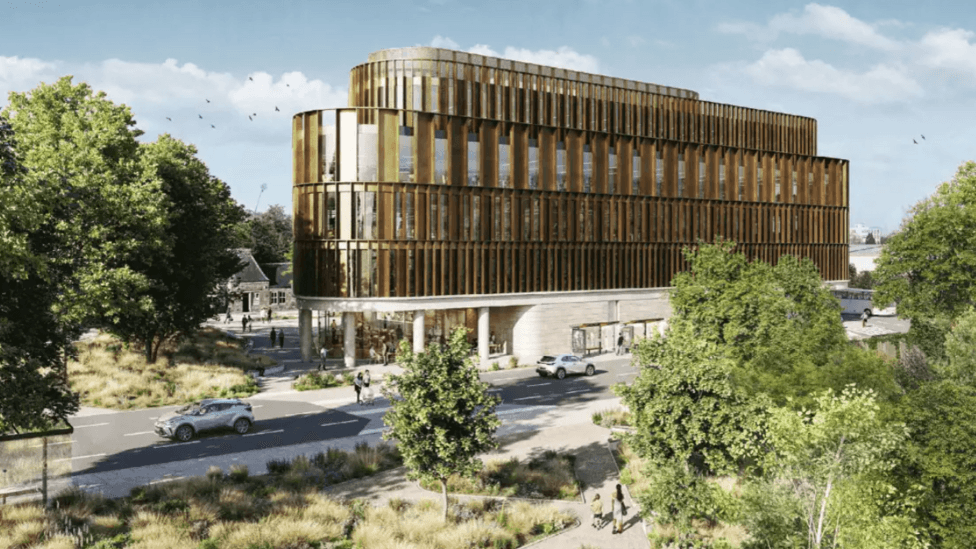
Households across Victoria could face annual electricity bill increases of nearly $100 under a state policy to postpone two major transmission infrastructure schemes, fresh analysis suggests. Research commissioned by a non-profit environmental group and conducted by consultancy Nexa Advisory indicates that delaying the Western Renewables Link and VNI West would slow the rollout of renewable energy capacity, forcing greater reliance on gas-fired generation and driving wholesale prices sharply upward.
The modelling projects wholesale electricity prices could climb from $52.90 to $85.20 per megawatt hour between 2027 and 2031—a 37% increase. This cost escalation would translate into $472 added to typical household power bills over that five-year span, alongside $4,719 for small businesses and $11,797 for large enterprises. By 2050, postponing these projects could add $33 billion to wholesale electricity costs and generate an additional 8.6 million tonnes of carbon dioxide emissions, equivalent to roughly one quarter of Victoria's current annual electricity sector emissions.
The Coalition has pledged to cancel VNI West outright if elected at the November 2026 state election, according to the Energy Council, which notes there is no published least-cost replacement portfolio for the project. The project's cost estimates have shifted significantly over time, with VNI West initially estimated at $3.6 billion before AEMO later placed the cost between $7.6 billion and $11.4 billion.
A Victorian Parliament document indicates that the Environment Effects Statement for the project was due to be publicly exhibited from 4 August to 14 September 2026, followed by public hearings on submissions.
How would halting these projects affect renewable energy deployment?
Postponing the Western Renewables Link and VNI West would delay other renewable energy projects that depend on transmission capacity becoming available. This bottleneck would force Victoria to maintain higher gas consumption to meet electricity demand, undermining the state's transition away from fossil fuels and increasing both costs and emissions.
What do the long-term financial impacts look like?
Over the five-year period from 2027 to 2031, the cumulative impact on a typical household would reach $472 in additional electricity costs. Small businesses would face $4,719 in extra charges, while large businesses would bear $11,797. Extending the analysis to 2050 reveals the scale of the long-term consequence: $33 billion in additional wholesale electricity costs and 8.6 million tonnes of extra carbon dioxide emissions.
When will voters decide on this policy?
The Victorian state election is scheduled for November 2026, when the Coalition's pledge to cancel VNI West would become a central campaign issue if the party wins office.
Migration driving nearly half of regional population growth
Migration is accounting for almost half of regional Australia's population growth, according to fresh research from the Regional Australia Institute, as healthcare services warn of major workforce shortages if immigration intake is reduced. The institute's analysis shows migrants made up 46.2% of growth in 2025, with the largest cohort arriving in areas outside the nation's capital cities comprising people aged between 25 and 44.
Regional Australia received just over 17% of overseas migrants in the 2024–25 financial year, substantially below its 36% share of the national population. Under current policy settings, 28% of Australia's population growth is projected to go to the regions, according to the institute. However, modelling by the institute suggests that figure could reach as high as 72% under a "nation-building approach" that prioritises the regions as a primary destination for population growth.
The institute is calling for increased regional migration pathways to be placed at the centre of the nation's population planning to address skills shortages and support new economic activity.
Community grants scheme defended as standard political practice
Jason Clare has rejected accusations of pork-barrelling against the government over an "invite-only" community infrastructure grants scheme that directed the majority of its funding to safe, marginal or key Labor seats. Clare characterised the practice as routine democratic governance, arguing that election commitments—such as funding for a new park or sports facility—represent promises that voters expect elected representatives to fulfil.

That's democracy … if you're in an election campaign and you make a promise as the local member, people expect that you'll deliver on it. And that's what this fund does.
When pressed on whether this represents a mechanism through which Labor wins elections via voter incentives, Clare maintained that the tactic is not novel. He drew a historical parallel to ancient political practice, suggesting that effective politicians have long understood that electoral success depends on direct engagement with constituents rather than media appearances alone.
I don't think that that is new. This is probably as old as ancient Greece. Good politicians know that you don't necessarily win elections by having a chat on the telly. You do it by having a chat on the front door of people's homes and meeting people where they are.
Australian students need 'digital detox' as reading and maths decline
Education Minister Jason Clare has stated that results from a global study released overnight demonstrate that Australian students who spend more time online perform worse academically and require a digital detox. The 2025 Programme for International Student Assessment (Pisa) results found that year nine students were declining in reading and mathematics performance, despite maintaining above-average results relative to other OECD nations. The data also revealed that public school students are more than two years behind their independent school counterparts.
Speaking to ABC News Breakfast, Clare highlighted the phenomenon that experts term "cognitive stunting," whereby technology functions as a crutch in classroom settings or becomes a source of distraction. While the government has removed personal mobile phones from schools, Clare noted that tablets and laptops remain ubiquitous on classroom desks, suggesting that a comprehensive digital detox may be necessary.
The experts call this cognitive stunting, that technology can be used as a crutch in the classroom. Or it also can be a distraction. We've taken mobile phones, personal phones out of schools. But you go into the average classroom today and you'll see tablets and laptops on every desk in every classroom … And the evidence is telling us that we probably need a good digital detox in our schools.
Clare emphasised that this position does not preclude a role for technology in education. Students require digital literacy skills, including competency with artificial intelligence tools, and must understand both how to use and how to avoid misusing such technologies. However, when technology becomes omnipresent, the evidence indicates it produces negative educational outcomes.
Clare pointed to the United Kingdom's experience as a model for Australia. The UK improved its Pisa scores since the previous assessment three years ago by implementing phonics instruction and other key curriculum changes a decade to fifteen years ago—reforms that Australia is now undertaking. He indicated that the next meeting of state and territory education ministers would consider reforms to the mathematics curriculum.
Greens raise concerns over digital duty of care legislation
Greens senator Sarah Hanson-Young has expressed concerns that the government's digital duty of care legislation lacks sufficient clarity regarding whether users can opt in or opt out of algorithmic systems, creating a risk of manipulation or malicious compliance by technology platforms. Speaking to RN Breakfast, Hanson-Young argued that the proposed fines of up to $100 million would prove insufficient to deter major technology companies.
It's neither opt-in nor opt-out. And what I'm concerned about is how the tech platforms will manipulate that. Unless the rules are tight, unless there's no gaps, big tech is going to spend a lot of money fighting these laws in the first place and finding every which way to get around them. Malicious compliance at best.
Hanson-Young contended that the financial penalty structure fails to address the core incentive structure of technology corporations. She argued that penalties should target revenue rather than imposing fixed dollar amounts, thereby striking at the financial foundation of these enterprises.
I think the fines element is one of those areas that I think is just not good enough … you need to hit them really where it hurts, and that's their revenue. So it should be a percentage of global revenue.
When asked about Coalition claims that the legislation amounts to censorship of free speech, Hanson-Young dismissed the characterisation as either deliberate misinformation or a reflection of insufficient engagement with the policy substance by opposition leadership.
I don't know whether this is deliberate misinformation by the opposition leader or he just doesn't know what he's talking about. He hasn't really spent much time engaging on these issues. Either way, it's wrong.
Treasurer warns One Nation and Coalition would 'destroy' superannuation system
Treasurer Jim Chalmers has declared that the Coalition and One Nation would "diminish or destroy" Australia's compulsory superannuation regime, which an upcoming intergenerational report will confirm is essential to long-term budget sustainability as the population ages. In remarks prepared for delivery to the Super Members Council, Chalmers condemned as "crazy" the right-wing parties' proposals to grant workers early access to superannuation savings, arguing such measures would leave Australians financially worse off in retirement and impose additional strain on national finances.
Treasury projections indicate that the number of retirement-age Australians will nearly double to approximately 9 million by 2066. The intergenerational report, scheduled for release on 21 September, will demonstrate that the proportion of older people receiving the aged pension is expected to decline from 66% to 52% over the next four decades.
Consequently, spending on age and service pensions is projected to fall from 2.3% of gross domestic product in the previous year to 1.8% by 2066. This trajectory contrasts sharply with other developed nations, which face mounting pressure to sustain pension obligations: aged pension costs in the United Kingdom are projected to reach nearly 10% of GDP by 2060, 8% in Canada, 7% in New Zealand, and 6% in the United States.
Chalmers emphasised that superannuation substantially reduces pressure on social security expenditure and enhances budget sustainability as a consequence. On 7 September 2026, Chalmers characterised the next election as a "referendum on super" following One Nation's proposal to allow some workers to divert part of their superannuation into pay.
We cannot let One Nation, the Liberals and Nationals diminish or destroy one of the best things Australians and Australia have going for us now and in the decades to come. They would put at risk the fiscal sustainability, higher living standards and stronger economy that the IGR shows will be supported by a strong and maturing super system.
Key Facts
- Delaying VNI West and Western Renewables Link could increase wholesale electricity prices by 37% between 2027 and 2031, adding $472 to typical household bills over five years
- By 2050, postponing these projects could add $33 billion to wholesale electricity costs and generate 8.6 million tonnes of additional carbon dioxide emissions
- The Coalition has pledged to cancel VNI West if elected at the November 2026 Victorian state election
- Migrants accounted for 46.2% of regional Australia's population growth in 2025, though regional areas received only 17% of overseas migrants
- The intergenerational report will show that superannuation reduces aged pension spending from 2.3% to 1.8% of GDP by 2066, substantially lower than comparable developed nations