Japanese brewer Sapporo announced it will relocate production of non-alcoholic beer from its Canadian operations to the United States, responding to a 50% tariff on beer imported from Canada that took effect on Tuesday. The company plans to complete the transition by the first half of 2027, marking a significant restructuring of its North American supply chain as trade barriers reshape manufacturing decisions across industries.
The tariff, introduced as part of broader trade tensions between the US and Canada, has created substantial cost pressures for brewers relying on cross-border shipments. According to reporting from a Japanese business publication, Chief Strategy Officer Rieko Shofu stated that
tariffs are something out of our controland that the company would
move ahead with local production.
Sapporo's decision directly affects its Canadian subsidiary, Sleeman Breweries, which operates a facility in Guelph, Ontario, where the company has manufactured beer since acquiring the operation in 2006. The shift underscores how tariffs are forcing multinational corporations to reconsider where they produce goods for specific markets, even when established manufacturing relationships exist.
Why is Sapporo moving production?
The 50% tariff on Canadian beer imports makes it economically unfeasible for Sapporo to continue shipping non-alcoholic beer from Canada to US customers. According to financial analysis, the tariff burden is estimated at approximately ¥1.2 billion in fiscal 2026, though Sapporo has not yet disclosed the specific production volumes affected or expected cost savings from the relocation.
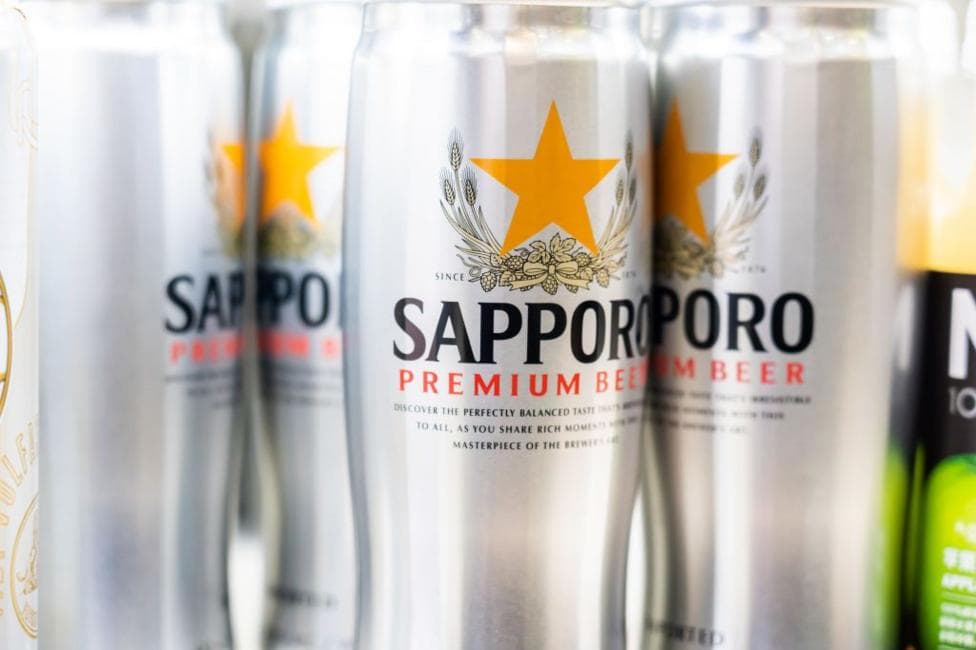
The US represents one of Sapporo's most critical overseas markets. The company has already begun distributing Sapporo Premium Non-Alcoholic nationwide in six-pack cans across the United States, making the tariff impact particularly acute for this product line.
What are Sapporo's options for US production?
To manage rising costs and establish domestic production capacity, Sapporo is evaluating multiple approaches for the US West Coast. According to Canadian coverage, the company is weighing the construction or acquisition of a brewery facility, or alternatively partnering with a third-party manufacturer to handle US-bound volume.

This flexibility in approach reflects the company's broader strategy to expand its US footprint. Sapporo has positioned itself as the country's best-selling Asian beer brand and has been systematically building its presence in the American market for years.
How does this fit into Sapporo's global expansion?
The production shift is part of a larger investment strategy aimed at offsetting declining domestic demand in Japan, where a shrinking population has reduced alcohol consumption. Sapporo plans to invest up to ¥400 billion ($2.6 billion) by 2030 to expand overseas operations and increase profitability, with approximately 30% of that capital earmarked for international markets.
Beyond North America, Sapporo is pursuing growth in other regions. In July, the company announced a partnership with Danish brewer Carlsberg to expand operations in Southeast Asia, demonstrating its commitment to diversifying its geographic revenue base.
What happens next?
Sapporo aims to complete the transition of US-bound non-alcoholic beer production from Canada to the United States by the first half of 2027. The company has not yet announced the specific location of its US facility or provided a timeline for finalizing its manufacturing partnership or facility acquisition decisions.
The production shift occurs against a backdrop of escalating global trade tensions. Canada implemented retaliatory tariffs on US goods on 8 September 2026, intensifying trade pressure at the same time Sapporo is executing its North American restructuring. The company's decision exemplifies how tariffs are prompting businesses worldwide to reassess supply chain strategies and manufacturing locations to remain competitive in key markets.
Key Facts:
- Sapporo will move non-alcoholic beer production from Canada to the US by mid-2027 in response to a 50% tariff on Canadian beer imports
- The tariff is estimated to cost the company approximately ¥1.2 billion in fiscal 2026
- Sapporo is considering building, acquiring, or partnering for US West Coast production capacity
- The US is one of Sapporo's most important overseas markets, with the company claiming the top-selling Asian beer brand position there
- The company plans to invest ¥400 billion globally by 2030, with 30% directed to overseas expansion