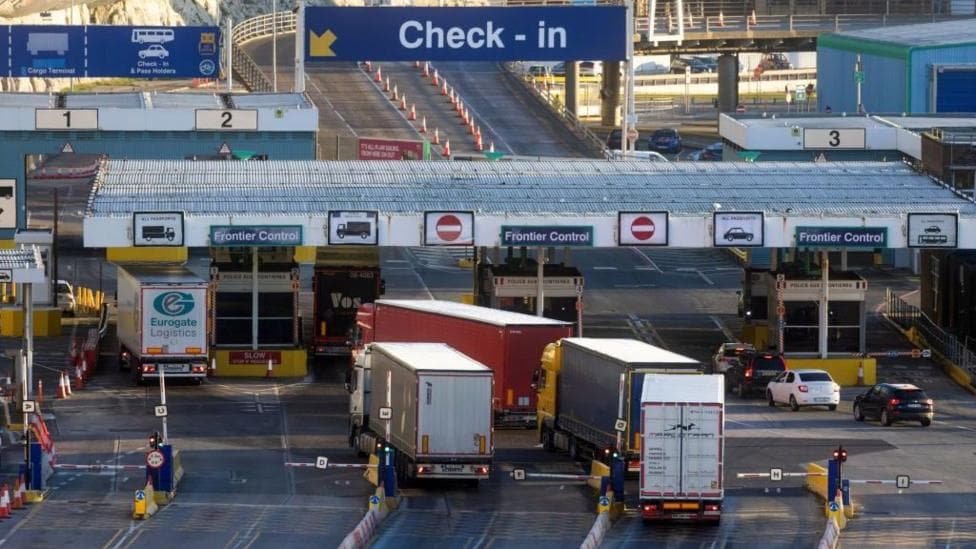
The UK and EU have reached agreement on a draft deal designed to eliminate post-Brexit checks and bureaucratic requirements affecting food and agricultural exports, with the proposal set for consideration ahead of a major UK-EU summit scheduled for later this month. According to BBC News, the 200-page draft text covering what is known as a "sanitary and phytosanitary" (SPS) agreement has been distributed to EU member states in Brussels for review at a meeting of EU ambassadors on Wednesday, 4 November 2026.
Alongside the food agreement, draft texts addressing emissions trading and a youth travel and work scheme have also been circulated, along with a 15-page draft joint statement for senior UK and EU leaders. The food component represents the most substantial element of the broader Brexit reset initiative announced so far, targeting the removal of checks and regulatory burdens that have constrained exporters since the UK left the EU's single market.
This agreement builds on commitments made in May 2025, when the UK and EU committed to negotiating an SPS agreement intended to allow fish and fishery products to move without current export health certificates and routine border checks.
What costs and requirements would be eliminated?
The agreement would remove the need for £200 Export Health Certificates, £25 Phytosanitary certificates, inspector fees, organic certificates, certain port fees, sampling fees and various other checks on exports and imports between the UK and EU. Fresh sausages, burgers, shellfish from domestic waters and seed potatoes from the UK would be permitted to resume sales into the EU market under the new arrangements.
The government projects that the UK economy will eventually realise £5.1 billion in annual economic benefits as a result of the agreement. The deal would also enable UK pet passports to be recognised for travel into the EU, while the UK commits to observing and adapting to existing EU regulations governing plant, animal and food trade standards—a process referred to as "dynamic alignment."
According to reporting on the negotiations, export health certificates alone can add thousands of pounds in costs to each truck carrying goods, in addition to delays experienced at ports and borders. These cumulative expenses have contributed to reduced export volumes, as companies face both substantial cost increases and time delays in their supply chains.
Why does this matter for Northern Ireland?
The food agreement holds particular significance for Northern Ireland, where it would substantially reduce the practical impact of the post-Brexit Irish Sea border. Under the existing post-Brexit arrangement, Northern Ireland remained inside the EU's single market for goods, meaning food products from other parts of the UK require documentation and physical checks when arriving at Northern Ireland's ports.
The proposed deal would ultimately eliminate those requirements, substantially easing the movement of goods arriving from other parts of the UK, which currently face documentation requirements and may undergo physical checks at ports.
What is the UK's approach to aligning with EU rules?
While UK regulations remain largely aligned with EU standards, England has diverged in certain areas, notably on "precision breeding" of plants, previously termed gene editing. Recent weeks have seen agreement reached on transition arrangements as the EU's new regulations take effect. The government has already introduced a European Partnerships Bill, which will establish a legal framework for implementing new EU rules and regulations.
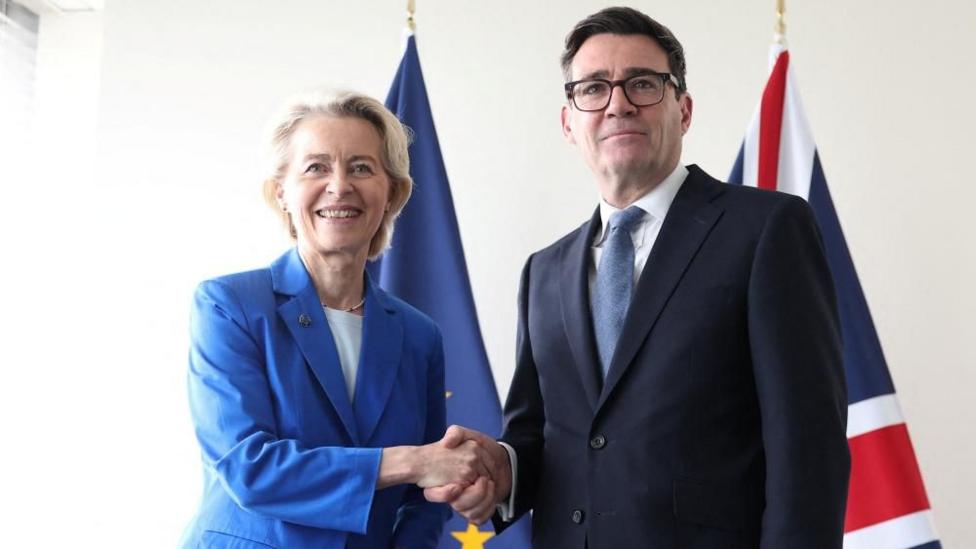
This legislation will also facilitate the necessary alignments required to link the UK emissions trading scheme with the EU's equivalent system, and will eliminate the need for UK exporters to pay the EU's new carbon border tax. The approach reflects a shift in UK policy priorities under Prime Minister Andy Burnham, who has indicated openness to closer EU relations compared to his predecessor.
What has changed in UK leadership on Brexit?
The negotiations have taken place under significantly different political circumstances than initially planned. Each element under discussion was originally scheduled for consideration under Sir Keir Starmer, and the summit would have occurred by now had Labour not changed its leader in July. Under Burnham, Britain's approach to post-Brexit relations with the EU has shifted markedly.
Starmer stated the UK would not rejoin the EU during his lifetime, whereas Burnham has expressed a desire to see Britain back in the EU during his. In an interview with ITV, Burnham acknowledged that "public opinion has changed nationally" since the 2016 Brexit vote, but stressed he would "not run ahead of public opinion" on the matter.
"The public need to be the boss when it comes to whatever happens with Brexit,"he stated. Burnham also clarified that he has not proposed the restoration of freedom of movement between the UK and EU.
What do businesses say about the deal?
While the food trade plans have received backing from supermarket chains and farming representatives, some pro-Brexit campaigners have objected to the reapplication of EU rules. The post-Brexit trade deal negotiated by Boris Johnson's government prioritised regulatory freedoms for the UK over avoiding new regulatory red tape, checks and delays.
However, business groups have taken a different view. William Bain, head of trade policy at the British Chamber of Commerce, told the BBC's Today programme that the business community overall regarded the agreement as a "price worth paying" to follow common rules, as companies would gain from "lower costs, reduced delays and increased market access." The British Chamber of Commerce has released fresh analysis of its members' views suggesting options for a closer relationship, arguing that the current trade relationship is "failing to deliver" and leaving firms "struggling with a thicket of Brexit red tape" nearly six years after the UK's departure from the bloc.
The British Retail Consortium indicated that negotiations were continuing and that final regulatory changes and transition arrangements would only become clear once the deal was formally agreed, suggesting that implementation details remain subject to further refinement.
What happens next?
EU ambassadors are scheduled to consider the draft agreement at a Coreper meeting on Wednesday, 4 November 2026, with some key details regarding the planned numbers in a Youth Experience Scheme to be finalised at a political level in the coming days. A discount on full foreign student fees for EU students is likely to be deferred to the following year, alongside a plan to reconnect electricity markets.
The draft agreements are also expected to include references to UK involvement in defence cooperation schemes, access to law enforcement databases and reassurances concerning the EU's "Made in Europe" plans. The second EU-UK summit is scheduled for 20 November 2026 in Brussels, where agrifood rules will be among the topics leaders review. Industry guidance indicates that implementation is expected around mid-2027, subject to the agreement being finalised and the UK completing the necessary alignment with EU standards.