Good morning, and welcome to our rolling coverage of business, the financial markets and the world economy.
According to The Guardian, Saudi Aramco, the world's largest oil exporter, has announced that earnings climbed substantially in the third quarter despite ongoing geopolitical tensions and infrastructure damage. The company posted a net profit of $3.25bn for the three months ending on 30 September 2026, marking a significant recovery from the $26.9bn recorded in the same period a year earlier.
Meanwhile, Australia's central bank has raised its benchmark interest rate to its highest level in 18 years, signalling a potential pause in its tightening cycle after five consecutive increases this year.
How has the Middle East conflict affected oil markets?
Attacks on Saudi energy infrastructure have constrained Aramco's production capacity, yet elevated crude prices have more than compensated for the lost output. Brent crude climbed $2.38 per barrel to $107.15 on the morning of 3 November 2026, representing a 2.2% gain following diplomatic signals from the United States. Before the conflict began on 28 February 2026, Brent crude traded near $72 per barrel. On 2 November, prices had fallen 11% to $103.28 after reports that Donald Trump indicated openness to extending diplomatic negotiations.
A report citing US officials indicated that the United States conducted strikes on Iran's Qeshm Island, with officials characterising the action as defensive and aimed at restricting Iran's capacity to endanger commercial shipping in the Strait of Hormuz. The Strait previously transported approximately one-fifth of global crude oil and natural gas supplies, and the conflict has substantially reduced transit volumes through this critical waterway.
Amin H. Nasser, Aramco's president and chief executive, stated:
Geopolitical uncertainty and attacks on key energy facilities continued to amplify the global energy supply crisis in the third quarter of 2026, with serious implications for global energy security. Despite challenges, the unwavering dedication of our workforce, our operational excellence, the flexibility of our system, and the strength of a supply network built over decades enabled us to continue delivering reliably to our customers through this extraordinary period. We continue to explore additional overseas storage capacity and alternative export routes to further strengthen our global supply network, and our robust operational and financial performance during this volatile period demonstrates the value of our resilience.
Beyond the headline net profit figure, Aramco reported adjusted net income of $31.2bn, operating cash flow of $38.7bn and free cash flow of $28.2bn for the quarter. The company's board declared a $21.9bn base dividend, representing a 3.5% year-on-year increase. Production commenced at the Zuluf crude oil increment, while Aramco's HUMAIN investment involved a 49% stake and approximately $2.6bn in cash contributions.
The surge in Aramco's earnings reflects a broader pattern among major energy producers. Shell's second-quarter profits more than doubled to $9.84bn after the Iran war drove up oil prices, while Equinor's profits nearly doubled to $11.5bn in the second quarter as higher oil and gas prices boosted results. BP reported a $5.73bn quarterly profit, its highest in four years, as conflict in the Middle East pushed up oil prices. Collectively, the world's largest oil companies are tracking towards combined profits of approximately $100bn between July and September 2026.
Why has Australia's central bank raised rates again?
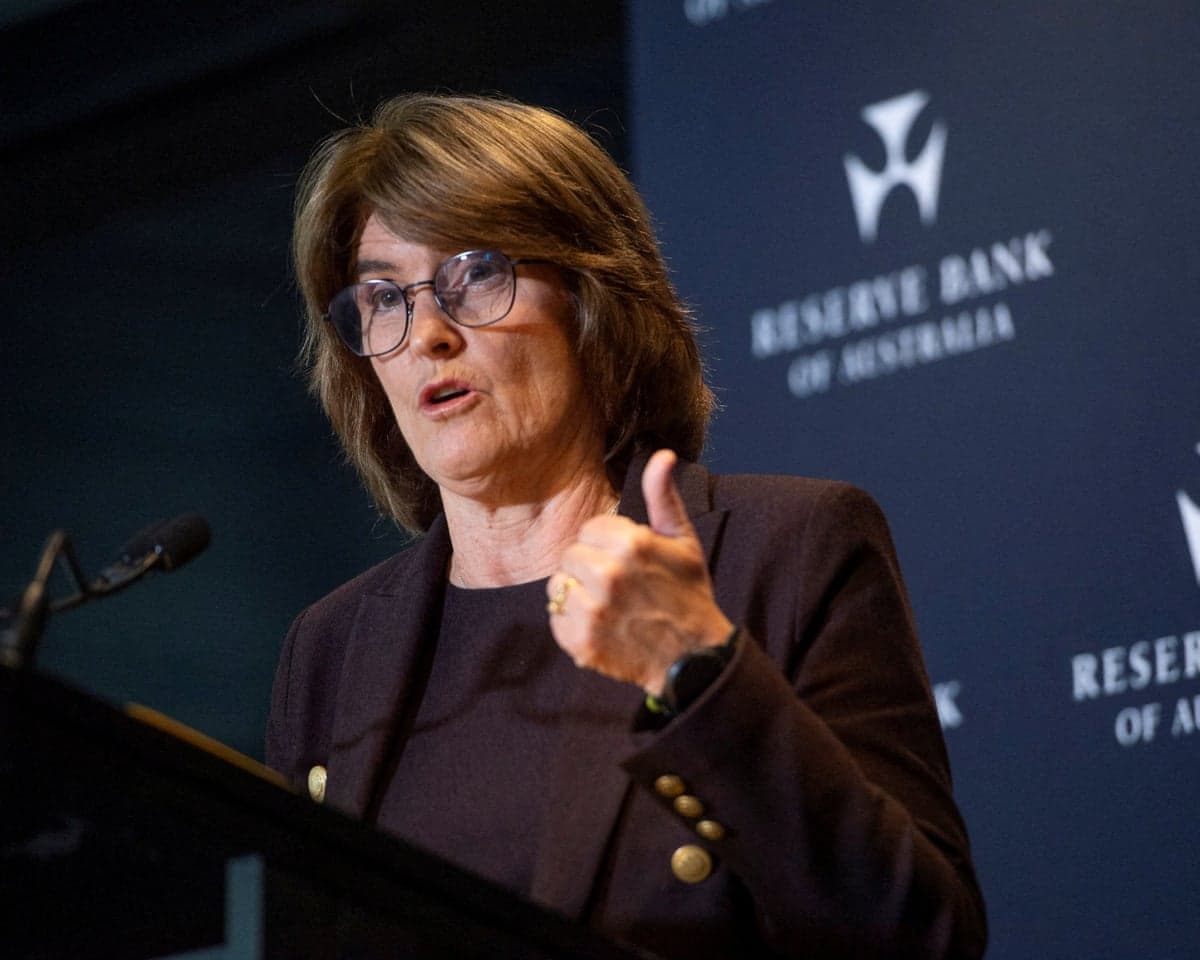
The Reserve Bank of Australia's board increased its cash rate by 25 basis points to 4.85%, marking the fifth rate rise in 2026 and the highest level since 2008. The bank stated it will persist in taking actions it deems necessary to bring inflation to its target range. However, the central bank removed its previous forward guidance indicating further rate increases would follow if required, a signal that policymakers may be approaching the end of their tightening campaign.
A narrow 6-3 vote on the decision underscored divisions within the board. Michele Bullock, the governor, acknowledged that
it was not the news that many Australians want to hear, but it would prevent even worse pain down the track.She indicated uncertainty about the direction of future rate movements, noting that the three dissenting members highlighted downside risks including the weakening housing market and rising unemployment.
Bullock suggested that after five consecutive rate increases this year, a pause would be appropriate to evaluate how the economy responds to the tightening measures. However, she cautioned that
there is still a bit of a skew on the upside to inflation risks, and we need to be alert to those materialising.
The central bank's updated forecasts project headline inflation reaching 4.5% in the fourth quarter of 2026, before moderating back to the target band of 2% to 3% in the second half of 2027. The bank also forecasts unemployment will climb above 5% over the coming years. The RBA warned of a growing risk that higher inflation expectations become embedded, with inflation expected to remain above 3% for the coming year. September data showed annual inflation at 4.3%, up from 4.0% in August, while quarterly trimmed-mean inflation stood at 1.0%.
What are the broader implications for global monetary policy?
Ipek Ozkardeskaya, senior analyst at Swissquote, observed:
Higher energy prices… would strengthen the case for further monetary policy tightening by the Federal Reserve (Fed) and other major central banks. The Reserve Bank of Australia delivered a 25bp hike today, as expected, while the Bank of England (BoE) is widely expected to announce a 25bp hike on Thursday, following a rather uneventful budget announcement last week that allows the BoE to go on with its life — and take care of its inflation problem. Overall, if we take a step back and look at the bigger picture, the latest monetary policy decisions have brought either rate hikes or the prospect of tighter monetary policy to fight inflation fuelled by elevated global energy prices. On top of that, many developed-market bond yields face upward pressure from intensifying fiscal concerns, while large bond issuance by technology companies to finance their massive AI buildout could add to that pressure.
What is the status of the Binance security breach?
Binance, the cryptocurrency exchange, reported that hourly deposits exceeded withdrawals on the morning of 3 November 2026, suggesting that asset flows are stabilising following a significant security incident the previous week. The hack resulted in $6.3bn of assets being stolen from customer accounts and has been characterised as the largest theft in the exchange's history.
What happens next?
The Reserve Bank of Australia's next monetary policy decision is scheduled for 8 December 2026 at 2:30 pm AEDT. Markets will be watching for signals about whether the central bank will maintain its pause or resume rate increases depending on inflation developments and economic conditions.
In the United States, the market will monitor the release of JOLTS job openings data for September and factory orders for September, both due at 3pm GMT on 3 November 2026, for clues about the strength of the American economy and the Federal Reserve's future policy direction.