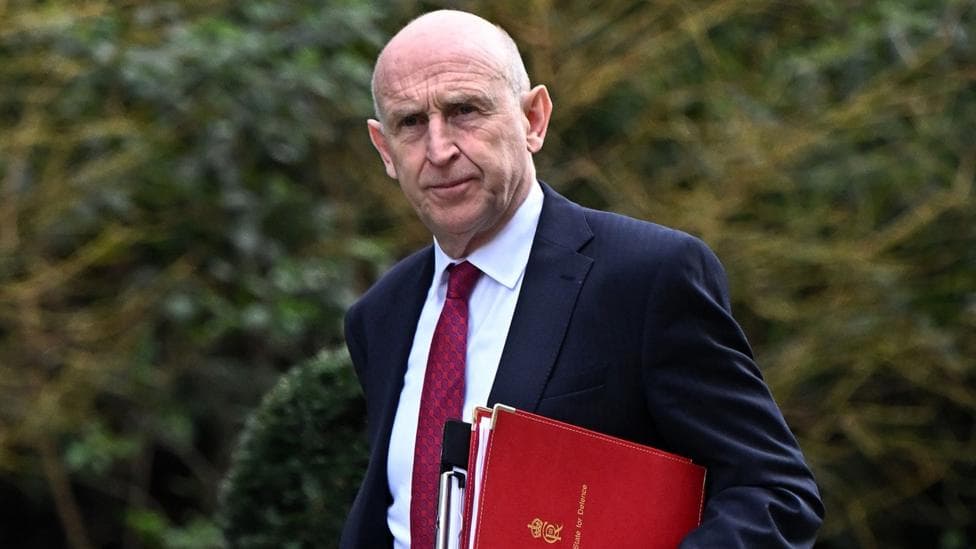
As Chancellor John Healey prepares to deliver his first Budget on Wednesday 28 October 2026, BBC News has gathered perspectives from people across the income spectrum on how they are managing financially and what they hope the government will do to help them.
Healey's tax and spending plans will face intense scrutiny at a time when government borrowing costs remain elevated. The Chancellor has committed to meeting fiscal rules and controlling borrowing to lower inflation, while the Office for Budget Responsibility will publish revised forecasts alongside the Budget, with its five-year forecast extending to 2031/32 for the first time.
The six individuals profiled here represent different life circumstances and financial pressures, from single parents struggling with energy costs to young people unable to find work and higher earners willing to contribute more in tax.
Single mother on £41,000: 'Can the government help with our tax bill?'
Chloe, aged 40, has been raising her 16-year-old son alone since her husband died four years ago. She works as an NHS research practitioner and earns £41,000 annually. Although her rent of £650 per month is subsidised through a housing association, she says managing finances became significantly harder after losing her husband's income.
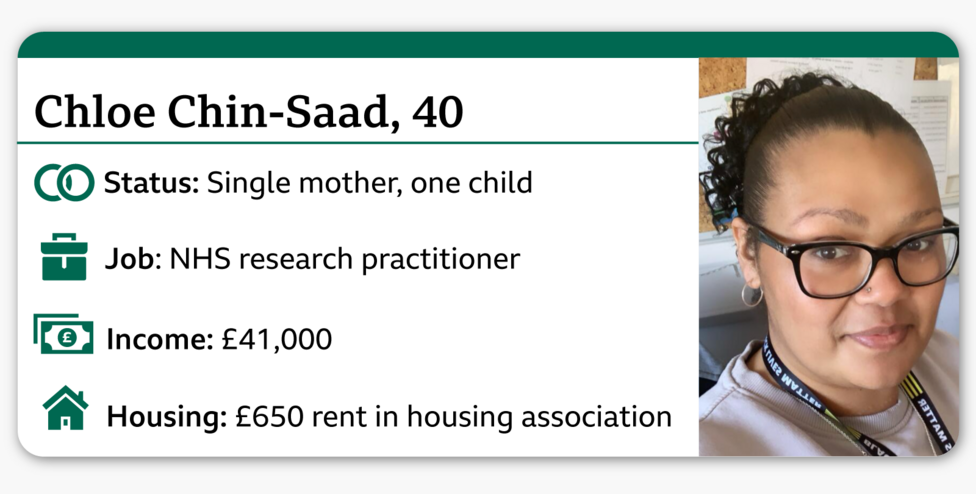
"Two incomes make a massive difference."Her energy bills have become a major concern, rising sharply to approximately £200 monthly for gas and electricity. To cope, she and her son have become more conscious of their consumption, thinking carefully about how long they run hot water while washing dishes.
Luxuries have been cut from their budget. Chloe has stopped shopping at M&S and visiting the cinema, and she now attempts to restrict her weekly food shopping to £40. However, she cannot reduce her £200 council tax bill or the cost of her medications for rheumatoid arthritis and other health conditions.
Chloe is calling for targeted support for single-parent families.
"I don't access benefits but I work full-time and it's hard. Can the government do anything else to help? Something on our tax bill perhaps."
Young man on £22,000: 'How can I ever afford to move out?'
Robert Portlock, 29, has lived with his parents in Gateshead throughout his life and desperately wants to move into his own place. However, he believes the financial barriers are insurmountable. He works as a check-in agent at Newcastle Airport, earning £22,000 annually.
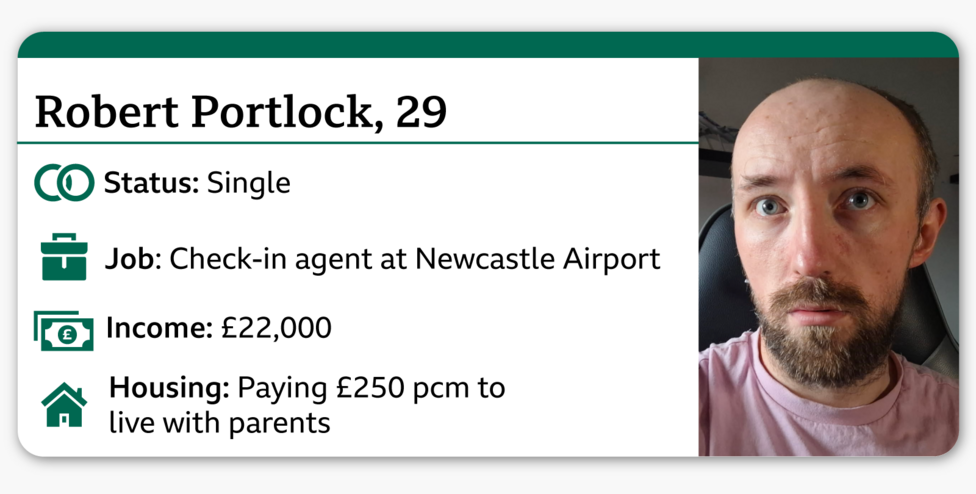
Rent represents his biggest obstacle. A small flat in his area would consume roughly two-thirds of his monthly wage, and that calculation does not account for council tax, energy bills, food, television licence, broadband, car expenses and money for socialising.
"By that point I'd be in the minus."
His current largest expense is his car, which he requires for his 32-mile round trip to work. He spends £750 monthly on car finance, insurance, fuel and tax. Robert is asking the Chancellor to cut fuel duty and income tax, or to raise the personal allowance—the amount of income exempt from tax—to approximately £16,000, up from the current £12,570.
Although the government has announced a scheme to help first-time buyers in England with a deposit of 2.5%, Robert remains pessimistic about his prospects.
"Saving for a house is impossible at the moment."
Young woman on universal credit: 'Why can't I find work?'
Emily Nelson, 19, completed her A-levels last year and has been unable to secure employment since leaving college, like thousands of her peers. She receives £338.50 per month in universal credit and lives rent-free with her parents in Swindon. She aspires to work as an animator but has been applying for retail, sales and apprenticeship positions without success.
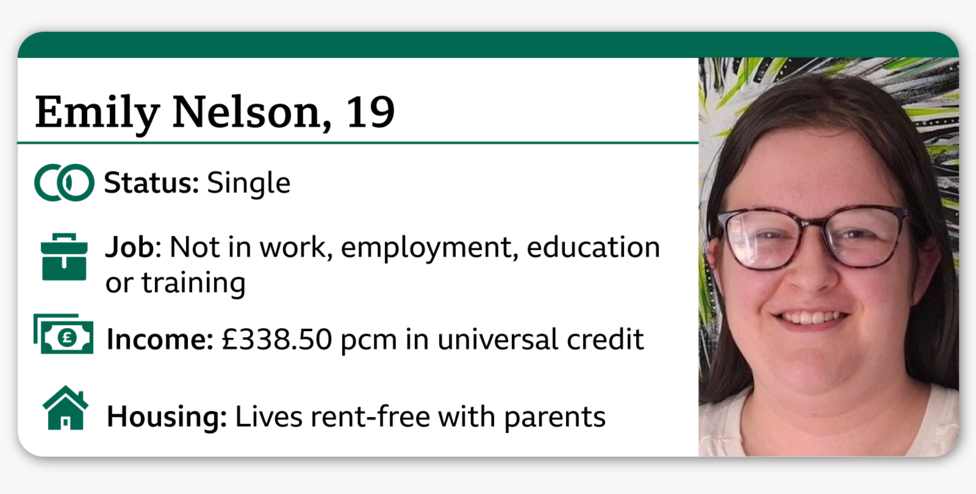
"I'm trying my best, it's all you really can do. It's kind of suffocating in a way. You see everyone else managing, and you feel like you're not."Emily wants the government to provide greater funding to businesses to enable them to hire more young employees. She also wants increased investment in training and an extension of the government's Jobs Guarantee scheme.
The Jobs Guarantee, being rolled out across England, Scotland and Wales, guarantees fully funded, six-month paid jobs for 18 to 24-year-olds who have been on universal credit and searching for work for 18 months. Emily believes eligibility should begin after just one year rather than 18 months, allowing younger people to access support sooner.
She hopes eventually to move out of her parents' home, though they have asked her to secure employment first.
"My parents want me to get a job first. They are not putting pressure on me to go yet."
Professional driver on £70,000: 'Fuel prices are crippling my budget'
Dave Herbert, 48, works as a professional driver moving cars between showrooms and making deliveries. He is married with a 12-year-old daughter and has a combined household income of £70,000. Fuel costs have become his primary financial worry, describing prices this year as
"crazy."
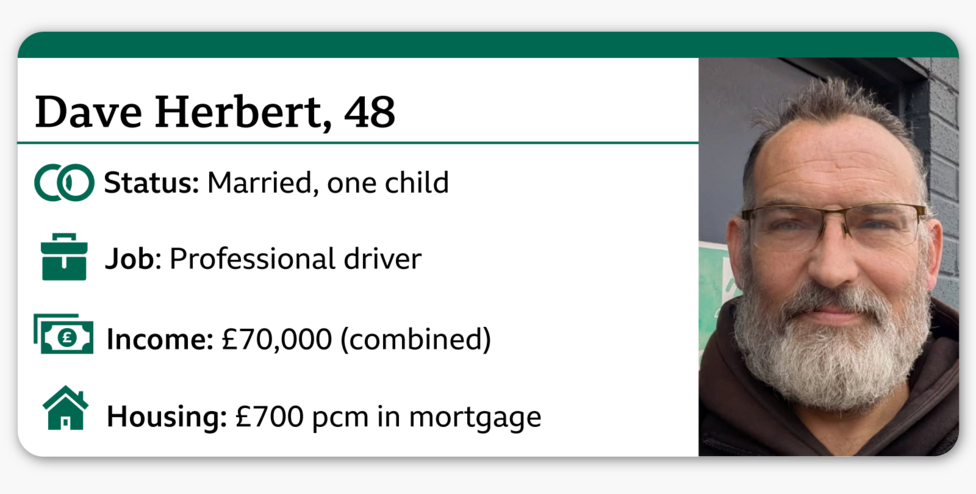
He spends approximately £350 monthly on petrol for both work and personal use—40 to 50 percent more than at the start of the year. His commute to Cardiff covers 62 miles round trip from his home in Ynysddu.
"I'd love to have a hybrid car but even an entry-level used car is too expensive."
Dave must find the additional fuel money
"from an already tight budget"and
"dreads"filling up at the pump. He is calling for the government to drastically reduce or remove fuel duty for a period of time. The main fuel duty rate has been frozen at 57.95p per litre since March 2011, but Dave argues the freeze is misleading.
"It sounds like they're giving us something by keeping it frozen but they're actually still taking it off us."
Higher earner on £186,000: 'I'd welcome paying more tax'
Jonathan Whitwam, 52, works in finance as a financial director for a small business and recently joined the Labour Party. He and his wife live in Essex with a combined income of £186,000. Beyond their mortgage, their largest expense is supporting their two daughters through university, with annual rent of around £18,000.
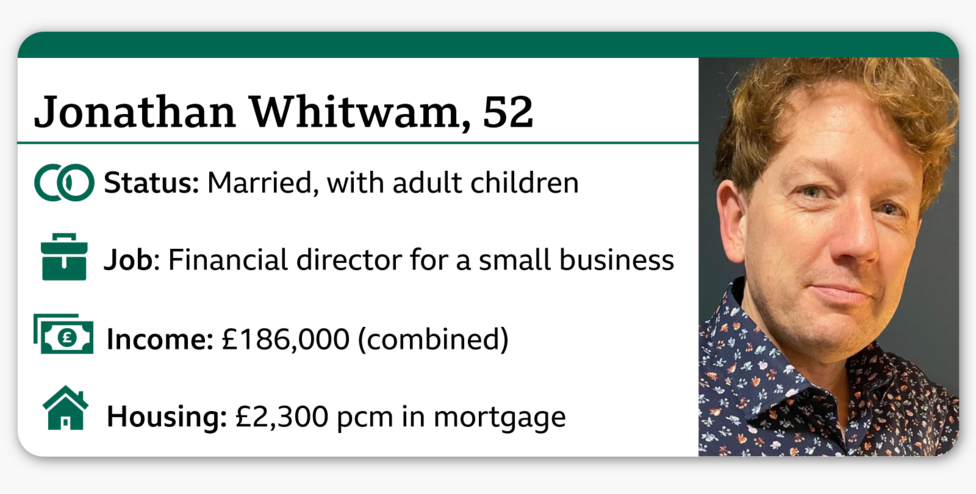
His daughters will begin their working lives with between £45,000 and £60,000 of student debt each, plus interest compounding at £5,000 to £8,000 per year.
"I have no objection to paying for degrees as I think they are a great way of broadening horizons and having great life experience. But I think the interest should be waived or capped below 1%, otherwise it's a noose around their neck for a substantial part of their lifetime."
Jonathan welcomes higher taxes on earners like himself in the name of redistribution. He would also like to see a one-off wealth tax for people with assets exceeding £10 million and new taxes on the oil, gas and banking sectors.
"If we want better roads, hospitals, schools we need to raise more tax."
Retired pensioner on £15,000: 'Will I have to spend my savings?'
Christine Morris, 78, from Worksop, has been retired for eight years and lives on a state pension combined with a small private pension left by her late husband. Her total annual income is approximately £15,000.
"It is very difficult to balance the books,"she says.
"I do go on holiday, but I'm spending more of my savings to live."
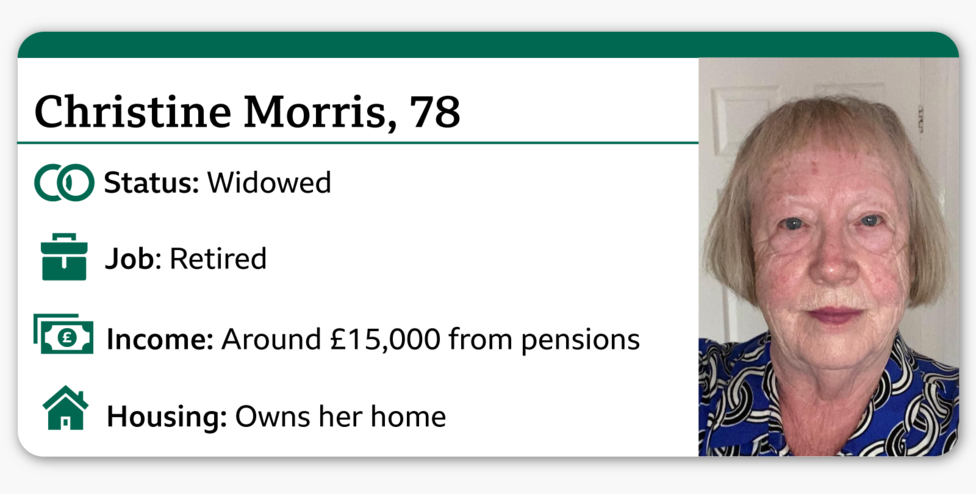
Although the Prime Minister has asked ministers to examine removing standing charges from gas bills, Christine believes people living alone should receive relief on electricity standing charges, which are typically higher. She would also like the government to extend access to pension credit, a means-tested benefit for people who have reached state pension age and are receiving £238 or less per week. Christine currently receives £241 and just misses the threshold.
She expressed doubt about Andy Burnham's pledge to end the triple lock so that from 2030 the state pension will rise at least by inflation or 2.5 percent, with savings used to create a free-at-the-point-of-use national care service for England sometime in the next parliament.
"I think the new service will take time to come in. In the meantime, I fear I will get less pension and still have to pay out the same for any care I need."
What happens next?
Chancellor Healey is scheduled to deliver the Budget in the House of Commons on Wednesday 28 October 2026. Reports in the days before the announcement have suggested possible measures including a £2 billion annual levy on banks and a higher business-rates threshold for small companies, though these remain unconfirmed speculation. The Office for Budget Responsibility will also publish its updated forecasts on the same day.