
A 22-year-old Singaporean man entered a guilty plea on 2026-09-08 to racketeering conspiracy charges in federal court for orchestrating one of the largest cryptocurrency theft operations ever prosecuted in the United States. Malone Lam admitted to assembling a network of associates to steal $245 million in bitcoin and subsequently launder the proceeds through extravagant spending across major American cities.
Lam faces a maximum prison sentence of 20 years, with sentencing to be determined at a future hearing. According to court records, a status hearing has been scheduled for 2026-12-08. Lam represents the 11th of 18 defendants to plead guilty in the broader conspiracy.
The US Department of Justice described the scheme as an international social-engineering network that targeted victims holding substantial cryptocurrency assets. Prosecutors documented that the stolen bitcoin was initially valued at approximately $263 million and had appreciated to more than $368 million by early December 2025, reflecting the volatile nature of cryptocurrency markets.
If you build a cybercrime empire, we will find you, dismantle your operation, and hold you accountable.This statement came from US Attorney Jeanine Pirro, who added:
This defendant led an international network that preyed on victims through deception, invaded their privacy, and stole hundreds of millions of dollars in cryptocurrency.
How did the conspiracy operate?
The criminal enterprise began no later than October 2023 and continued through at least May 2025, according to court documents. Lam, who also operated under aliases including Anne Hathaway, $$$, and King Greavy, served as the ringleader who identified targets and coordinated the roles of different conspirators. The co-conspirators originated from California, Connecticut, New York, Florida, and locations outside the United States, having initially connected through online gaming platforms.
The network employed two primary methods to compromise victims' cryptocurrency holdings. Members engaged in social engineering tactics, tricking individuals into divulging confidential account information, and also conducted occasional residential break-ins to obtain the details necessary to access and drain cryptocurrency wallets. In one documented case involving a Washington, DC victim, prosecutors say the scheme used these techniques to steal more than 4,100 bitcoin.


How was the stolen money spent?
Rather than attempting to conceal their illicit gains, Lam and his associates engaged in highly visible consumption patterns that ultimately drew law enforcement attention. The group spent up to $500,000 per visit at nightclubs in Los Angeles and Miami, according to the DOJ. They accumulated a fleet of exotic automobiles valued between $100,000 and $3.8 million each, with Lam purchasing more than 30 high-end luxury vehicles in total.
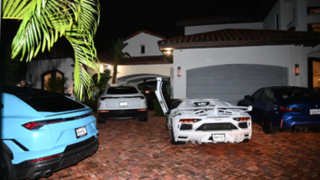
Additional expenditures included Hermès Birkin handbags worth tens of thousands of dollars, which were distributed to crowds at nightclub parties as casual gestures of wealth. The conspirators also acquired high-end timepieces valued up to $500,000, luxury clothing in the tens of thousands of dollars, rental properties in Los Angeles, the Hamptons, and Miami, private jet charters for travel, and a dedicated team of private security personnel.

Lam became notorious within the Los Angeles and Miami nightclub scenes due to his ostentatious lifestyle and the visible scale of his spending. During his initial court appearance, US Magistrate Alicia Valle drew a cultural reference to characterize his behaviour:
As I was listening to the evidence, I could only think of Ferris Bueller gone bad.She elaborated:
[He] spent this money wildly, going to Los Angeles nightclubs, purchasing more than 30 high-end luxury automobiles. I mean, [that's] an incredible amount of spending and craziness that followed his coming into more than $230 million.
What was Lam's background?
Lam disclosed to investigators that he had abandoned secondary school in Singapore at age 14. He travelled to the United States in October 2023 and remained in the country after his visa expired in January 2024, establishing himself within the criminal network during this period. His flamboyant lifestyle and sudden wealth accumulation in major American cities eventually triggered the attention of federal authorities.
How was the conspiracy dismantled?
FBI agents arrested Lam and a co-conspirator in September 2024, effectively ending the operation's activities. The arrest set in motion a series of prosecutions against network members. In April 2026, one of Lam's co-conspirators, Evan Tangeman, received a sentence of 70 months in prison for money laundering related to the scheme. The DOJ noted that Tangeman had attempted to destroy evidence following Lam's arrest, which prosecutors characterised as demonstrating
consciousness of his guilt.
What happens next?
The case continues through the federal court system with additional defendants still proceeding through the justice system. A status hearing is scheduled for 2026-12-08 to assess progress toward sentencing. Some co-conspirators have reportedly agreed to cooperate with prosecutors and provide testimony against other members of the network, potentially leading to additional convictions and sentences in the coming months.
Key Facts:
- Malone Lam, 22, pleaded guilty on 2026-09-08 to racketeering conspiracy for orchestrating a $245 million cryptocurrency theft operation
- The stolen bitcoin was initially valued at $263 million and appreciated to over $368 million by December 2025
- Lam is the 11th of 18 defendants to plead guilty in the broader conspiracy
- The network used social engineering and home break-ins to compromise victims' cryptocurrency accounts, stealing over 4,100 bitcoin from one Washington, DC victim
- Lam faces up to 20 years in prison, with sentencing to be determined and a status hearing scheduled for 2026-12-08