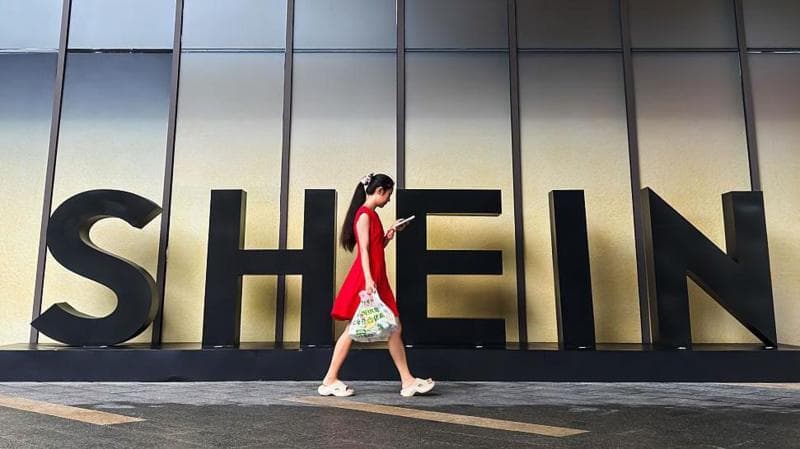
Fast-fashion retailer Shein has announced plans to raise up to HK13.86bn (£1.3bn; $1.77bn) through its initial public offering when shares commence trading on the Hong Kong stock exchange on 1 September.
According to a regulatory filing released on Monday, Shein intends to issue approximately 280 million shares priced between HK$47.60 and HK$49.50 each.
Should the offering price reach the upper end of this range, the company would achieve a market valuation of nearly $27bn (£19.8bn). This represents a substantial decline from the $100bn valuation the firm commanded during a private funding round in 2022, a shift that underscores moderating sales expansion and mounting operational expenses.
Why is Shein listing in Hong Kong instead of the US or UK?
The long-delayed public listing materialises following unsuccessful attempts to enter markets in the United States and London, both of which encountered regulatory obstacles stemming from heightened scrutiny of the company. Although Shein maintains its corporate headquarters in Singapore, it was originally established in China, a factor that has complicated its path to listing in Western markets.

Goldman Sachs, Morgan Stanley and JP Morgan are jointly underwriting the offering, providing backing from three of Wall Street's most prominent investment institutions.
What financial challenges has Shein faced recently?
The company disclosed in July that it had shifted into quarterly loss territory as revenue growth decelerated following a policy decision by US President Donald Trump to eliminate an import duty exemption applicable to small-value packages. This tariff change directly impacted Shein's business model, which relies heavily on shipping low-cost items directly to consumers.
For the opening three months of the year, Shein reported a net loss of $99m, a sharp reversal from the $395m in net income it generated during the equivalent period twelve months prior. The deterioration in financial performance reflects both the immediate impact of tariff changes and broader headwinds affecting the company's profitability.
Ongoing uncertainty surrounding the escalating US-China trade dispute, which remains temporarily suspended, continues to weigh on business planning and investor confidence. The potential resumption or intensification of tariff measures poses a material risk to the company's financial outlook and operational strategy moving forward.