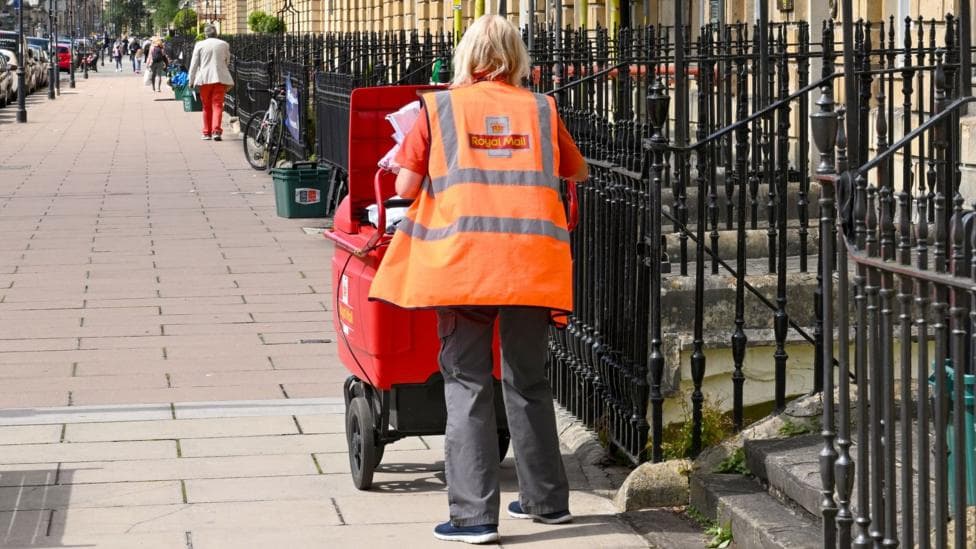
Royal Mail has announced plans to eliminate 2,500 head office and support positions by the end of 2027, representing approximately 2% of its 131,000-person workforce. Frontline postal workers, including posties and drivers, will not be affected by the restructuring. The company said the reduction, designed to enhance operational efficiency, will be achieved through voluntary redundancies and natural attrition.
The proposed review is part of a wider transformation as Royal Mail adapts to universal-service reform and shifting demand patterns, according to reporting on the announcement. Royal Mail is currently in formal consultation with the Communication Workers Union and Unite CMA regarding its plans.
These proposed changes remove duplication and allow us to invest further in the service we deliver for our customers,said chief executive Alistair Cochrane.
The proposed changes will not be easy, but they are an important part of building a stronger, simpler and future-ready Royal Mail for our customers and colleagues.
Why is Royal Mail making these changes?
Royal Mail has faced persistent challenges meeting its delivery targets for first and second class post, resulting in regulatory fines in recent years. Letter volumes have declined dramatically, falling by more than 70% from their peak, according to the company's statement. The chief executive previously noted that letter volumes have plummeted from 20 billion to five billion annually, while parcel deliveries have grown substantially.
In the year to the end of March, just over 75% of first class letters were delivered on time, falling well short of the company's 93% target. More recently, in the first three months of 2026-27, 85% of First Class letters arrived within a day, still below Ofcom's 90% target, according to financial reporting on the company's performance.
What is the Universal Service Obligation and why does Royal Mail want to change it?
Royal Mail is legally required to deliver letters six days a week to every address in the UK under its Universal Service Obligation (USO). The company has repeatedly argued that this requirement is outdated and needs reform, given the dramatic shift in how people communicate and the financial pressures it creates. The company has faced years of criticism from politicians and the public over the slowness of its letter delivery service.
What transformation work is already underway?
Royal Mail said changes have been implemented at 70% of sites, with rollout to most remaining sites planned before Christmas 2026. The firm is investing £500 million over the next five years as part of its broader improvement plan. The company described the proposed review as simplifying processes and functions across the business to adapt to changing demand.
Who owns Royal Mail and what is their commitment?
Royal Mail is owned by Czech billionaire Daniel Kretinsky's EP Group, following his takeover approval by shareholders at the end of April last year. Kretinsky has previously stated he will not abandon the requirement to deliver letters throughout the UK six days a week, as long as he is running the service.
What do the unions say?
The Communication Workers Union said members had voted in favour of its business recovery, transformation and growth agreement with Royal Mail. However, Unite CMA's national chairman Gary Sassoon-Hales warned that Royal Mail's financial and operating pressures could put more jobs at risk. The union cited figures showing £5 million profit on £8.4 billion revenue in the year to March, raising questions about the company's financial position.
What happens next?
Royal Mail will continue formal consultation with its unions over the proposed job cuts. The company expects to complete the workforce reduction by the end of 2027 through voluntary redundancies and natural departures. Implementation of transformation changes will continue across remaining sites before the end of 2026.
Key Facts
- 2,500 support and head office jobs to be cut by end of 2027, representing 2% of the workforce
- Frontline postal workers are protected from the restructuring
- Letter volumes have fallen by more than 70% from their peak, now at five billion annually
- First class delivery performance stands at 85% within one day, below the 90% Ofcom target
- Royal Mail is investing £500 million over five years to improve service delivery