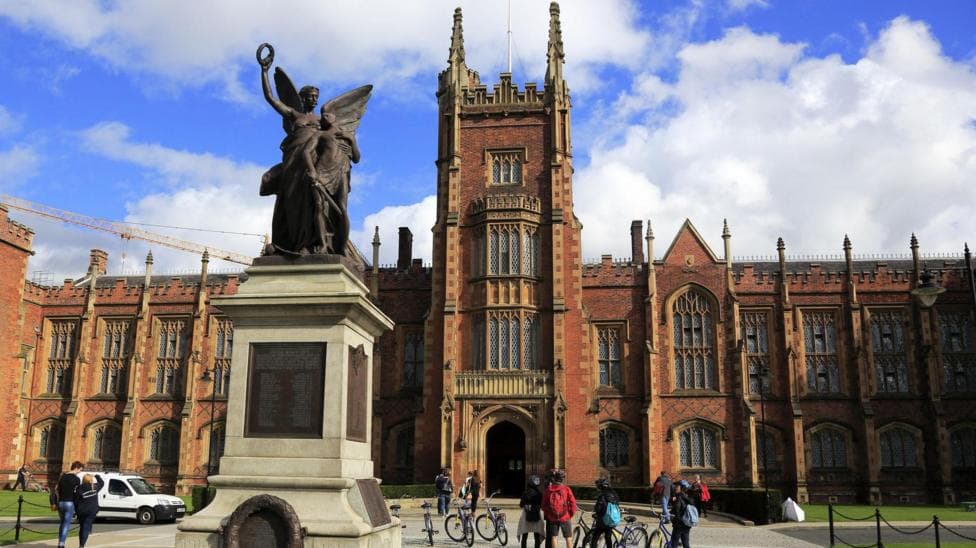
Staff at Queen's University of Belfast (QUB) have been warned of "difficult decisions" ahead as the institution grapples with mounting financial pressures. According to BBC News, pay deals with staff, childcare and gym fees for staff and students are under review, while staff car-parking charges are being increased. The warnings came in a message from the university's vice-chancellor Prof Sir Ian Greer following a "significant" cut in the grant paid by the Northern Ireland Executive to universities for 2025/26.
The financial strain facing Queen's reflects a broader crisis affecting universities across the UK and Ireland. A Department for the Economy official said on 21 October 2026 that Northern Ireland's universities faced a £21m reduction in teaching funding, with both Queen's and Ulster University expected to run deficits in 2025/26.
What is the state of Queen's University's finances?
The university recorded a deficit of approximately £12.5m in the last financial year, according to Greer. While the institution had hoped to reduce this shortfall, a combination of reduced funding from Stormont and declining student fee income forced the university to implement cost controls. Reporting in October 2026 showed Queen's recorded a £22.8m operational deficit in 2024–25, compared with £12.7m the previous year, with international fee income down 8% in 2024–25.
The university's annual accounts revealed that income from international student fees fell sharply, declining by around £5m from more than £60m in 2024 to approximately £55m in 2025. This decline reflects tougher visa requirements for international students entering UK universities in recent years. Greer also noted that student recruitment income was expected to fall around £7m short of target in the current year.
Despite these pressures, Greer stated that the university still intended to deliver agreed pay deals to staff.
However, given the Department for the Economy's position, we have no choice but to keep the position under review,he said.
The University Management Board has committed to identifying approximately £10m in savings during the current year, with Greer warning that
depending on the final position with public funding, further difficult choices may have to follow this academic year.

However, plans for a new university heritage and visitor centre to be built in the Quad on the site of the current administration building are proceeding. The university described this as part of a commercial growth strategy to generate income while providing enhanced teaching and research space.
What cost increases are being implemented?
Staff car-parking charges on campus are being raised, and costs for university services used by staff and students are under review. These services include childcare provision and membership of the university Physical Education Centre (PEC), which may see fee increases. Current QUB students using these facilities could face higher charges as a result of the cost-cutting measures.
How are students affected?
The university's ability to admit students is constrained by a cap on student numbers set by Stormont's Department for the Economy, which depends on available funding. Greer revealed that QUB had turned away approximately 500 students who possessed the grades required to attend the university. This restriction applies to both QUB and Ulster University, with the number of local students each institution can admit determined by departmental funding decisions.
Current students using university childcare or the PEC may also face higher fees for these services. However, Greer emphasised that
the student experience must remain central to our decisions.
What has the university said about its strategy?
In a statement to BBC News NI, a QUB spokesperson said the university was
facing increasing financial pressures arising from reduced public funding, lower student recruitment income and rising costs.The institution outlined its response:
Our planned approach is centred on both stability and growth, to secure the university's long-term future while supporting our students and staff. Strategic investment in projects such as the Public Engagement and Discovery Centre are part of a commercial growth strategy to help generate income while providing teaching and research space to further enhance the student experience.
The financial challenges facing Queen's are part of a wider pattern affecting higher education institutions. The University of Glasgow has announced plans for voluntary redundancies to address financial challenges caused by declining international student numbers, joining other Scottish universities facing budget cuts and restructuring. The reliance on international student fees has become increasingly unsustainable across the sector, forcing institutions to pursue alternative revenue streams and cost reductions.
What happens next?
The Department for the Economy indicated that universities could not confirm their 2025–26 funding until the Executive agreed a budget, and at the time of reporting they had not received formal funding letters. The university's financial position remains contingent on decisions by Stormont regarding public funding allocations. Further announcements regarding cost-saving measures and their impact on staff and students are expected as the financial year progresses and the full extent of funding cuts becomes clear.