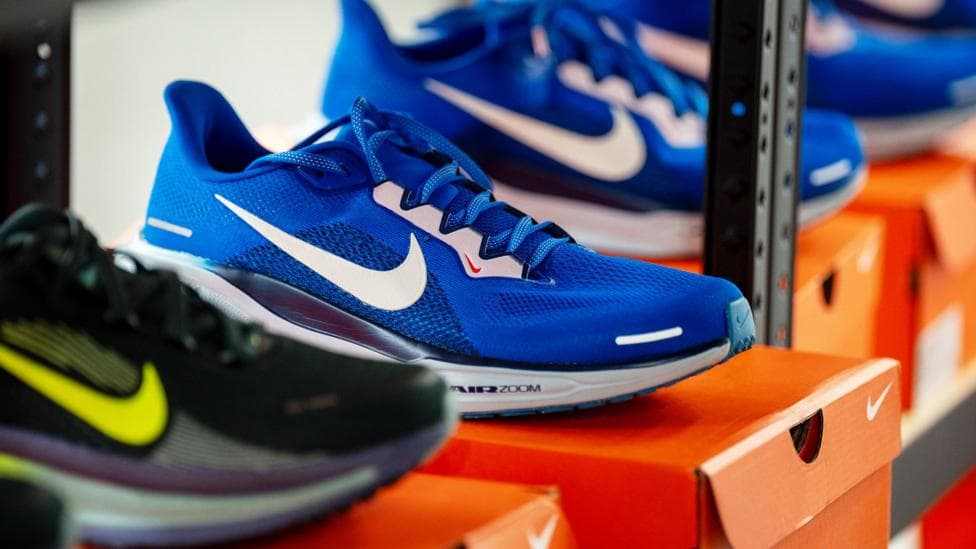
The past few years have presented formidable challenges for Nike, the world's dominant sportswear manufacturer. Named after the ancient Greek goddess of victory, the company has experienced a reversal of fortune—declining revenues, shrinking customer bases, and intensifying competition from emerging rivals.
Once an industry pioneer that disrupted established norms, Nike has transformed into an establishment player navigating a complex recovery strategy designed to preserve its market leadership. The company's latest financial disclosures indicate that the turnaround initiative led by Elliott Hill, a company veteran brought back from retirement two years ago, is beginning to yield results, though progress remains gradual rather than dramatic.
Yet this recovery has suffered a significant setback with the departure of football superstar Kylian Mbappé, who terminated his two-decade relationship with Nike last week to join On, an ascending Swiss competitor. According to , On's agreement with Mbappé includes equity alongside cash, though specific financial details remain undisclosed. The Real Madrid striker's exit raises a fundamental question: can Nike maintain its status as the preferred brand for elite athletes and the millions of supporters who emulate them?
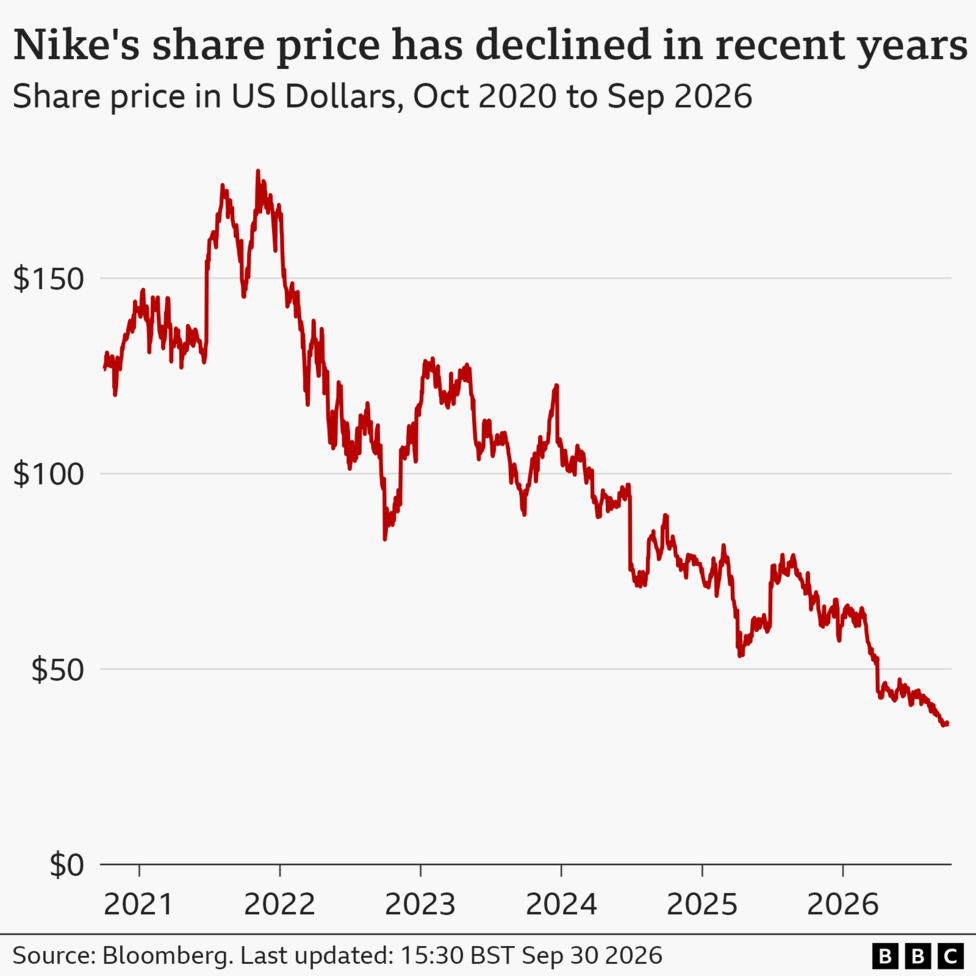
Despite remaining a globally recognized powerhouse, Nike has suffered substantial damage to its market valuation. The company's share price has declined by 75 percent over five years, erasing hundreds of billions in shareholder value. In September 2026, Nike was removed from the S&P 100 index of America's largest blue-chip corporations.
What strategic missteps led to Nike's decline?
Industry veteran Matt Powell identifies multiple "strategic errors" that have proven difficult to reverse. Among the most consequential was Nike's decision to sever relationships with traditional retailers in favour of direct-to-consumer online sales, combined with an overexpansion of limited-edition product availability.
"The more broadly available those shoes became, the fewer people were interested,"Powell explains. The strategy backfired as the exclusivity that had driven demand evaporated.
Another self-inflicted wound involved redirecting research and development resources away from innovative footwear toward digital infrastructure.
"They really shut down their innovation on product. Someone jokingly said they were trying to turn Nike into eBay."This criticism targeted John Donahoe, the former eBay executive who spearheaded Nike's direct-to-consumer pivot before stepping aside for Hill. Donahoe's four-year tenure coincided with Nike's dramatic share price collapse.
Initially, Donahoe's strategy generated strong sales growth, fuelled by pandemic-driven demand for online shopping. However, subsequent cost-of-living pressures dampened consumer spending. As international demand weakened, particularly in China, Nike implemented cost reductions and workforce reductions. This inward focus on digital operations created an opening for competitors. Brands including On and Hoka captured retail shelf space previously dominated by Nike, signalling a fundamental shift in market dynamics.
How did Nike build its historical dominance?
Nike's ascendancy rested on a foundation of bold innovation and athlete partnerships. In the mid-1980s, the company made an audacious gamble by allocating its entire basketball budget to sign Michael Jordan, then an untested rookie who had not yet competed in the NBA. This calculated risk transformed Nike's trajectory.
The company developed the Air Jordan shoe line around him, deliberately using the red and black colourway that violated NBA regulations as a marketing strategy while paying the resulting fines. This willingness to challenge conventions became central to Nike's identity.
Subsequent decades saw Nike forge partnerships with generational athletes including Tiger Woods, Serena Williams, and Cristiano Ronaldo, each of whom achieved sporting greatness while wearing the Swoosh. These associations cemented Nike's position as the aspirational brand for athletes and fans worldwide.
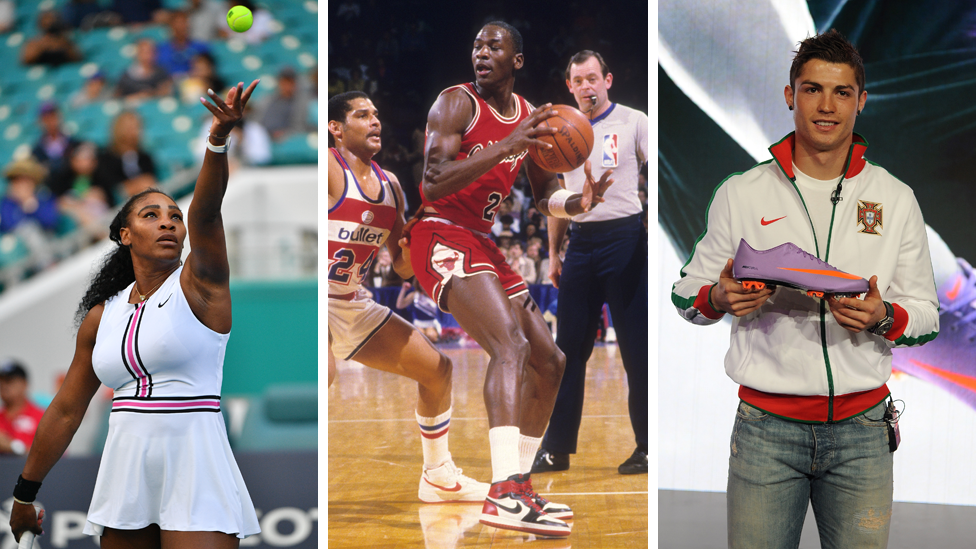
Today, Nike maintains partnerships with the retired Jordan and Williams, though Woods ended his association in 2024. The company's current roster includes elite athletes such as Rory McIlroy and Vinicius Junior. However, the loss of Mbappé—who had been with Nike since age nine—alongside World Cup winner Lamine Yamal represents a significant erosion of football talent.
Yamal indicated that his move to Adidas offered him the opportunity to differentiate himself from Nike's crowded roster of superstars, while Mbappé stated that On would position him
"surrounded by innovators who dream of the same things I do."Marketing strategist Tim Derdenger observed that
"[I'm] not saying that what they did wasn't great, but it was in the past. It's not the future and it's not the current and that is what drives apparel sales today."
Derdenger suggested that Mbappé's decision paralleled Jordan's choice decades earlier to select Nike over Converse and Adidas, driven by the opportunity to become synonymous with a single brand.
"Athletes have egos and those egos want them to be a part of something big and that they're the ones that are helping drive that change, that growth."On's commitment to football, including plans to launch its first football boots in 2027 with former France international Thierry Henry serving as director of football, positions the brand as an emerging force in the sport.
What do Nike's recent financial results reveal?
Nike's fiscal 2026 performance demonstrates the uneven nature of its recovery. Full-year revenue reached $46.4 billion, remaining flat year over year on a reported basis and declining 2 percent on a currency-neutral basis.
The company's quarterly results reveal a mixed picture. In the fourth quarter of fiscal 2026, wholesale revenue increased 4 percent to $6.6 billion, while Nike Direct revenue declined 7 percent to $4.1 billion. This divergence suggests that the company's pivot back toward traditional retail partnerships is beginning to bear fruit, even as its direct-to-consumer channel continues to contract.
The company reported diluted earnings per share of $0.72 for the quarter, including a $0.52 benefit related to expected tariff recovery. Hill acknowledged that
"more work to do"remains on sportswear, the Jordan brand, and operations in China.
Nike projected revenues would decline by "high-single digits" in the coming financial year and announced plans to achieve $2.5 billion in cost savings by 2031, with reductions expected to include job losses.
Can Nike recover its former dominance?
Powell maintains that Nike will retain its position as the market leader, noting that millions of consumers worldwide, particularly younger demographics, remain loyal to the brand. However, he acknowledges that the company's missteps have diminished its former supremacy.
"Will Nike be the gorilla they once were? I don't think so. Can the brand come back to growth and profitability? Yes,"Powell states. He cautions that restoring innovation capabilities requires time:
"When you shut down innovation, you don't turn it back on and it goes right back to full speed."
Powell anticipates that Nike's "Sport Offense" turnaround strategy will demonstrate positive momentum beginning in 2027. Last year, the company launched a campaign targeting younger audiences with the phrase "Why Do It?" as a counterpoint to its iconic "Just Do It" slogan.
What developments lie ahead for Nike?
Nike faces a critical period as it attempts to restore its market position. The company maintains certain institutional advantages: its French national-team kit-supply agreement has been extended through 2033–34, and it will become the official kit and equipment supplier for German national teams beginning in 2027. However, Nike lost the Premier League match-ball supply contract to Puma, underscoring competitive pressures across multiple categories.
The company's next quarterly results and investor conference call are scheduled for 1 October 2026, providing an opportunity to demonstrate whether Hill's turnaround strategy is gaining traction. Young consumers and aspiring athletes will determine whether Nike can reclaim its position as the brand synonymous with sporting excellence and innovation—or whether emerging competitors have permanently altered the competitive landscape.
Key Facts
- Nike's share price has declined 75 percent over five years, and the company was removed from the S&P 100 index in September 2026
- Kylian Mbappé ended his 20-year association with Nike to join On, which plans to launch football boots in 2027
- Nike's direct-to-consumer revenue fell 7 percent in Q4 fiscal 2026, while wholesale revenue rose 4 percent, indicating a strategic shift back toward traditional retail
- The company projects high-single-digit revenue declines in the coming financial year and plans $2.5 billion in cost savings by 2031
- Elliott Hill's "Sport Offense" turnaround strategy is expected to show positive results beginning in 2027