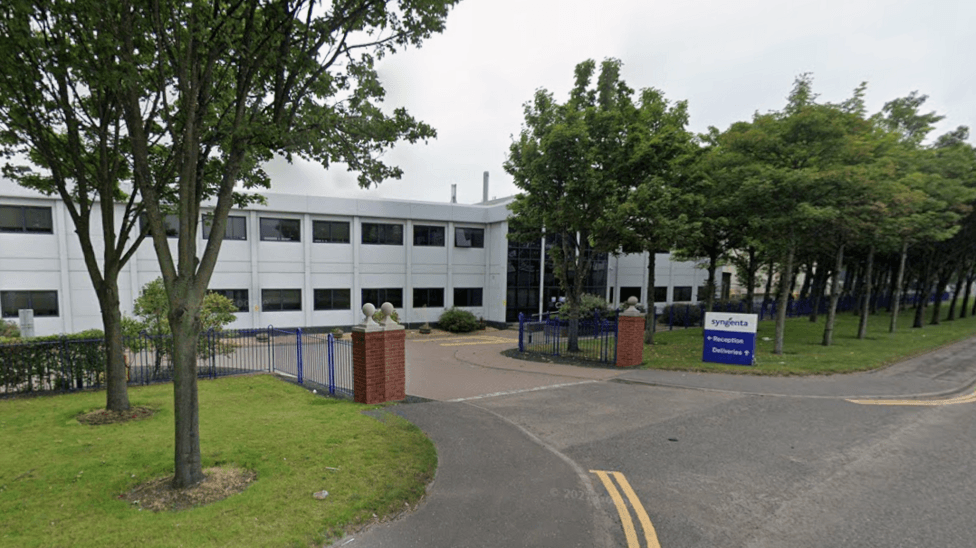
Agricultural chemical manufacturer Syngenta has announced plans to cease operations at its Grangemouth facility, putting 377 jobs at risk. The company cited mounting international competition and the inability to maintain competitive production costs at the Scottish site as reasons for the proposed closure.
In a statement, Syngenta said the Grangemouth operation was "significantly more expensive" to operate than its alternative production facilities worldwide. The firm indicated it would enter a formal consultation period with trade unions and employees, though it stressed that no final decision has yet been made.
The move represents a significant setback for the region, which has already experienced substantial job losses in recent years. The closure of the nearby oil refinery in April of the previous year resulted in approximately 400 redundancies, and bus manufacturer Alexander Dennis announced the shutdown of its Falkirk plant in March with the loss of 115 positions.
Why is the timing particularly significant?
The announcement comes just over a year after Syngenta received £2.2m in funding from Scottish Enterprise to support expansion at the site. According to Scottish Enterprise records, that grant was intended to back a £14.7m expansion programme designed to create 38 new jobs and safeguard 14 existing roles, including a dedicated Seedcare manufacturing facility. The reversal underscores the volatility of investment commitments in the chemical sector.
What has the company said about the decision?
Mike Hollands, president of Syngenta UK, stated:
"The workforce at Grangemouth is highly skilled and passionate, but despite all efforts, we have not been able to make the Grangemouth site competitive compared to alternative supply options. It is with a very heavy heart that we make this proposal, but we are committed to a constructive consultation and will continue to consider options as part of that process."
Syngenta said it had undertaken a detailed review of its Grangemouth operation before announcing the plans. The company identified cost savings in certain business areas, but these proved insufficient to close what it described as the site's "competitiveness gap". The manufacturer added that it remained "committed to genuine consultation" with trade unions over potential alternative uses for the facility.
How have Scottish politicians responded?
Stephen Flynn, Scotland's Economy Secretary, described the announcement as "extremely disappointing" and stated that the Scottish government had "strongly opposed" Syngenta's plans. Flynn expressed particular frustration over the delayed allocation of previously pledged support, saying:
"My thoughts are with the workers, their families and the local community who will be affected by this decision. We made clear to Syngenta's board our strong opposition to any potential scale down or closure of their Grangemouth site."
Flynn emphasised that the UK government had previously committed an additional £200m in funding for Grangemouth through the National Wealth Fund under then-Prime Minister Sir Keir Starmer. However, he noted that not a single penny from that fund—promised in 2024—has yet been allocated.
"During this period of consultation, I sincerely hope that the UK government will now provide some of the £200m committed to Grangemouth, since not a single penny has yet been allocated from that fund promised in 2024."
Gillian Mackay, co-leader of the Scottish Green Party, called the proposed closure another "devastating blow" for the area. She stated:
"Our governments should be doing more to protect jobs and ensure that workers can benefit from our transition to a greener future. Grangemouth is my home, and I am concerned about what this will mean for the local community if it goes ahead."
What alternative futures have been explored for the site?
The Grangemouth site has been the subject of broader strategic planning beyond its current chemical operations. According to analysis of Project Willow, an examination of low-carbon alternative uses for the wider Grangemouth industrial complex identified clean-energy projects that could potentially create around 800 jobs over a 15-year period. Such possibilities may form part of the discussions during the consultation period.
What support is available for affected workers?
According to reports on the consultation process, the Scottish Government's Partnership Action for Continuing Employment (PACE) initiative is ready to provide support to workers who may face redundancy as a result of the proposed closure. This programme typically offers retraining, job search assistance, and other employment support services.
What is Syngenta's ownership structure?
Syngenta, the company proposing the Grangemouth closure, is ultimately owned by Chinese state company Sinochem. This ownership structure may be relevant to discussions about the company's strategic priorities and investment decisions across its global operations.
Key Facts:
- 377 workers at the Grangemouth facility face potential redundancy if the proposed closure proceeds
- The announcement follows receipt of £2.2m in Scottish Enterprise funding just over a year ago for an expansion programme
- Syngenta cited high operating costs and international competition as reasons for the proposed closure, with no final decision yet made
- The UK government has committed £200m to Grangemouth support through the National Wealth Fund, but none has been allocated to date
- The region has experienced significant job losses in recent years, including the oil refinery closure and the Alexander Dennis plant shutdown