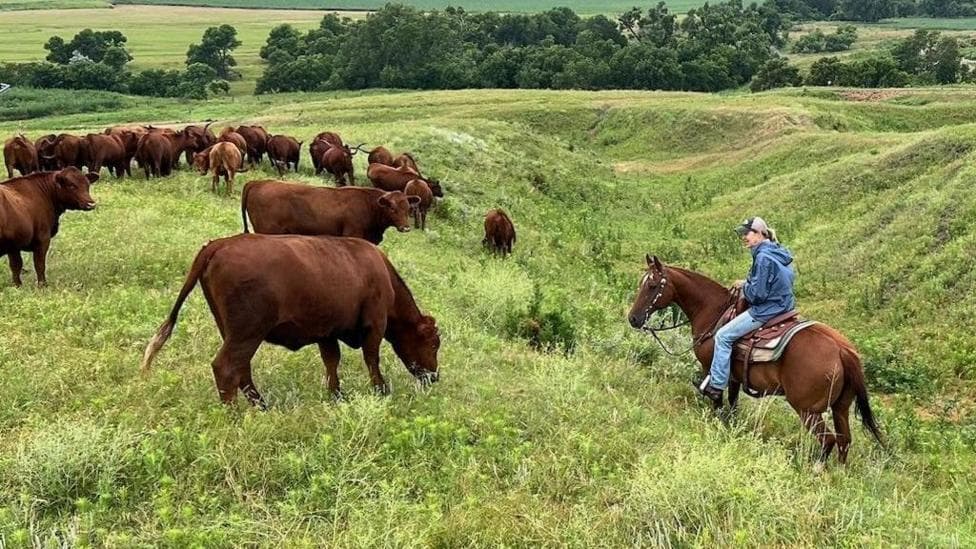
Rancher Yvette Mannon was already navigating a destructive wildfire and rising fuel costs when the Trump administration announced plans to import foreign beef, a move that devastated cattle markets just as she needed them most.
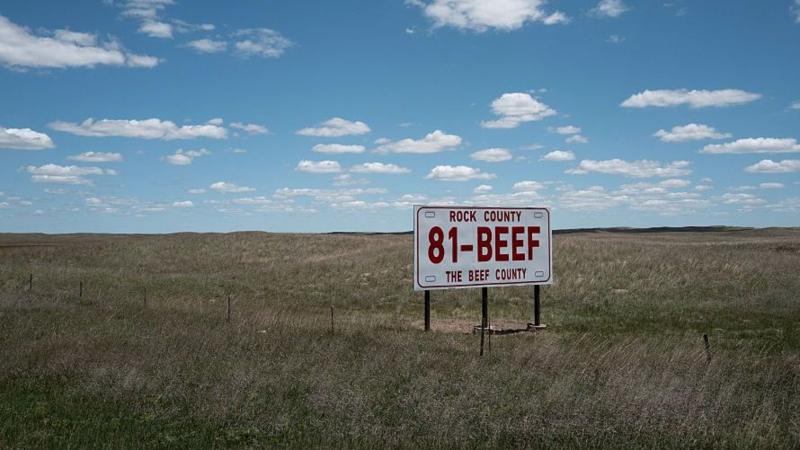
In April, a wildfire consumed 1,600 grazing acres and 21 kilometres of fencing on the ranch Mannon purchased in 2002. The property sits in a corner of Nebraska characterised by rolling green hills beneath expansive Midwestern skies, the terrain scattered with grain silos, feedlots, and extensive cattle operations.
Though Mannon's 300 cattle survived the blaze, replacing the fencing proved costly. Steel prices had reached their highest levels in years, driven upward by tariffs imposed under President Donald Trump's administration, forcing her to pay $4.89 per foot—a bill exceeding $300,000 in total.
The financial pressure intensified when much of the destroyed grazing land meant deploying a tractor daily to deliver hay to her herd. Diesel prices, spiking due to the Iran War, had climbed more than 40% compared to the previous year.
Then in August, the Trump administration unveiled plans to import 300,000 metric tons of duty-free foreign beef to reduce consumer prices. The announcement arrived during the September-November window when most American calves are weaned and sold—precisely when Mannon needed strong market conditions. The cattle market collapsed immediately.
"So we're 'Buy American', 'Let's Make America Great'," said Mannon, 63, who voted for Trump. "But for you guys over here, sorry. It just felt like a betrayal."
How are rising costs affecting Nebraska's agricultural sector?
Farmers and ranchers across the United States report being squeezed from multiple directions simultaneously. Recent years have brought drought affecting crops and historically low cattle herds, but government policies have compounded the strain.
The Iran War has sent diesel and fertiliser prices soaring—both essential for agricultural operations. Tariffs have increased machinery costs and repairs, while steel and lumber prices have surged. Decisions by the Trump administration—whether importing foreign beef or opening the southern border to Mexican cattle—have sent already-volatile markets into further turmoil. Many producers are losing hundreds of dollars per head of cattle.
"All of this hit cattle markets, as a whole, negatively,"said James Mitchell, an assistant professor and agricultural economist at the University of Arkansas. Cattle markets operate in 10-12 year cycles, he explained, with alternating periods of strength and weakness. The industry recently enjoyed a particularly lucrative period where low supply and high demand drove prices upward. Now, the market is clearly declining.
The economic pressures have become severe enough that some Nebraska voters—a state that overwhelmingly backed Trump in the last election—are reassessing their political allegiances. Dan Osborn, an independent candidate running against Trump-backed Republican Pete Ricketts, is performing surprisingly well in polling ahead of the November Senate race.
Republicans appear acutely aware of the discord among farmers. Both Trump and Nebraska Governor Jim Pillen have announced relief policies in recent weeks aimed at lowering fuel costs for struggling agricultural producers. On 5 October, Trump signed an executive order easing limits on tax-exempt red-dyed diesel use, including for highway use, deferring the applicable federal excise tax. However, Midwest diesel prices had risen nearly $4 in a year, while the measure was estimated to lower costs by about 24 cents.
What are individual ranchers experiencing?
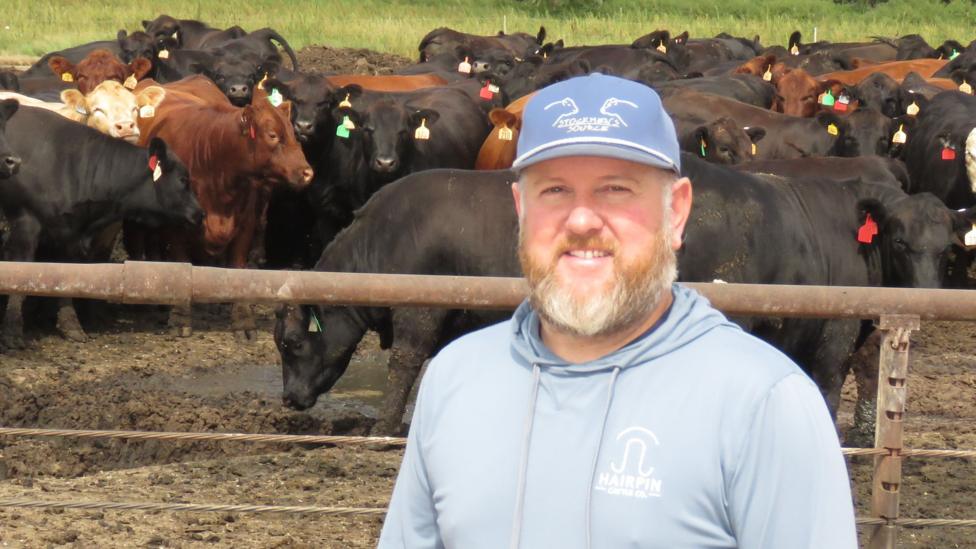
Jake Wolfinger, 45, has been weathering the downturn at his feedlot near Lexington, Nebraska. He and his wife, both Ohio natives from multi-generational farming families, relocated to Nebraska—which boasts lush land and the nation's most abundant groundwater—to establish their own operation.
The Wolfingers purchased a dilapidated feedlot in 2010 and transformed it into a sophisticated operation housing 5,500 cattle. Neighbours point to them as evidence of what determination can still achieve in a challenging industry.
However, Wolfinger did not anticipate the Iran War, tariffs, or foreign beef imports when planning his operation.
"Things were just chumming along pretty good,"he said, selling cattle for $240 per hundredweight—a price that has since dropped to $225. That seemingly modest decline translates to potential losses of hundreds of dollars per animal.
Wolfinger also contends with sky-high diesel costs, with some equipment consuming 400-gallon tanks daily.
"It really makes a guy think,"he said.
A Trump supporter who voted for the president because
"we needed his spirit in this country,"Wolfinger also expressed frustration with what he termed "woke DEI" policies on the left. Yet he remains unhappy with the president's intervention in the beef market.
"People need to stay the hell out of farmers' business, because it's harvest time,"Wolfinger said.
Forty kilometres northwest, near Callaway, Nebraska, 54-year-old Duane Kimball stands in his shed surrounded by machinery and a large Trump banner.
"The daily upcharge… is kind of painful,"he said.
"I know a lot of people have had to go back to their banks and increase their lines of credit."
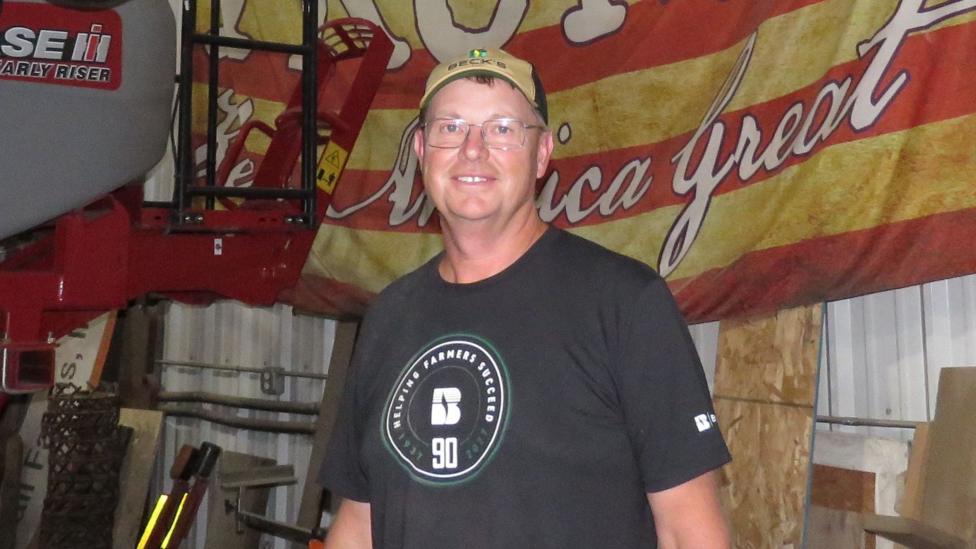
Kimball believed the Iran War would have concluded long ago. However, he does not attribute all his economic challenges to Trump.
"To pin that on this administration, I don't think is a fair assessment,"he said, pointing instead to cumbersome regulations and rising costs for machinery and fertiliser—trends that began before Trump returned to the White House.
How are ranchers' political views shifting?
Mannon, who returned to her native Nebraska and purchased the ranch after a banking career, believes the agricultural industry will demonstrate its feelings at the midterms. Like many in the region, however, she prefers to avoid extensive political debate.
That restraint does not apply to her friend and nearby rancher Jim Jenkins. A former independent senatorial candidate, Jenkins takes fierce pride in Nebraska agriculture and his own ranch, situated on land his family homesteaded more than 150 years ago.
Jenkins has grown so incensed by policies he believes harm Nebraska's agricultural industry that he wrote an opinion article over the summer in an Omaha newspaper. He has felt the squeeze personally, citing high diesel, fertiliser, lumber, and steel costs—everything from barbed wire to fence posts. That pressure has been compounded by
"uncertainty"over what may happen next and what the next Trump announcement might mean for the industry.
"Those are the things that keep you up at night,"the 69-year-old said.
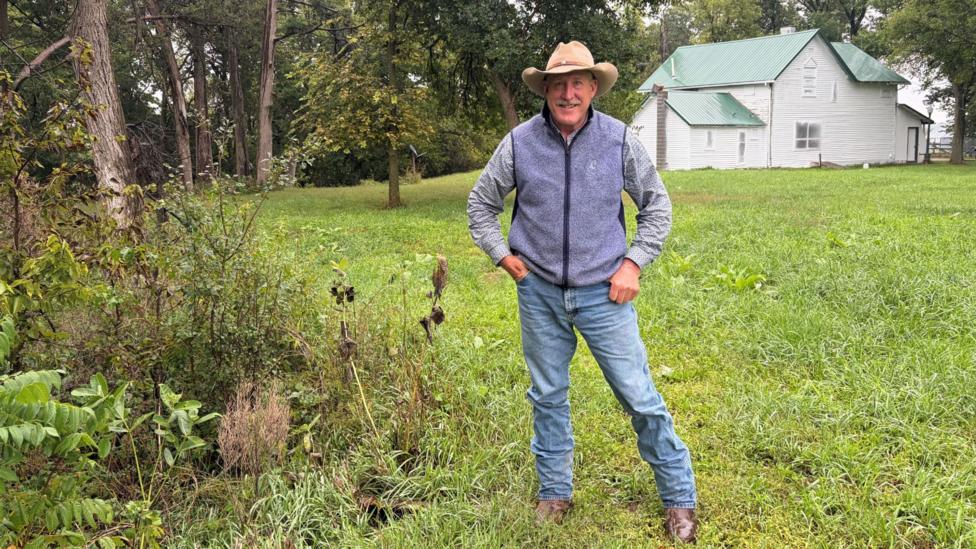
An outspoken Trump critic who did not vote for the president during any of his White House terms, Jenkins recognises he is an outlier among his conservative neighbours. When Trump was first elected, Jenkins said he hoped he would prove
"to be a practical business guy."Now, he said,
"I think he's been anything but practical."
Yet for many Trump-supporting farmers and ranchers, the president's decisions—even when they damage them economically—warrant the benefit of the doubt.
"We've all known this about Trump. He just kind of could be a little 'shoot, fire, aim',"Wolfinger said.
"I wish you could, you know, put the gun back and holster it and then think about it. But I think he's, for the most part, trying to run this country in the right direction."
Don Cantrell, whose grandfather began farming family land that now stretches to 12,000 acres, said he continues to be hit on diesel costs and admits the president
"does some stupid things"and
"says some stupid things."Yet Cantrell believes Trump has been the
"best president overall."His establishment of DOGE—the Department of Government Efficiency—was exactly what Cantrell felt the country needed.
"Let's cut government waste,"he said.
"There's so much waste."
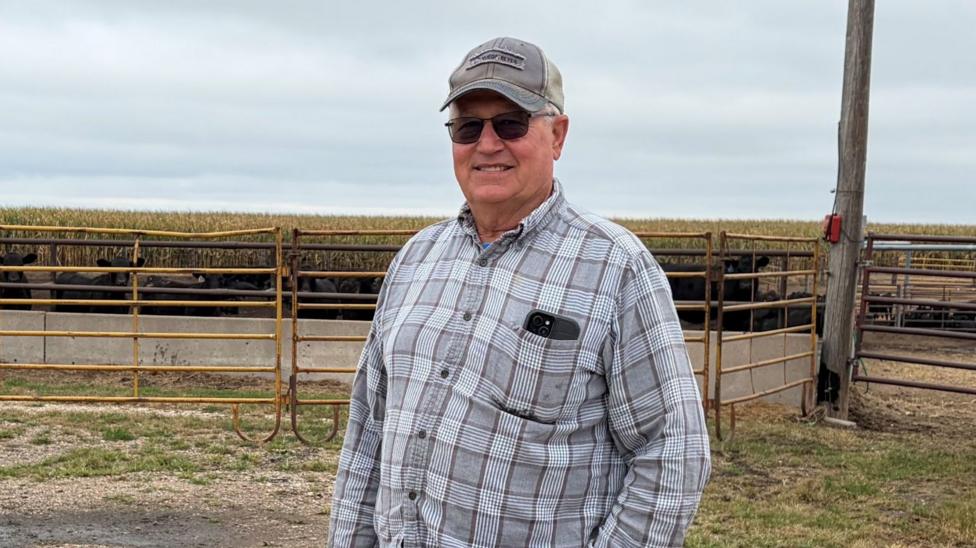
Trump also maintains positions on social issues—including abortion and praising Christianity—that align with many Nebraskan voters' personal convictions.
"I think, in general, if you're conservative in this country, you're going to vote conservative,"Wolfinger said.
Don Batie, 67, agrees:
"There's a lot of other issues besides agriculture."Still, the economic realities are difficult to ignore, he said.
Batie retired from farming last year for personal and economic reasons. The corn and soybean farmer watched prices fall from $7 per bushel for corn in early 2022 to just $4.29 three years later. But costs have not declined, he said, with tariffs and inflation affecting his bottom line. As a result, he has had to abandon his longtime dream of passing the 400-acre farm he owns to his daughter.
"It just wasn't going to work now,"he said, sitting at the dining room table in the home where he grew up.
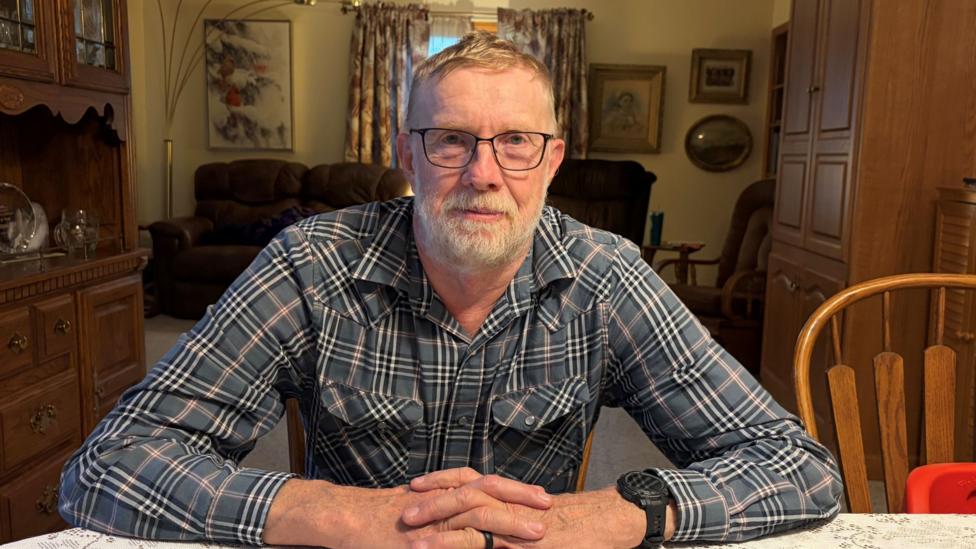
He reached that realisation only within the past year after working through the numbers.
"I knew things hadn't been good,"he said.
"But when I started working on the numbers… I was like, 'This is going to be bad.'"
Batie voted for Trump in 2016 and again in the primary—but not in 2024, because he was disappointed with his policies. He said he had heard similar dissatisfaction throughout the state.
"They're still strong Republicans,"he said of those people.
"But they're not a Trump supporter anymore."
What is the broader context for beef prices and cattle herds?
The import plan covers up to 300,000 metric tons, or 661 million pounds, of beef, which the administration says will be sold at 25% below market prices. The announcement has drawn public criticism from industry leaders. U.S. Cattlemen's Association president Justin Tupper said Trump's support among ranchers "has definitely taken a hit."
The economic environment for cattle producers has deteriorated significantly. U.S. beef averaged $6.92 per pound in August 2026, up from $4.47 in August 2021. Meanwhile, 57% of U.S. cattle were in areas experiencing moderate or greater drought, a 27% year-over-year increase. The U.S. cattle herd stood at 86 million head at the start of 2026, according to the U.S. Department of Agriculture.
How are ranchers continuing despite the challenges?
All over Nebraska, however, the industry soldiers on. On a rainy Thursday in Broken Bow, buyers wearing cowboy hats, plaid shirts, and denim gathered for the regular indoor cattle auction. Calves still need to be bought and sold, and ranch operations—many multi-generational—do not pause for politics.
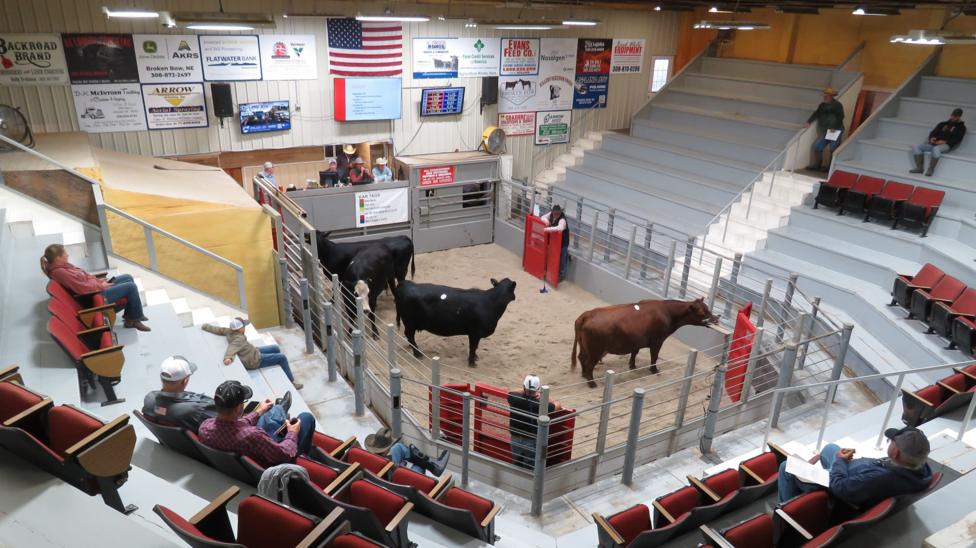
Across the train tracks, past feed and hardware stores, Yvette Mannon summed up Nebraskans' resilience and fortitude.
"People in agriculture are eternal optimists,"she said.
"Otherwise we wouldn't get in it."
What happens next?
Nebraska's general election, including the Ricketts–Osborn Senate contest, is scheduled for 3 November 2026. The 90-day beef-import tariff pause is expected to expire in November; reporting indicates the White House was not planning to end it early.