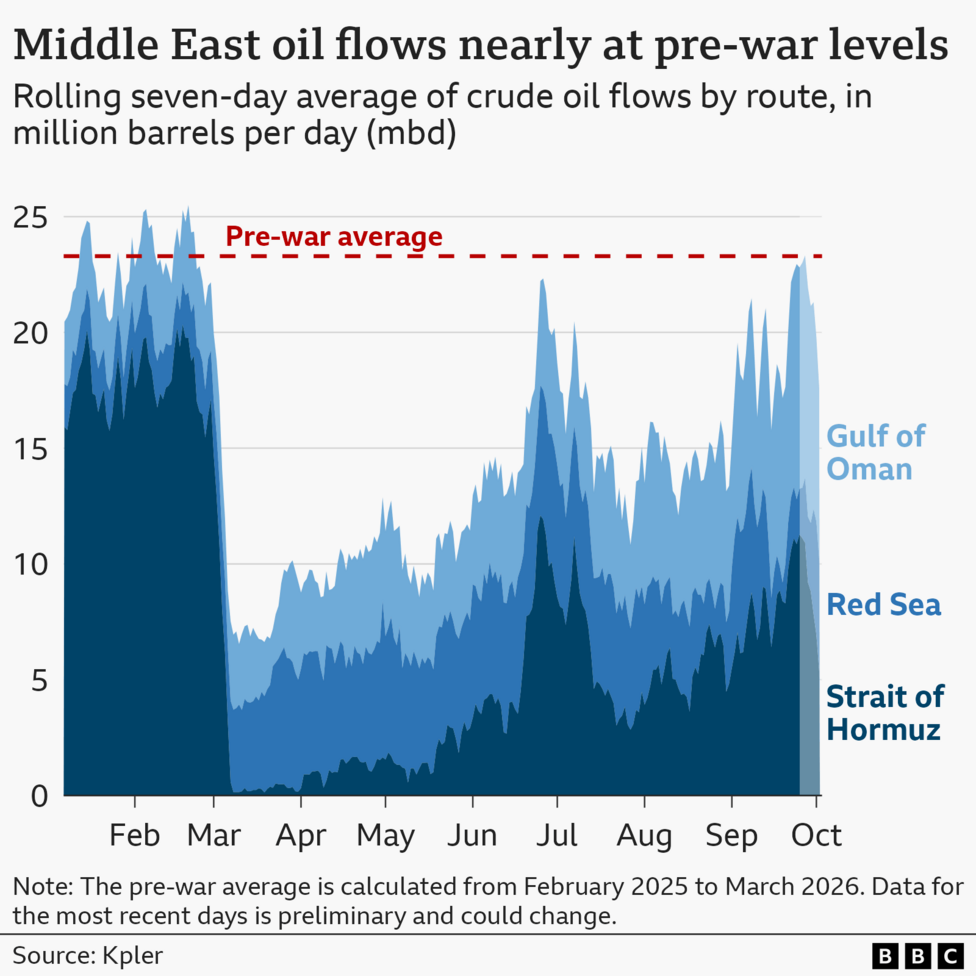
Crude oil shipments from the Middle East have recovered to approximately 92% of their pre-conflict volume, maritime data reveals, even as Iran maintains restrictions on vessels transiting the Strait of Hormuz. Seven months after hostilities between the US and Israel against Iran effectively disrupted this vital waterway, the recovery reflects a combination of military protection, alternative shipping methods, and pipeline diversions that have allowed regional exporters to sustain near-normal output.
According to Kpler, a maritime intelligence firm, the final week of September saw daily oil flows reach levels comparable to those before the conflict began. However, this apparent stability masks underlying vulnerabilities: the measures sustaining current export volumes depend on continued US military presence, face persistent Iranian attacks, and may prove unsustainable if geopolitical conditions shift.
The recovery of Middle East oil exports follows an earlier period when prices fell as traffic through the Strait of Hormuz resumed after initial disruptions. Yet analysts caution that the current equilibrium remains fragile, dependent on factors beyond the control of oil-producing nations.
How are ships getting through the Strait of Hormuz safely?
The US military has provided direct support to commercial vessels navigating the Strait of Hormuz since mid-June, with the number of assisted transits rising by a third between August and September. According to Martin Kelly, senior intelligence analyst at security firm EOS Risk Group, American assistance consists primarily of air cover for ships, including threat warnings and interception of incoming drones, missiles, and fast-attack boats.
Despite this protection, vessels using the southern route near Oman's coast—the path recommended by US authorities rather than Iran's northern corridor—continue to face targeting. September recorded the highest number of successful Iranian attacks on commercial shipping since March, according to the Armed Conflict Location and Event Data conflict monitor. Naveen Das, senior oil analyst at Kpler, warned that the oil market remains uncertain about the durability of current arrangements, citing both the risk of escalating Iranian action and potential shifts in US policy following the midterm elections.
What role are shuttle tankers playing?
A fleet of more than 60 large oil tankers now operates a shuttle system through the Strait of Hormuz, transferring crude to other vessels in the Gulf of Oman rather than completing full transits. This method has become the dominant transport mechanism: more than 70% of crude passing through the strait in August was transferred between ships in the Gulf of Oman, according to Kpler data.
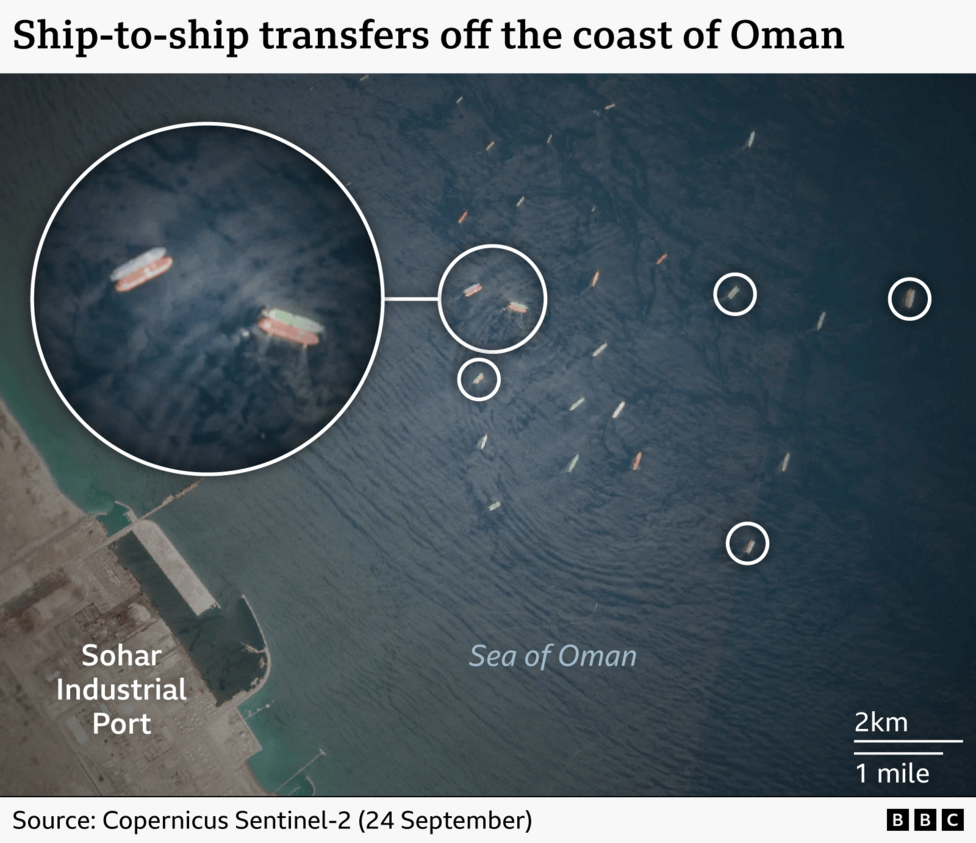
Satellite imagery analysed by BBC Verify shows these ship-to-ship transfers occurring off the coast of Sohar, an Omani port city, where they appear to face reduced exposure to Iranian attack. An average of more than four million barrels per day was transferred between vessels in the week ending 30 September. However, Martin Kelly cautioned that questions remain about how long these shuttle tankers can sustain operations, particularly as attacks on them persist. Imagery from 24 September captured six pairs of vessels docked or positioned together near the port.
Overall, an average of 12 million barrels per day passed through the strait during the week to 30 September, compared with a pre-war baseline of 17 million barrels daily. The gap reflects both the continued disruption and the diversion of flows through alternative routes.
How are pipelines changing the export picture?
Oil-exporting nations in the Gulf have responded to Iranian threats by dramatically increasing overland pipeline exports, fundamentally reshaping regional trade flows. About 40% of total oil exported from the region in September bypassed the Strait of Hormuz entirely, up from 17% before the conflict, according to Kpler.
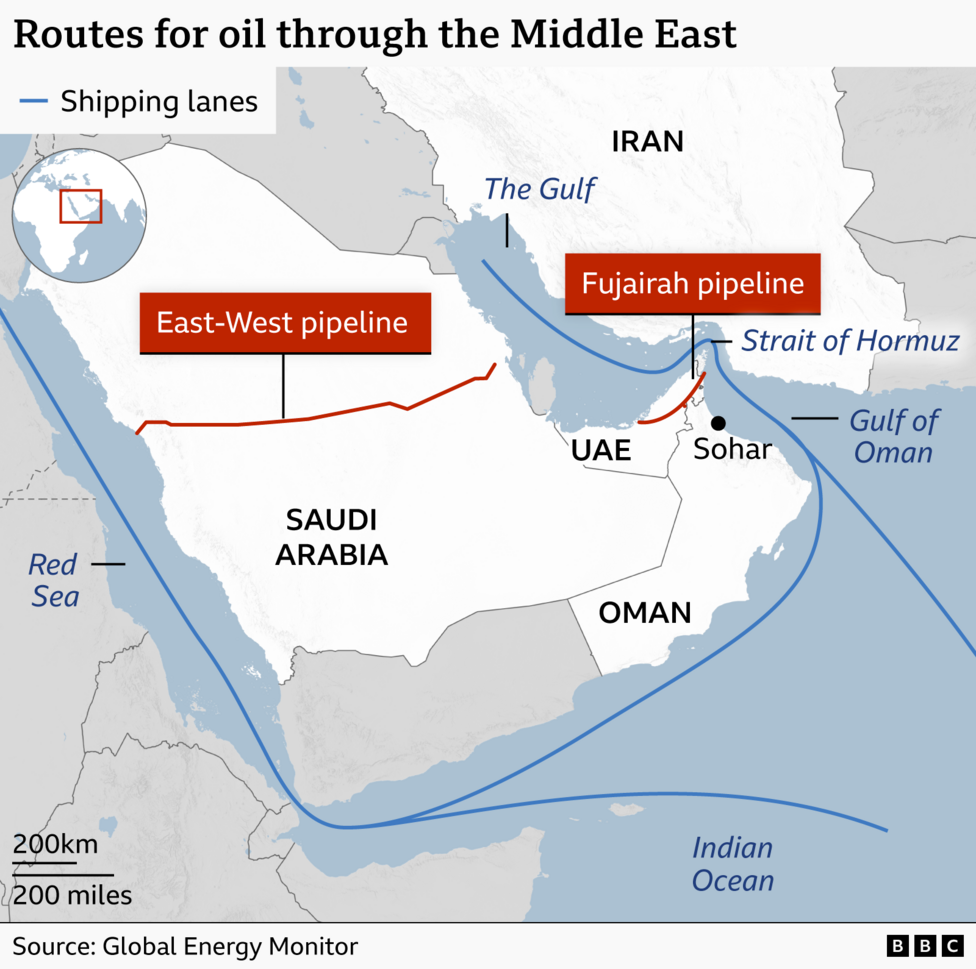
Saudi Arabia's East-West Pipeline, which carries crude from the Persian Gulf to the Red Sea port of Yanbu, has become critical to this strategy. Just under 20% of regional crude now exits via Red Sea ports supplied by this pipeline, with flows exceeding four million barrels per day. According to reporting on September trade data, Saudi Arabia's crude exports rebounded to approximately 5.4 million barrels per day in September, up sharply from 2.446 million in August, as shipments shifted back toward Gulf terminals following pipeline damage.
Three weeks after an attack on the East-West Pipeline attributed to Iran-backed proxies in Iraq, Saudi Arabia now operates the facility at maximum capacity. Almost a quarter of all crude leaving the region now travels via pipeline to terminals along the Gulf of Oman, particularly the Fujairah facility in the United Arab Emirates. According to Kpler's detailed breakdown of September flows, at least 16.5 million barrels per day left the region excluding Iran, with 60% crossing Hormuz, 23% loaded outside the strait mainly at Fujairah, and 17% departing via the Red Sea.
Naveen Das from Kpler suggested that expanded pipeline usage is likely to become the permanent operating model, arguing that
it seems very improbable that we live in a world whereby the Gulf countries and Iran go back to being relatively harmonious. This structural shift reflects both the immediate security environment and longer-term regional tensions.
What has happened to Iranian oil exports?
Iran's own crude exports have effectively ceased following the reimposition of a US naval blockade in mid-July. Shipments have fallen from 1.7 million barrels per day before the conflict to nearly zero, according to Kpler data. This collapse has left Iranian tankers stranded: 20 empty Iran-flagged vessels currently sit off the coast of Sri Lanka, unable to return to the Gulf due to the US blockade, according to ship-tracking data and analysis from United Against Nuclear Iran, a US-based monitoring organisation.
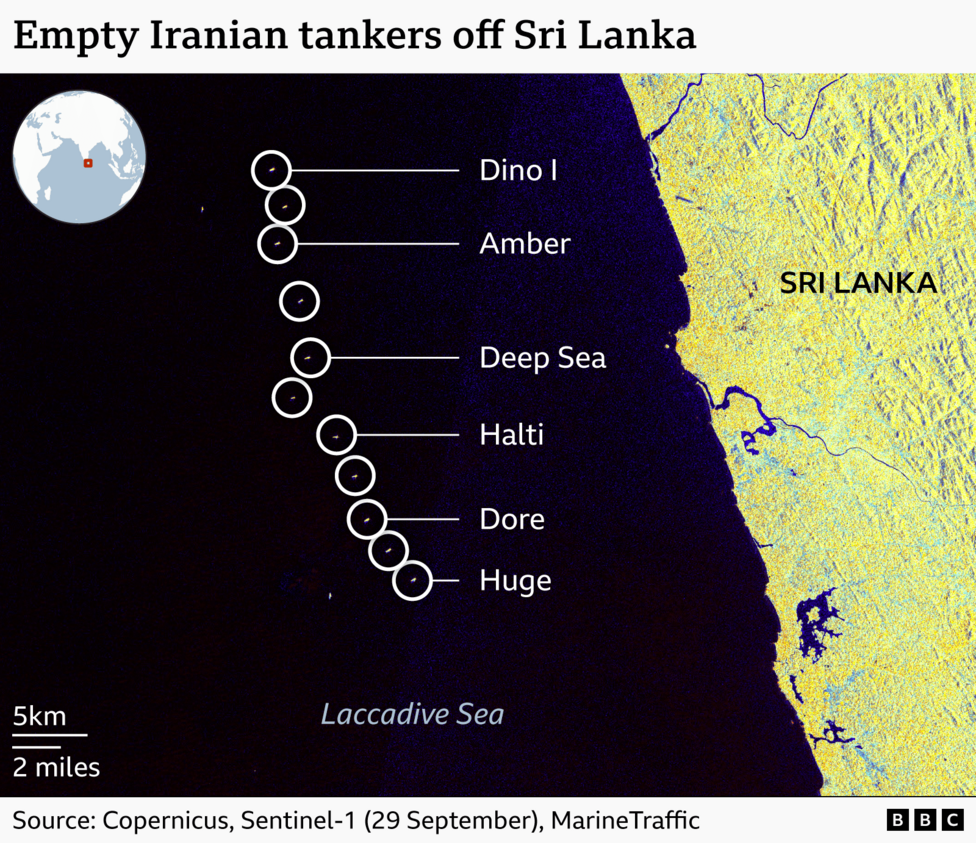
The blockade represents one of the most severe economic consequences of the conflict for Iran, effectively removing the country from global oil markets and depriving it of crucial export revenue.
Are refined products flowing normally?
While crude oil recovery has approached pre-war levels, refined products and liquified natural gas remain severely constrained. Fewer than one million barrels of processed oil products passed through the Strait of Hormuz on average in the final week of September, down from 3.5 million barrels daily before the conflict. According to CNBC reporting on Kpler data, refined-product shipments through Hormuz averaged just 677,000 barrels per day over a seven-day period, compared with 3.6 million before the war.
This disparity reflects the greater vulnerability of refined-product tankers to disruption and the limited alternative routes available for processed fuels compared to crude oil. The shortfall in refined products and LNG has broader implications for global energy markets and consumer prices, even as crude supplies have stabilised.
Key Facts
- Middle East crude oil exports reached 92% of pre-war levels by late September, sustained by US military escorts, shuttle tanker transfers, and pipeline diversions
- About 40% of regional oil now bypasses the Strait of Hormuz via overland pipelines, up from 17% before the conflict
- Iran's oil exports have collapsed to near zero following a US blockade, with 20 empty Iranian tankers stranded off Sri Lanka
- Refined products and liquified natural gas remain far below normal, with processed fuels at just 19% of pre-war volumes
- Analysts question the long-term sustainability of current arrangements, citing ongoing Iranian attacks and potential shifts in US policy