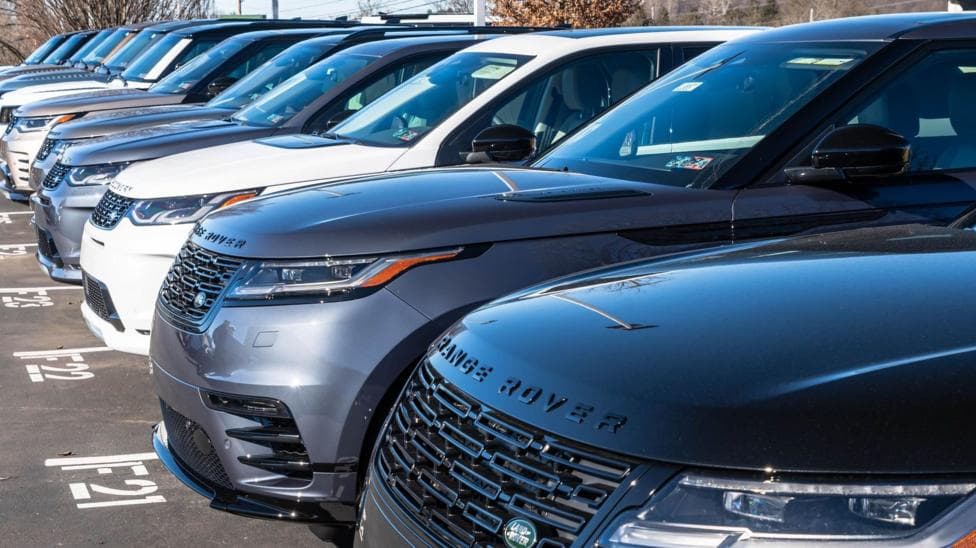
Jaguar Land Rover is eliminating approximately 4,000 positions over the next two years as part of a sweeping restructuring effort. According to , the cuts represent roughly 10% of the company's workforce and are intended to generate around £1.7 billion in cost savings. The redundancies will primarily affect non-production staff in the UK, with voluntary redundancy schemes opening for salaried and management employees, though compulsory redundancies have not been ruled out.
The decision reflects mounting pressures across multiple fronts. Sales have contracted in all major markets, a severe cyber-attack disrupted production throughout late 2025, and the company faces intensifying competition from Chinese manufacturers while simultaneously investing billions to transition toward electric vehicles. UK business minister Jonathan Reynolds is scheduled to meet with JLR's chief executive this week to discuss the restructuring.
What drove the sales decline in China?
China represents the most significant challenge for JLR's business model. The region was once viewed as an expanding market where European luxury brands could capitalise on growing middle-class demand. JLR, alongside competitors including BMW, Audi and Mercedes-Benz, aggressively pursued this opportunity when the European market offered limited growth prospects.
The landscape has transformed dramatically over the past decade. Domestic Chinese manufacturers, supported by government backing, have expanded rapidly and established themselves as leaders in electric vehicle development. This shift has fundamentally altered competitive dynamics, with local producers raising technological standards and accelerating development cycles.
JLR's performance in China illustrates this reversal starkly. Sales peaked at 146,000 vehicles in 2017 but collapsed to 62,400 in the most recent financial year. Simultaneously, new luxury car taxation and intensified competition have eroded profit margins, resulting in substantially reduced revenues from the region. The Volkswagen Group has experienced similar pressures, prompting its decision to eliminate 100,000 positions by the end of the decade.
How are Chinese brands challenging European competitors?
Chinese manufacturers have begun exporting aggressively to Western markets, directly competing with established European brands. Companies such as BYD and Chery have captured growing market share in the UK and Europe, with the Jaecoo 7 ranking as the third best-selling vehicle in Britain during the first half of this year. Industry analysts warn that traditional manufacturers face substantial difficulties competing against newcomers who can produce vehicles at lower costs and bring new models to market more rapidly.
What impact did the cyber-attack have?
A devastating cyber-attack in September 2025 paralysed JLR's production across its UK facilities, including plants at Solihull and Halewood. The breach inflicted £1.9 billion in losses and disrupted output through the remainder of the year, with production returning only gradually as the company implemented recovery measures in phases.
The attack contributed to declining US sales, where JLR sold more than 120,000 vehicles in the year ending March 2025 but only just under 100,000 in the following year. However, the cyber-attack was not the sole factor behind this decline.

How have US tariffs affected the business?
Import tariffs introduced by the United States, combined with ongoing uncertainty about future tariff levels, have further pressured JLR's American operations. Automotive analyst Matthias Schmidt characterised the situation bluntly, stating the company is
seeing a head-on hit each time a Land Rover rolls off a ship onto US soil.
In response, JLR is pursuing a partnership with Stellantis to manufacture new Defender-badged vehicles within the United States. These models, designed specifically for the American market, would avoid tariff exposure and help restore competitiveness in a crucial region.
What role do energy costs play?
Energy expenses represent another significant headwind for JLR and its competitors. Automotive manufacturing is energy-intensive, and electricity prices in the UK rank among Europe's highest. According to Prof David Bailey of Birmingham Business School,
electricity is a fundamental input into modern industrial production. He further warned that
if producing a car in Britain is structurally more expensive because the energy required to manufacture it is substantially more expensive, Britain is effectively imposing a competitiveness tax on its own industry.
These elevated costs affect not only JLR but also its supply chain partners, who face their own pressures from high energy and employment expenses. One leading supplier told researchers that
JLR has been pushing hard for cost savings, but acknowledged that
those suppliers are also facing high energy costs and high employment costs…there's huge anxiety right now.
What is JLR's electric vehicle strategy?
JLR has committed £15 billion to developing a new generation of electric vehicles. The first tangible result emerged recently with the official unveiling of the Range Rover Electric, marking a significant milestone in the company's electrification programme. This model represents a relatively uncontroversial addition to the lineup.
The relaunch of Jaguar as an all-electric brand has proven far more contentious. In late 2024, the company released a polarising advertising campaign that critics characterised as excessively
woke, drawing the company into broader cultural debates. The first production Jaguar electric vehicle is scheduled to debut publicly on 6 October, representing a pivotal moment for the brand's future.
Why is restructuring necessary now?
Chief executive PJ Balaji has determined that substantial cost reduction and organisational streamlining are essential for navigating the current environment. The combination of declining sales, competitive pressures, energy costs and the substantial investment required for electrification has created an urgent need for operational efficiency.
The restructuring carries significant consequences for employees, with thousands facing redundancy and compulsory dismissals possible if voluntary uptake proves insufficient. JLR's supplier network is also experiencing pressure, as the company pursues aggressive cost reductions while suppliers themselves struggle with elevated operational expenses.
What happens next?
According to reporting, UK business minister Jonathan Reynolds will meet with JLR's leadership this week to discuss the job cuts and their implications. The company will implement the workforce reduction over the next two years, with voluntary redundancy programmes forming part of the restructuring process. The success of the electric vehicle launches, particularly the Jaguar brand's October debut, will significantly influence whether these measures prove sufficient to restore the company's financial health and competitive position.
Key Facts
- JLR is cutting 4,000 jobs (approximately 10% of workforce) over two years to achieve £1.7 billion in cost savings
- China sales collapsed from 146,000 vehicles in 2017 to 62,400 in the latest financial year due to domestic competition and economic slowdown
- A September 2025 cyber-attack cost £1.9 billion and disrupted production for months across UK manufacturing sites
- The company is investing £15 billion in electric vehicles, with the Range Rover Electric already launched and the all-electric Jaguar debuting on 6 October
- US tariffs and elevated UK energy costs add further pressure to profitability and competitiveness