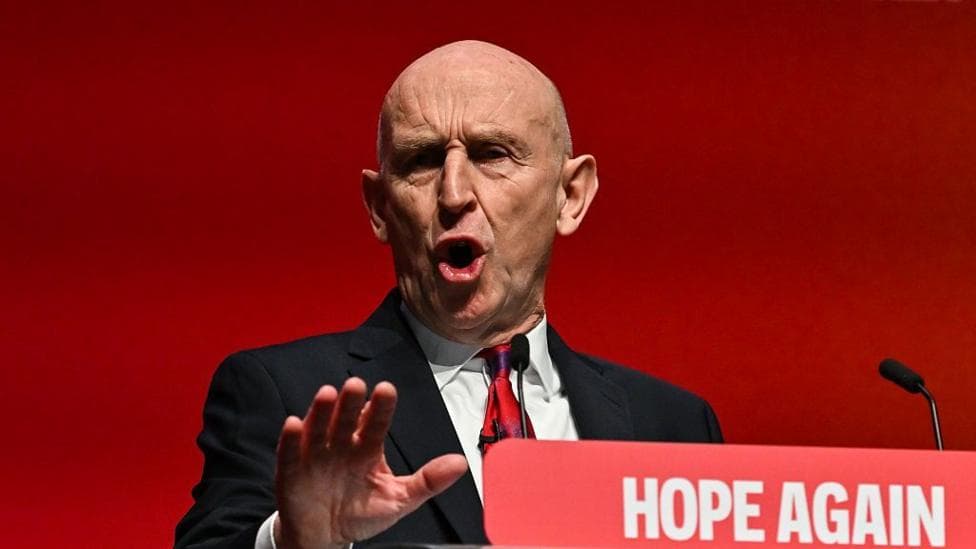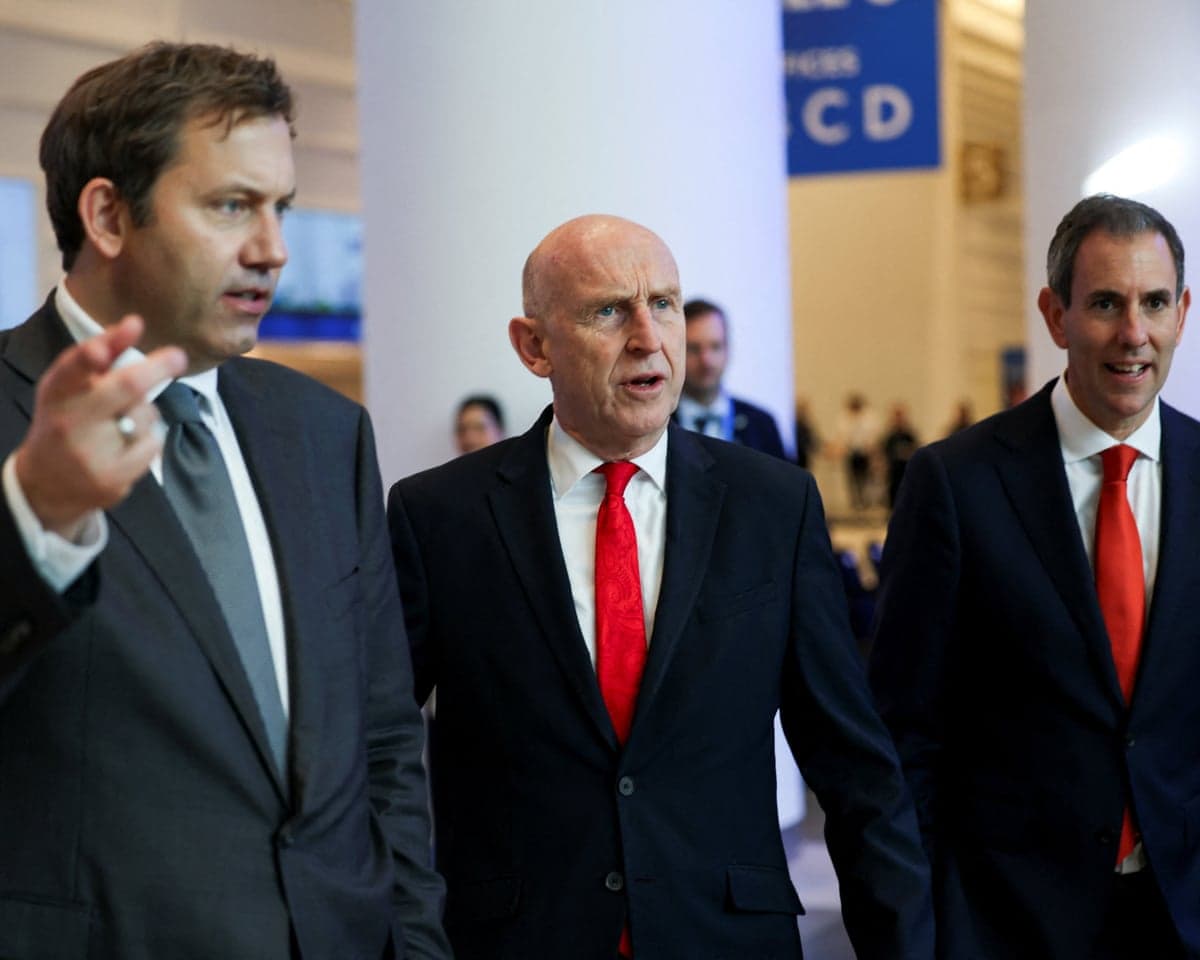
Chancellor John Healey has committed to safeguarding the resilience of the British economy when he unveils his budget on 28 October 2026, following data showing the UK economy expanded faster than anticipated in August. Speaking at the International Monetary Fund's annual meeting in Bangkok, Healey emphasised his determination to maintain economic stability while the IMF upgraded its growth outlook for the year.
The latest figures revealed that the UK economy grew by 0.1% in August, with annual growth reaching 2.1%, surpassing economists' expectations of 1.7%, according to CNBC reporting on ONS data. This performance underscores the UK's continued economic momentum despite global headwinds and domestic cost pressures.
What drove August's growth?
Production output was the primary engine of expansion in August. According to the Office for National Statistics, the production sector rose by 0.8%, while the services sector remained flat and construction contracted by 0.2%. This sectoral breakdown reveals an uneven recovery, with manufacturing strength offsetting weakness in other areas.
How has the IMF reassessed UK prospects?
The International Monetary Fund has raised its growth forecast for 2026 to 1.3%, up from its previous projection of 1.0%. However, reports that the IMF expects growth to decelerate to 1.2% in 2027 as elevated energy prices and sustained interest rates constrain consumer spending and business investment. The fund has endorsed the government's fiscal consolidation strategy, urging the UK to maintain its deficit-reduction trajectory.
Healey responded positively to the IMF's backing, stating:
They say stay the path, and my budget will. It's my job, my responsibility as chancellor to make sure that I can protect that resilience in the British economy, and I will do that in the budget in two week's time.
What is the government's fiscal strategy?
The administration is pursuing a deficit-reduction plan with the goal of balancing day-to-day spending with tax revenue by 2029/30. The IMF has signalled support for this approach, viewing it as essential to long-term economic stability. Healey has framed the upcoming budget as an opportunity to reinforce growth potential while maintaining fiscal discipline.
Will the chancellor raise taxes on banks?
When pressed by journalists about potential new levies on the financial sector, Healey declined to preview specific tax measures. He remarked:
I don't want anybody to try and read in or second guess what [we may] do in two weeks' time. My observations on the banks are just that people too often see them as a big distant financial institutions, when they are hardwired into the economic fabric of this country and our future prospects. That said, you know I've got decisions to take in the in the budget, and I will. I'll set those out in two weeks' time.
The chancellor has consistently resisted speculation about tax policy ahead of the budget announcement, warning that such conjecture has caused economic damage in the past. He explained:
Just in general terms, if you think back to the run-up to previous budgets, the speculation about what was set to be in those budgets was actually deeply damaging. It led to people cashing in their pensions early when they didn't need to. It led to people holding back or not investing in their businesses when they didn't need to. So I'm just not going to get drawn into any speculation, especially as chancellor, especially this close to the budget.
How will the budget address cost-of-living pressures?
Healey indicated that the budget will seek to provide relief from mounting economic pressures facing households and businesses. The government has already implemented a reduction in VAT on electricity bills to ease energy costs. The chancellor stated:
It doesn't remove the cost pressure. It recognises those pressures and says, look, where we can, we're a government that will act to try and give people a bit of breathing space. I've been very clear. Also, the prime minister's talked about recognising the cost of business, not just the cost of living.
Healey framed the forthcoming budget as an instrument to deliver breathing room for the economy:
And so, I want the budget to be a budget that gives Britain a bit of breathing space, but also reinforces the the strength of our fiscal plans and the strength of our resilience and our economy for the future.
What does the UK's economic performance reveal?
Sanjay Raja, chief UK economist at Deutsche Bank, highlighted the significance of August's growth figure in the context of broader economic trends. He observed:
Undoubtedly, there may be some hiccups to come in the run up to year end, especially as energy prices continue to bite household incomes, and higher rates continue to drag on spending and investment. The good news? The UK's resilience story continues. It's hard to overstate how strong the UK performance has been all year. The UK economy remains the fastest growing G7 economy. What's more impressive? If you believe the HMRC jobs data, UK GDP growth has hit 1.8% this year in the first eight months of the year, with 95k FEWER jobs. Who said productivity growth was dead in the UK?
This assessment underscores a paradox in the UK economy: growth has accelerated despite job losses, suggesting that productivity improvements are driving expansion rather than employment gains alone.
How are global markets reacting to economic uncertainty?
While the UK's economic news has been positive, global financial markets have been roiled by a sharp sell-off in technology stocks, particularly semiconductor companies. This rout has had spillover effects on UK bond markets and equity indices. The yield on UK 10-year government bonds fell by 10 basis points to 5.33% as investors sought safer assets, while 30-year gilt yields declined by the same margin to 5.8%.
Neil Wilson, investment strategist at Saxo UK, explained the mechanics of this shift:
The sell-off across semiconductor stocks has sent bond yields lower, which if it sticks could ultimately support risk sentiment and support valuations. This is two-fold; one a flight to relative safety with the risk-free rate generating 5%, and two, because a breakdown in the AI capex narrative and pullback in spend will shrink the supply of debt, the huge increase of which has been a powerful driver of bond yields moving out to multi-year highs.
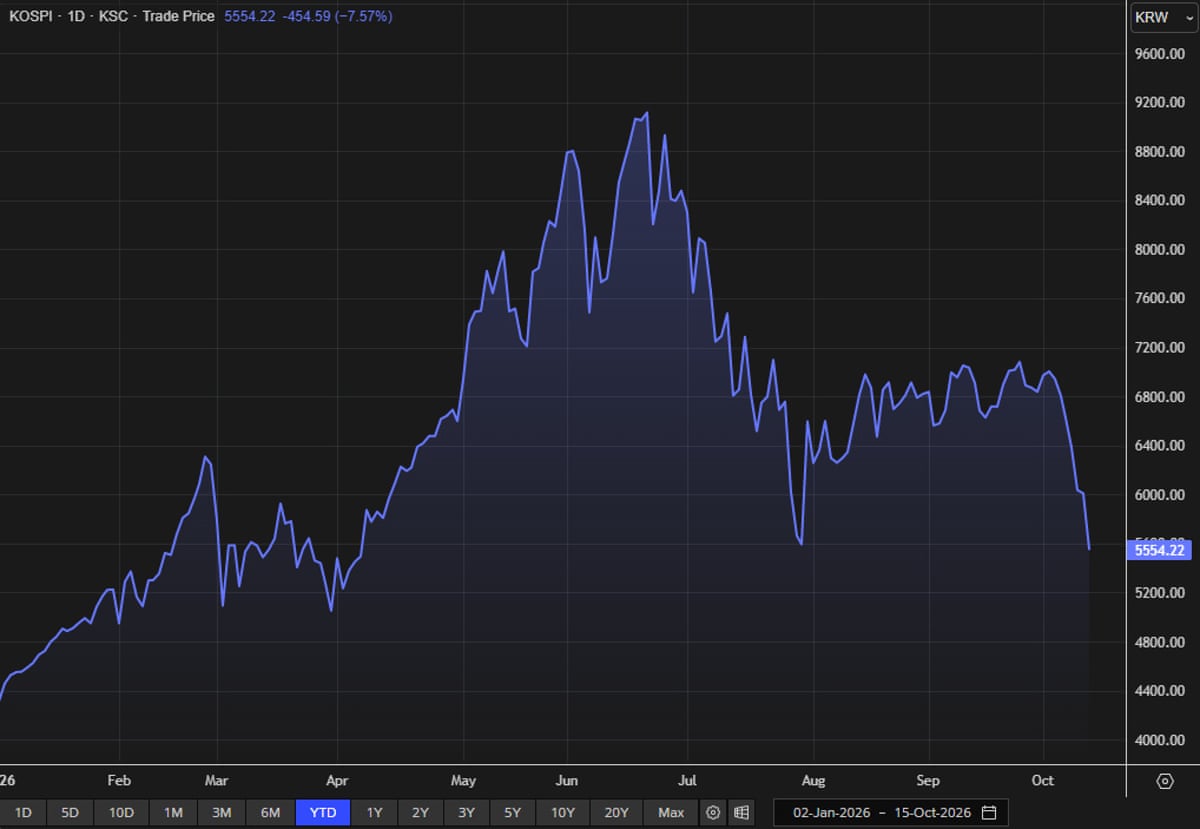
South Korea's Kospi share index experienced a particularly severe decline, closing at a six-month low with a fall of 7.5%, having briefly dropped over 9% during the trading session. Chipmakers led the selloff, with Samsung Electronics declining 9.5% and SK Hynix plunging 11.1%. The Kospi, which had roughly doubled in value during the first half of 2026 as investors pursued artificial intelligence-related stocks, is now up only 30% for the year.
The technology rout reflects mounting concerns about the sustainability of artificial intelligence investment. Lee Hardman of Japanese bank MUFG noted that investor confidence in AI-related ventures has been undermined by funding concerns. CoreWeave, a major provider of computing infrastructure to AI developers, saw its share price fall by as much as 17%, with its debt trading at less than 78 cents on the dollar. According to Bloomberg, credit default swaps on the company are pricing in more than a 50% chance of default within five years.
European stock markets have been pulled lower by the technology decline, though the impact has been uneven. Germany's DAX index dropped 0.5% in early trading, France's CAC fell 0.2%, and Spain's IBEX lost 0.17%. The London stock market has proven more resilient, with the FTSE 100 down only 0.1%, partly because it contains fewer technology stocks and more defensive holdings such as tobacco companies and consumer goods manufacturers.
Mining shares have declined sharply in London trading, with copper producer Antofagasta falling 6.5%, Rio Tinto dropping 4.2%, and Anglo American sliding 4%. These declines may reflect concerns that rising US interest rates to combat inflation could dampen global growth and reduce demand for commodities. Antofagasta released its third-quarter production report, which showed a 7% increase in copper output, with the company maintaining its annual guidance despite the broader market weakness.
What happens next?
Healey is scheduled to present the budget on 28 October 2026. The announcement will clarify the government's approach to taxation, spending, and economic policy in the coming fiscal year. Markets and economists will scrutinise the budget for signals about the government's commitment to fiscal consolidation, its approach to supporting growth, and any new tax measures that may affect households and businesses.
Key Facts
- UK GDP grew 0.1% in August 2026, with annual growth of 2.1%, beating economist forecasts of 1.7%
- The IMF raised its 2026 UK growth forecast to 1.3% from 1.0%, but expects growth to slow to 1.2% in 2027 due to energy prices and interest rates
- Chancellor Healey will present the budget on 28 October 2026, with a focus on protecting economic resilience and providing relief from cost pressures
- The UK economy remains the fastest growing in the G7, with productivity gains offsetting job losses
- Global technology stocks have experienced a sharp sell-off, affecting bond yields and equity markets worldwide