Income tax thresholds frozen since 2021 are set to remain locked at their current levels through 2030–31, a policy that will continue to erode take-home pay for millions of workers over the next four years. According to BBC News, Chancellor John Healey did not highlight this continuation in his Budget speech, but documents from the Office for Budget Responsibility confirm the freeze will persist, meaning tax thresholds will not rise in line with inflation as they normally would.
The freeze—often called a stealth tax because it operates invisibly compared to raising headline tax rates—has been a significant revenue-raising tool for successive governments. By 2030–31, the frozen thresholds are projected to generate £58bn in additional tax revenue annually, exceeding current UK spending on transport and approaching defence expenditure. This policy means that as wages rise to keep pace with living costs, an ever-larger share of earnings ends up subject to taxation.
Who faces the biggest impact from frozen thresholds?
The freeze affects anyone whose income rises above the frozen thresholds, but the burden falls heaviest on those earning close to the boundary points where tax rates change. Only workers earning under £12,570—the personal allowance threshold—currently pay no income tax. However, the OBR estimates that between 2022–23 and 2030–31, the freezes will bring 5.2 million additional people into income tax, meaning they will owe tax where they would not have if thresholds had risen with inflation.
Pensioners face particular pressure. The state pension is currently just below the personal allowance threshold, and when the basic state pension rises to £13,036 from next April, many low-income pensioners would normally be drawn into the tax system. To prevent this, Chancellor Healey is introducing a new Pension Tax Allowance. The allowance will apply from 6 April 2027 to 5 April 2030, with income above the full new state pension tapered by £1 for every £3 of excess income, protecting low-income pensioners from paying tax on their pensions.
The personal allowance threshold applies across the entire UK, so people in Scotland are equally affected, although other tax bands in Scotland differ from the rest of the country. National Insurance Contributions are levied using the same frozen thresholds, multiplying the effect on take-home pay.
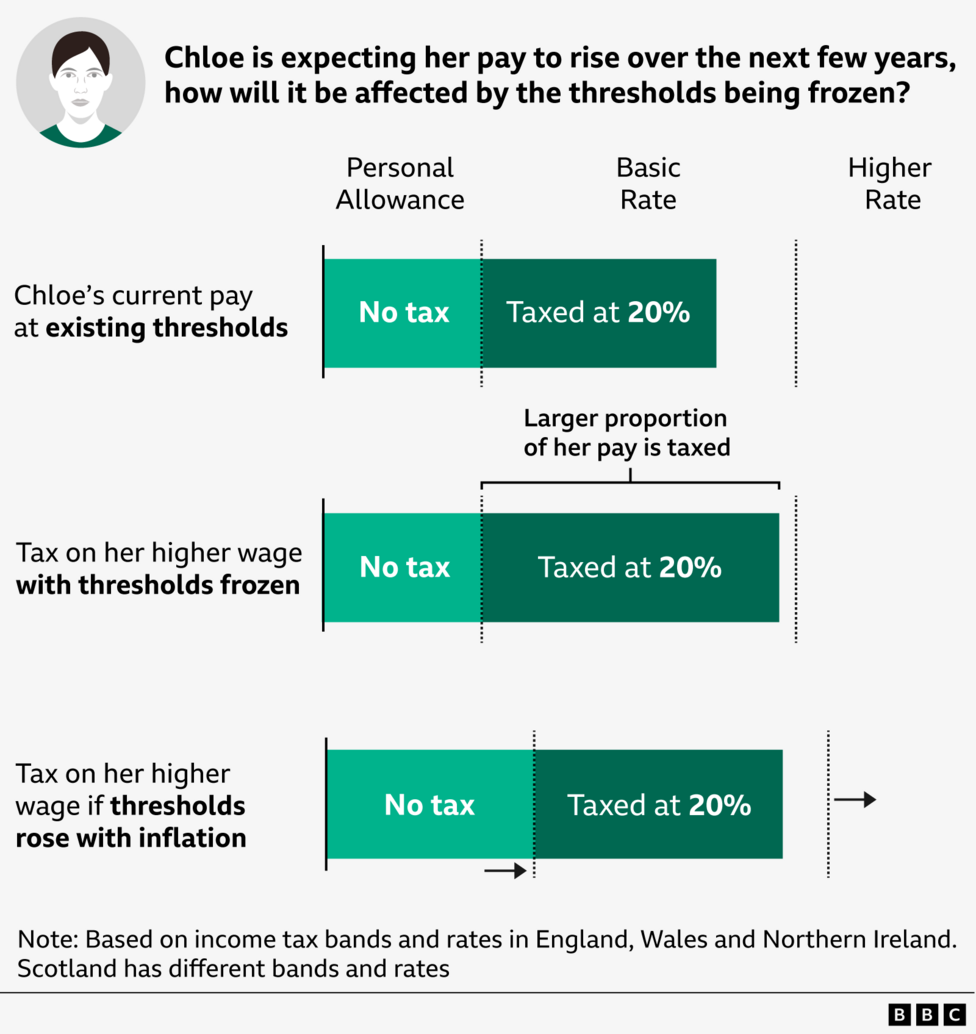
How does the freeze push people into higher tax brackets?
Normally, as wages rise year-on-year to cover inflation, tax thresholds would also increase proportionally, keeping the same percentage of income subject to tax. Currently, thresholds remain frozen at 2021 levels, so as pay rises, a progressively larger share of earnings ends up above the threshold where taxation begins.
The impact intensifies for higher earners. The OBR projects that 4.8 million more people will move into the higher 40% tax bracket between 2022–23 and 2030–31, with a further 600,000 entering the additional 45% rate on income above £125,140. By 2031, almost one in four taxpayers will pay some tax at the higher rate, compared with fewer today. Workers earning just under the £50,271 higher-rate threshold who receive pay rises will find portions of their earnings taxed at 40% rather than 20%, while those already above the threshold will see an increasing proportion of their income subject to the higher rate.
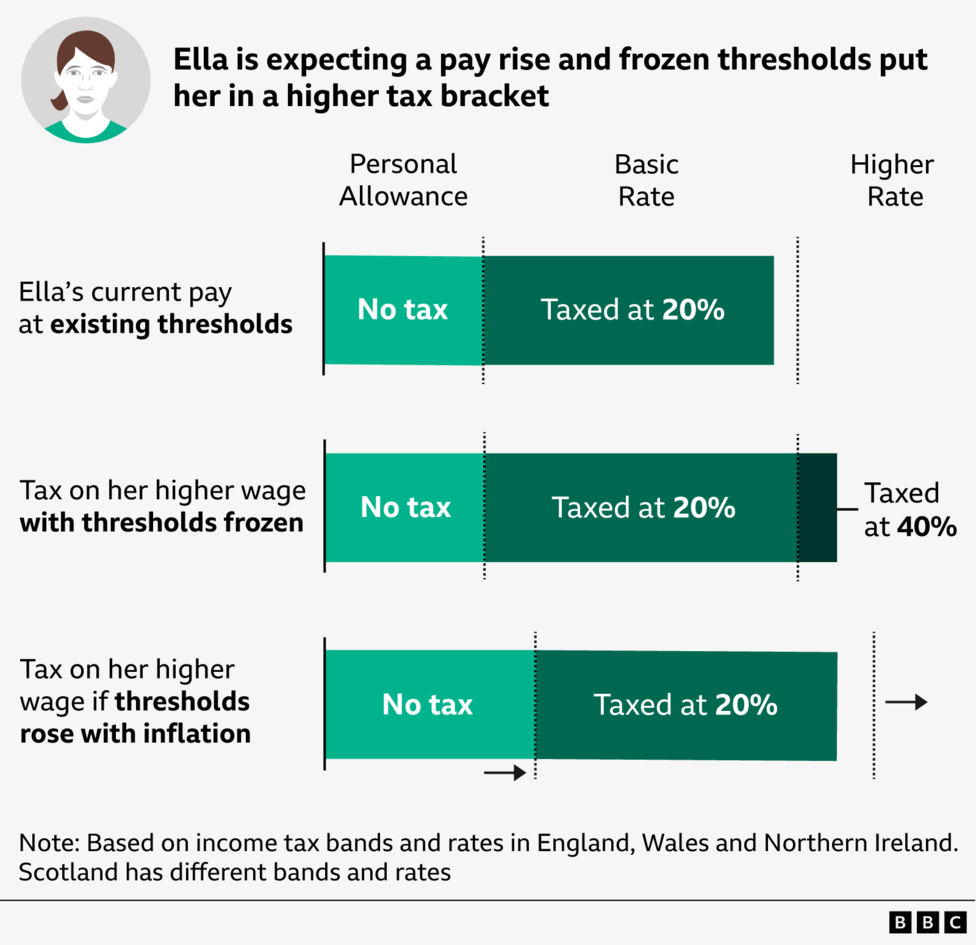
What will the frozen thresholds cost you in lost tax relief?
The cumulative effect of five years of frozen thresholds is substantial. If the personal allowance had risen with inflation since 2021, workers would now be able to earn £16,070 tax-free instead of £12,570. This means basic rate taxpayers are currently paying 20% tax on earnings that would otherwise be untaxed. The Institute for Fiscal Studies calculates that if thresholds had been unfrozen in the 2026 Budget, basic rate taxpayers would save up to £198 annually in income tax, while higher rate taxpayers would save £395 per year.
The gap between frozen and inflation-adjusted thresholds will widen further. By 2030–31, the personal allowance will be £4,900 lower than it would be if it had risen with inflation, and the higher-rate threshold will be £20,100 lower. However, some workers have benefited from partial relief: a cut to National Insurance Contributions introduced in 2024 has offset higher income tax bills for people in the middle of the earnings range, though this does not apply to all taxpayers.
When will thresholds start rising again?
The freeze is scheduled to end after 2030–31, meaning thresholds would begin rising with inflation from 2031 onwards. At that point, the personal allowance and other tax thresholds will increase in line with price rises, allowing workers to retain more of their earnings. However, the exact benefit of unfreezing will depend on wage growth rates at that time. Wages have risen sharply in recent years to keep pace with inflation, but future growth rates remain uncertain.
It is worth noting that even after thresholds resume rising with inflation in 2031, the personal allowance will still be lower in real terms than it was before the financial crisis. Before 2008, the personal allowance was substantially smaller, and it was allowed to grow steadily until the pandemic. By 2031, workers will still be able to take home a larger proportion of their earnings before income tax than they could in 2008, despite the freeze's impact.
What happens next with the Pension Tax Allowance?
The government plans to legislate for the Pension Tax Allowance in Finance Bill 2026–27, with implementation scheduled for April 2027. This new allowance will shield low-income pensioners from income tax as the state pension rises, protecting nearly one million pensioners from an unexpected tax bill. The allowance will taper for those with income above the full state pension level, ensuring that support is targeted at those most in need while maintaining work incentives for higher-income pensioners.