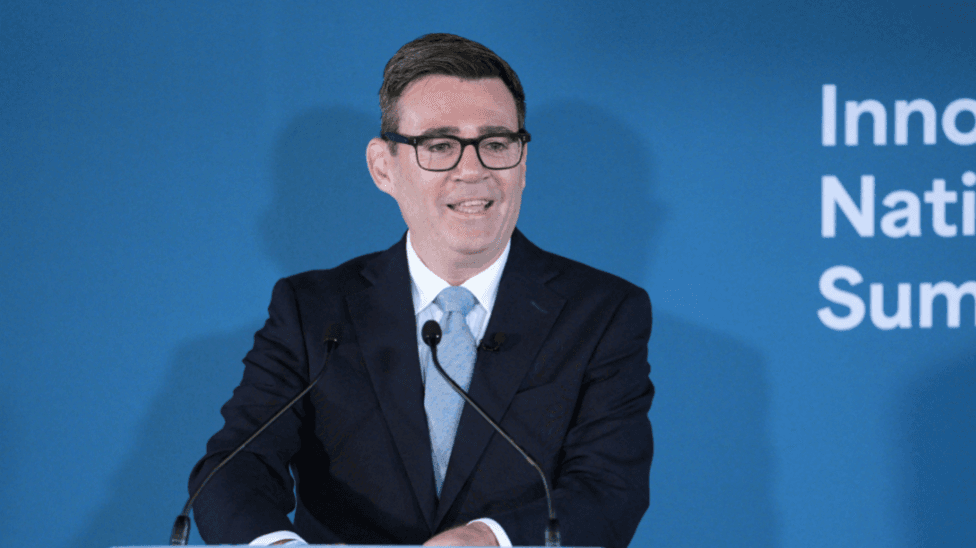
Prime Minister Andy Burnham has committed to introducing legislation that will limit companies' ability to use non-compete clauses to restrict workers' career options after they leave a job. Speaking at a business summit in Manchester, Burnham stated that the widespread use of such clauses had "gone too far" and was hampering innovation and growth across the UK economy.
Non-compete clauses in employment contracts prevent workers from joining rival firms or starting their own businesses for a specified period after leaving their role. Burnham argued that these restrictions have forced employees to remain without income during their notice periods and have made it harder for expanding companies to recruit talented staff. He framed the government's action as essential to unlocking the UK's innovative potential and keeping high-growth businesses from relocating overseas.
The government has been examining options for restricting non-compete clauses since late 2024. According to a government working paper published in November 2025, four main reform options are under consideration: imposing a general duration limit on how long clauses can last, restricting them based on employer size, implementing a complete ban, or banning them only for workers earning below a certain salary threshold. The working paper also sought views on whether reforms should extend to other restrictive covenants and broader workplace contractual arrangements.
Research cited by the government estimates that approximately 5 million jobs across Britain are currently covered by non-compete clauses, which typically last around six months. While these restrictions are most commonly associated with financial services and technology sectors, Burnham indicated that his government's reforms would apply to the "everyday economy" as well as supporting "promising start-ups and scaling firms."
Notably, Burnham confirmed that the legislation would also protect workers in the "foundational economy" from being prevented from moving between jobs, according to reporting on his speech. However, he stopped short of committing to a full ban on non-compete clauses, leaving the final scope of the proposed rules undecided.
How does this compare to previous government approaches?
The previous Conservative administration had ruled out a total ban on non-compete clauses after receiving representations from employers who warned that such a move could reduce investor confidence in the UK or lead companies to restrict how they share sensitive information internally. In 2023, the Sunak government had proposed a three-month statutory cap on non-compete periods, but this proposal was not enacted before the 2024 general election brought the current administration to power.
Earlier government consultations have also explored alternative approaches. A 2020 consultation considered requiring employers to compensate workers during periods when non-compete restrictions applied, or making the clauses unenforceable altogether, but neither of these approaches was ultimately adopted.
When will the government announce its final decision?
The government is expected to unveil details of its proposed restrictions alongside the Budget on 28 October, according to initial reporting by Politico and the Financial Times. The government's working-paper consultation closed on 18 February 2026, though available reporting indicates there is no fixed timetable for the resulting reforms.
What is the broader economic context?
Burnham used the announcement to frame non-compete reform as part of a wider government strategy to boost innovative sectors and prevent UK companies from relocating abroad. He drew a parallel to the landmark 1995 Bosman ruling, which revolutionised the football transfer market in Europe, suggesting that reining in non-compete clauses could prove similarly transformative for the innovation sector.
The prime minister highlighted a persistent challenge facing the UK economy: while the country is home to outstanding research institutions and start-ups, too many companies have relocated overseas in search of investment and better conditions for scaling. He signalled that the government would announce further measures at the Budget to use public investment as a catalyst for private funding, with plans to establish dedicated funds in all UK regions modelled on the Good Growth Fund that was launched in Greater Manchester during his tenure as mayor of the city-region.
Burnham also indicated that the government is examining the tax system to ensure the UK can retain high-growth companies. He stated:
"One of our biggest challenges is breaking through our own ceiling. Too often, our best ideas are developed and scaled overseas, and with it the jobs, technology and investment that goes with them. So I know there is more to do to fix that, specifically on tax, to encourage people to stay and scale."
Key Facts
- Approximately 5 million jobs in Britain are currently covered by non-compete clauses, which typically last around six months
- The government is considering four main reform options: a general duration limit, limits based on employer size, a complete ban, or a ban for workers below a salary threshold
- Details of the proposed restrictions are expected to be announced alongside the Budget on 28 October
- The previous Conservative government rejected a total ban after concerns from employers about investor confidence
- The reforms will apply to both the technology and financial services sectors and the broader "everyday economy"