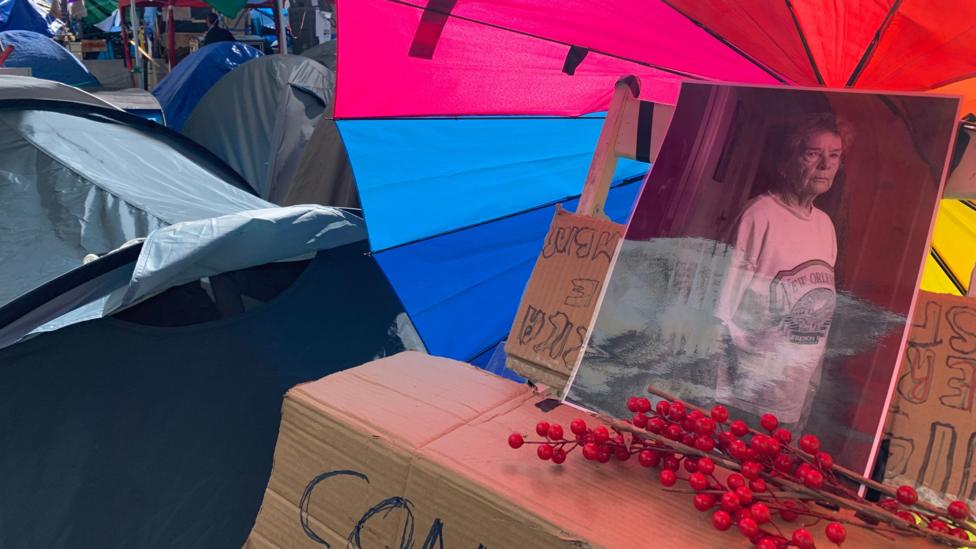
Hundreds of demonstrators have established an encampment in Madrid's Puerta del Sol square to voice their anger at Spain's escalating housing emergency, pointing to investment firms and short-term rental platforms as primary culprits driving up costs and displacing residents. The movement gained momentum following the eviction and subsequent death of Maricarmen Abascal, an 87-year-old pensioner whose case crystallised public frustration with profit-driven housing practices.
Pierina Nicuray, a 21-year-old university graduate, is among those who have spent weeks camped in the central Madrid square. She identifies the root cause as straightforward: insufficient housing stock combined with landlords exploiting scarcity to increase rents, alongside the impact of platforms like Airbnb converting residential properties into tourist accommodation.
Jorge Moreno, a 19-year-old film-dubbing student also living in a tent at the protest site, articulates a widely held grievance among demonstrators. He describes how investment funds purchase properties and systematically raise rents to force out existing tenants, creating what he characterises as an exploitative business model that prevents ordinary Spaniards from securing affordable homes.
What triggered the current protest movement?
The catalyst was Abascal's eviction from her Retiro district apartment, where she had lived for seven decades. According to reporting on the eviction, police removed her on a stretcher on September 23. The investment firm Urbagestión, which had acquired the property, raised her monthly rent from €500 to €2,650, making it impossible for her to remain.
Although the company subsequently invited Abascal to return following public outcry, she never did. She died at 87 in Madrid's Gregorio Marañón Hospital on October 7, according to Spain's Tenants' Union.
Her case resonated far beyond Madrid. Tens of thousands marched in Madrid on September 26, with protests and encampments subsequently spreading to other Spanish cities. Attendance figures for the Madrid demonstration varied significantly: municipal authorities reported approximately 25,000 participants, while the Madrid Tenants' Union claimed the figure exceeded 300,000.
How severe is Spain's rental market crisis?
The scale of the problem is substantial. Over the past decade, rental costs across Spain have climbed by an average of 84%, according to property data outlet Idealista. Regional variations are even more dramatic: Málaga's city centre experienced a 113% increase, while Marbella saw rents rise by nearly 150%.
Housing has become Spaniards' foremost concern. A study by the Centre for Sociological Research (CIS) revealed public appetite for intervention: 72% of respondents supported higher taxes on those owning 10 or more properties, 76% favoured restrictions on short-term tourist accommodation, and 40% backed expropriation of vacant homes.
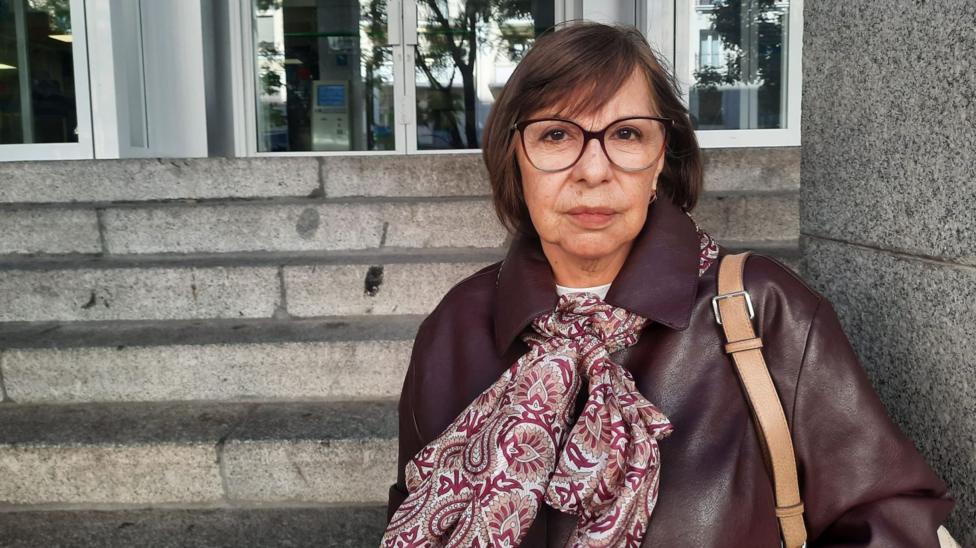
Carmen Pérez, a retired widow originally from Ecuador who has lived in Spain for 17 years, exemplifies the human cost. She arrived when housing was affordable but has since been forced to move in with her daughter and son-in-law as she searches for rentals within her means.
When a property is listed to rent, there's always a long waiting list. And the rent is always too high for me. All of this has affected my health - I've got depression, I don't have any stability or security.
Salary stagnation has compounded the crisis. Research by El País found that the average Spaniard has 5% less purchasing power than a decade ago when accounting for taxes, social security contributions and inflation. The average salary in the Madrid region stands at €1,550 (£1,314; $1,738).
Francisco Pardo, an 81-year-old retired taxi driver sympathetic to the protesters, underscores the absurdity of current conditions.
No worker should have to spend 75% or 80% of their salary on rent, because what are they supposed to eat? Many workers don't even earn €2,000 [per month].
Are investment funds really the main problem?
While protesters and government officials frequently blame so-called "vulture funds" for the crisis, economic analysis suggests the picture is more complex. Jorge Galindo, director at the Esade centre for economic policy, notes that precise data on properties owned by investment firms for speculation remains elusive.
Bank of Spain figures from 2024 indicate that only 8% of rental properties are owned by companies, suggesting that investment funds do not represent the dominant force in Spain's rental market. Galindo concludes from available evidence that property accumulation by a small number of owners is not the primary driver of rising rents.
When it comes to explaining the rise in rentals, that is not the big cause. What explains it is the shortage of supply compared to demand over recent years.
The Bank of Spain concurs with this assessment, estimating a housing shortfall of approximately 750,000 homes. The institution's deputy governor, Soledad Núñez, warned in September that this deficit could expand to one million by 2028.
Why is there such a shortage of homes?
Spain possesses 3.8 million empty properties according to the National Statistics Institute (INE), yet most are concentrated in depopulated rural areas with minimal relevance to urban housing crises. Others await renovation or remain entangled in legal disputes among family members who inherited them.
Demographic shifts have created acute supply-demand imbalance. Between 2021 and 2025, Spain gained approximately 1.2 million new households, driven substantially by migration that has bolstered economic growth. However, construction has lagged dramatically, with fewer than 500,000 new homes built during that five-year period.
Multiple factors constrained building. Spain's construction sector contracted following the Eurozone crisis and never fully recovered. Material costs surged after Covid-19 disrupted supply chains. Political disagreement created legal barriers to development, and housing construction was not prioritised as urgent.
Galindo reflects on this miscalculation:
It was not a priority for us to build new houses. But, once the demographic boom came, we realised how costly it was for us.
What role does short-term tourist accommodation play?
Platforms like Airbnb have been identified by both the Spanish government and housing activists as contributors to the crisis. However, Galindo suggests their impact, while significant in specific neighbourhoods, is more localised than systemic. Short-term rentals likely drive up prices in particular urban areas rather than creating nationwide scarcity.
Nevertheless, public opinion strongly favours intervention. The CIS study found that 76% of Spaniards support limits on short-term tourist accommodation, reflecting widespread belief that converting long-term rentals to tourist lets exacerbates housing unavailability.
How has the government responded?
Socialist Prime Minister Pedro Sánchez presented emergency measures to address the housing crisis, framing them as legislation
against those who consider housing just another object on the market with which to speculate.
Congress rejected these reforms, prompting Sánchez to call a snap election for the following month. The political impasse reflects deeper disagreement about how to balance housing access with property rights and market mechanisms.
Key Facts
- Rental costs in Spain have risen 84% over the past decade, with some cities experiencing increases exceeding 150%
- Spain faces a housing shortfall of approximately 750,000 homes, potentially rising to one million by 2028
- Only 8% of rental properties are owned by companies, suggesting investment funds are not the primary cause of rising rents
- Between 2021 and 2025, Spain gained 1.2 million new households but constructed fewer than 500,000 new homes
- Public support for intervention is strong: 72% back higher taxes on large property owners, 76% favour short-term rental restrictions