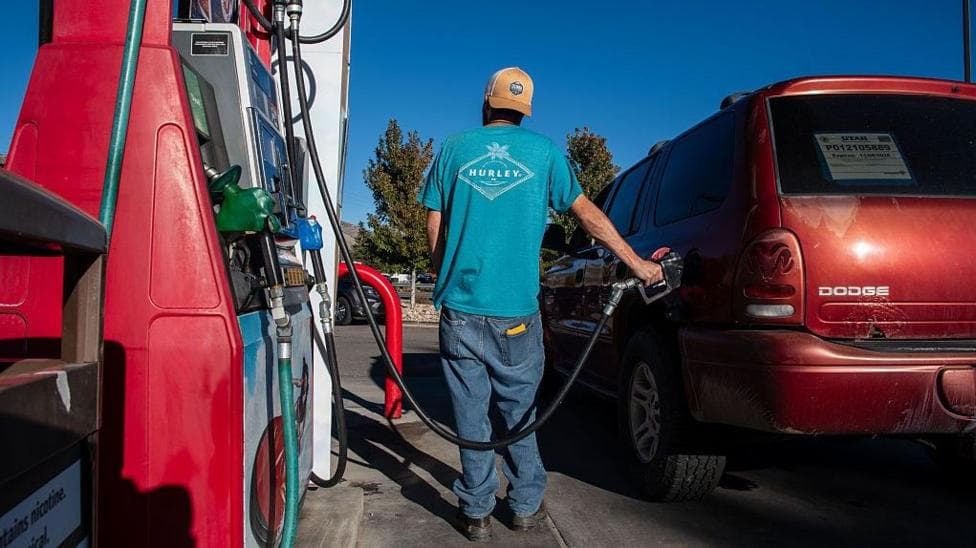
Fuel prices for gasoline and diesel have surged more than double their levels before the US-Israel conflict with Iran began in February, creating strain on transport operators, agricultural producers and millions of American drivers. With midterm elections approaching in November 2026, pressure has mounted for action to bring costs down, and President Donald Trump has announced several measures aimed at relief.
The central question facing analysts and voters alike is whether these interventions can meaningfully reduce prices in the weeks remaining before election day, and whether their effects will persist beyond the immediate political moment.
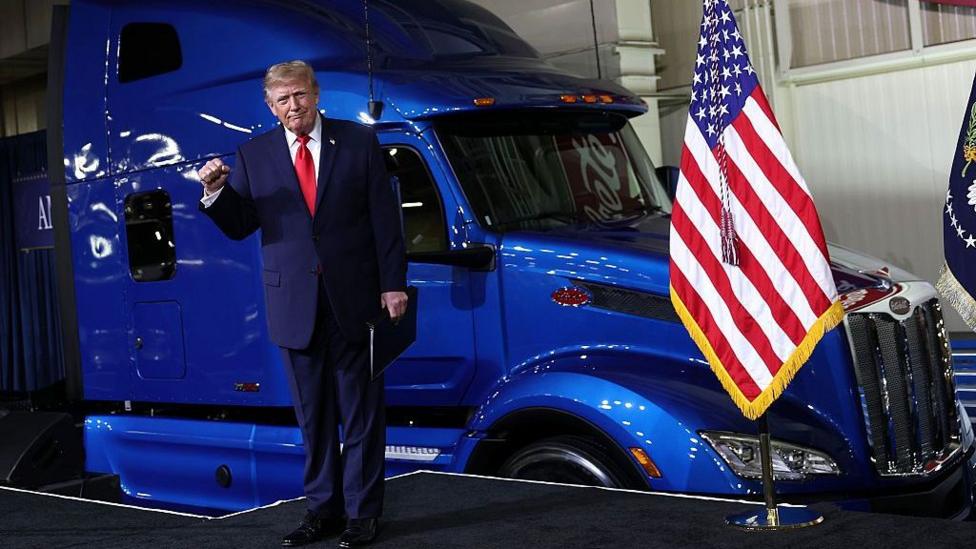
Why has fuel affordability become central to the midterms?
Fuel costs have emerged as a dominant election issue because they reflect broader concerns about living standards. The public has grown anxious about rising prices for energy, food and consumer goods across the board, and surveys indicate voters hold Trump and his party responsible for economic conditions. Polling data shows a majority of Americans disapprove of Trump's handling of both the economy and the conflict in Iran, which has contributed directly to elevated diesel and gasoline prices.
The underlying cause traces to geopolitical disruption. Military conflict in the Middle East has severely restricted the normal flow of crude oil and refined products through the Strait of Hormuz—a chokepoint that normally carries about one-fifth of the world's oil supplies. Although crude oil shipments have nearly recovered to pre-conflict levels, prices remain above $100 per barrel, creating sustained pressure on fuel costs at the pump.
The Russia-Ukraine war has compounded the problem. According to David Ruisard, pricing manager at commodities intelligence firm Argus, the combined effect of both conflicts has been substantial:
Our estimates are that your price increase from about $3 a gallon up to $6 a gallon [for diesel] is 60% connected to the Strait of Hormuz, 40% connected to the Russia-Ukraine conflict.
These elevated energy costs have driven much of this year's inflation surge, which in turn has pushed up interest rates. Michael Pearce, chief US economist at Oxford Economics, explains the household impact:
The combined impact of higher rates and higher energy prices is squeezing household budgets and adding to firms' costs.
Despite the overall pressure, Patrick De Haan, head of petroleum analysis at fuel price tracking website GasBuddy, has noted modest recent declines in both gasoline and diesel prices.
A lot of that is likely due to some of the manoeuvres that we've seen the Trump administration employ over the last couple of weeks,he observed.
What measures has Trump announced?
The most prominent recent action came on October 5, when Trump signed an executive order permitting red-dyed diesel—fuel normally reserved for off-road use and exempt from federal highway taxes—to be used on public roads. The order defers the federal excise tax on that fuel through the end of 2026, with the White House estimating potential savings of approximately $60 on a 250-gallon fill-up.
The technical distinction between red-dyed and regular diesel is minimal. According to Ruisard, the only difference lies in the dye itself, which serves to identify fuel intended for off-road consumption. However, complications arise once the temporary relief expires.
The problem with that red dye is, it's extremely hard to clean it out of your tank,Ruisard explained, adding that trucking companies face substantial fines for possessing dyed fuel in their tanks after the tax relief ends, as it would constitute tax evasion.
A second complication involves supply depletion. Ruisard noted that rail operators and other businesses typically maintain dedicated reserves of red-dyed diesel for their operations.
If suddenly people go out and they start consuming that diesel, that depletes their available supply as well,he said. Industry representatives have further warned that the order does not resolve state or EPA restrictions on red-dyed fuel use, limiting its practical impact.
A more successful intervention involved international coordination. Last week, the G7 countries announced they would release 100 million barrels of oil and diesel from strategic stockpiles to ease supply concerns, following pressure from Trump. De Haan credited the announcement itself with having a measurable effect:
has worked to push prices down to some degree. Pearce cautioned, however, that this represents only a temporary measure.
As long as energy exports from the Gulf remain disrupted, stocks will need to be drained further to supply the market,he said,
and the need to refill those stocks will mean energy prices remain elevated for a period, even when disruption in the Middle East clears.
Trump has also encouraged states to cut their own fuel taxes. Several states, including Ohio and Georgia, have responded to this pressure. De Haan noted that state taxes represent a
moderate portionof what consumers pay at the pump, and those reductions have contributed to lower national averages. However, suspending or reducing the federal gasoline tax would require Congressional approval, which De Haan described as
difficult to obtain ahead of the midterm elections.Indiana's May gasoline tax cut, for example, cost the state government an estimated $1 billion in lost revenue.
Trump has also previously supported calls for a ban on diesel exports from the United States. Pearce cautioned that while such a ban might provide partial relief in the Gulf and Midwest regions, it would offer
little benefitto the Northeast and West Coast. More problematically,
the policy risks backfiring because it would result in stockpiling of diesel, and as that storage runs out, refineries would need to cut back on production. That would raise prices of other energy products, including gasoline.
What options remain available to the president?
De Haan believes the administration has largely exhausted the direct tools at its disposal.
The president has basically pulled all of the small levers that a president can pull, and we're still seeing prices very elevated.He identified the fundamental constraint:
The only way out of this to reduce gas prices in a meaningful way is solve one or both of the geopolitical tensions that are causing high prices.
This would require negotiating an agreement with Iran and facilitating a settlement between Ukraine and Russia—outcomes that Pearce noted lie largely outside direct White House control. Even if such diplomatic breakthroughs occurred, Ruisard cautioned that infrastructure damage from military strikes in the Middle East would delay recovery.
Due to damage to facilities in the Middle East caused by military strikes it would still take production four to six months to return to normal.
Ruisard's message to consumers and industry reflected this reality:
The message to consumers and industry is that regardless of what happens and whether the president is able to successfully negotiate that kind of a deal, high prices are here to stay for a little while at least.
What is the current price situation?
Recent price data illustrates the scale of the challenge. According to AAA data, diesel reached a record $6.52 per gallon on September 22 before declining to $6.28 on October 8. Regular gasoline averaged $4.36 per gallon nationally on October 8. The federal diesel tax stands at 24.4 cents per gallon, while the national average state diesel excise tax is 35.5 cents per gallon, meaning state taxes alone represent a substantial portion of the final price consumers pay.
What happens next?
The midterm elections are scheduled for November 3, 2026, leaving limited time for fuel prices to respond to policy changes. The red-diesel measure is set to run through December 31, 2026, with the executive order directing the Treasury Department to explore ways to eliminate the deferred tax obligation permanently. Whether these measures prove sufficient to influence voter sentiment in the coming weeks remains uncertain, as the underlying geopolitical factors driving high prices remain unresolved.