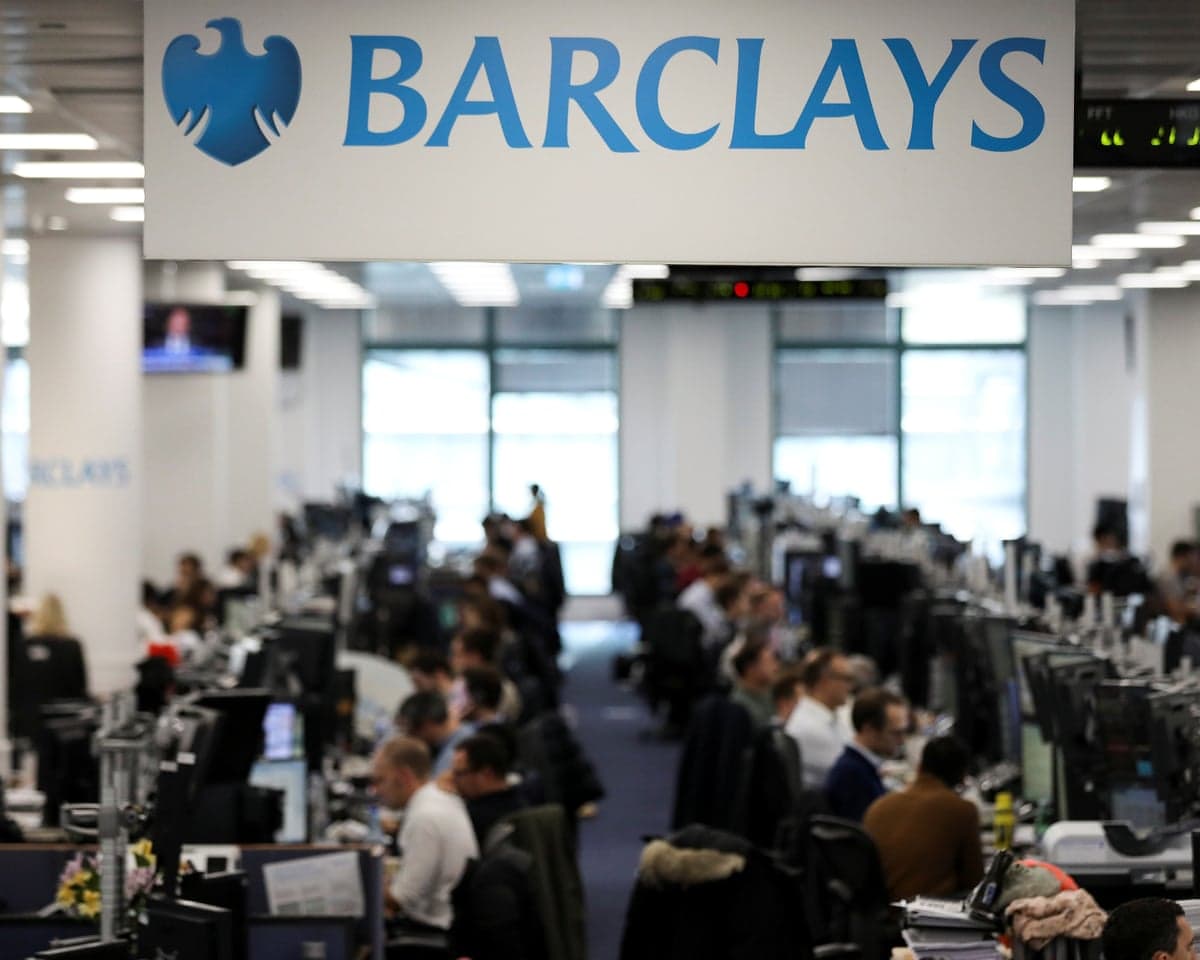
Barclays has reported a sharp rise in third-quarter profits, delivering £2.3bn in pre-tax earnings for the three months ending 30 September, as pressure mounts on the government to impose higher taxes on the banking sector ahead of Chancellor John Healey's budget on 28 October. The lender's strong performance has reignited calls from unions and opposition parties for a windfall tax on banks, with the TUC arguing that record profits should be shared with households facing an energy bill crisis. According to The Guardian, the bank's results underscore the tension between financial sector profitability and public pressure for fiscal relief.
The bank's pre-tax profits represent a 12% quarterly increase and bring its year-to-date earnings to £8.4bn, up 15% compared with the same period last year. Barclays also announced a fresh £500m share buyback programme, bringing total shareholder distributions so far in 2026 to £2.8bn—a 46% year-on-year increase. In the UK market, the lender saw loan growth of 7% annually, with corporate lending particularly robust at 14% expansion. According to the Associated Press, Barclays reported third-quarter earnings of 66 cents per share and revenue of $9.9 billion.
Barclays chief executive C. S. Venkatakrishnan stated:
I am pleased with the ongoing momentum of Barclays' operational and financial performance. With one quarter to go before the end of our original three-year plan, we have either achieved or are on track to achieve all of our 2026 group targets. We are confident in and committed to the 2028 targets that we laid out earlier in the year.
The investment banking division generated income of £3.1bn, falling short of analyst expectations. Fixed income trading revenue declined 19%, a steeper contraction than the 5% drop experienced by major US competitors, reflecting challenging market conditions in that segment.
Why are unions calling for higher bank taxes?
The TUC has seized on Barclays' strong results to renew its push for substantially higher taxation of the banking sector. The union body argues that Britain's largest banks have accumulated £200bn in profits since 2021 while ordinary households struggle with rising energy costs and mortgage payments. The TUC is urging the government to increase the bank surcharge—currently set at an additional 3% corporation tax on banking profits above £100m—to generate up to £60bn over the next four years.
TUC general secretary Paul Nowak said:
Barclays' bumper profits aren't an anomaly. All the big banks are doing exceptionally well at the same time – but their windfall profits have been underpinned by mortgage misery for millions. That's why it's time for banks to pay a fairer share. At a time when the chancellor needs to raise more revenue to support households and businesses through a looming energy bill crunch, Britain's big four banks have made £200bn in profit since 2021. They can - and should - pay more tax.
The union is specifically calling for the revenue from a higher bank surcharge to fund a social energy tariff that would reduce bills by up to £559 annually for households on low and middle incomes. Even a reversal of the Conservative government's 2023 decision to cut the surcharge from 8% to 3%—a move the TUC estimates cost the Treasury £6bn—would raise approximately £9bn over four years, according to union calculations.
What is the history of the bank surcharge?
The bank surcharge was introduced as an additional layer of taxation on the financial sector following the 2008 financial crisis. In 2023, the Conservative government reduced the rate from 8% to 3%, arguing the cut would encourage investment and competitiveness. The TUC and other critics have pointed to this reduction as a missed opportunity to raise revenue during a period when interest rates were at their peak and bank profitability was rising sharply. A report ahead of the budget indicated that reversing this cut alone was estimated to raise approximately £2 billion annually, according to AOL.
How might different banks be affected by a tax increase?
Market analysts have noted that the impact of any bank tax rise would vary significantly across the sector. Angeline Ong, senior technical analyst at investing and trading platform IG, observed:
A UK bank tax risk is now a base case. If it is confirmed on 28 October, it'll be the size and timing that will be key. If Healey does go ahead, shares of Lloyds and NatWest, which are almost entirely exposed to the UK, would likely be impacted most, and you are seeing this already in the share price reaction today. Barclays is partly exposed. HSBC is least exposed in the mix.
This analysis reflects the different geographic footprints of Britain's major lenders. Lloyds and NatWest derive nearly all their earnings from the UK market and would face the full brunt of any tax increase, while Barclays generates a substantial portion of revenue internationally through its investment banking operations. HSBC, with its significant Asian and global operations, would be least affected by UK-specific tax changes.
What is happening in global financial markets?
Beyond the UK banking sector, financial markets have been roiled by mounting concerns over France's fiscal position. The yield on France's 10-year government bonds has surged to fresh multi-decade highs, reflecting investor anxiety about the country's ability to manage its public finances. The 10-year yield briefly reached 5.002% on Wednesday before easing slightly, marking its highest level since July 2002, according to Reuters. The risk premium over German Bunds—a key measure of investor confidence in French debt—has widened to 163 basis points, the broadest spread since November 2011.
France's borrowing-cost surge came amid investor concerns about its fragile public finances and the government's ability to restore them, according to Reuters. The French government has yet to pass its budget, adding to uncertainty in financial markets. The widening yield spread reflects growing doubts among investors about France's fiscal trajectory relative to other eurozone nations.
Oil markets have also shown volatility, with Brent crude climbing above $111 a barrel following fresh Houthi attacks in Saudi Arabia. The 2.5% rise to $111.58 per barrel reflects escalating concerns about Middle East instability and potential disruptions to global energy supplies. Higher oil prices typically feed through to inflation, creating additional pressure on government bond markets and central bank policy decisions.
Asian stock markets declined sharply in response to these global headwinds. Japan's Nikkei index fell 2.65%, China's CSI 300 lost 1.5%, and South Korea's Kospi tumbled 3.7%, signalling broad-based investor caution across the region.
What happens next?
Chancellor John Healey's budget is scheduled for 28 October, when the government is widely expected to announce changes to bank taxation. The size and structure of any tax increase remain uncertain, though a reversal of the 2023 surcharge cut appears to be under serious consideration. Market participants and business leaders are bracing for the announcement, with implications for bank share prices and investment decisions likely to follow swiftly.
Key economic data releases scheduled for the day of this article include the UK CBI Industrial Trends survey at 11am BST, a speech by Bank of England governor Andrew Bailey at 11.50am BST, US initial jobless claims for the week of 17 October at 1.30pm BST, eurozone consumer confidence flash for October at 3pm BST, and the US Conference Board leading index for September at 3pm BST.
Key Facts
- Barclays reported third-quarter pre-tax profits of £2.3bn, up 12% quarterly, bringing year-to-date earnings to £8.4bn, up 15% year-on-year
- The bank announced a £500m share buyback, bringing 2026 shareholder distributions to £2.8bn, up 46% year-on-year
- The TUC is calling for the bank surcharge to be increased from 3% to raise up to £60bn over four years, or at minimum restored to 8% to raise £9bn
- France's 10-year government bond yield has reached 5.039%, its highest level since July 2002, reflecting investor concerns over fiscal sustainability
- Chancellor John Healey's budget announcement is scheduled for 28 October 2026