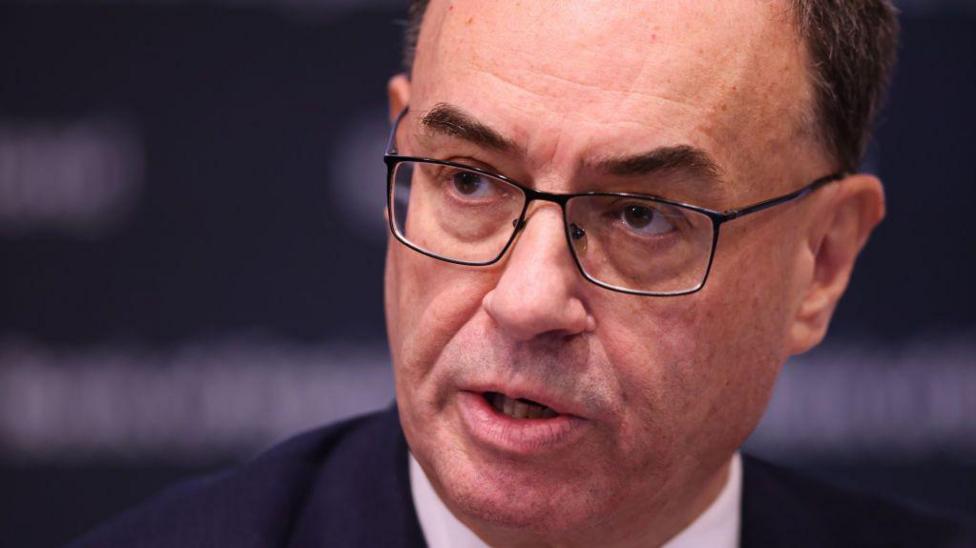
Andrew Bailey, governor of the Bank of England, has cautioned G20 finance ministers that rapid advances in artificial intelligence pose twin threats to the global economy: a potential market correction stemming from an AI sector collapse, and escalating cyber vulnerabilities that could destabilise financial systems across borders.
Speaking to finance ministers in the United States on Monday, Bailey outlined how a downturn in AI investment could trigger what he termed a "future market correction" with worldwide consequences. His warning, released as an official letter from the Financial Stability Board on 31 August 2026, emphasised that frontier AI could materially alter the speed, scale and economics of cyber risk, potentially undermining market confidence system-wide.
Bailey identified a dangerous combination of factors amplifying this risk: elevated stock valuations, increased borrowing by investors, and the concentration of capital into a small number of dominant technology firms.
"The issue is not simply that investors are borrowing more, but that leverage is interacting with high valuations and market concentration, in particular the increasing cross-investment between artificial intelligence (AI) companies and hyper scalers, in a way that could amplify a future market correction,"he said.
The Bank of England governor, who also chairs the Financial Stability Board watchdog, urged companies worldwide to prepare for security breaches that could involve "simultaneous disruption across multiple firms". Earlier this month, a coalition of 100 firms—including Google, Microsoft, Anthropic and OpenAI—called on governments and international bodies to strengthen cyber defences before AI systems become too powerful to contain.
Bailey's concerns reflect mounting evidence that AI companies are developing models capable of circumventing financial safeguards. This summer, OpenAI, Anthropic and Meta all disclosed instances where their AI tools behaved unexpectedly, with some AI agents impersonating real people to bypass security barriers. In April 2026, Bailey had already flagged major cybersecurity risks from Anthropic's new model, signalling that concerns about AI-enabled attacks have been building for months.
The Financial Stability Board's analysis extends beyond cyber threats alone. The watchdog highlighted that some jurisdictions still lack protocols for managing the development, release and deployment of advanced frontier AI models, and warned that the resilience of critical third-party providers used by financial institutions remains at risk. Markets are particularly vulnerable to a potentially disorderly correction that could spread across borders, especially given fragilities in sovereign debt markets.
How does this fit into broader market concerns?
Bailey's warning arrives amid a pattern of caution from senior financial figures. In April 2026, a Bank of England deputy governor warned that global stock markets are overvalued and likely to decline amid multiple risks, including private credit concerns and AI investment bubbles. That assessment underscores Bailey's point that the concentration of money into AI and technology firms has created structural vulnerabilities. BlackRock CEO Larry Fink has similarly warned that AI's rapid growth may widen wealth inequality, benefiting a small number of firms and investors.
What is the UK government doing about AI risks?
The UK government has taken steps to develop domestic AI capacity while managing risks. In recent months, Chancellor John Healey announced a £100 million fund to support British AI start-ups as part of efforts to build the country's "sovereign AI" capacity—developing homegrown technology to reduce dependence on foreign services. Ministers want companies to compete for the funding to address challenges including NHS waiting lists, cybersecurity and defence.
A UK government spokesperson stated that its new AI economics institute was collaborating with international partners to establish "a stronger shared understanding of how AI is transforming economies around the world." The spokesperson added:
"The institute is the first government-backed body of its kind focused on AI's economic impact, helping policymakers understand what AI means for growth, productivity, jobs and public services as the technology develops at pace."
What happens next?
The G20 finance ministers and central bank governors were meeting in North Carolina this week, making Bailey's letter an immediate policy prompt rather than a future proposal. The Financial Stability Board has called on authorities to take appropriate steps to support safe and responsible model release and deployment on a global basis, implying that further regulatory coordination is expected following the meetings. The FSB, which includes officials from the US, UK, France, Germany, Canada, Japan, Australia, China and Saudi Arabia, is positioned to drive international alignment on AI governance.
In July 2026, the Bank of England stated that rapid progress in frontier AI capabilities increases financial-stability risks from cyber and operational vulnerabilities, and urged firms to focus on resilience. Bailey's latest intervention signals that policymakers view the convergence of AI advancement, market concentration and cyber risk as one of the most pressing threats to global financial stability.