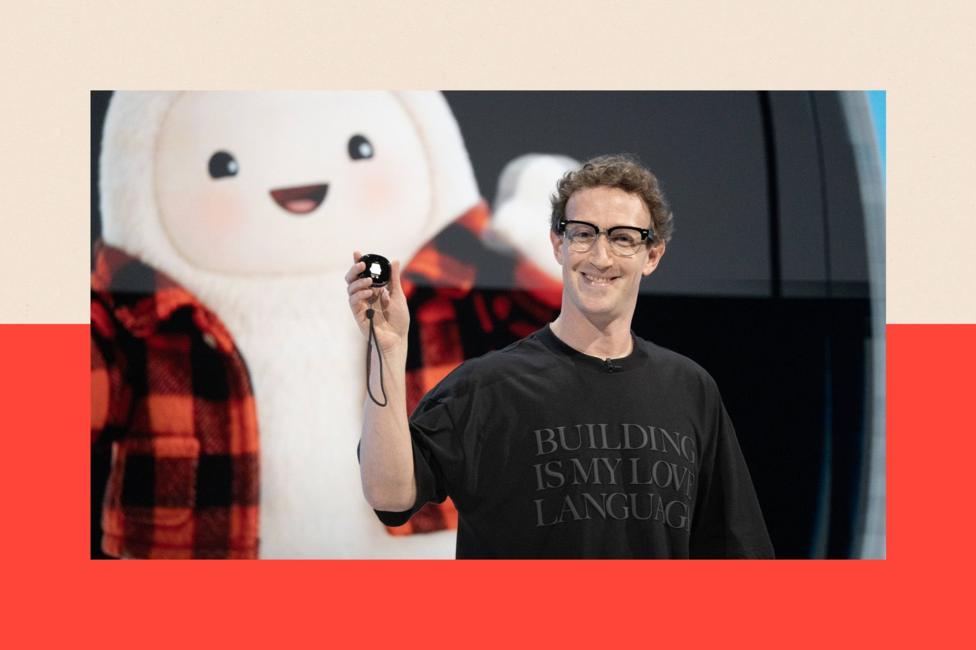
Mark Zuckerberg stood before hundreds of analysts and developers at Meta Connect last month, three minutes into his keynote address, when his demeanor shifted to something almost reflective.
Building is an act of love,he said, glancing downward with his hands in his pockets.
It's how we impart what we believe, and we pour our hearts and our souls into what we make.He then unveiled Meta's latest technological initiatives: an agentic artificial intelligence chatbot named Muse, a range of smart glasses, and a wrist-worn AI device resembling a Tamagotchi.
Yet during nearly an hour of presentation, Zuckerberg conspicuously avoided discussing two of Meta's most widely used platforms—Instagram and Facebook—the social networks that transformed the company into a $2 trillion enterprise. The omission was telling. Throughout the past year, Meta has faced mounting legal challenges, with accusations that the company deliberately engineered addictive features targeting young users. These lawsuits have exposed internal communications, corporate records, and whistleblower accounts that prosecutors and personal injury lawyers have deployed to build their cases. Zuckerberg himself has become unpopular: a Pew Research Center survey conducted last year revealed that roughly two-thirds of Americans held an unfavorable view of him.
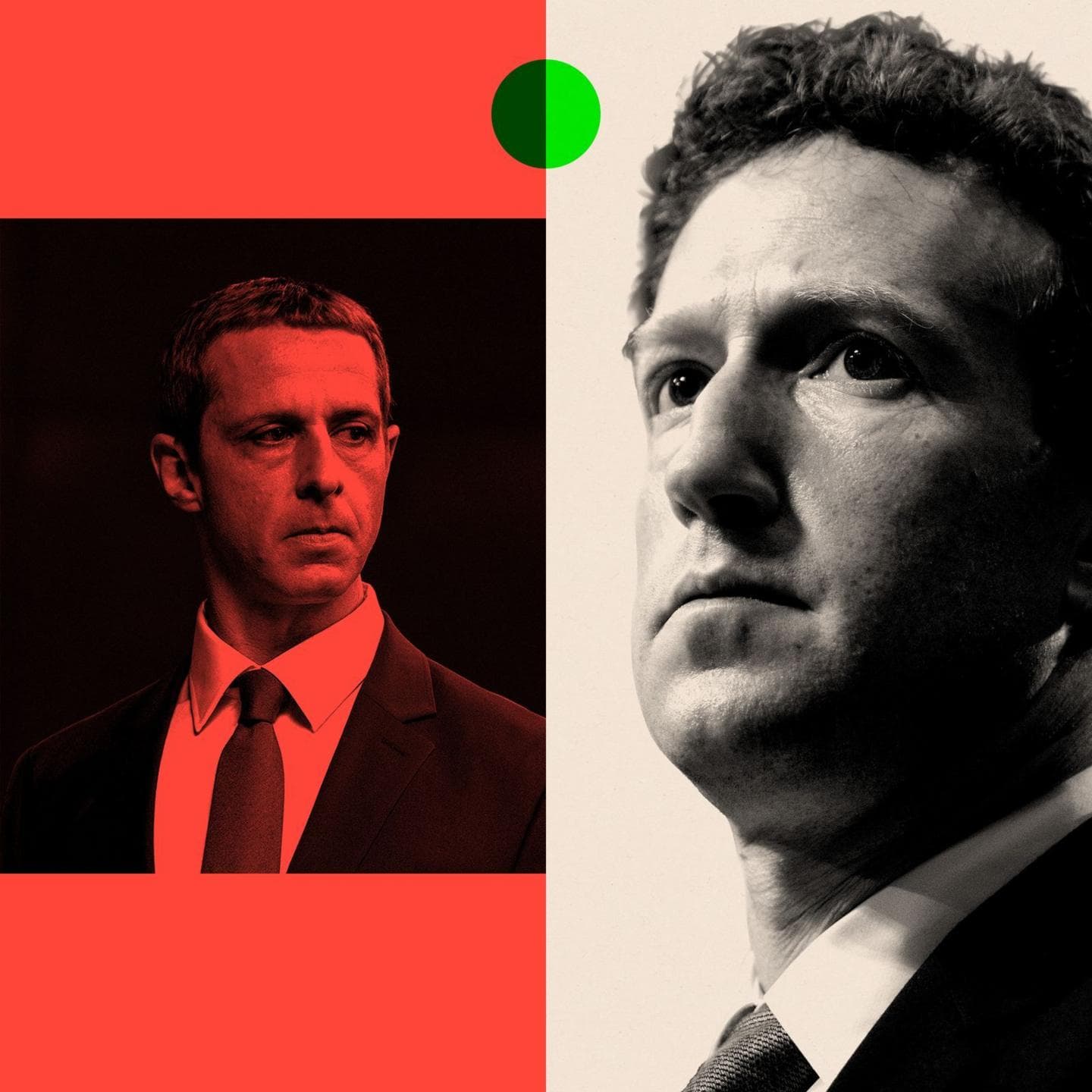
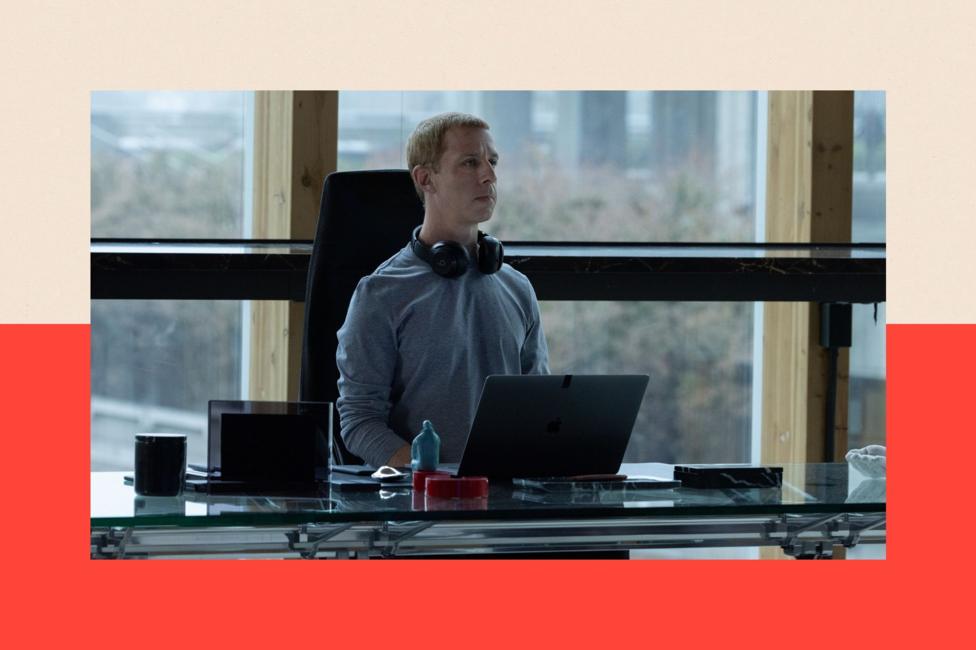
The timing of these reputational challenges has intensified with the release of The Social Reckoning, a film by Aaron Sorkin that premiered this week. The movie dramatizes whistleblower allegations that Meta executives were aware their products were harming young people. Aaron Sorkin initially offered the Zuckerberg role to Jesse Eisenberg, who declined; Jeremy Strong ultimately took the part, portraying the Meta founder as a
full-on villainwho argues that accepting any responsibility contradicts profit maximization, according to a Hollywood Reporter review.
Some observers have drawn parallels between Meta's current predicament and the tobacco industry's reckoning decades ago, suggesting a consensus is forming against the company and the broader social media sector. Yet the reality proves far more complex. Despite months of negative coverage, Meta's products continue to thrive in the marketplace. Usage of its applications keeps climbing, and its new AI assistant is already attracting millions of users. This raises a fundamental question: can anything meaningfully damage Meta's market position, or has the company become effectively immune to scandal?
A Year of Legal and Reputational Setbacks
Meta has endured relentless bad headlines throughout the past twelve months. In summer 2025, disclosed that Meta's chatbots had
engage a child in conversations that are romantic or sensualand dispensed inaccurate medical guidance. Meta subsequently revised its policies and acknowledged such responses should never have occurred.
The financial toll has mounted steadily. In March 2026, a California jury awarded $6 million to a 20-year-old woman who claimed Instagram and Google's YouTube caused her mental health deterioration. Around the same period, New Mexico became the first state to prevail in a lawsuit against Meta concerning child safety. The jury determined the company had failed to alert the public to risks its platforms posed to minors. Meta agreed to pay up to $18 billion in penalties to settle claims by 29 US states that its platforms endangered children. The presiding judge characterized Meta as a
public nuisancecomparable to air pollution. Meta has stated it disagrees with both verdicts and is pursuing appeals.
In May 2026, Meta avoided trial by settling a case brought by a Kentucky school district that attributed a youth mental health crisis to product design choices. Meta reportedly contributed $9 million, the largest amount among defendants. The settlement with 48 US states, the District of Columbia, and three US territories came with conditions: Meta denied wrongdoing but committed to implementing two-hour daily time caps for young users, blocking access during nighttime hours, muting notifications during school, and implementing other safeguards. During the five-day trial preceding the settlement, Meta maintained it had invested extensively in making platforms safer for adolescents through rigorous testing and research.

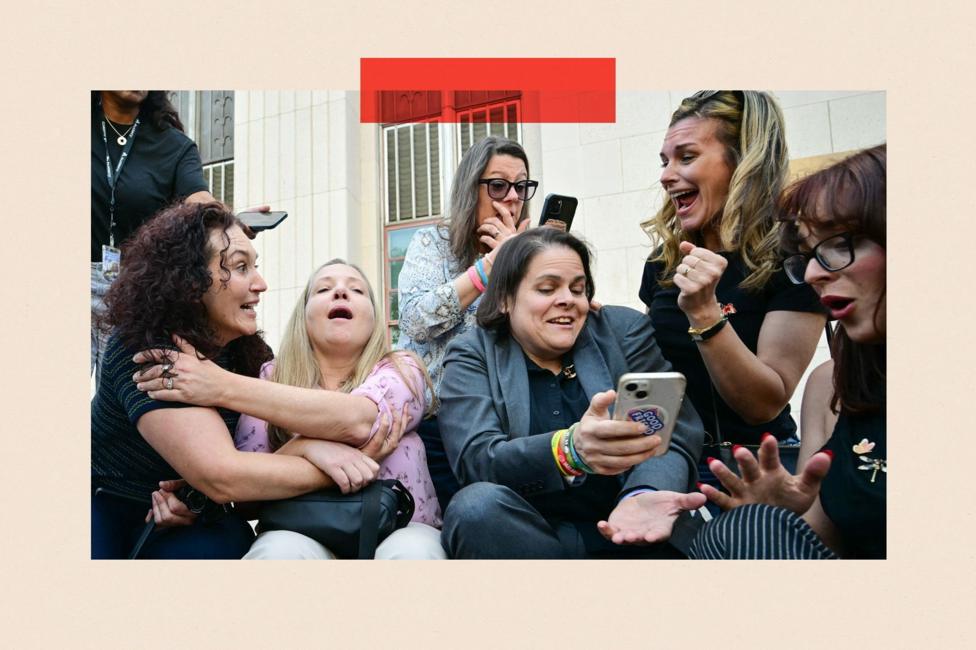
Additional litigation looms. A trial scheduled to begin later this month in Los Angeles will again address alleged social media addiction among young users. Meanwhile, several nations have pursued outright bans on social media for children, with Australia leading the way in December 2025. Public sentiment reflects deep skepticism: a /Ipsos survey found that 85 percent of Americans believe social media can be addictive for children, and 61 percent support increased government regulation.
To some observers, the erosion of public trust represents an existential threat.
Once the public has stopped trusting you, it's kind of a downward spiral,says Alison Taylor, an associate professor at New York University's Stern School of Business.
It feels like… the trust deficit is so big, I just don't know that they're going to be able to recover.
Why Meta's Business Remains Resilient
Despite these high-profile legal defeats, Meta reported that daily active people across its applications—including Instagram and WhatsApp—grew 3 percent year over year. Meta's second-quarter 2026 revenue reached $60.80 billion, representing a 28 percent increase compared with the same quarter in 2025. The company has acknowledged reducing its focus on the teenage demographic, though it notes that adolescents generated less than 1 percent of revenue anyway. Competitors including TikTok and YouTube command larger shares of the youth market.
The settlement with 48 states was widely interpreted as a strategic victory for Meta. The agreement prevented certain executives, including Zuckerberg, from testifying and blocked the release of additional internal documents, while permitting the company to avoid admitting culpability. Meta's stock price jumped 4 percent immediately following the announcement and has climbed more than 25 percent over the preceding month.
A prevailing theory among analysts suggests Meta has tested the limits of consumer tolerance for corporate misconduct and discovered that users will continue engaging with products regardless of their opinions about the company itself.
I think they're in a remarkably good position that I didn't expect them to be in,says Patrick Moorhead, founder and chief executive of Moor Insights & Strategy.
The Muse Gamble: Privacy and Trust
Meta's expansion into artificial intelligence depends significantly on restoring public confidence. Last month, the company launched Muse, a new AI personal assistant application. Unlike conventional chatbots such as ChatGPT that handle single tasks sequentially, Muse functions as an AI agent capable of executing multi-step operations over extended periods. It represents the first AI agent from a major technology corporation to reach public availability. A technology reporter from the New York Times who tested the application for two weeks described being
blown away; the agent telephoned his dental insurance provider on his behalf, purchased groceries, and organized his credit card expenditures into a spreadsheet.
However, Muse operates optimally when users grant the company access to highly sensitive personal data, including credit card details, transaction histories, and email account access. This represents a substantial request from a corporation whose privacy reputation was damaged a decade ago by the Cambridge Analytica scandal, during which millions of Facebook users' information was compromised and weaponized by a political consulting firm. Just two days after Zuckerberg's keynote presentation, a New Mexico jury ruled that Meta misled state residents in a case involving allegations that Cambridge Analytica obtained Facebook users' personal data without consent. Meta has disputed this verdict and stated it will defend itself against what it characterizes as distortions of its record.
Despite these concerns, early adoption has exceeded expectations. Since launching one month ago, Muse has accumulated more than five million downloads and over three million weekly active users—surpassing ChatGPT's initial adoption rate in the North American market. Zuckerberg has articulated a vision in which Muse integrates with an expanding ecosystem of Meta AI-powered smart glasses, enabling users to access what he terms
personal superintelligencethrough hands-free voice commands.
The smart glasses initiative remains contentious. Critics have labeled them
pervert glassesdue to their capacity for covert recording. Meta has implemented modifications to prevent tampering with the indicator light that signals when photography or video capture is active. Zuckerberg has also announced audio-only smart glasses variants, apparently intended to address privacy apprehensions.
Skeptics remain unconvinced.
Consumers know that Meta has problems, and that to date we haven't been able to trust them to make their products safe for children. So why would a consumer want to trust them with some of their most private and sensitive information?asks Brooke Istook of the Heat Initiative, a campaign organization.
The Privacy-Convenience Tradeoff
During his keynote, Zuckerberg briefly addressed privacy concerns. An image of Muse's mascot embracing a blue padlock appeared on the screen behind him as he spoke.
Given how personal Muse and the content on your glasses is, we designed state-of-the-art privacy and security into all these systems from the beginning,he told the assembled audience. He highlighted a personal virtual machine—essentially a self-contained computing environment operating within Meta's cloud infrastructure—where Muse users' information would reside. Zuckerberg pledged that this system would safeguard customer data and that eventually
even Meta won't be able to see that information. He indicated the virtual machine would launch later in 2026, with additional privacy enhancements following.
Meta's emphasis on privacy and security appears designed to reassure consumers. However, Kate Winick, principal analyst at Forrester covering social media and influencers, notes that users must actively opt into many of these protections.
I think if they thought they could get away with not doing that, they would,she says. Shortly after Zuckerberg's presentation, social media users reported instances of Muse malfunctioning, including allegations that the agent accessed emails without authorization. Meta has contested these reports, asserting that Muse does not retrieve emails unless users have explicitly granted permission.
Ultimately, many consumers may accept privacy compromises in exchange for convenience and functionality.
If the consumer sees the trade-off as beneficial, then they'll keep it going,Moorhead explains.
This is why Facebook and Instagram still have billions of users.The social media advertising business—Meta's primary revenue engine—continues generating substantial income. The company reported $60.8 billion in revenue and $15.9 billion in profit during the second quarter of 2026.
Consistent profitability has enabled Meta to fund ambitious ventures ranging from the widely criticized Metaverse initiative to its current aggressive expansion of artificial intelligence infrastructure.
It's a very real time-saving benefit that a lot of people will want and will like,Winick says of Muse. However, artificial intelligence investment carries substantial costs. Meta has accumulated $83.7 billion in long-term debt according to its most recent financial statement.
What Happens Next
The Social Reckoning is scheduled to open in cinemas on October 9, 2026. Meta's third-quarter 2026 financial results are expected on October 28 after the US market closes. Despite the mounting legal and reputational challenges, Meta executives remain optimistic about the company's artificial intelligence pivot.
It's really about your agent, who can do work on your behalf, who is your constant ally in whatever you're trying to accomplish in your goals in your life,Andrew Bosworth, the company's chief technology officer, stated in an interview with a national broadcaster.
Meta possesses ambitious plans for expansion. Yet the company's trajectory may ultimately hinge on whether its user base can reconcile their reliance on its products with fundamental doubts about the organization's trustworthiness and commitment to user safety. The coming months will test whether the company can successfully transition from social media dominance to artificial intelligence leadership while simultaneously addressing the accumulated skepticism of regulators, lawmakers, and the public.