
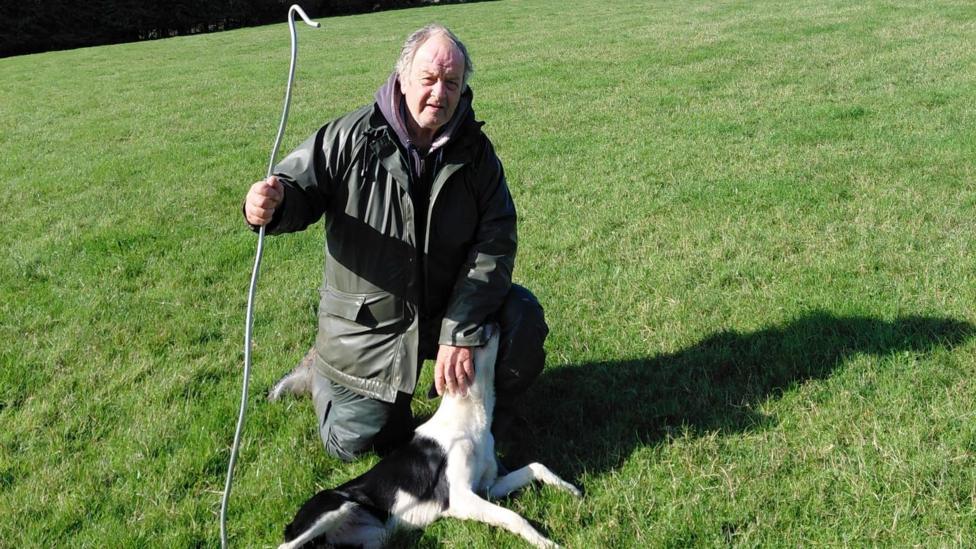
Alan Watson, 68, from Llanbadarn Fynydd in Powys, has hosted a telecommunications mast on his land for over two decades but now describes the arrangement as a "nightmare" following a sharp reduction in rental income and mounting legal expenses. The farmer claims he has been forced to accept worse contractual terms due to changes in UK telecoms law, and warns that other landowners may be discouraged from hosting the infrastructure rural communities depend on.
Watson's rental payments from the mast operator were cut in half, from £5,000 to £2,500 annually, while he incurred £10,000 in fees and legal costs navigating negotiations with telecoms companies. He has called on the government to intervene, arguing that the current system penalises landowners who support rural connectivity.
What changed in telecoms law?
The Electronic Communications Code was reformed in 2017 to alter how rental payments are calculated between mobile operators and landowners. The government introduced these changes to reduce the cost of deploying mobile infrastructure across the UK. However, landowners argue the reforms have driven down payments by as much as 90% in some cases and transformed negotiations into adversarial disputes rather than cooperative arrangements.
According to legal analysis, sections 61–64 of the Product Security and Telecommunications Infrastructure Act 2022 took effect on 7 April 2026, aligning certain telecoms lease renewals under the Landlord and Tenant Act 1954 with the Code's valuation basis. A Court of Appeal judgment in On Tower UK Ltd v AP Wireless II (UK) Ltd [2026] EWCA Civ 43 established that an operator benefiting from a Code agreement may apply to renew it, further shifting the balance toward operators.
How has this affected Watson's situation?
Watson describes feeling powerless in his dealings with the telecoms company.
"It was very much like David and Goliath, I was the little one fighting the big company,"he said. He claims that under the revised code, he had no meaningful negotiation over rental terms and was presented with a take-it-or-leave-it offer.
"When I tried to get my agreement finalised, the process ended up costing me more than £5,000."Over the 20 years he has hosted masts, Watson estimates he has received approximately £55,000 in revenue before tax, with tax taking 40% of that income. The combination of halved rent and substantial legal bills has left him questioning whether the arrangement remains worthwhile.
"The boot is on the telecommunication companies' foot. I could take it to court but it wouldn't be financially viable... and there is no guarantee of me winning if we took it to court."Watson added that the code theoretically requires negotiations to take place before disputes reach court, but in his experience, operators have bypassed this step entirely.
"There is no negotiations, it's going straight to court."
Why does rural Wales need these masts?
Nearly a quarter of Wales still lacks 4G coverage from every mobile network operator, according to Ofcom data. This gap leaves rural communities dependent on masts hosted by farmers and private landowners to maintain connectivity. Recent figures show some improvement in specific areas: according to Swansea Bay City Deal reporting, Ofcom's January 2026 data revealed that 4G coverage from all operators reached 81% of premises in Carmarthenshire, up from 66% in January 2024, and in Neath Port Talbot it rose from 73% to 84%.

The Farmers' Union of Wales has expressed concern that reduced rental payments will discourage landowners from hosting masts, potentially slowing rural connectivity improvements. Watson, identified as the Farmers' Union of Wales's Brecon and Radnor County Chair, has become a prominent voice in this dispute.
"Farmers across Wales have hosted mobile masts in good faith for decades, helping to keep rural communities connected."said Tim Faire, FUW's land use and climate change committee chair.
"But they cannot be expected to continue doing so while rents are slashed and reaching agreements becomes increasingly costly and difficult."
What do the operators and government say?
Mobile UK, the trade association representing the UK's mobile network operators, argues that mobile connectivity is
"an essential service, not a luxury"and that the government reformed the Electronic Communications Code because the cost of accessing land was becoming a
"significant barrier" to building and upgrading the mobile networks across the UK.The operators say they are investing around £2 billion each year to meet rising demand and network traffic.
The Department for Environment, Food & Rural Affairs (DEFRA) stated that its reforms ensure landowners are
"treated fairly when negotiating with mobile operators"and that the changes support
"the ambition for high-quality 5G coverage across all populated areas by 2030."
What are the broader concerns?
The National Infrastructure Commission for Wales has warned that falling rents are reducing incentives to host mobile masts and putting existing sites at risk. Landowners in Cardiff and Swansea have begun submitting notices to quit, signalling potential withdrawal from hosting arrangements. Watson fears this trend could have serious consequences.
"Why would a land owner want to rent space on their land when they're going to be paid next to nothing for it?"he asked.
He compared his situation to residential tenancy, arguing that the principle should be similar.
"I set the rent... it's like my tenants coming back to me and saying 'no, it's too much I can only pay half of it'. It isn't being used in the matter which it is meant to be used."Watson warned that connectivity across the UK could be
"severely reduced"as a result of the changes if landowners withdraw their cooperation.
What is Watson calling for?
Watson has urged the government to intervene, claiming it remains
"blind to what is happening to landowners across the country."He advocates for a system that encourages cooperation between landowners and operators rather than driving them apart.
"If we genuinely want to improve mobile connectivity, we need a system that encourages co-operation between landowners and operators, rather than driving them further apart,"he said.
The Farmers' Union of Wales echoes this sentiment, calling for
"a policy framework that treats farmers fairly and encourages landowners and operators to work together, rather than driving them further apart."
Key Facts
- Alan Watson's annual rent from hosting a 4G mast was halved from £5,000 to £2,500 following changes to the Electronic Communications Code.
- Watson has incurred £10,000 in legal and administrative fees while negotiating with telecoms operators.
- Nearly a quarter of Wales lacks 4G coverage from every mobile network operator, making farmer-hosted masts critical for rural connectivity.
- The 2017 reforms to the Electronic Communications Code were designed to reduce infrastructure deployment costs but have resulted in rental reductions of up to 90% in some cases.
- The National Infrastructure Commission for Wales warns that falling rents are putting existing mast sites at risk as landowners submit notices to quit.