Duncan Trevithick's employer has structured its bonus scheme around how effectively staff deploy artificial intelligence in their daily work. On the surface, the incentive appears straightforward: master AI tools, complete more tasks, and earn financial rewards. Yet Trevithick, a 34-year-old marketing professional at an AI training data company based in Spain, has begun to question whether the arrangement truly benefits workers or simply accelerates their own obsolescence.
"The uncomfortable interpretation is that employees are being assessed on how effectively they can participate in their own redundancy,"he explains. If AI allows him to accomplish two days of work each week, the mathematics of his compensation don't align with his productivity gains.
"I do not receive two days off or a 40% pay rise. The higher output simply becomes the new baseline. In the short term, that may help me get promoted. In the longer term, I have helped prove how much of my job no longer requires me,"he says.
How widespread is this practice among major employers?
Tying career advancement to artificial intelligence proficiency has become increasingly common across the corporate landscape. According to Fortune's reporting, Accenture trained 550,000 workers in AI tools and subsequently began tracking weekly log-ins to its internal systems for senior staff, with regular adoption now factoring into leadership promotion decisions—though some Europe-based employees and U.S. federal contractors have been exempted from this requirement. The consulting giant's chief executive, Julie Sweet, stated in March that
"Today, AI at Accenture is how we do work. So if you want to get promoted, you've got to do the things that we do in order to operate at Accenture."
Large technology and financial services firms have adopted similar tracking mechanisms. Disney, Meta, JP Morgan and KPMG have introduced "AI leaderboards" that rank employees based on their usage of various large language models and platforms available to them. The approach reflects corporate urgency to demonstrate returns on substantial AI investments, particularly given that 94% of companies have yet to see significant value from artificial intelligence, according to consultants McKinsey.
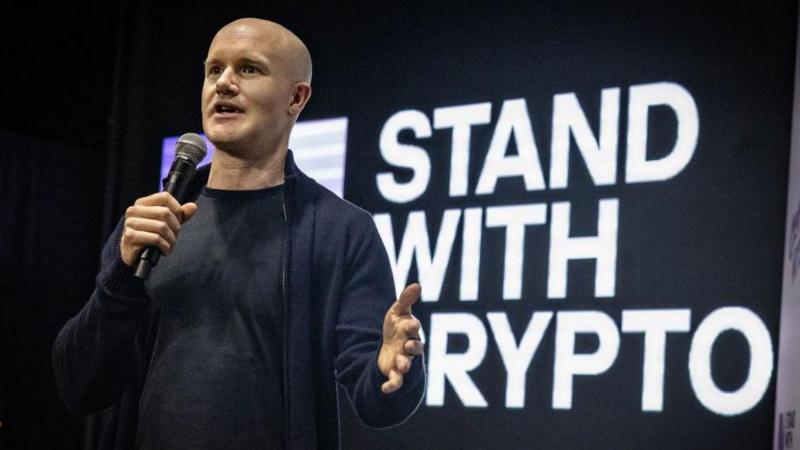
Cryptocurrency trading platform Coinbase took enforcement further. According to , the company cut approximately 700 jobs—roughly 14% of its workforce—in May 2026, with leadership citing a repositioning for the artificial intelligence era. The layoffs followed an earlier incident in which chief executive Brian Armstrong had directed engineers to complete AI training, and those who did not were dismissed.
Why are workers feeling pressured to adopt AI?
The current employment market leaves many workers with limited negotiating power. In the United Kingdom, job vacancies have fallen to a five-year low, creating an environment where employees feel compelled to demonstrate AI competency regardless of formal mandates. A survey conducted in July by recruiter Gi Group found that among 1,881 UK jobseekers polled, 75% said they would not be discouraged from applying to an organisation that had incorporated AI proficiency into individual performance reviews, though 22% indicated it would be off-putting.
Trevithick describes the dynamic as inescapable.
"It's like being in the sea and you see a giant wave coming. You can get out a surfboard and try and ride it as long as possible, or you can just let it take you under. But you can't stop the wave,"he says.
At a large consulting firm, a senior executive—identified here as Pamela to protect her identity—has observed a more subtle but equally consequential shift. While her employer has not issued a formal mandate requiring AI adoption, the technology is clearly determining who receives recognition and advancement.
"The ground is shifting under us. You've got to demonstrate [AI] fluency and fluidity as one of your key achievements. It's kind of quiet where nobody's saying, 'learn AI or else'. But let me tell you, in performance reviews, they reward who uses it well,"she explains.
What does this mean for experienced workers?
The emphasis on AI capability is creating what Pamela describes as a "two tier workforce." Employees with identical job titles and tenure are now valued differently based on whether they view artificial intelligence as a threat or an opportunity.
"You've got the same job title, same tenure, but different value based on whether someone treats AI as a threat or a tool - that gap widens really quickly once leadership notices it,"she observes.
The disparity becomes particularly stark when comparing experience against AI fluency.
"AI fluency beats credentials every day. Somebody that has 15, 20 years of experience and no AI fluency will be passed over for those that have, say, three years, but are fast with the tools,"Pamela notes. Workers who do not visibly integrate artificial intelligence into their output face slower advancement.
"If you're not visibly using AI, you see slower promotion timelines. It's harder to be seen, and it's harder to fight being on that shortlist,"she adds.

Are these practices legally permissible?
From a legal standpoint, employers have considerable latitude to reshape performance expectations around emerging technologies. Tina Chander, an employment lawyer and partner at Weightmans, confirms that companies can shift evaluation criteria without violating employment law. However, she identifies significant fairness questions that arise from such changes.

"The question then becomes whether the employer increases expectations on the basis that the employee can now produce more work. Is that fair?"Chander asks.
"And if an employee is effectively doing more because AI has made them more efficient, should they be rewarded differently? Or are they effectively making themselves redundant, thus acting as a disincentive to be productive?"
Chander advises organisations to establish explicit policies, provide comprehensive training, and define clear boundaries around AI usage. Without such frameworks, companies risk triggering employee disputes concerning fairness, performance expectations and job security. The legal landscape is shifting as well: from January 2027, UK employees will have six months—rather than the current three—to submit unfair dismissal claims, and will be eligible to do so after just six months of service instead of the current two-year threshold.
Why aren't employers being transparent about their intentions?
HR consultant Tina Rahman, who operates a London-based consultancy called HR Habitat, identifies a critical communication gap. Employers are not adequately explaining to workers why artificial intelligence integration matters to their roles or what the ultimate business objective is—which Rahman acknowledges includes cost reduction, time savings, and decreased reliance on outsourced labour.

"Because they misunderstand it, this is not being reflected to employees,"Rahman states. The lack of transparency is generating discontent. At Pamela's firm, leadership deliberately maintains vagueness about AI expectations.
"Leadership is being inconsistent and vague on purpose. Firms want productivity gains without owning the disruption narrative,"she observes.
"If something goes wrong, they're going to say, 'I didn't tell you to do that. Where'd you get that from?' Then if you did something with AI, and it works, great."
What happens when AI adoption becomes performative?
Kamila Miller, an applied AI researcher and lecturer at Henley Business School, warns that mandating AI usage can devolve into theatre rather than genuine improvement. When organisations establish AI usage as a key performance indicator, workers respond by optimising for the metric rather than for actual value.
"Make AI usage a KPI [key performance indicator], and people will log their interactions to hit the metric, route work through a chatbot that did not need it, and generate AI-flavoured outputs that look productive on a dashboard. You will measure adoption. You will not measure judgement, learning, or better decisions,"Miller explains.
"You have not made people more skilled - you have made them more obedient."

Some high-profile companies have recognised these pitfalls and adjusted course. In April, Luis von Ahn, chief executive of language-learning platform Duolingo, announced that his firm had discontinued the use of AI adoption as a component of performance evaluations.
"We found that people... were asking: 'Do you want us to use AI for AI's sake?'"Von Ahn explained.
"In the end we backtracked and we said: 'Look, the most important thing for your performance is that you are doing, whatever your job is, as well as possible. A lot of times AI can help you with that. But if it can't, I'm not going to force you to do that.'"
Similarly, in May, the Financial Times reported that Amazon had deactivated an internal leaderboard tracking employee AI usage after workers began deliberately assigning unnecessary tasks to artificial intelligence systems in order to climb the rankings.
How are individual workers responding?
Despite these cautionary examples, many employees feel obligated to demonstrate AI competency to protect their careers. Pamela, now in her mid-50s, plans to retire within a decade and is determined to maintain her position to preserve her pension and health benefits. She is deliberately increasing the visibility of how artificial intelligence helps her attract new clients and ensuring she receives credit for those contributions.
Trevithick is pursuing a different strategy.
"If AI can do a job better than you can, it makes sense for the business to replace you. That's how the capitalist model works. So it's about, how can you move into a position where you own assets where you can leverage AI, and then you benefit,"he says. He is developing multiple side projects designed to position himself as someone who can harness artificial intelligence as a business asset rather than simply as a tool within an employment relationship.
Key Facts
- According to Fortune, Accenture trained 550,000 workers in AI and began tracking weekly log-ins to internal systems, with regular adoption now factoring into leadership promotion decisions expected to take effect in summer 2026.
- Coinbase eliminated approximately 700 positions in May 2026 as part of a broader repositioning for the artificial intelligence era, following earlier enforcement of mandatory AI training completion.
- Employment law permits companies to shift performance expectations around new technologies, but experts warn that unclear policies and unequal treatment could trigger disputes over fairness and job security.
- Some organisations, including Duolingo and Amazon, have reversed AI-adoption mandates after discovering that employees were gaming metrics rather than genuinely improving their work.
- Workers report that AI proficiency is increasingly outweighing traditional credentials and experience in promotion decisions, creating a two-tier workforce based on technology adoption rather than job performance.