A Holyrood committee has concluded it cannot determine whether the Scottish government's tax and spending plans are affordable, citing insufficient transparency from ministers about how the administration intends to close a projected £5 billion shortfall in public finances. According to BBC News, the Finance and Public Administration Committee published its findings on 3 November 2026, warning of substantial risks to next year's Budget if the government fails to deliver on its reform agenda.
MSPs on the committee examined evidence from public bodies, local authorities and economic experts but said they lacked sufficient information from ministers to assess the viability of the government's fiscal strategy. The committee called for "much greater transparency" on progress in closing the forecasted gap and meeting reform targets ahead of Finance Secretary Jenny Gilruth's Budget announcement on 3 December 2026.
The financial pressures facing Scotland stem from multiple sources. The country faces an anticipated budget shortfall of £2.6 billion for day-to-day spending—such as public sector wages—and £2.1 billion in capital funding for long-term infrastructure projects, by 2029–30. The Scottish Parliament's committee report notes that 2027–28 appears particularly challenging, with both day-to-day and capital spending estimated to fall in real terms. Additionally, the Scottish government must contend with a £720 million reduction in next year's Budget due to weaker-than-expected income tax receipts compared with the rest of the United Kingdom, and the UK government's prioritisation of defence spending could reduce capital funding for Scotland by £87 million.
Economic headwinds including inflation and rising energy prices compound these difficulties. The Scottish government has announced plans for major overhauls of public services, including proposals to drastically shrink the number of NHS boards and regional councils, in a bid to make savings and improve efficiency. However, the committee expressed concern that these ambitious reform targets may not be delivered in full and on time.
What does the committee want the government to do?
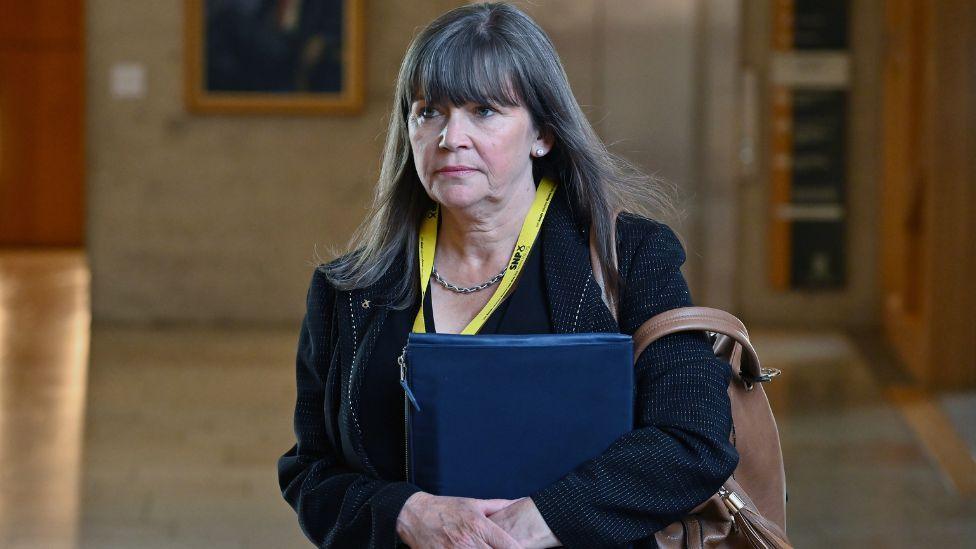
The committee is calling on the Scottish government to provide substantially greater transparency on its fiscal strategy. Finance committee convener Clare Haughey, an SNP MSP, stated that the committee has insufficient evidence to determine whether the government's plans are affordable and sustainable.
"We are also concerned that the Scottish Budget faces substantial risks if the three pillars of its Fiscal Sustainability Delivery Plan (FSDP) – including ambitious public service reform targets – are not delivered in full and on time,"she said.
As a first step, Haughey said the Scottish government should publish an updated Fiscal Sustainability Delivery Plan alongside the Budget announcement and resume the annual publication of the medium-term financial strategy while committing to regular spending reviews.
"We also urge the government to update its public sector pay policy and tax strategy at the earliest opportunity,"she added.
What is the government's position on ScotWind funding?
The committee has urged ministers not to "routinely" use cash from the ScotWind project—generated by the leasing of offshore wind farm options—as a "second reserve". According to the committee's detailed report, Scotland raised £755 million from ScotWind seabed leasing in 2022, with ministers having committed to developing a ScotWind Wealth Fund by the end of the current parliamentary session. The Scottish Fiscal Commission expects £80 million of ScotWind funds to be spent in 2026–27 and £328 million in 2027–28, though the committee also records that ministers drew down £96 million in 2022–23.
At a 30 September committee hearing, the Cabinet Secretary acknowledged that ScotWind "probably does currently work as a second reserve," citing the government's limited borrowing powers and the fund's role in managing volatility. The committee's concern reflects broader anxiety about the sustainability of relying on volatile revenue sources to plug structural budget gaps.
How has the government responded?
A Scottish government spokesperson said the administration has delivered a balanced budget every year and published a comprehensive strategy and delivery plan setting out how it will close the gap between funding and spending by 2029–30.
"We are also taking forward a public service reform strategy to deliver services that are preventative, better joined up and more efficient,"the spokesperson said.
The government noted that its funding package from the UK government in 2027–28 will suffer a real-terms cut of £650 million as a result of measures announced in the chancellor's UK Budget, reducing "the money we have to spend on public services and supporting people with the cost of living". The Scottish government said it would consider the committee's recommendations and respond to the report after the Budget announcement next month.
What is the political reaction?
Scottish Conservative finance spokesperson Craig Hoy criticised the government's lack of transparency.
"Even one of their own backbenchers who leads this committee says it is typically shrouded in SNP secrecy,"he said, adding:
"This reeks of more economic incompetence from the nationalists, who are already presiding over a £5bn funding gap in Scotland's finances."
Key Facts
- The Finance and Public Administration Committee published its report on 3 November 2026, finding insufficient evidence to assess the affordability of the government's tax and spending plans.
- Scotland faces a combined £5 billion budget shortfall by 2029–30: £2.6 billion for day-to-day spending and £2.1 billion for capital projects, if no action is taken.
- The Scottish Budget for 2027–28 is scheduled to be announced on 3 December 2026, with the committee recommending an updated Fiscal Sustainability Delivery Plan be published alongside it.
- The government must manage a £720 million reduction in next year's Budget due to lower-than-expected income tax receipts and faces a further £650 million real-terms cut from UK government funding changes.
- The committee has urged the government to resume annual publication of its Medium-Term Financial Strategy and commit to regular spending reviews to improve fiscal transparency.