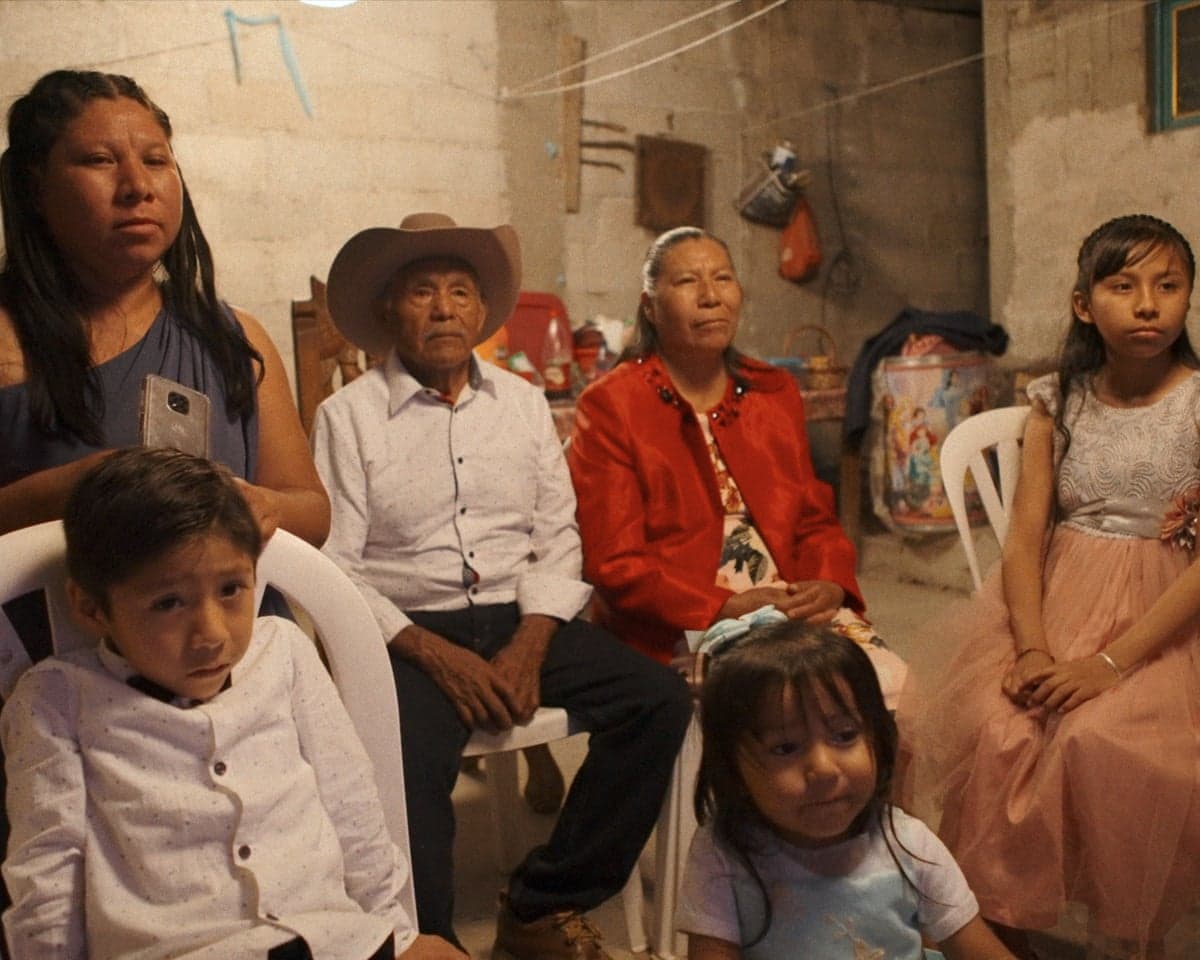
Clara Trischler's absorbing second feature takes an unconventional approach to migration storytelling by centering those who remain rather than those who depart. Instead of chronicling the lives of successful border-crossers, the film examines the communities hollowed out by emigration and the creative, troubling ways they process collective loss.
The film opens with a visceral sequence: whispered voices in darkness, figures stumbling and crawling through terrain, then sudden illumination and gunfire as a police vehicle arrives. The shock dissolves when viewers learn this is performance, not reality. In El Alberto, a town in Hidalgo state whose population has been steadily depleted by migration to the United States, residents have become actors in staged re-enactments of the border-crossing experience.
What is the Caminata Nocturna?
The Caminata Nocturna—Spanish for "night hike"—recruits local participants to perform as characters within a simulated migration operation, including the role of "coyotes," or human traffickers. According to academic research on the event, the hñahñú community of El Alberto organized these performances, which have gained both national and international recognition. The simulation is rigorous: participants experience a four-to-five-hour immersive recreation that includes being loaded into vans, intimidation from traffickers, and police interrogation. According to festival documentation, the re-enactment incorporates fake abductions, restricted water access, and staged sexual violence.
The events serve a dual purpose: ostensibly functioning as a deterrent to potential migrants while simultaneously operating as a tourist attraction that brings revenue to a struggling community. This contradiction sits at the heart of Trischler's inquiry.

What ethical concerns does the film raise?
Trischler's observational style deliberately avoids psychological analysis or explicit moral judgment of these performances. The film documents a woman casually assigned the role of rape victim with minimal briefing, yet refrains from interrogating the emotional or ethical implications of such casting. This restraint may frustrate viewers seeking clear condemnation or analysis, though it reflects the director's choice to let the contradictions speak for themselves.
What the film does capture with precision is the pervasive grief suffusing El Alberto. Through personal testimonies, residents share stories of separation: those deported from the United States, children torn from parents, and the accumulating emotional toll of a community fractured by migration. The border represents not merely a physical barrier but a chasm of lost moments and unfillable emotional voids.
How does the film approach its subjects?
Rather than offering a single narrative perspective, the documentary tells three interconnected stories of residents who appear determined to remain in El Alberto despite the exodus around them. These individuals navigate the tension between economic necessity and cultural rootedness, between the pull of opportunity elsewhere and commitment to place.
The film's production history reflects its international scope. It premiered at CPH:DOX in March 2024 as a Germany-Austria co-production with a runtime of 78 minutes, later cataloged at 79 minutes for the 2025 Margaret Mead Film Festival. Trischler attended the Margaret Mead screening, where the work reached North American audiences.
Key Facts
- The Caminata Nocturna was initiated by El Alberto's hñahñú community in response to escalating dangers on the U.S.-Mexico border
- The simulation lasts four to five hours and includes abductions, water deprivation, and staged sexual assault scenarios
- The film centers three residents committed to staying in their hometown despite widespread outmigration
- Trischler's second feature premiered at CPH:DOX in March 2024 before international festival circulation