Michael McNay, ’s design editor who helped transform the paper’s appearance in the 1980s, has died aged 91. Although he was not an immediately recognisable name to many readers, he more than anyone else shaped the modern look of the paper during a 37-year career.
How did he change ?
McNay worked across many areas of the paper as a subeditor and also wrote mainly on arts subjects, before becoming ’s design editor during its radical remodelling in 1988. The innovative redesign changed the presentation of articles, headlines and spacing, expanded the use of photographs, introduced new typefaces and even a new masthead, taking the paper decisively away from its cramped, dowdy and often amateurish past, with its cloudy pictures and reputation for frequent spelling errors.
If the twin impetuses for the overhaul were the sidelining of the print unions after Rupert Murdoch’s clandestine removal of his papers to Wapping and the early success of the Independent, ’s redesign was both radical and a challenge to other broadsheet national newspapers, which gradually followed suit. McNay had many of the original ideas, argued for them despite internal opposition and mastered the then new Atex computer system. He was, in the words of ’s history Witness in a Time of Turmoil (2025), “the most vociferous and talented, even belligerent, advocate of newspaper design”.
McNay was a substantial presence and a keen rugby supporter who had played hooker for London Scottish. He could be passionate in defending his position. Linda Christmas, who worked in the paper’s features department in the 1970s, described him as “the only journalist I know outside of movies who, in a heated moment, threw a telephone across the room”, adding that he was well informed, funny and “damned good company”.
At the time of the paper’s 1983 legal fight over a fax detailing the Ministry of Defence’s plans to limit protests outside the US air force base at Greenham Common, Berkshire, which had been sent anonymously, the court ordered to hand it over so that the junior civil servant who had sent it could be identified. The judgment led to anguished editorial discussions about whether to comply, and McNay tried to seize the fax out of the editor’s hands so that he could destroy it and take the blame himself. It was a vain and tempestuous gesture: the paper could not defy the law, the fax was handed over, Tisdall was identified and subsequently went to jail.
What was his background?
McNay was a son of the Raj, born in Rawalpindi, now in Pakistan, the youngest of three sons of an army staff sergeant and western front veteran, later a warrant officer, Harold McNay, and his wife Eleanora Yanischek, who had been born in London to refugees from Silesia, now in Poland. He survived a severe case of typhoid as a child, and went to Britain only at the age of 12 after the partition of India and Pakistan in 1947.
He was educated in Co Durham at Darlington grammar school, did his national service in the Royal Corps of Signals and won a place at Balliol College, Oxford, to study English. He left after a year, however, after failing the preliminary examination in medieval English, which he hated and did no work for.
A series of jobs followed, including temporary work for a tailors’ firm in Jermyn Street, before trainee reporters’ jobs on the Oxford Mail and then the Bedford Times. He joined as a subeditor in its Manchester office in 1963. A flavour of the routine in those inky cut-and-paste days came in a memoir he gave to the paper’s archive in 2001:
“It was a gently civilised life in which the major effort was to stay awake. You arrived in the evening to find a fresh pot of glue on your desk alongside a pair of scissors and a neat pile of copy paper with a clean, freshly ironed towel and a piece of soap in the top drawer. The dark wood panelling, the frosted glass, the big ceramic fittings in the lavatories gave [it] the air of a gentlemen’s club.”

Moving to the features department in Manchester, McNay became fascinated with page design and was given more leeway, especially after Preston, the future editor, became features editor and was determined to make the pages appear more coordinated and coherent when the department was moved to the London office, and page proofs no longer had to be sent by road or rail back and forth.
What else did he do at the paper?
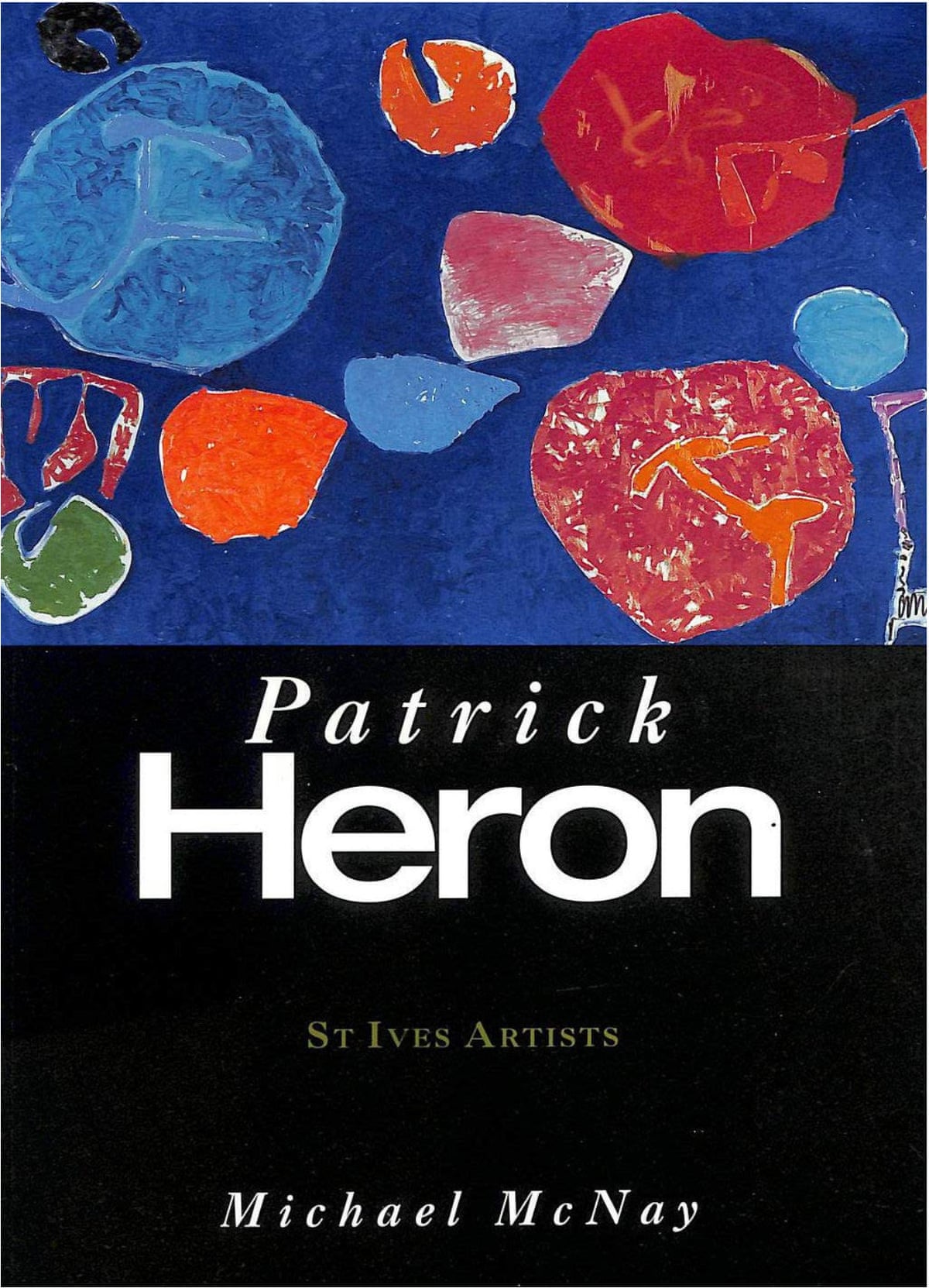
He became arts editor, writing about art and cinema and, later, producing artists’ obituaries for the paper. One of his pieces led to a book for Tate’s St Ives series in 2002. Other books included a 2008 title providing the text to go with photographs by the paper’s picture editor, Hidden Treasures of England (2009) and Hidden Treasures of London (2015). In 2003 he was a founder member of the Hazlitt Society, formed out of the restoration of the Soho graveyard of the 19th-century essayist William Hazlitt.
By the mid-1980s it was becoming clear that needed a redesign and McNay, as the most vociferous internal critic of the paper’s limitations, was placed in charge of the project. He enlisted the graphic designer, who had already worked on the Sunday Times, and gave him a broad brief:
“We regard ourselves as basically a text paper but with decided ambitions to use pictures better … We decidedly don’t want a deja-vu appearance … We want to look modern.”Preston agreed to the investment on being shown the original design.
In preparation McNay trained to use the new Atex system, using it more easily than most others managed, and he would train the subeditors and rigorously patrol the redesign, its pages more boldly laid out, its pictures given more space and its articles less squeezed and jumbled. The front page, which he laid out, would have only one or two stories on it instead of the previous 10 or 12. Not all subs were happy, and McNay became known as the thought police for his vigilance. By the time he retired in 2000 the paper’s appearance had been changed for ever.
McNay concluded his memoir:
“ must always be about its writers, but I made my career in production on a gut instinct that, whether or not I could make it as a writer, helping to shape the paper physically would be a necessary and deeply satisfying job of work. Every time I see the paper now, I look at it with pride.”
Who survived him?
In 1957 he married Marian Milne, with whom he had two children, Lois and Ross. After their divorce, in 1974 he married Sue Pilkington, herself a subeditor, and they had a daughter, Anna. She died last year, and he leaves his children and five grandchildren, Morgan, Maisie, Freddie, Solly and Isla.
Stephen Bates
Ian Mayes writes: Mike McNay radiated creative energy. His great achievement was, indeed, the 1988 redesign, using a unique combination of Helvetica bold, and what seemed to some effete, to others, elegant, Garamond italic. It was widely copied both inside and outside the industry.
It was Mike who persuaded Peter Preston to go the whole hog, and include the almost sacred masthead, title, in the redesign. Mike took Preston to the studio of the designer, David Hillman, where he resisted the latter’s suggestion to take the whole paper from broadsheet into tabloid: it was too soon, too radical. At Preston’s bidding they went back to on the bus. They were, in fact, in this and other projects, a closely bonded pair, the relationship based on the greatest mutual respect. Preston, in entrusting Mike with the redesign had, in effect, put the welfare of the whole paper in his hands. There was opposition even in Preston’s editorial bunker. Mike prevailed.