

Singer-songwriter KT Tunstall is returning to the Edinburgh Fringe almost 30 years after her first performance there, this time as composer for a new stage musical called The Singer. The show, developed with theatre-maker Cora Bissett and deaf performer Jamie Rea, brings together deaf and hearing cast and crew and grew out of a short pandemic-era film of the same concept.
Ten years before the production took shape, Bissett watched a showcase at the Royal Conservatoire of Scotland (RCS) featuring some of the first graduates of its Performance in British Sign Language (BSL) and English degree. One performer left a lasting impression.
He was signing his music but it was much more than interpretation of the music.
He was inhabiting the music through his whole body.
That performer was Jamie Rea. During the pandemic he and Bissett collaborated on a short film, The Singer, about a deaf musician who strikes up an unlikely partnership with a struggling busker. That film has now been expanded into a full-length stage production, made in partnership with Aberdeen Performing Arts, Dundee Rep and Solar Bear, a theatre company that works with both deaf and hearing performers.
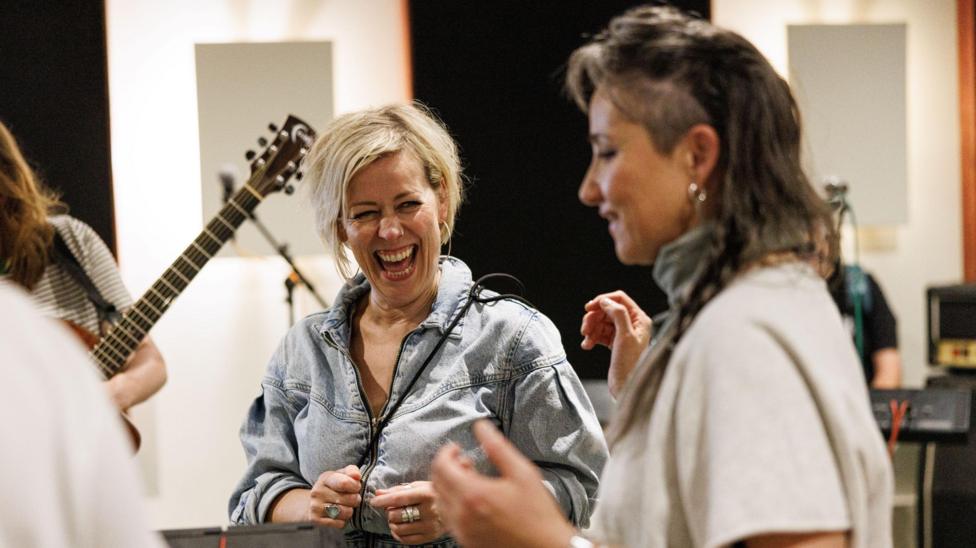
How did the production bring deaf and hearing artists together?
Solar Bear's creative director, Jennifer Bates, called the collaboration a landmark for Scottish theatre because of how fully it integrates deaf and hearing performers and crew rather than treating sign language as an add-on. Tunstall wanted the score, which she describes as sounding like Massive Attack meeting Hozier, to go beyond BSL-signed singing.
To achieve that, Jamie Rea wore a vibration vest that let him feel the tempo of the music and trigger his own beats in response, an approach Tunstall likened to being "like a rock and roll ninja."
He'd never done it before and he took to it like a duck to water.
He just immediately got the drumsticks and made these massive hip-hop style beats.
The team also built new technical systems, including lighting cues, so that deaf and hearing performers and crew could work in sync throughout rehearsals and performances.
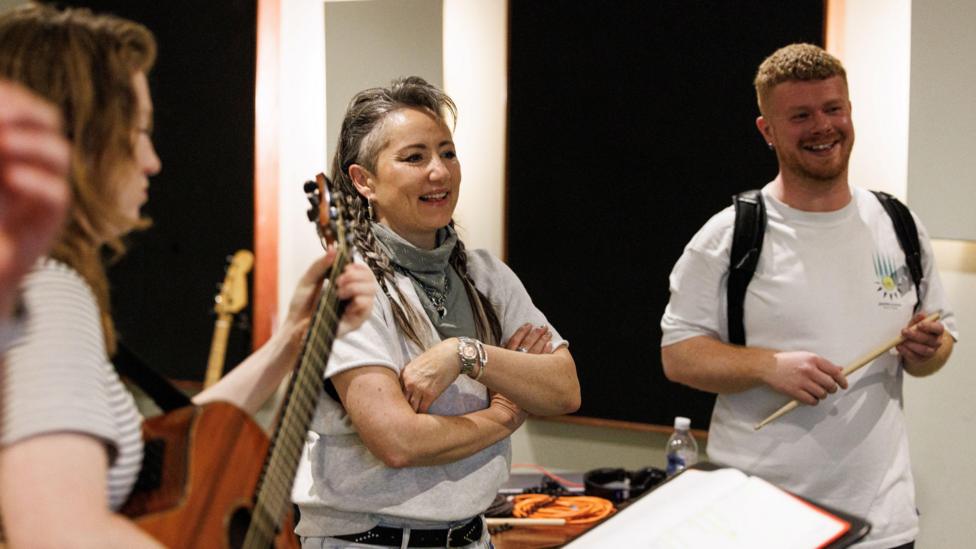
Why does the story resonate personally with KT Tunstall?
Tunstall said she was struck by how closely the show's two central characters mirrored her own life: a deaf musician and a Glasgow busker.

I couldn't believe the convergence of elements being so close to my life because we've got a deaf character.
My younger brother was born profoundly deaf and I lost my hearing in 2018, so I don't have any hearing on my left hand side.
That's been a real kind of journey, getting used to being someone who's hard of hearing and being a musician.
And then the other character is a busker in Glasgow. Which was me!
Tunstall has previously described herself as roughly 97 percent deaf in her left ear, saying a hearing aid was ruled out because the damage was considered too advanced, according to a celebrity news report. She has also said the most difficult part of the 2018 episode was vertigo that left her unable to balance properly for two or three months, according to a separate interview report.
What caused her hearing loss?
According to a report from a national broadcaster's coverage, Tunstall first noticed high-frequency hearing loss and tinnitus in her left ear as far back as 2008, a decade before the sudden and complete loss she experienced in 2018. That later episode was diagnosed as sudden sensorineural hearing loss, a condition that can cause rapid and irreversible damage, the same report notes. Tunstall has suggested the trigger may have been a long-haul flight followed immediately by attending a Spice Girls concert, telling an interviewer the combination may have overloaded her nervous system, according to a video interview. She has also linked years of loud touring with insufficient recovery time to the cumulative damage, according to a separate newspaper interview.
The concern about her hearing did not end there. In July 2021, Tunstall withdrew from summer tour dates because of worsening tinnitus in her right ear, raising fears at the time that she could lose hearing on that side as well, according to the same broadcaster report.
Other Fringe-adjacent work has drawn on similar territory this year. Comedian Ray Bradshaw, who grew up with deaf parents, built his own show around sign language and his upbringing; details of that production are covered in our earlier piece on his new show 'Coda'.
What has Jamie Rea said about the project?
Rea said the opportunity traces directly back to his training at the RCS.
If it wasn't for the RCS, I wouldn't be in this position.
I think it's very important to believe in yourself and push yourself forward.
Yes, there's been a lot of barriers and lots of moments when we've had to adapt and change with the ebb and flow but it's a very supportive team and we've had a huge team of interpreters so it's hats off to them as well.
What happens next for Tunstall's hearing advocacy?
Tunstall has continued to speak publicly about hearing loss beyond this production. In 2025 she took part in an interview supporting a tinnitus-awareness campaign run by the hearing loss charity RNID, connecting her own experience to broader public advocacy work, according to RNID's published interview. No specific new medical milestone or further campaign date has been announced beyond that ongoing advocacy work.
Tunstall made her Fringe debut nearly three decades ago at a late-night slot at the Gilded Balloon. She said she is looking forward to having friends and family, including her deaf brother, in the audience for The Singer.
I can't wait for my little brother to come and see a show where literally doesn't matter whether you can hear or not.
You are going to have a great time watching a show that is full of music and made for deaf people as well as hearing people.

Key Facts
- The Singer is a collaboration between KT Tunstall, Cora Bissett and deaf performer Jamie Rea, produced with Aberdeen Performing Arts, Dundee Rep and Solar Bear.
- Jamie Rea trained in the RCS's Performance in British Sign Language and English degree and uses a vibration vest to feel the music's tempo on stage.
- Tunstall lost hearing on her left side in 2018 after earlier tinnitus and high-frequency loss dating back to 2008, and later withdrew from 2021 tour dates over right-ear tinnitus.
- Tunstall first performed at the Edinburgh Fringe almost 30 years ago at the Gilded Balloon.
- She continues hearing-loss advocacy work, including a 2025 interview supporting an RNID tinnitus-awareness campaign.


