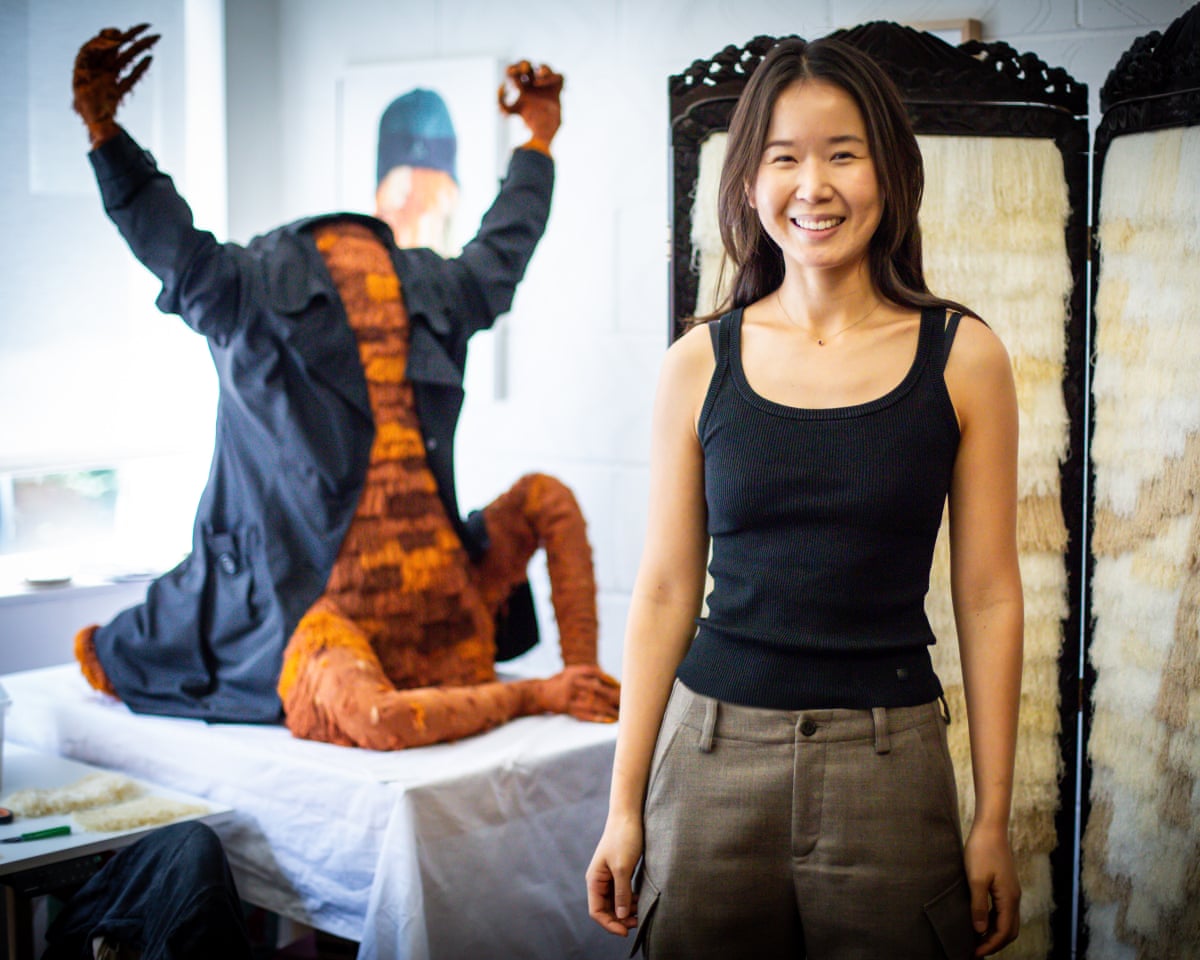
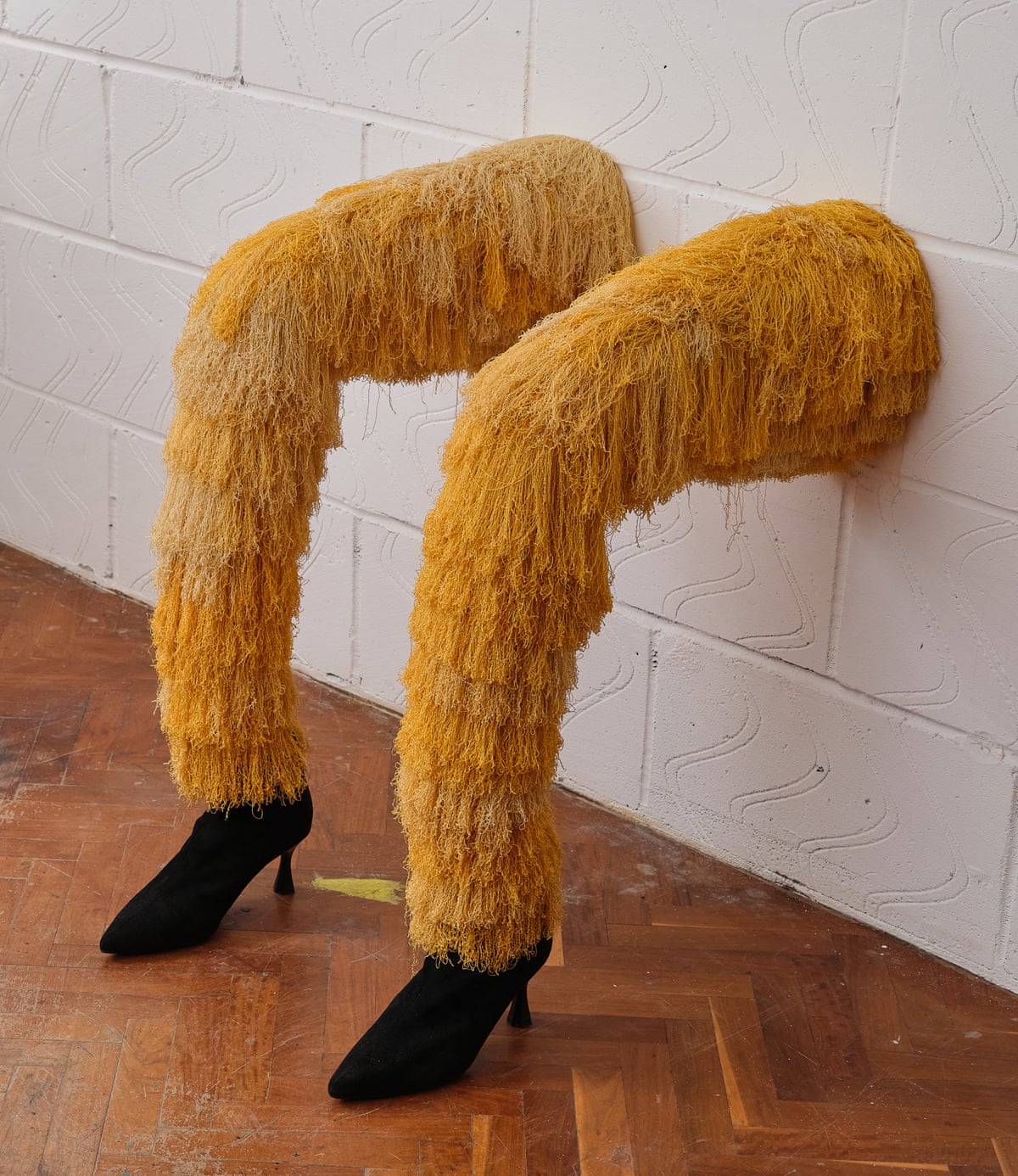
Woo Jin Joo's studio overflows with enchantment. Ceramic goblin feet line the windowsill in shades of green, disembodied furry legs protrude from one white wall, and on a table behind where the Korean-Chinese artist sits with her tea, a headless figure dressed in black crouches with arms raised in a gesture of caution. These are not remnants of a curiosity cabinet but the output of a rigorous artistic practice rooted in Korean mythology, Daoist philosophy, and a conviction that the discarded objects of everyday life possess spiritual potential.
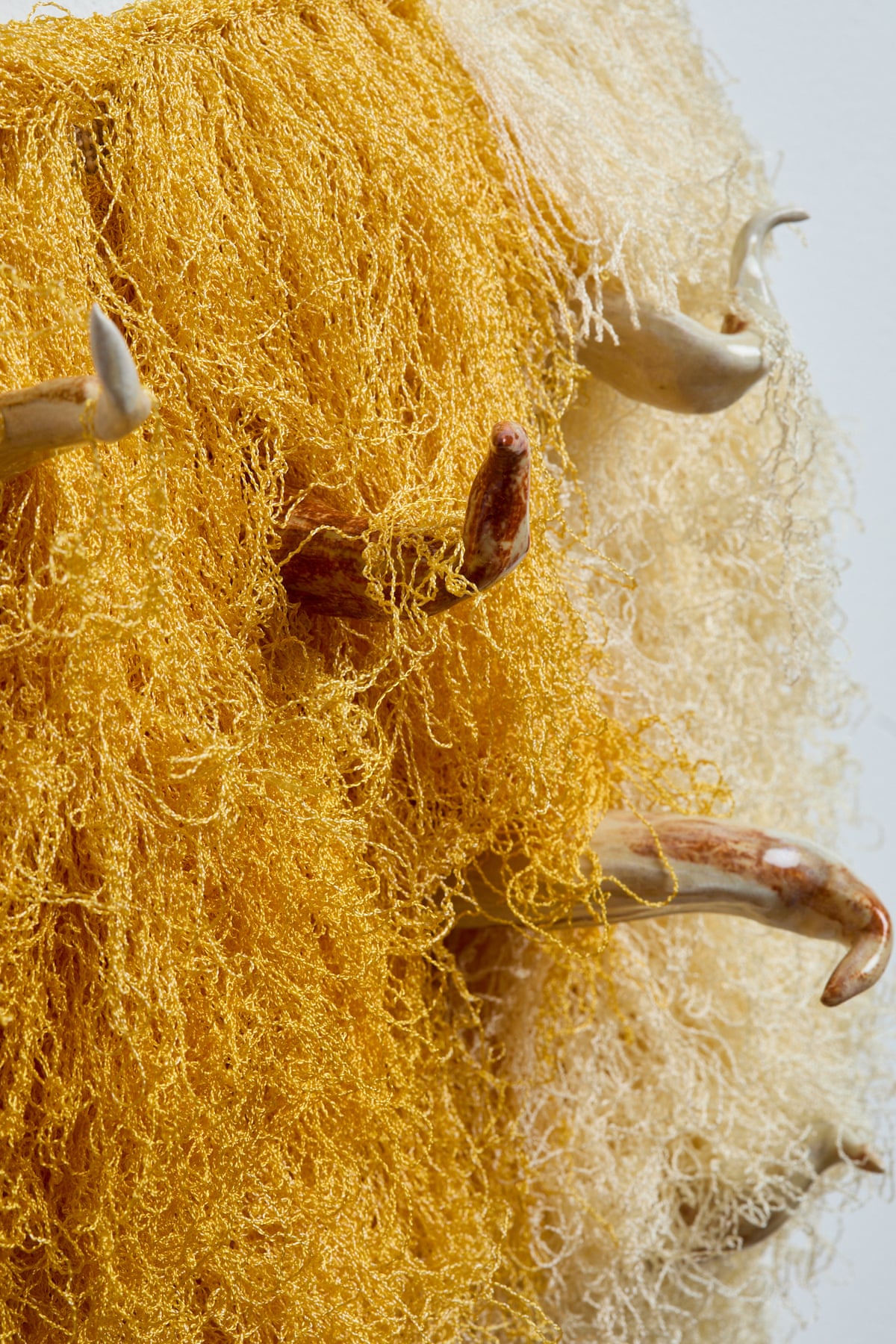
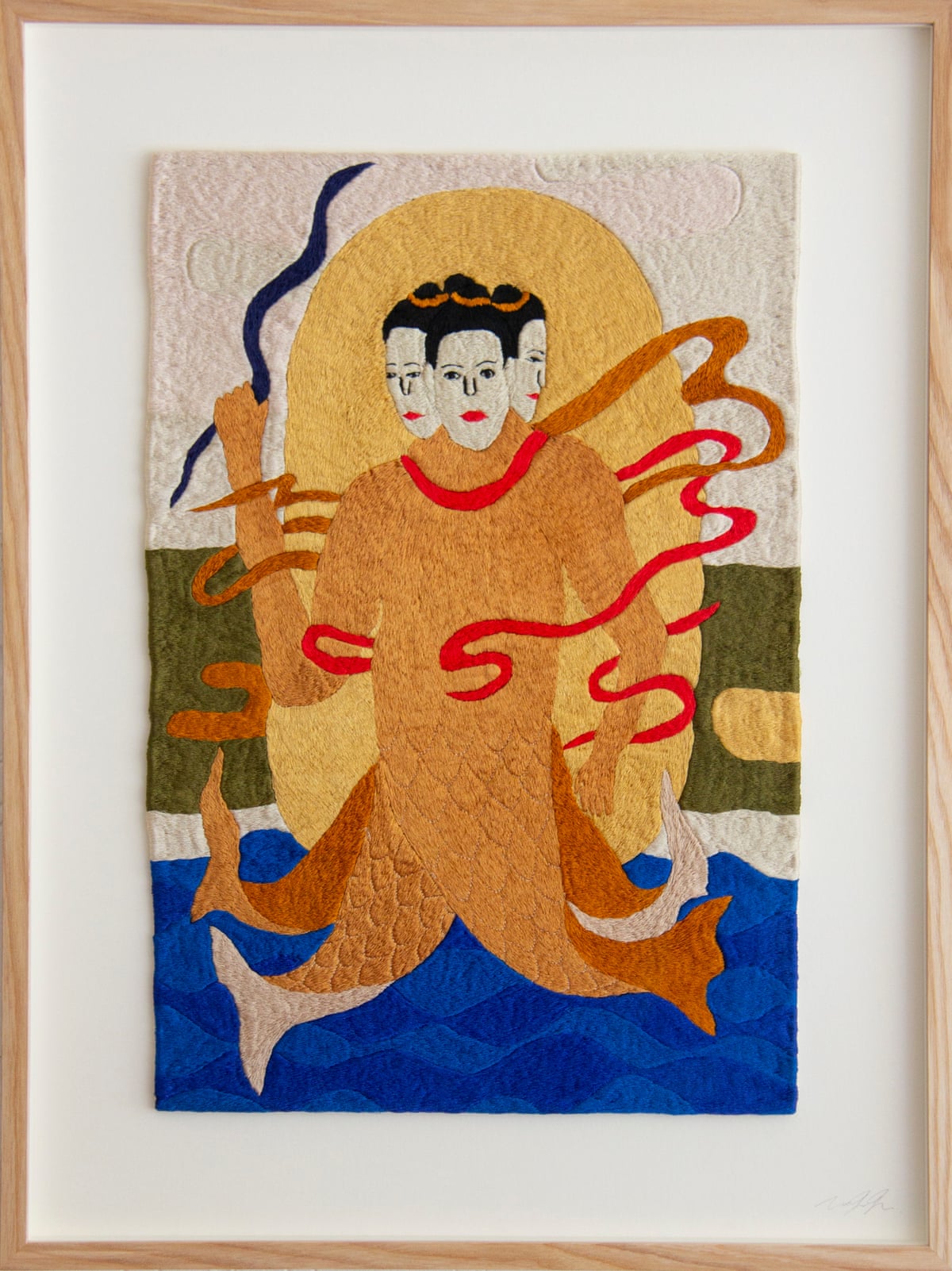
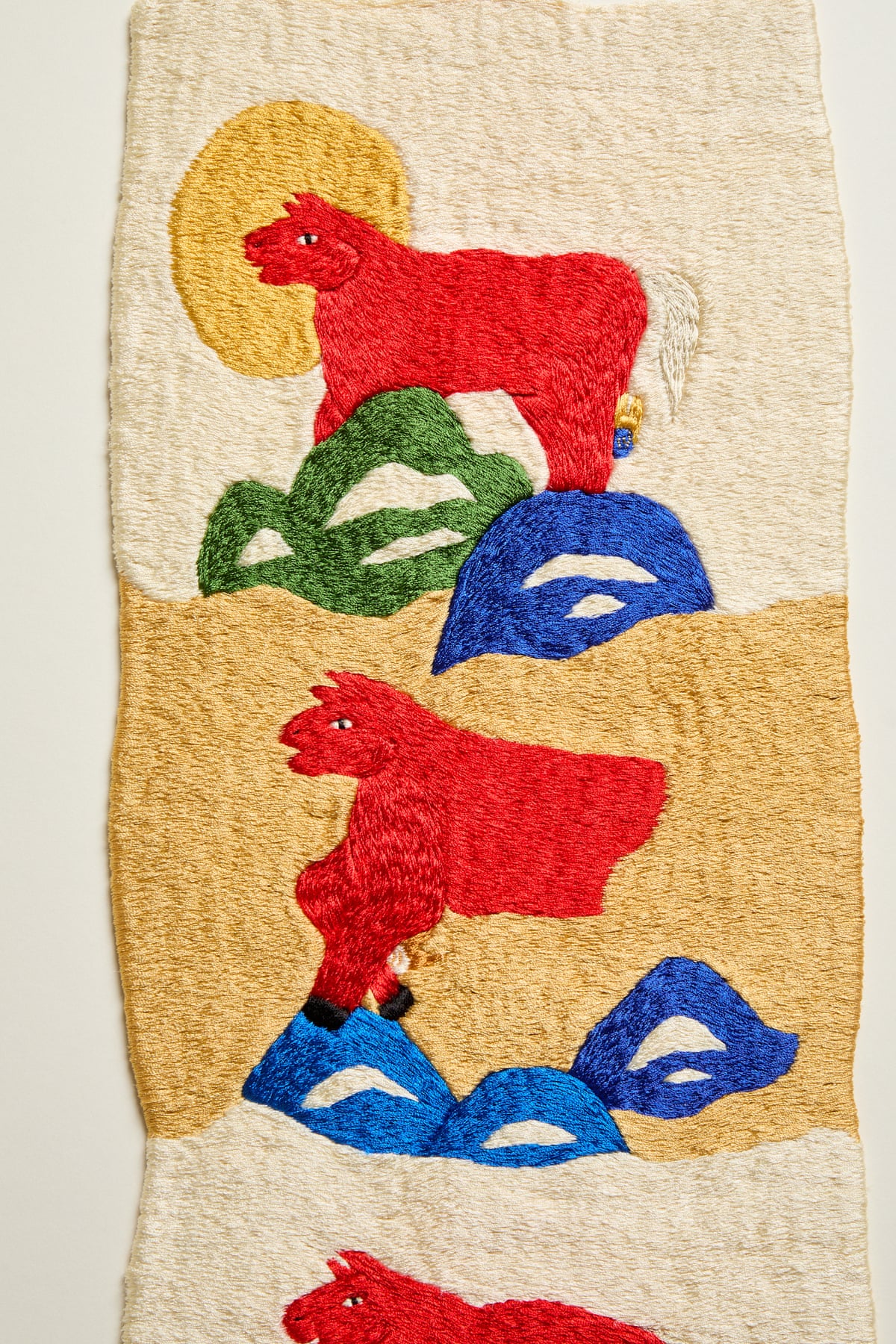
Rows of vibrant thread sit neatly organised beside a freehand embroidery machine, the instrument through which Joo conjures her supernatural menagerie. Her practice combines surface embroideries with three-dimensional sculptural creatures, all informed by Korean myth, philosophical inquiry, and the intricate relationship between humans and the natural world.
When I use the embroidery machine I feel like I'm painting. It's as if each thread has its own life.Joo describes the machine as an extension of her artistic vision rather than a tool of production.
How did Joo develop her artistic voice?
Raised primarily by her grandmother in Korea, Joo relocated to the United Kingdom 12 years ago to pursue studies at Central Saint Martins and subsequently the Royal Academy in London. The geographical and cultural displacement prompted deep reflection on identity and perception.
That transition made me want to explore who I am and how I see things.The shift from East Asia to Western Europe became a catalyst for investigating how culture and environment shape artistic consciousness.
A pivotal moment arrived in 2021 when Joo embroidered the ten Daoist symbols of longevity—traditionally inscribed to wish extended life—onto a discarded Ikea plastic bag, a material requiring up to 1,000 years to decompose.
It was that work that made me feel a connection, a way of drawing ideas together to make a transformation that resonated with religious beliefs as well as myth.This gesture synthesised her interests: the marriage of ancient spiritual symbolism with contemporary consumer detritus, the sacred embedded within the mundane.
What role does Korean folklore play in her work?
Guided by the Korean folkloric and shamanic concept that inanimate objects can become spirited beings called dokkaebi, Joo began observing London's discarded materials through a transformed lens. A creature with numerous feet peers from an old shirt sleeve; a wooden side-table abandoned on the street now supports a five-foot-tall dokkaebi leg sprouting from its surface.
I love the idea that the small and mundane have spirit. We need to realise that the ordinary is special.Her practice rescues waste from invisibility, asserting that objects cast aside retain agency and presence.
This animistic worldview positions Joo within a broader contemporary movement. According to her gallery's description of her NADA NYC 2026 presentation, her practice frames the home as a charged interior space where domestic objects become vessels for spiritual inquiry. The work functions as what she terms an
Ode to the Domestic, centring animism and the everyday as sites of artistic investigation.

How does Joo position craft within contemporary art?
Joo belongs to an emerging cohort of makers demonstrating that traditional, sometimes archaic, craft techniques can generate distinctly modern, joyful artistic statements. Rather than preserving skills in amber, these practitioners evolve their application.
I think a lot of makers are very experimental now, craft is no longer just about material knowledge, but about experimenting and playfulness. This means more people are drawn to it.The distinction matters: craft is no longer subordinate to fine art but operates as a legitimate mode of contemporary artistic expression.
Yet hierarchy persists.
There is still a hierarchy. A lot of fine artists now use craft like ceramic or textiles and that's seen as part of their knowledge. Whereas if you come from a craft background what you do is rarely considered fine art. It should be free-flowing.Joo's insistence on identifying as both maker and artist represents a deliberate claim to legitimacy at a moment when craftspeople continue fighting for institutional recognition.
According to her representation gallery, Joo graduated from the Royal College of Art in 2021 and currently holds a residency at Cockpit Arts, having won the inaugural Bagri Craft Award. This trajectory underscores her emergence as a significant voice in contemporary craft discourse.
What defines her upcoming exhibition?
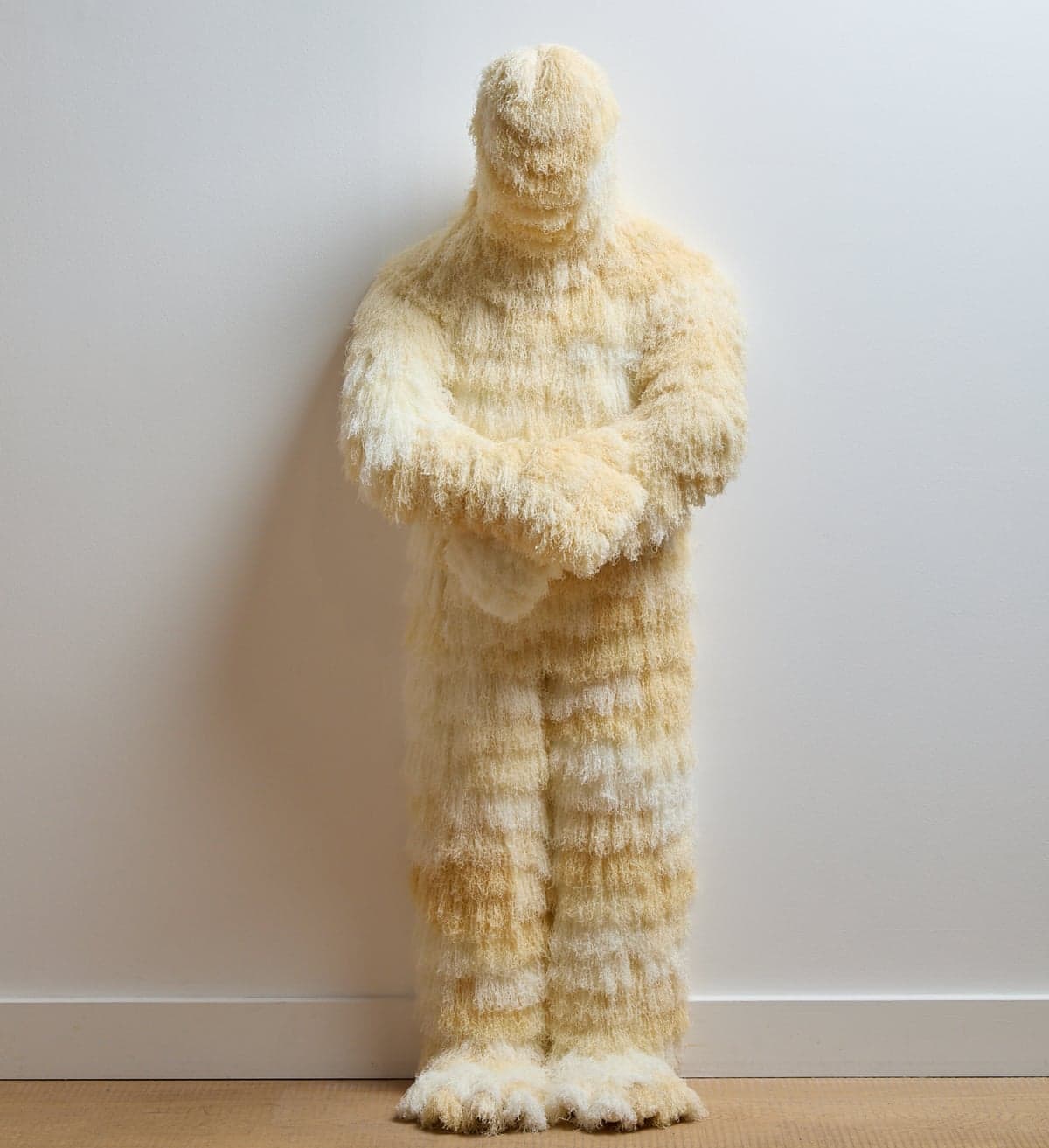
Joo is preparing her first solo show, Bodily Inbetweenness, at London's Ruup & Form gallery, opening during Shoreditch Design Week. The exhibition explores a new category of spirit: human emotion and its visible manifestation. Powerful figures, reminiscent of corn dollies yet five feet in height, protrude from the walls.
For me, a sense of fun always wants to come out, but for some people it's awkward, it doesn't fully emerge.The works capture emotional states suspended between expression and suppression, visibility and concealment.
The inaugural sculpture in this series, I Hear Things Existing With Me—a contemplative figure slightly sunken into the wall it leans against—emerged as a standout piece at London's Collect Craft Fair in February. TF Chan, the fair's director, recalls the impact of encountering Joo's work for the first time.
Mine was a pair of ceramic legs with each toe tipped in glossy red nail varnish. In my view, she embodies the values of contemporary craft: closely bound to the artist's heritage while accommodating both serious intellectual engagement and sheer delight.
How does global interest in Korean culture shape her practice?
Joo recognises the current widespread enthusiasm for Korean cultural production—spanning music, visual media, and beauty industries—as a significant context for her work's reception.
Because I'm from Chinese as well as Korean heritage it's been very meaningful to see both cultures celebrated. I think that international attention has meant that, especially within Korea, there's now more interest in preserving and honouring traditions.The global appetite for Korean aesthetics has created space for artists drawing on Korean heritage to reach international audiences while simultaneously strengthening cultural preservation efforts within Korea itself.
This international recognition has materialised through multiple platforms. Joo was included in ai. gallery's PAVILION Hong Kong 2026 presentation in March 2026, and subsequently featured in ai. gallery's NADA NYC 2026 booth in May 2026, where works including Satgat, Freakin Mind Reader, Old Dust, and Tiniest Burrows were presented. She was also selected for the Korean Cultural Centre UK's 2025 New Generation Art Exhibition: Emerging Voices group show, which ran from late 2025 into February 2026, further cementing her position within contemporary discourse around Korean artistic practice.
What lies ahead for Joo?
Beyond the Ruup & Form exhibition, Joo is preparing a show at the Harley Foundation in Nottinghamshire later in the year. The studio demands long hours of creation, yet she approaches this labour with evident relish.
I think it's the trickle of everydayness that really shapes who I am and how I see things. That really is what my work is about.Her artistic vision remains anchored in the quotidian—the accumulated texture of daily life, the objects we discard, the emotions we struggle to articulate—transformed through patient craft into vessels of spiritual and emotional resonance.
Key Facts
- Woo Jin Joo combines embroidery, sculpture, and found objects to create works inspired by Korean folklore, shamanism, and the concept of dokkaebi—spirits inhabiting inanimate things
- She graduated from the Royal College of Art in 2021 and currently holds a residency at Cockpit Arts after winning the inaugural Bagri Craft Award
- Her practice challenges the hierarchy between craft and fine art, asserting that makers working from craft traditions deserve equal institutional recognition
- Recent international exhibitions include PAVILION Hong Kong 2026 and NADA NYC 2026, alongside her first solo show Bodily Inbetweenness at Ruup & Form during Shoreditch Design Week
- Joo's work transforms discarded London materials into spiritually charged objects, embodying the conviction that the ordinary possesses inherent magic