
A man from Long Beach, California, arrives intending to meet someone he believes is a 13-year-old girl. When a journalist enters the room, his face goes pale. He has been caught, and everything changes in an instant. The journalist asks what should happen to him. "The electric chair?" the man responds desperately. "No," comes the reply. "Dateline NBC."
This opening sequence sets the tone for Primetime, a film directed by Lance Oppenheim that examines how a network news programme transformed sting operations into mass-audience television, forcing uncomfortable questions about justice, entertainment and society's appetite to strip certain offenders of their humanity for profit. The film opened in US cinemas on 25 September 2026, with a UK and Irish theatrical release scheduled for 30 October 2026.
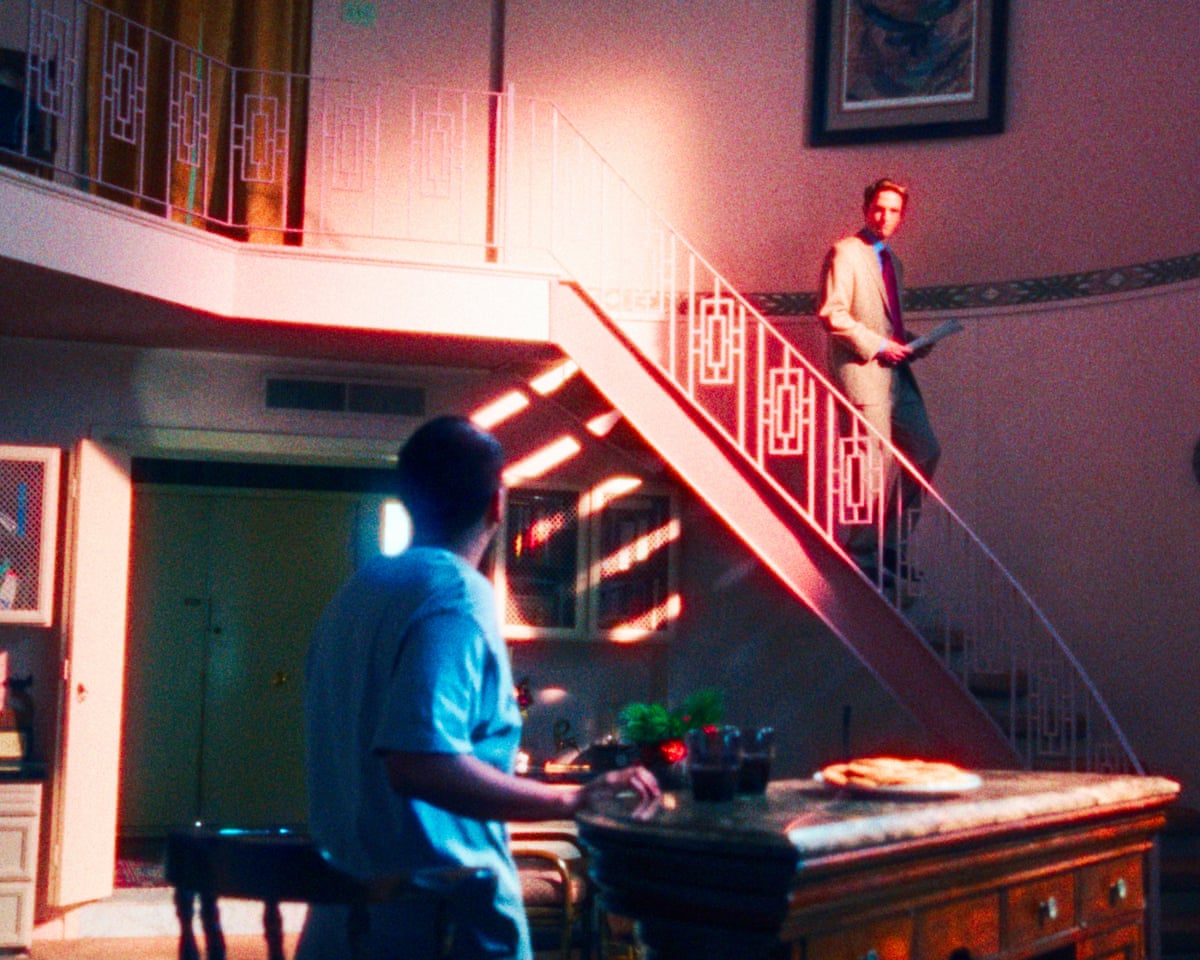
Robert Pattinson, whose recent films include The Batman, Twisters and Mickey 17, plays Chris Hansen, the real-life journalist who became the face of the original television programme. Pattinson delivers a line that encapsulates the film's central argument about a pivotal cultural moment:
"There used to be a pillory in every village. Now, there's a television in every living room."
The actual Hansen, now 67, has publicly condemned the film as an
"insult"and an act of
"identity theft"without having viewed it. The film is rated R for violent content, disturbing sexual material, language and graphic nudity, with a runtime of 1 hour 50 minutes. The cast also includes Merritt Wever, Skyler Gisondo, Phoebe Bridgers, Matthew Maher and Bokeem Woodbine, with Pattinson serving as a producer as well as star.

At the Venice Film Festival in early September, Primetime reportedly received a seven-minute standing ovation, generating early awards conversation and establishing the project as a significant cultural intervention into a story that continues to provoke debate.
How did To Catch a Predator become a television phenomenon?
Competing directly against ABC's Lost during primetime slots, NBC's To Catch a Predator emerged as one of the defining television hits of the mid-2000s ratings wars, an era before streaming services reshaped the industry. The programme identified men suspected of soliciting sex with minors through online chat rooms. Operatives from the citizen watchdog organisation Perverted Justice posed as underage children, engaging adults in conversations and arranging meetings at fake residences.
Decoy actors playing the supposed teenagers would be present at these locations. The men would then be confronted on camera by Hansen while law enforcement officers waited outside, prepared to make arrests. The formula achieved enormous success. By the 2006-07 season, the programme was drawing approximately 7 million viewers per episode, transforming Hansen into a television personality recognised for his signature phrase:
"Have a seat."
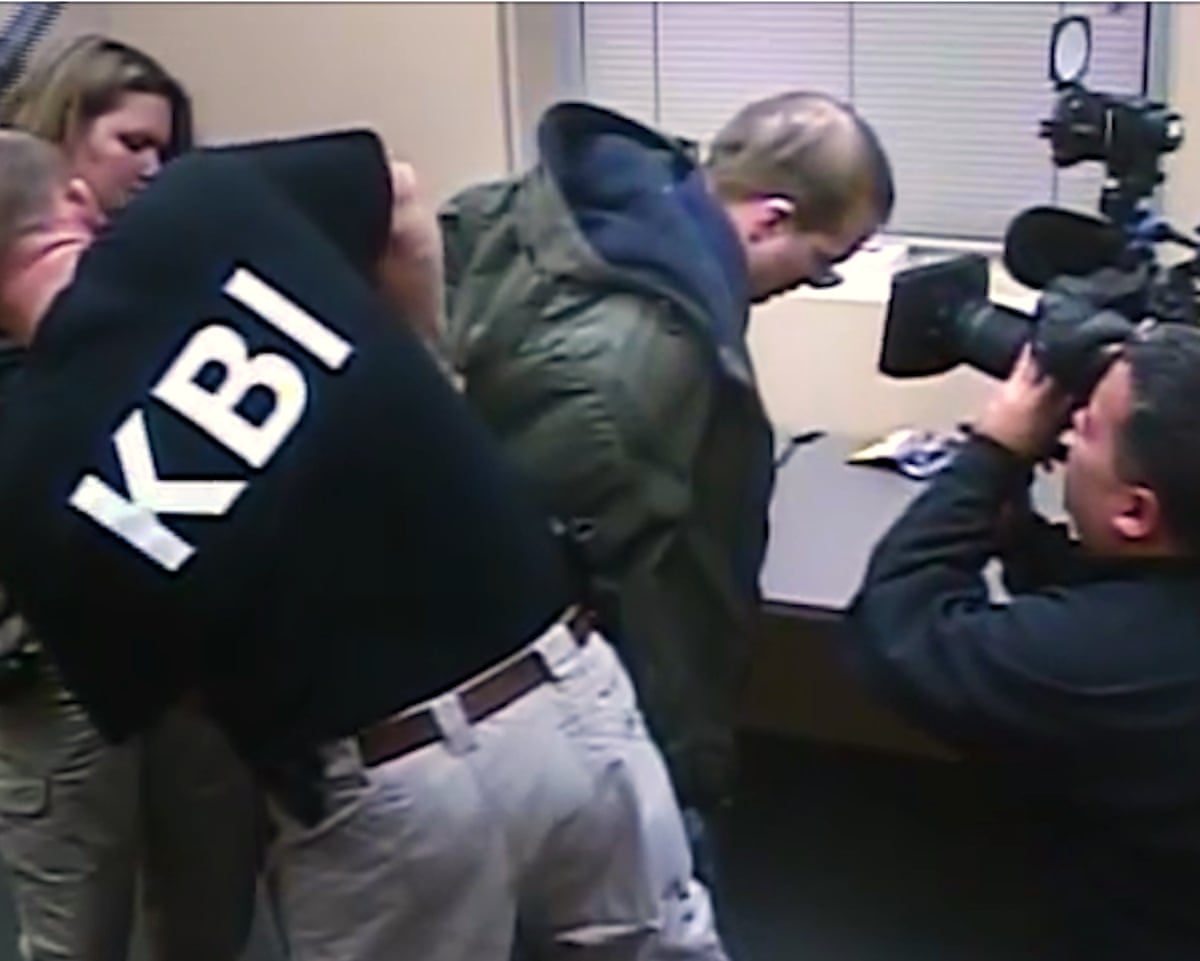
Lance Osit, who directed the 2025 documentary Predators examining the show's creation and influence, explains the programme's psychological appeal:
"The show was sordid and creepy and amusing and you could find many different ways to relate to what was happening. You could identify with the parents, you could identify with Chris Hansen, you could identify with the schadenfreude of watching these men have the worst day of their lives. You can see that even in the marketing for Primetime: a lot of it's reposting old clips of To Catch a Predator. It's quite clear that this still has an effect on people because it is at this nexus of discomfort and basic human instinct. In our deepest hearts we are voyeurs and we enjoy discomfort from a safe vantage point and that's what the show was able to offer people."
The documentary, which is now available on Paramount+, provides archival material and interviews that contextualise the show's production and lasting cultural impact.
What tragedy ended the original sting operations?
In 2006, the operation took a devastating turn. Louis Conradt, an assistant district attorney in Rockwall County, Texas, allegedly made contact with a decoy posing as a 13-year-old boy but subsequently withdrew. The team proceeded with the police operation at his residence after he failed to appear at the sting house. Conradt took his own life as a local SWAT team entered the property, with the television crew positioned outside.
This incident prompted a lawsuit that was eventually resolved through an out-of-court settlement, as well as investigative journalism from multiple outlets. Reporting by ABC's 20/20 and Esquire journalist Luke Dittrich—whose 2007 article would later become a key source for screenwriter Ajon Singh's script for Primetime—examined the ethical dimensions of the operation. By 2008, To Catch a Predator had been cancelled.
How did law enforcement agencies approach similar operations?
Years before the Dateline NBC programme gained national prominence, local law enforcement agencies across the United States had begun quietly conducting their own investigations into internet solicitation. In Kentucky, then-attorney general Greg Stumbo oversaw a series of state-led sting operations designed to apprehend men suspected of soliciting sex with minors.
Working alongside local officials including Jerry "Peanuts" Gaines, the sheriff of Bowling Green, Kentucky's bureau of investigation deployed a young-appearing female agent to pose online as an underage teenager. The state partnered with Perverted Justice to engage men in online chat rooms and direct them to monitored locations. These stings resulted in more than 20 arrests in Kentucky.
Stumbo reflected on the operations:
"None of them had a criminal record. They were a firefighter, they were a university teacher – people that you just walk around and see every day on the street. It's scary when you think about how many people like that there are out there who are predators for our children."
Only after Kentucky authorities concluded their stings did Hansen and the Dateline NBC crew arrive in Bowling Green to conduct interviews. Stumbo notes that state prosecutors maintained strict control over their files, declining to release criminal evidence recordings to network producers while trials remained pending. However, Stumbo emphasises that the message transmitted to potential offenders was swift:
"The talk was, 'Don't go to Kentucky. They'll catch you if you go to Kentucky.' That's what we wanted the talk to be, obviously."
Did the operations constitute entrapment?
When asked whether the sting setup and subsequent television spectacle crossed an ethical boundary into entrapment, Stumbo was unequivocal:
"Nobody ever came to me and said that and it wouldn't do any good if they did. We didn't do it for that purpose. We did it because we wanted that word that was spread through that community of people who look at those types of situations: don't come to Kentucky."
Regarding the men whose lives were destroyed by the operations, Stumbo offered no sympathy:
"I'm a prosecutor. I probably am a little bit hard about stuff like that. I don't find any excuse in that. Yeah, you feel sorry for anybody that stoops that low in life, but to intentionally want to go and do that type of activity with a minor, I have no sympathy for them."

What role did Perverted Justice play in the television programme?
Perverted Justice, established by Xavier Von Erck, served as the operational engine behind To Catch a Predator. Von Erck's involvement with national media began in early 2004, following a series of stings with local television stations. Within a single week, CBS's 60 Minutes II, ABC's Primetime Live and NBC's Dateline NBC all approached him to replicate his model on a national network scale.
Von Erck made a deliberate choice about which network to partner with. He explains:
"We had caught a national news producer for ABC News at our first sting in Milwaukee. He showed up to that very first sting house we ever did, and ABC News did not fire him despite our pressure campaign … So obviously I wasn't going to work with Primetime Live."
Von Erck managed volunteers remotely, reviewing chat logs and enforcing operational boundaries, while operatives Frag and Del Harvey worked inside the sting houses alongside Dateline NBC producers. He recalls one particularly troubling proposal from a producer: that a target be persuaded to enter a hot tub with one of the female decoys.
"We said no."
Von Erck vigorously defends Perverted Justice's record, asserting more than 600 convictions, a 99.1% conviction rate and statutory changes across all 50 states. He rejects accusations of entrapment, contending that his operatives never initiated contact and that convictions based on their evidence survived appellate review. He writes:
"In fact, out of the dozens of cases in which convicted individuals desperately appealed to a higher court, convictions due to the evidence we supplied were *never* overturned. It is quite a silly notion to believe that someone can be 'induced' to want to sexually assault a 10-15 year old. It requires a specific predilection."
Von Erck emphasises that he spoke with Hansen only twice and views To Catch a Predator as fundamentally dependent on his organisation's work.
"Without my organization, there was no To Catch a Predator possible at that time,"he states.
"It would have been a tall reporter standing inside of a house interviewing no one."

Why is Von Erck critical of the new film?
Von Erck's hostility toward Primetime stems from what he characterises as significant inaccuracies in its portrayal of his organisation. He accuses the filmmakers of fabricating scenes, statements and locations involving him.
"I don't regard 'Primetime' as being a movie made about the story of To Catch a Predator because from what I know from watching the trailer and reading reviews of the movie, it seems like most of the details of the movie are absurdly inaccurate when it comes to my organization in particular. It feels like an oddly and purposely malicious portrayal, especially of myself, given that every review I've seen that mentions the way they have portrayed me is literally something I did not do, things I never said, and places I never was ever even physically at. Frankly, I find it bewildering that they are using my legal name and semi-likeness while completely inventing every opinion, statement, act and physical location that they portray me as in the movie."
Attempts by journalists to contact director Lance Oppenheim and screenwriter Luke Dittrich were unsuccessful. Hansen declined to participate in interviews but has used other platforms to condemn Primetime as an
"insult"and to suggest that actor Tom Hanks would have been superior casting to Pattinson.
In a statement released on Wednesday, Hansen declared:
"They wanted to exploit the brand that I've built over the last 45 years. You can decide whether that's ethical or legal or identity theft or however you look at it. But it seems a little exploitive, as Hollywood often is."
Intriguingly, Hansen has also negotiated for his true crime streaming network TruBlu to show promotional material before screenings of Primetime. Osit, the director of Predators, observes that this manoeuvre reflects Hansen's characteristic business acumen.
"It does fit with the Chris Hansen I know,"Osit remarks.
"That's a savvy and intelligent thing to do for what Chris Hansen is interested in doing, which is to get people to see his investigations."
What broader questions does the film raise about society?
Osit contends that when commercial news networks commodified vigilante justice, they established a precedent that has only intensified in the age of social media and streaming platforms. In contemporary iterations of the format, networks and digital streamers frequently decline to obscure the faces of suspects or implement traditional journalistic safeguards. Ethical considerations have increasingly been abandoned.
"We've societally accepted that these men are not human beings. They're not deserving of the same rights or protections that someone who committed a different kind of crime and has their face blown up on the internet might be. We've societally accepted it's quite acceptable to shame these men and that is their punishment for this crime."
Osit characterises Hansen as a charismatic combination of journalist and entertainer and does not believe To Catch a Predator's underlying intentions were deliberately cruel. He acknowledges Hansen's skill in interacting with people but expresses reservations about certain aspects of his professional conduct.
"If Chris was interested in ending child predation, the investigations wouldn't still be going on,"Osit observes.
"That's not what we're doing here. However, Chris has been told by many, many people over the years that they're grateful for his investigations and those people exist. There are also many people who think that those investigations are problematic and then there's a lot of people in between."
Ultimately, Osit argues, focusing excessively on Hansen's personal motivations obscures more uncomfortable truths that To Catch a Predator exposed about its audience and the culture that produced it.
"The more interesting question than who is Chris is who are we? Why do we enjoy this show? What do we get out of the show? What is this show reflecting about the society we live in where we sexualise teenage girls so much and yet create circumstances where we will ask people to show up to a house because they think it's safe and people are playing these games on the internet where they're pretending to be different ages?"
"This is a world that we helped create as a society and those are more challenging questions to ask about who we are as human beings because it involves maybe interrogating how culpable we are in the culture that decides to treat young people as attractive objects for men who can't get mental help to avoid being sucked into these issues. Those are questions that a movie is not going to deal with."
What happens next?
Primetime is currently in theatrical release across the United States. The film will arrive in UK and Irish cinemas on 30 October 2026, with A24 having released its final trailer ahead of the international rollout. The documentary Predators, which provides historical context and archival material about the original television programme, remains available for streaming on Paramount+.