The 41st Turner Prize exhibition at Middlesbrough Institute of Modern Art showcases four strikingly different visions of contemporary art, with Kira Freije's haunting installation of life-cast cyborg figures emerging as the standout work. Freije's 33 lifesize steampunk humanoids, displayed in a vaporous apocalyptic setting, demonstrate an emotional depth and technical mastery that sets them apart from the other shortlisted artists. The exhibition runs at MIMA from 26 September 2026 to 29 March 2027, with the winner to be announced on 10 December 2026.
The Turner Prize proves most thrilling when a visitor finds themselves passionately advocating for one artist's vision. Walking through this year's exhibition, the impulse to champion Freije's work is overwhelming—compelling enough to inspire the kind of devoted support visible in the scarves and banners that surround Middlesbrough's football stadium.
Why is Freije's work displayed separately?
Freije occupies her own floor, accessed by a tall flight of stairs, deliberately separated from the three other shortlisted artists because the fine watery mist pervading her installation could damage their more fragile materials. Yet this physical separation functions as a curatorial statement in itself, and the justification becomes clear upon encountering the work. Freije was shortlisted for her solo exhibition *Unspeak the Chorus* at The Hepworth Wakefield, and the MIMA presentation demonstrates why her practice commands such attention.
What makes Freije's cyborgs emotionally compelling?
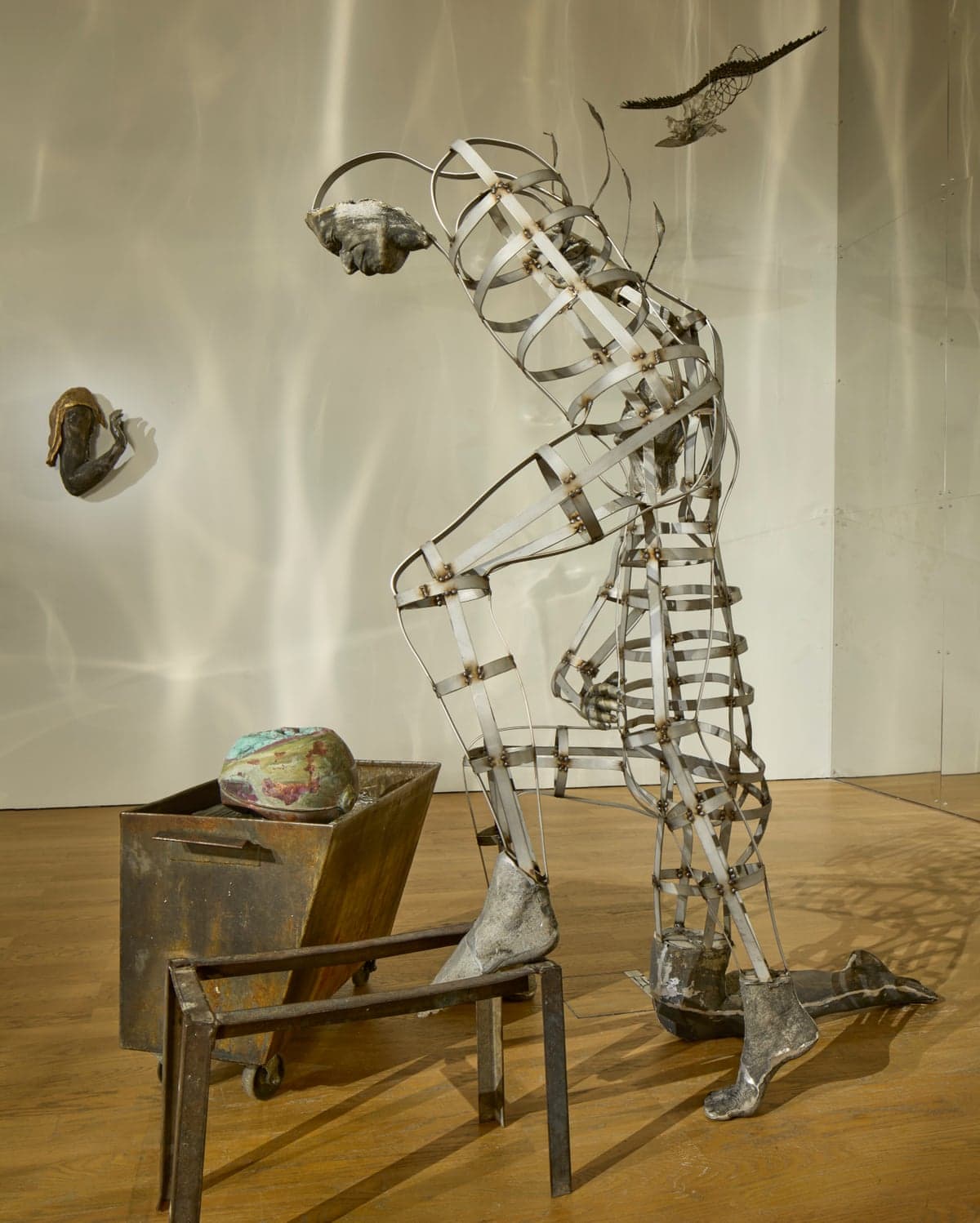
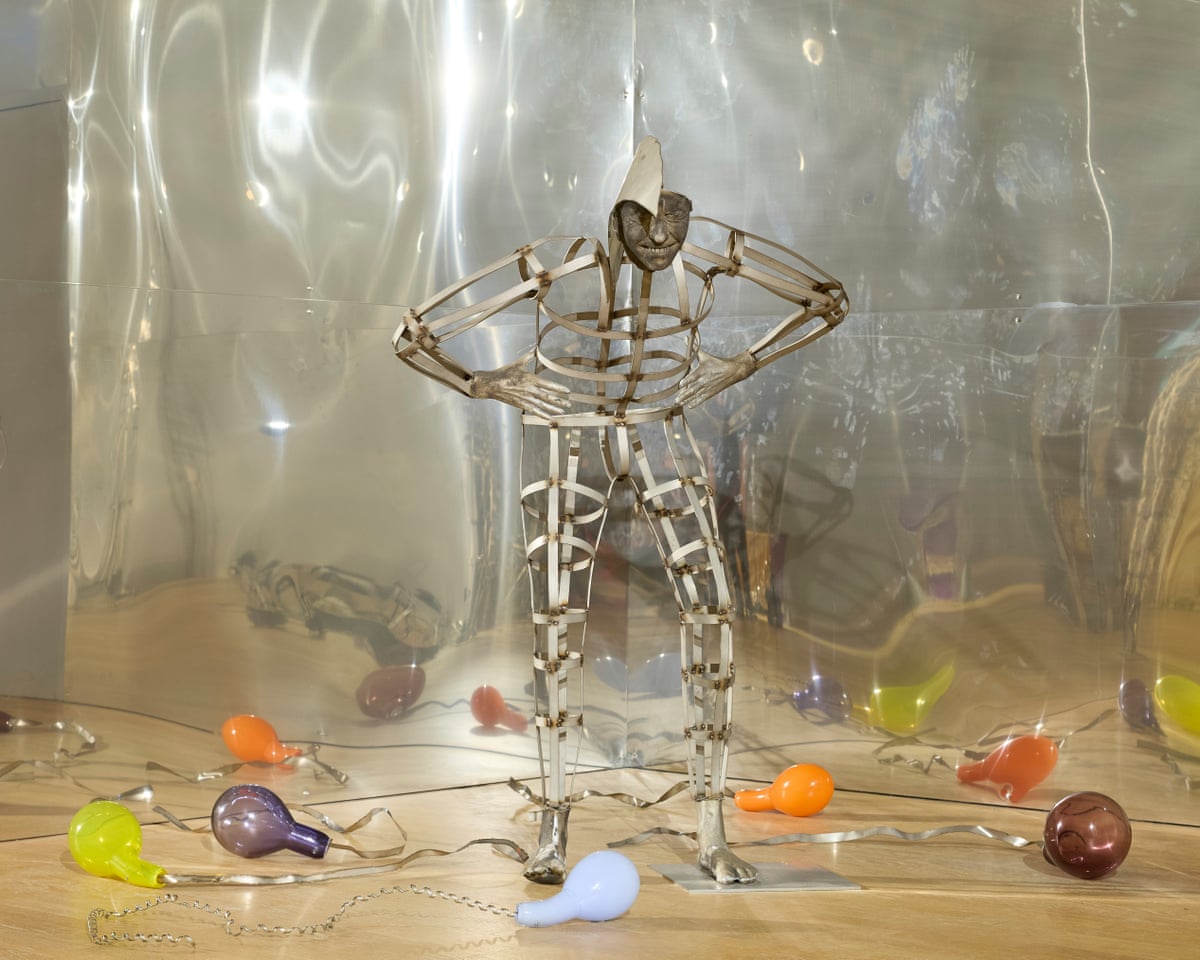
Freije understands that human faces and hands are what convey our humanity, and she has preserved these features alone in her figures—rendered through life-casting—while replacing everything else with hollow metal frames and steel components. The result is a world where consciousness persists as a ghost trapped within machinery. Walking among the 33 statues, viewers encounter anguished expressions and fallen figures desperately grasping at one another's steel ankles, creating a landscape of pathos and interdependence.
The installation rejects any vision of sleek technological futures. Rusty buckets of fetid liquid, a mangy sofa, and bronze steamy lighting undercut any sense of shiny futurism. Instead, Freije presents the way we live now—a world where the only things that matter are love and compassion. Her cyborgs touch one another tenderly, offer mutual support, and cuddle steel-framed pets. This is not science fiction; it is a meditation on human vulnerability and connection in an age of dehumanization.
How does Simeon Barclay's work engage with class and masculinity?
Simeon Barclay creates a dramatic tableau that functions like immersive theatre, guiding visitors past giant photographs of a man reading a tabloid newspaper bearing the headline "Leave 'em to die," then through a glowing melancholy landscape and beneath a neon sign into a central space evoking a living room. Barclay was shortlisted for his performance work *The Ruin*, which combines visual and sonic elements to explore personal and political themes.
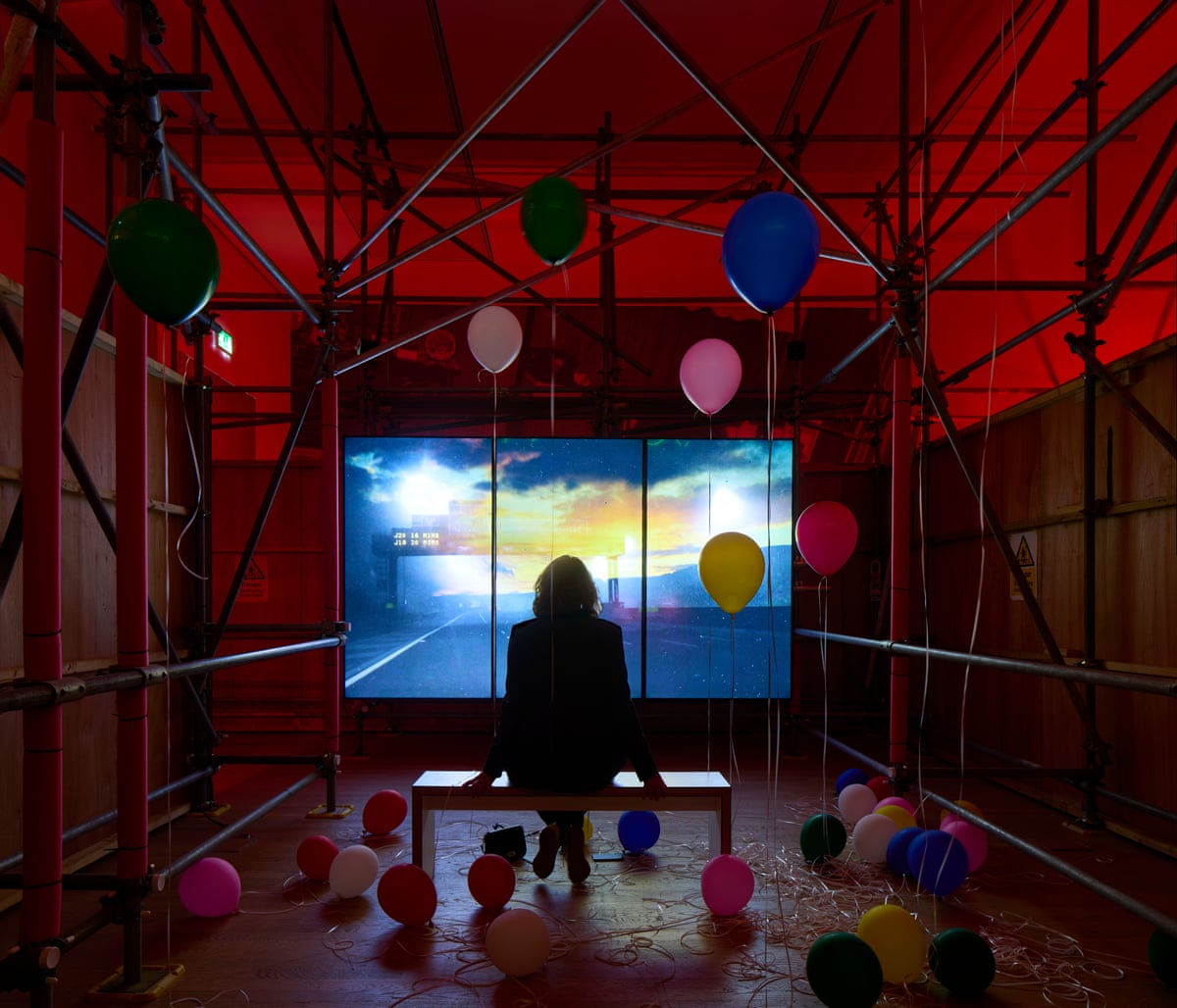
His recorded voice declaims poetry that denounces a northern, working-class man—possibly his father—who became hardened and selfish. The work is visceral and haunting, yet the connection between its various elements remains somewhat loose. The specific nature of the father figure's failings and the precise loss Barclay laments could be articulated more clearly. A more developed memoir or novel might provide the narrative precision that would sharpen the work's emotional and intellectual impact.
What is Marguerite Humeau attempting with her baroque sculptures?
Marguerite Humeau's practice prioritizes baroque form over discernible content. Beneath her eccentric creations lies probably something about nature, ecology, and planetary crisis, yet what visitors actually experience is a self-conscious cocktail of affected originality and brittle eccentricity. Her sprawling sculpture *The Holder of Wasp Venom* contains an improbable mixture: natural beeswax, microcrystalline wax, pigments, 150-year-old walnut (cause of death unknown), handblown glass, and wasp venom. The materials are remarkable, yet the sculpture still reads as a stack of giant biscuits, lacking the palpable presence of felt or fat that characterizes genuinely alchemical art.

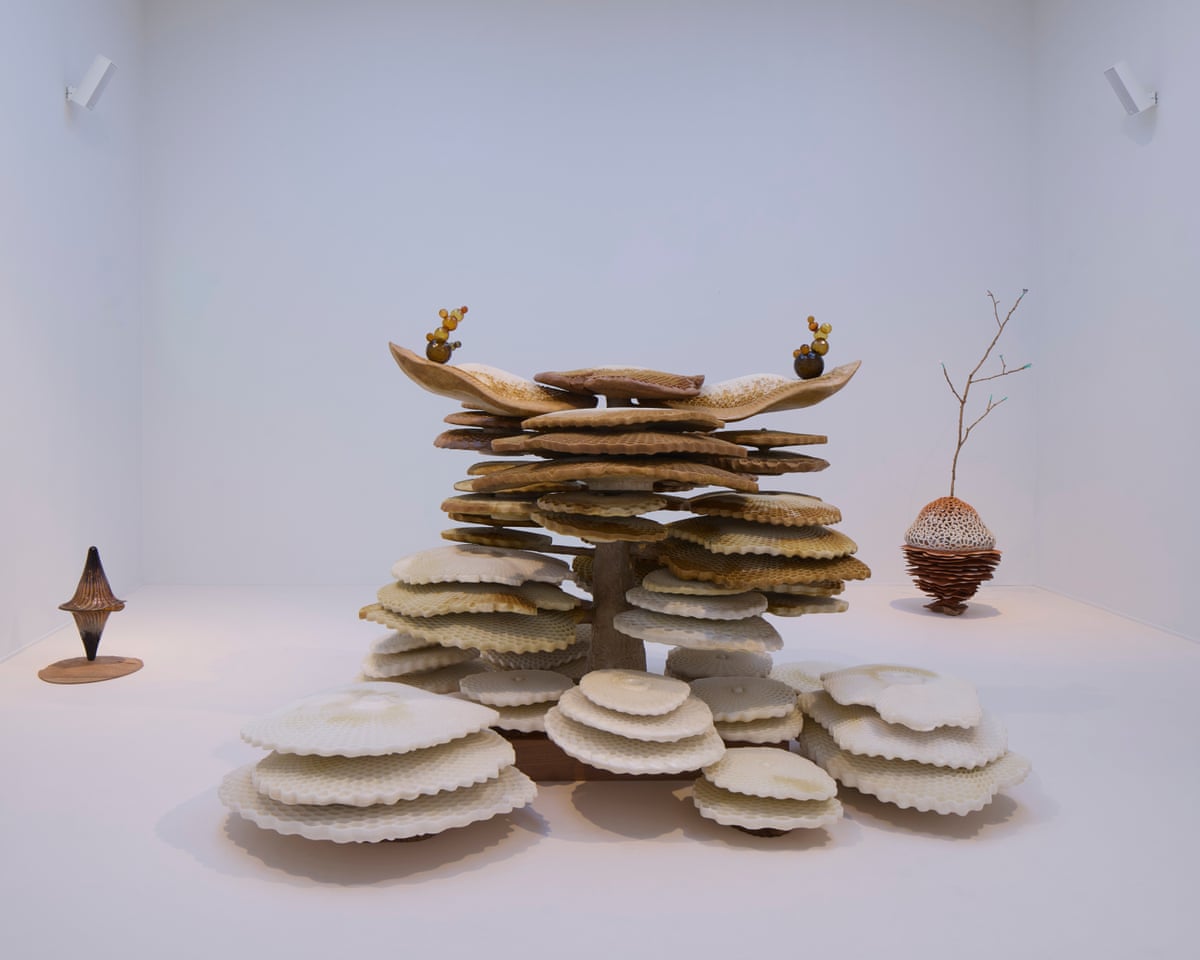
Yet Humeau's work possesses another dimension: a psychedelic soundscape of high-pitched warbles, heartbeat pulses, and elephantine bellows that uncannily follows visitors through her two rooms. This audio component does not demand understanding; instead, it invites surrender to the flow. Her sculptures similarly reward those who simply enjoy their weirdness, absorb the wasp venom, and allow their minds to nibble at a giant hallucinogenic Hobnob.
How does Tanoa Sasraku address the oil industry?
Tanoa Sasraku presents a large, brown abstract agglomeration of textures hanging at one end of her room—a work that possesses genuine visual power and might have achieved sublimity if expanded into a full exhibition. Instead, Sasraku also displays a tabletop covered with tiny glass paperweights, each containing small bulbous bottles and bubbles filled with dark viscous liquid. This second element addresses the oil industry through alchemical metaphor, but the work's impact is severely limited by scale and accessibility.
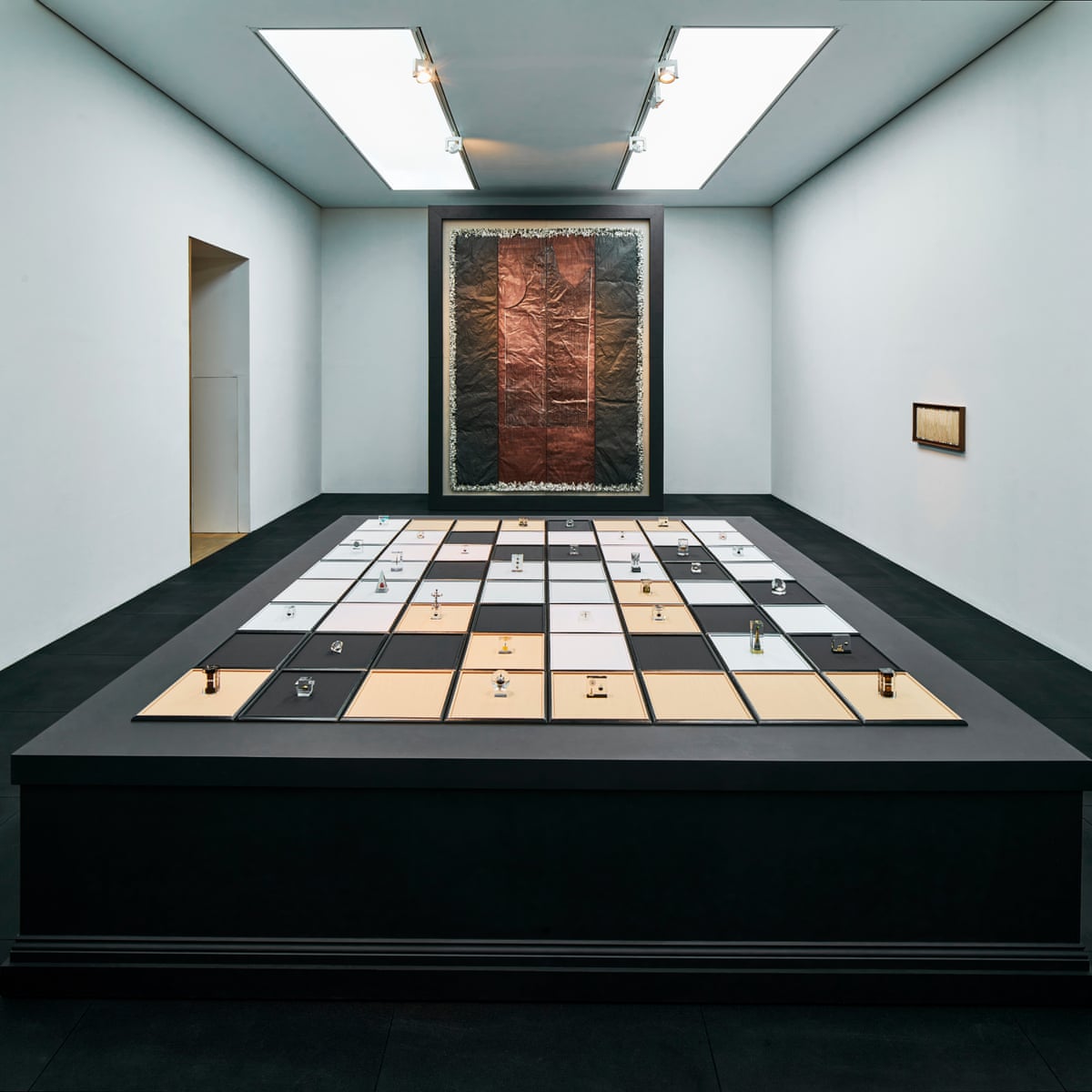
Visitors can only approach closely enough to comprehend the objects at the edges of the space-hogging installation, and their diminutive size precludes meaningful emotional or intellectual engagement beyond a momentary recognition. Once the viewer grasps that Sasraku is protesting against big oil, the work has exhausted its communicative capacity. Among the four shortlisted artists, Sasraku is by far the least generous in what she offers her audience.

Why does Freije's work transcend the competition?
Admittedly, bias clouds this assessment from the moment Freije's installation comes into view. Her gathering of lost souls evokes Dante's *Inferno*: viewers want to speak with these tormented figures, to ask how they came to inhabit this wasteland. There is an affinity here with Rodin, whose *Gates of Hell* drew inspiration from the medieval poet. Freije's practice echoes Dante, Rodin, Francis Bacon, and Alberto Giacometti—artists preoccupied with the desperate condition of being human.
A sceptic might accuse Freije of apocalyptic excess and steamy sensationalism, yet her work is tempered by humour—observe the cute pets nestled among the cyborgs. As for apocalyptic overkill, one need only read the daily news. Freije makes art about what it means to endure, to connect, to remain human when the world seems designed to strip away our humanity.
What makes this Turner Prize year significant?
This is a blistering year for the Turner Prize. While the assessment has been harsh toward Barclay and Humeau, their rooms overflow with personality and verve, creating a truly competitive shortlist with a genuine sense of occasion. The exhibition feels like an event that matters—a quality the Turner Prize has often failed to achieve in recent years. The four artists represent diverse approaches to contemporary practice, and their work should inspire passionate and eloquent disagreements among visitors.
Humeau will certainly attract devoted admirers, but Freije stands as a great modern artist regardless of the prize outcome. The winner will receive £25,000, while each of the three other shortlisted artists receives £10,000. For those seeking to understand the future direction of contemporary art, a journey to Middlesbrough is essential.
What happens next?
The Turner Prize winner will be announced at MIMA on 10 December 2026. The exhibition remains on view until 29 March 2027, providing an extended opportunity for audiences to engage with these four distinct artistic visions and form their own judgements about which work most deserves recognition.