Glasgow School of Art says it cannot fully restore the city’s iconic Mackintosh Building to its former state without additional financial support. The art school, which had previously insisted it was committed to a faithful reinstatement of the building, now says financial clarity from an insurance settlement over the 2018 fire has shown it cannot take forward the faithful reinstatement on its own.
Instead, the Glasgow School of Art says the building could become an anchor for a “creative and cultural production innovation district”, a claim that has attracted scorn from figures in the art world.
The school’s new report on restoration plans says several factors, including construction inflation, market volatility and economic pressure, have made reinstatement far more expensive than predicted in a previous report published in 2021. The report says restoring the Mackintosh is therefore dependent on external funding sources that are uncertain and points to a significant funding gap that must still be resolved. It puts the total cost of restoring the Mackintosh at £265m.
What does the Glasgow School of Art say it can afford?
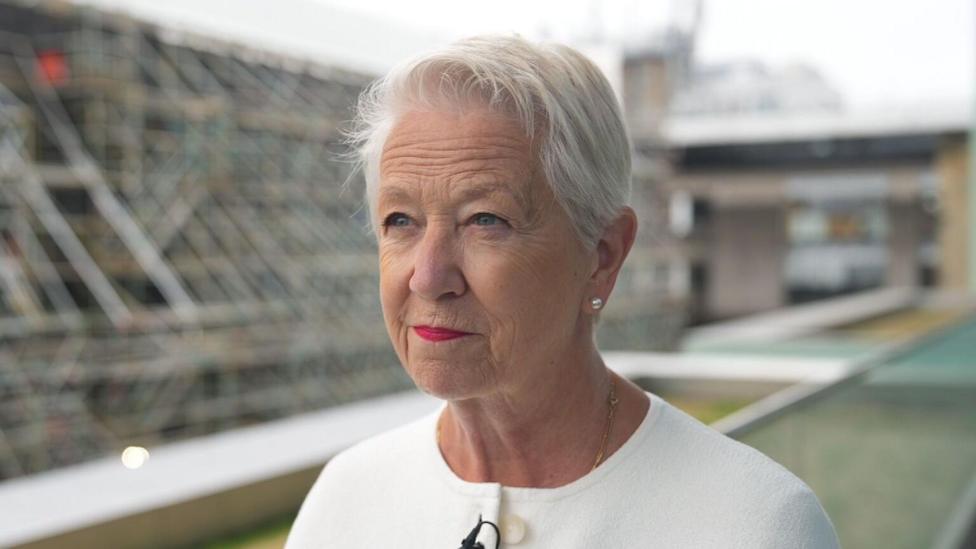
Ann Priest, chair of the school’s board of governors, said the school is now pursuing what it can afford while still hoping for a full, faithful reinstatement. She told BBC Scotland News:
“What we are doing is what is affordable to us.
“The school cannot possibly, on its own, rebuild this whole building. It would take us away from financial sustainability.
“We are still hoping to go towards a full, faithful reinstatement. It's not going to be an exact replica, due to changes in construction and building [standards].”
She said the school would now look for visionary individuals who could bring serious investment to the project, as well as governments and local authorities.
The GSA will now remove external scaffolding around the building, saying this will improve the building’s presentation and visibility, as well as help stabilise the site. Priest said this would be the first step in
“the reinstatement for whatever this building is going to become”and described the new proposals as a landmark move for the long-term future of the site.
She said:
“We have looked at the economic case, what does Glasgow need, what do our students need and what will benefit the school, the building and the creative and cultural industries.”
The report proposes that the Mackintosh Building could serve as a cultural anchor within a wider cluster of organisations near Sauchiehall Street, including Scottish Opera, the Royal Conservatoire of Scotland and the National Theatre of Scotland. It says formal recognition of this so-called cluster would mean a creative and culture-led innovation district could bring significant opportunities for Glasgow as a whole.
The Art School said it will seek to begin discussions immediately with the city, government, stakeholders and potential partners over this proposal.
Why are some in the art world critical?
The suggestion that the building may not be restored to its former self has drawn criticism, with some questioning the school’s direction and transparency. Painter and writer Lachlan Goudie told BBC Scotland News he believed any outcome short of an authentic recreation would be a disgrace.
He said he feared that as time passes after the fires, people will start to forget the building. Goudie said:
“This reeks of a lack of transparency, which has been very common over the past eight years. The fact it has taken that long to get to a point where we know nothing much, beyond the GSA don't have enough money to rebuild it, is shameful.
“It is a national disgrace what has happened here. Nothing less than an authentic recreation of what Macintosh left Glasgow and the world will do.
“We had the World Cup recently, and we should be as proud of the building as we are of the national football team. The Scottish government need to be saying this is vital to our national character - we had architectural crown jewels left to us.”
When asked by BBC Scotland whether she would consider the Mackintosh being taken outwith the board of governors and perhaps passed to a trust if the school fails to secure further investment, Priest said she was confident more funding would be achieved.

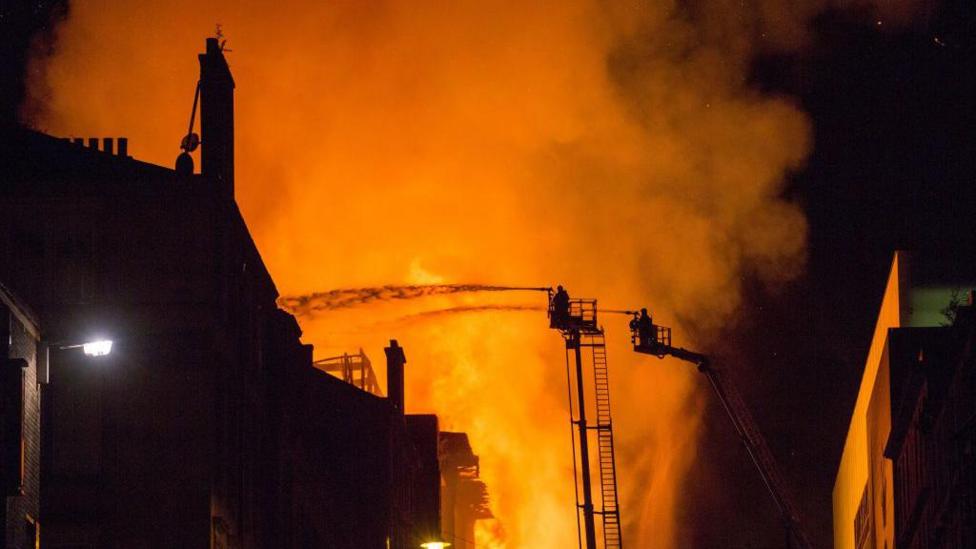
The building was devastated by the second fire in 2018. The first fire ripped through the Art School building on 23 May 2014, and four years later an even more devastating fire broke out near the end of a £35m restoration project.
Since then, GSA says about £26m of funding has gone towards work on restoring the historic building, which was first completed in 1910. However, work stalled after a dispute with insurers, leading to a long-running arbitration claim. The school now says that dispute was settled to its satisfaction last month.
GSA declined to reveal any details of what was awarded in the case, saying only that the total came short of the amount needed to carry out a full restoration of the building.
What do the new proposals involve?
The report says the proposed cluster near Sauchiehall Street already includes several cultural organisations and argues that formal recognition would create a creative and culture-led innovation district with major opportunities for Glasgow.
It says the Mackintosh Building would act as a cultural anchor to that plan, and the school says it will begin discussions immediately with the city, government, stakeholders and potential partners.
Priest said the new plan marks a landmark in the long-term future of the Mackintosh.
Why are architects questioning the plan?
Some critics say the new approach introduces too many uncertainties. Prof Alan Dunlop, who studied architecture at the GSA, has previously criticised the school’s management of the two fires and stood for chair of the board in 2022.
He told BBC Scotland News the new plans feature
“so many if's and but's”.
He added:
“This seems to me to be a dilution of responsibility, and worse, a distinct failure to focus on their prime task of delivering a replacement for the Mackintosh building, rather than enabling some centre for creative activity.
“There's no legitimate pathway described at all for the delivery for the 'faithful reinstatement' of the building.”
Prof Dunlop said he feared the building is gone forever, arguing it would be impossible to rebuild to modern health and safety standards. He also questioned how the GSA had reached the £265m figure.
Priest told BBC Scotland the figure had been calculated through work with various leading architects.